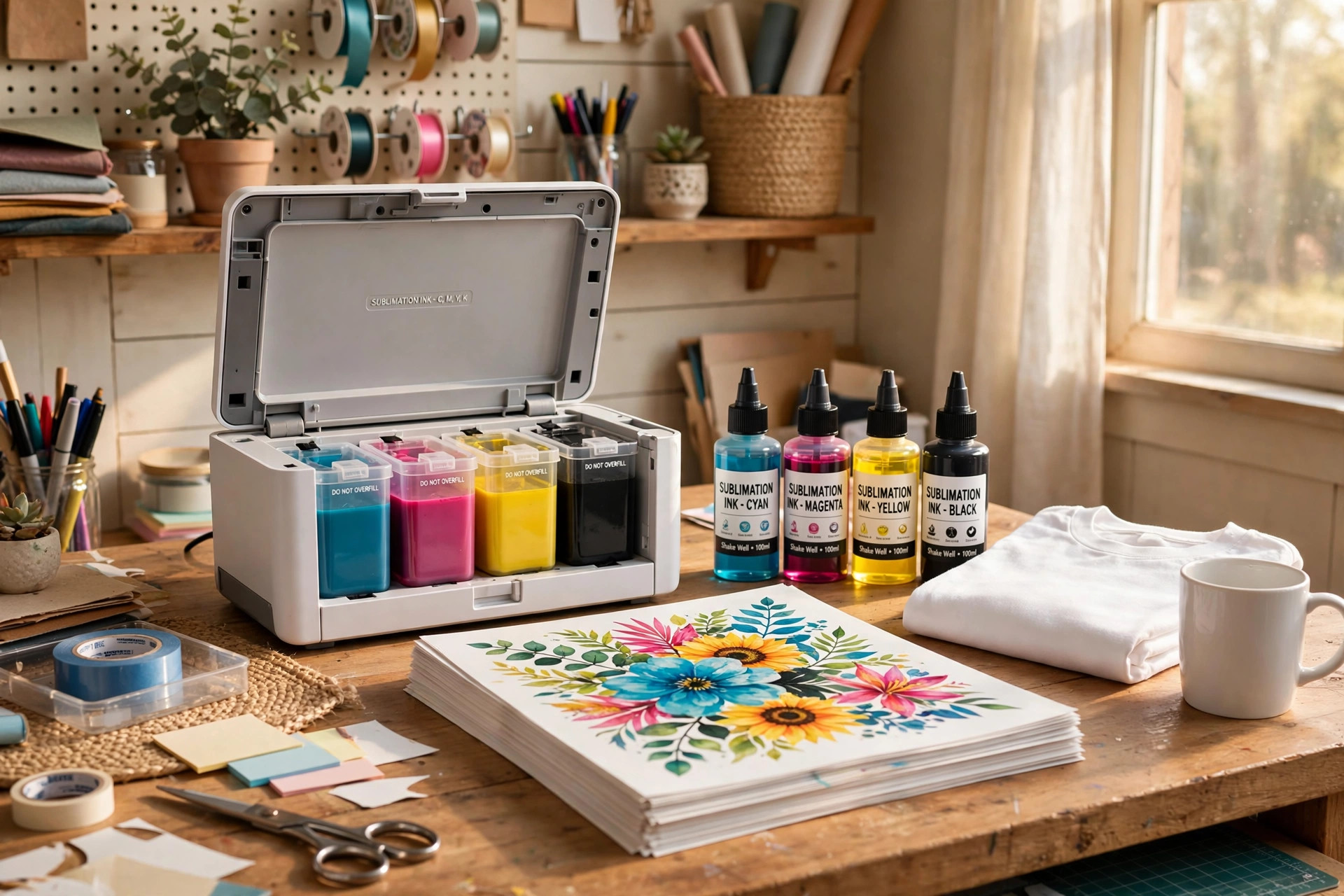

A home craft business can grow fast when the right tools are in place. The best sublimation printer for home craft business owners is the one that prints bright, lasting color without high cost or waste. Sublimation printing turns ink into gas under heat. The gas then bonds with polyester fabric or coated hard goods. The result is a picture that will not peel, crack, or wash out. Shirts, mugs, tumblers, pillow covers, tote bags, and signs all come from this one method. Many crafters sell these goods at fairs, in online shops, and through local stores. A good printer sits at the heart of that work. This guide explains what to buy, what it costs, and how to keep it running well for years.
Why It Matters
A home craft business lives or dies by product quality. Customers want shirts with sharp color. They want mugs where the picture stays bright after many washes. The best sublimation printer for home craft business use gives that quality at a small scale. Large print shops need machines that cost thousands of dollars. A home crafter does not. Small printers made for sublimation now cost less than a good sewing machine. That change has opened the door for thousands of home sellers.
Profit is the other reason this choice matters. A plain white polyester shirt may cost two or three dollars. With a printed design it can sell for twenty or more. A blank mug costs a few dollars and sells for fifteen after printing. The margin stays high because the ink and paper for one item cost well under one dollar. But those numbers only hold when the printer is right for the job. A printer that clogs wastes ink. A printer with a small print area limits the products you can offer. Choice of printer shapes the whole business.
There is also the matter of ease. Vinyl cutting has been the old path for custom shirts. It works, but it needs weeding by hand. Every letter must be picked out with a tool. That is slow work. Sublimation needs no weeding. You print the full design on paper, press it with heat, and the image moves to the shirt. Full color photographs and small text all come out clean. For a one-person shop, that speed is worth a great deal.
What to Look For: Best Sublimation Printer for Home Craft Business
Buying the best sublimation printer for home craft business work starts with four simple points. Print size, ink supply, upkeep, and room on the desk. Each one shapes what you can make and how much work it takes.
Print Size
Most home models print on letter size paper, eight and one half by eleven inches. That is fine for mugs, small tote designs, and baby onesies. But it limits shirt designs. An adult shirt often needs a design ten or twelve inches wide. Wide format printers print on thirteen by nineteen inch paper. They cost more, but they let you print full front designs and large back prints. Think about what you plan to sell first. If shirts are the main product, wide format is the safer pick. If mugs and small gifts lead the way, letter size will do.
Ink Type and Supply
True sublimation ink is made to turn to gas under heat. Some printers come from the factory filled with this ink. Others are standard inkjet printers that crafters convert by adding third party sublimation ink. Converted printers cost less at first. They also carry risk. The maker of the printer will not honor the warranty after a conversion. Clogs are more common. For a business that must ship on time, a purpose built sublimation printer is the calmer choice. Look also at how ink is supplied. Tanks that you refill from bottles hold far more ink than small cartridges. The cost per page drops sharply with tank systems.
Upkeep and Clogging
Sublimation printers must be used on a steady schedule. Ink dries in the print head when the machine sits idle. Most makers say to print something at least once or twice a week. Some models run cleaning cycles on their own. These cycles use ink. A model with strong nozzles and gentle cleaning saves money over time. Ask about this before you buy. Read what owners say about months of steady use, not just first week reviews.
Space and Noise
A home shop is often a spare room or a garage corner. Measure the desk. The printer, a stack of paper, and ink bottles all need room. Wide format models are about two feet wide. You also need a heat press nearby. Some printers are loud during cleaning. If the shop shares a wall with a bedroom, noise may matter. None of these points is hard to solve. They just need a plan before the boxes arrive.
Types and Options
Three paths lead to the best sublimation printer for home craft business use. Each suits a different seller.
Purpose Built Sublimation Printers
These machines ship with sublimation ink and software made for the task. You unbox them, follow the setup, and print. Color profiles are tuned for the ink. Support lines will help when a problem comes with this ink, since that is the intended use. The price sits in the middle range. For most home craft business owners, this is the best balance of ease and cost. You trade a higher sticker price for fewer headaches.
Converted Inkjet Printers
Some inkjet printers with refillable tanks can be converted. The owner fills them with third party sublimation ink instead of the ink in the box. The printer itself costs less than a purpose built model. Many crafters start this way. But the risks are real. The warranty is void. Print heads can clog faster with converted ink. Color may need manual tuning. If you choose this path, buy from a seller who knows sublimation and offers their own support. Do not convert a printer that has ever held regular ink, since the two inks can react.
Wide Format Models
Wide format sublimation printers take thirteen by nineteen inch paper or rolls. They suit sellers who print large shirt designs, all over prints, or big signs. They take more desk space and cost more. Ink tanks are larger, which lowers cost per print. If your catalog centers on adult apparel, this class of printer earns its price quickly. A seller of only mugs and small gifts will not need it.
Wherever you buy, a craft supply store like Michaels carries blanks and paper to feed your new printer. Big box retailers such as The Home Depot stock heat presses and work tables. Electronics sellers like Best Buy and B&H Photo Video list the printers themselves with full specs. Compare prices across these stores before you decide.
Cost and Price
A clear budget keeps a craft business healthy. Here is what the best sublimation printer for home craft business use tends to cost, and what the running costs look like.
Entry level purpose built models sell for about three hundred to six hundred dollars. Mid range wide format models run six hundred to twelve hundred. Converted tank printers cost less for the printer itself, plus fifty to one hundred for third party ink. Sales change these figures often.
Running costs are where the real math lives. A set of sublimation ink bottles costs forty to seventy dollars and prints hundreds of pages. Paper costs about fifteen to thirty cents a sheet. A blank polyester shirt costs two to four dollars. A blank ceramic mug costs three to five dollars. Add about fifty cents of ink and paper per item. A shirt that sells for twenty dollars then carries a material cost near four dollars. That leaves a strong margin even after fees and shipping.
Do not forget the heat press. Sublimation needs heat and pressure to move the image. A flat press for shirts costs one hundred fifty to four hundred dollars. A mug press or tumbler press costs one hundred to three hundred. Buy the press after you choose the printer, so the print size and press size match.
Software costs little or nothing at first. Many printers ship with basic design tools. Free programs can lay out text and images. As the business grows, paid design software may earn its keep. Budget for that later, not on day one.
Care and Upkeep
A sublimation printer is a work tool. Treat it like one and it will pay you back.
Print at least once a week, even if there are no orders. A small test page with all four colors keeps the nozzles wet. If you plan a vacation, run a cleaning cycle the day before you leave and the day you return.
Store sublimation paper in a dry place. Paper that takes in moisture curls and feeds poorly. Keep it in the sealed bag until use. Do not touch the print side with bare hands.
Keep the printer free of dust. A cover helps in a garage shop. Wipe the outside with a dry cloth. Never spray cleaner into the machine. When the printer runs a cleaning cycle, let it finish.
Watch your color over time. If prints look dull, check the heat press first. Time, heat, and pressure all shape the final color. Old paper or low heat gives washed out results. Keep notes on what settings work for each blank.
Blanks matter too. Sublimation bonds best with one hundred percent polyester or poly coated goods. Cotton will not hold the image. A shirt that is half cotton gives a faded, vintage look. Some sellers like that look. Know what your blank is made of before you promise a result to a buyer.
For general craft room setup ideas, JOANN and Blick offer storage and work surface guides. Home project sites like This Old House, Family Handyman, and Bob Vila show how to build sturdy work tables and vent a small shop.
Safety
Heat and ink need respect. A heat press runs at three hundred fifty to four hundred degrees. That heat burns skin in a second. Always close the press with the handle, never with your fingers near the plates. Keep a clear zone around the press. Children and pets should stay out of the shop when the press is hot.
Vent the work area. Sublimation inks are made for this process, but heating any printed material gives off fumes. A small fan near a window or a range hood over the press moves air out. If you print many items a day, a proper vent matters more. The U.S. Environmental Protection Agency publishes guidance on indoor air and home workshops. The U.S. Consumer Product Safety Commission tracks product safety recalls and safe use tips for home equipment.
Store ink bottles upright and out of reach of children. Wipe spills at once with a damp cloth. Wear gloves when you refill tanks. Wash hands after handling ink. These are small steps. They keep a home shop safe for the whole family.
FAQ
Can I use a regular inkjet printer for sublimation?
No. Regular ink stays liquid on the page. Sublimation ink is made to turn to gas under heat and bond with polyester. A regular printer can be converted with third party ink, but it was not built for that ink. Purpose built models give steadier results for a business.
Do I need special paper?
Yes. Sublimation paper holds the ink on its coated side and lets go of it under heat. Plain copy paper gives dull, uneven prints. Buy paper made for sublimation and match it to your printer size.
Will sublimation work on cotton shirts?
Not well. The image needs polyester to bond. On cotton the print washes out fast. Use one hundred percent polyester shirts for bright, lasting color. Blends give a soft faded look that some buyers like.
How much room does a sublimation setup need?
A small desk or sturdy table holds the printer, paper, and ink. The heat press needs its own clear space of about three by three feet. Allow room to lay shirts flat and to move safely around a hot press.
What does one printed shirt really cost me?
Roughly four to five dollars in materials. The blank shirt is the biggest cost at two to four dollars. Ink and paper add under one dollar. Your time, fees, and shipping sit on top of that.
How is this different from a heat press for vinyl crafts?
That link points to a different craft, but the question is fair. Vinyl work cuts shapes from colored sheets and presses them on. Sublimation prints full color art straight into the item. If you already own a press for vinyl, it will also work for sublimation in most cases. Check that it reaches the right heat.
A Final Word
The best sublimation printer for home craft business use is not the most costly one. It is the one that fits your products, your space, and your schedule. Pick the print size your designs need. Choose purpose built ink when steady orders matter. Budget for the press, the paper, and the blanks. Keep the machine printing weekly and the shop aired and safe. Then the business side can take over: good photos, fair prices, and designs people love. Many home crafters start with a single printer on a spare table. With care, that small setup grows into real income.
Related crafts can round out a shop. Sellers who enjoy fabric work may like these beginner sewing patterns for dresses, and makers of home goods often add items like wood burning pen tip sets for detailed craft work.
References
B&H Photo Video. (n.d.). Photography and printing equipment. https://www.bhphotovideo.com Best Buy. (n.d.). Consumer electronics retailer. https://www.bestbuy.com Blick Art Materials. (n.d.). Art and craft supplies. https://www.dickblick.com Bob Vila. (n.d.). Home improvement advice. https://www.bobvila.com Family Handyman. (n.d.). DIY home repair and maintenance. https://www.familyhandyman.com JOANN. (n.d.). Fabric and craft supplies. https://www.joann.com Michaels. (n.d.). Arts and crafts supplies. https://www.michaels.com The Home Depot. (n.d.). Home improvement products. https://www.homedepot.com This Old House. (n.d.). Home renovation guidance. https://www.thisoldhouse.com U.S. Consumer Product Safety Commission. (n.d.). Product safety information. https://www.cpsc.gov U.S. Environmental Protection Agency. (n.d.). Protecting human health and the environment. https://www.epa.gov
Was this guide helpful?

About James Carter
The My Garden US editorial team writes practical, in-depth home and garden guides for American homeowners — tested advice, no fluff.
You May Also Like
Cross Stitch Kit for Beginners Adults Patterns: A Complete Starter Guide
March 15, 2026 0 views
The Best Watercolor Brush Pens for Lettering Art
February 12, 2026 0 views
DIY Plant Hanger Kit Macrame for Beginners: A Complete Guide
June 12, 2026 0 views