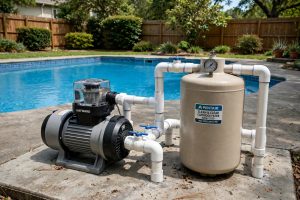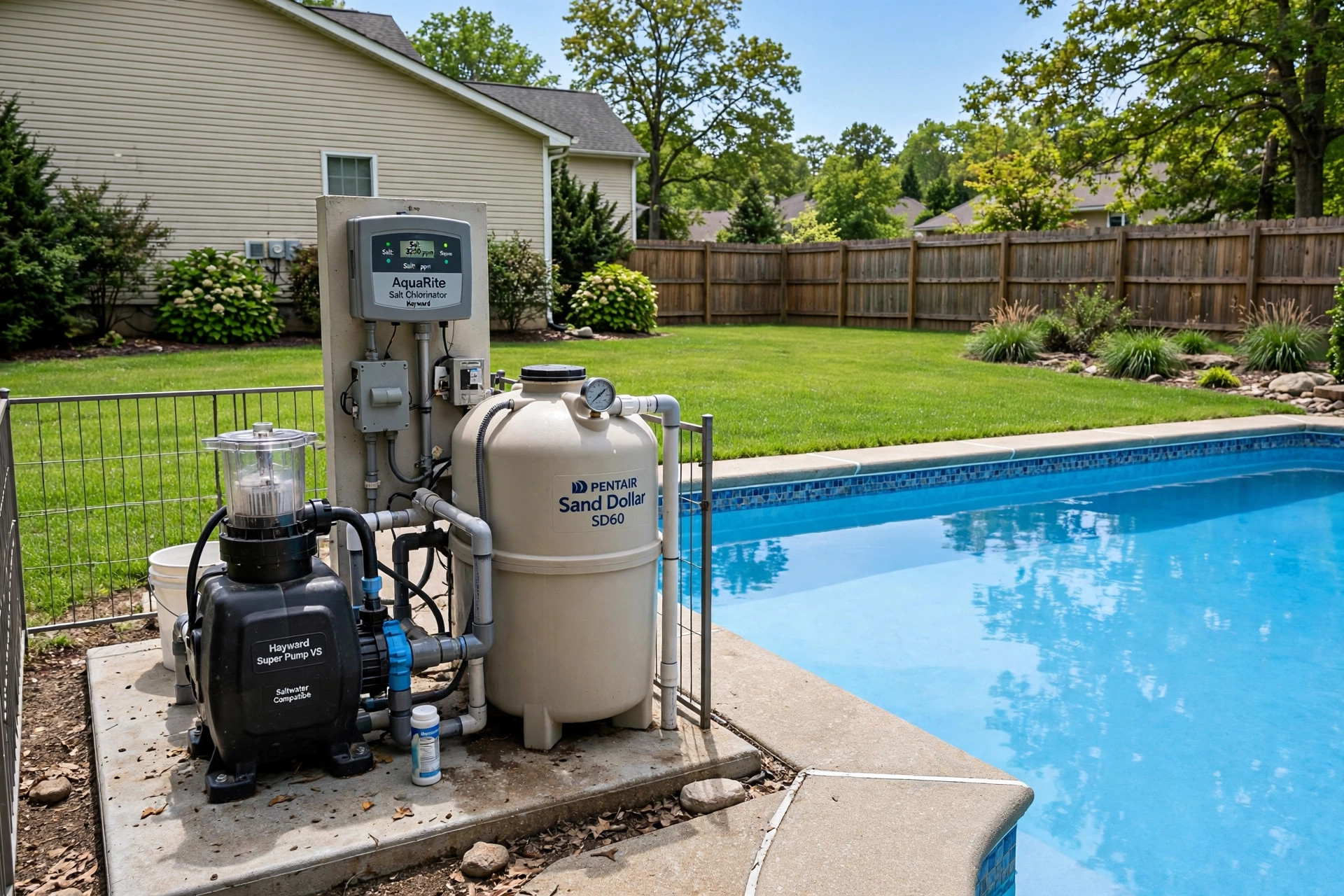

A salt water pool feels soft on the skin and gentle on the eyes. The salt water pool pump sizing guide in this article will help you find a pump that matches your pool. Many pool owners buy a pump that is too big or too small. A pump that is too big wastes money on power. A pump that is too small leaves the water cloudy and dull. The size of the pump must match the size of the pool and the needs of the salt system. This guide walks through the steps in plain language. You will learn how to measure your pool, how to figure out the flow rate, and how to choose a pump that works well with a salt water chlorine generator. By the end, you will know exactly what size pump your pool needs.
Why the Right Pump Size Matters
Water in a pool must move through the filter to stay clean. This movement is called the turnover rate. Most health rules say the full pool volume should pass through the filter once every six to eight hours. The pump does this work. In a salt water pool, the pump does one more job. It pushes water through the salt cell, where salt turns into chlorine. If the flow is too low, the salt cell will not make enough chlorine. If the flow is too high, the cell wears out faster and the power bill climbs.
A pump that is too small runs all day and still cannot clear the water. Dirt stays. Algae grows. The pool looks tired. A pump that is too big moves more water than the filter can handle. Filters have a top speed. When the pump pushes past that speed, the filter cleans less well. Small dirt passes through. Parts wear out early. Both mistakes cost money. The right size gives clean water, a steady chlorine supply, and a fair power bill.
Many home owners face this choice when they buy a new pump for an inground pool. The steps in this guide fit pools of all shapes and sizes.
How to Measure Your Pool: Salt Water Pool Pump Sizing Guide
Before you pick a pump, you need the volume of your pool in gallons. This is the first step in every salt water pool pump sizing guide.
Rectangular and Square Pools
Measure the length and the width in feet. Measure the depth in feet. For the depth, use the average of the shallow end and the deep end. Multiply length times width times depth. Multiply the result by 7.5. The answer is the gallons.
A pool that is 16 feet wide, 32 feet long, and 5 feet deep on average holds about 19,200 gallons. The math is 16 times 32 times 5 times 7.5.
Round Pools
Measure the diameter in feet. Divide by two to get the radius. Multiply the radius by itself, then by 3.14, then by the average depth. Multiply by 7.5. A round pool 24 feet across and 4 feet deep holds about 13,500 gallons.
Kidney and Freeform Pools
Odd shapes are harder to measure. The best choice is to use the builder’s plan, which often lists the gallons. If you do not have the plan, ask the pool store. They can test the water or use their records. A close guess is fine, but a wrong guess of five thousand gallons can change the pump size you need.
Write the gallon number down. You will use it in the next step.
Flow Rate: The Heart of Pump Sizing
Flow rate is the amount of water a pump moves each minute. It is written in gallons per minute, or GPM. To find the flow rate your pool needs, divide the pool volume by the hours for one full turnover, then divide by 60.
A 19,200-gallon pool with an eight-hour turnover needs 40 GPM. The math is 19,200 divided by 8 divided by 60. Most pool experts say salt pools do best with a six to eight-hour turnover. Warmer pools need the faster end of that range. A pool in the sun in July needs more flow than the same pool in May.
Now look at pump charts. Every pump has a chart that shows flow rate at different head pressures. Head pressure is the push back from pipes, the filter, the heater, and the salt cell. A pool with long pipes and many turns has high head. Most home pools run between 40 and 70 feet of head. Pick a pump that gives your needed GPM at your pool’s head. The pump maker or the pool store can help you read the chart. Charts from makers such as the brands reviewed at Leslie’s Pool Supplies show real numbers for common models.
Remember that the salt cell adds head pressure. A salt cell sits in the pipe after the filter. Water must push through it. When you size the pump, allow for this extra push back. A small margin, about five to ten feet of head, covers most salt cells.
Types of Pool Pumps
Three kinds of pumps sell today. Each has a place in a salt water pool.
Single-Speed Pumps
A single-speed pump runs at one speed only. It is the cheapest to buy and the most costly to run. It moves water fast and loud. Some areas now limit or ban new single-speed pumps because they waste power. They still work, but they are rarely the smart buy.
Two-Speed Pumps
A two-speed pump has a high speed for cleaning and a low speed for daily filtering. The low speed uses far less power. You can run it for more hours and still save money. Many salt pool owners like the low speed for the long daily run and the high speed for vacuuming. This is a sound middle choice.
Variable-Speed Pumps
A variable-speed pump lets you set the speed to any level. This is the best match for a salt water pool. You set a low speed that still makes enough flow for the salt cell. The pump runs long and quiet. It uses a small share of the power a single-speed pump uses. The buy price is higher, but the power savings often pay it back in one or two seasons. Variable-speed models from lines carried by Pool Warehouse give many choices in each size range.
Most salt water pool pump sizing guides written today point to variable-speed pumps as the first pick. They suit the steady, gentle flow that salt cells prefer.
How to Choose the Right Model
With your needed flow rate in hand, follow these steps.
First, list pumps that reach your GPM at your pool’s head. Cross off any that cannot.
Second, pick the pump type. Choose variable speed when the budget allows. Choose two speed as the next best. Skip single speed unless rules allow it and the pool is small.
Third, check the pump size against the filter size. The filter maker prints a top flow rate on the tank. The pump must not push more water than the filter allows at full speed. If it does, pick a larger filter or a smaller pump. Cartridge filters need clean cartridges to keep flow up, so read our notes on the best pool filter cleaner for cartridges before you decide.
Fourth, check the salt system. The salt chlorine generator has a lowest flow number. The pump must beat that number at the speed you plan to run most hours. This is the step many buyers skip. A pump that cannot feed the salt cell is useless in a salt pool.
Fifth, think about pipes and fittings. A pump rated for 1.5 horsepower on thin pipes may give less flow than a 1 horsepower pump on wide pipes. Pipe size, length, and turns all change the result. If your pipes are narrow, you may need a stronger pump to reach the same GPM. A pool pro can measure your head with a gauge.
Sixth, look at power use and noise. Two pumps with the same flow can use very different amounts of power. The label shows watts or amps. Quieter pumps make pool time more pleasant. Guides at Swim University explain how to read these labels in plain terms.
Cost and Price Ranges
Pump prices change by type and size. A single-speed pump may cost a few hundred dollars. A two-speed pump costs more. A variable-speed pump often costs between seven hundred and fifteen hundred dollars for a home pool. Larger pools need larger models, which cost more.
The buy price is only half the cost. Power is the other half. A single-speed 1.5 horsepower pump can use about 2,000 watts. A variable-speed pump at low speed can use about 200 to 400 watts. Run the numbers for your power rate. In many homes, the variable-speed pump saves two to four hundred dollars a year. Over five years, that is more than the buy price. Cost trackers at The Home Depot list current prices for popular models.
If you are new to salt pools, the full project may cost more than the pump alone. Read the salt water pool conversion cost guide to see the full picture before you buy.
Care and Upkeep of Your Pump
A well-sized pump lasts ten to twelve years with simple care. Check the pump basket each week. A full basket cuts flow and strains the motor. Empty it with your hand or a small scoop.
Keep the lid seal clean. Hair and grit on the seal let air in. Air in the pump makes it loud and weak. A thin coat of pool lube on the seal each season helps.
Watch the pressure gauge on the filter. When the pressure climbs eight to ten points above the clean number, clean or backwash the filter. A dirty filter raises head and cuts flow to the salt cell.
Listen to the motor. A new hum or grind means the bearings may be worn. Bearings are cheap parts, but a dead motor is not. Fix small sounds early.
In cold states, drain the pump before winter. Water left inside can crack the housing when it freezes. Winter tips from The Spruce cover the full closing routine.
Safety Around the Pump
Pool pumps run on strong power. Always switch off the breaker before you open the pump or touch the wires. Water and power do not mix. Keep the pump area dry and clear of leaves.
Do not run the pump dry. A pump with no water heats fast and can melt its seal. Fill the pump basket with water before you start it after cleaning.
Keep small children away from the pump and the salt cell. Lock the equipment gate if you have one. The Consumer Product Safety Commission gives clear rules for pool equipment safety.
FAQ
What size pump do I need for a 20,000-gallon salt water pool? For an eight-hour turnover, you need about 42 GPM. A variable-speed pump in the 1 to 1.5 horsepower range often meets this at normal head. Check the pump chart for your exact head before you buy.
Can a pump be too big for a salt water pool? Yes. A pump that is too big wastes power and can push past the filter’s top flow rate. It can also wear the salt cell faster. Match the pump to the flow your pool needs, not to the largest model on the shelf.
Does a salt water pool need a special pump? The pump itself does not need to be special. The seals and parts must stand up to salt. Most modern pumps do. The key need is steady flow for the salt cell. A variable-speed pump gives this best.
How many hours a day should the pump run? Most salt pools need eight to twelve hours of run time in summer. The goal is one full turnover each day at minimum, plus enough time for the salt cell to make chlorine. Run longer in hot weather.
What flow rate does a salt chlorine generator need? Each model lists a lowest flow, often between 15 and 30 GPM. Your pump must beat that number at the speed you use most. Check the generator manual for the exact figure.
Should I replace my filter when I replace my pump? Not always. But the pump and filter must match. If the new pump moves more water than the old filter allows, upgrade the filter too. A matched set works better and lasts longer.
A Short Final Word
The right pump size comes from simple math and honest checks. Measure the pool. Find the flow rate. Pick a pump that meets it at your head. Feed the salt cell. Match the filter. When these pieces line up, the water stays clear and the bills stay fair. A little care each week keeps the pump strong for years. For more on pump brands and test results, the pool experts at Hot Spring and Bullfrog Spas publish useful background on water movement in home pools.
References
Bullfrog Spas. (n.d.). Hot tubs and spas. https://www.bullfrogspas.com Hot Spring Spas. (n.d.). Hot tubs and spas. https://www.hotspring.com Leslie’s Pool Supplies. (n.d.). Pool supplies and equipment. https://www.lesliespool.com Pool Warehouse. (n.d.). Pool equipment and supplies. https://www.poolwarehouse.com Swim University. (n.d.). Pool and hot tub care guides. https://www.swimuniversity.com The Home Depot. (n.d.). Home improvement products. https://www.homedepot.com The Spruce. (n.d.). Home and garden advice. https://www.thespruce.com U.S. Consumer Product Safety Commission. (n.d.). Product safety information. https://www.cpsc.gov
Was this guide helpful?

About Robert Taylor
The My Garden US editorial team writes practical, in-depth home and garden guides for American homeowners — tested advice, no fluff.
You May Also Like
Above Ground Pool Liner Replacement Cost: A Plain Guide
September 10, 2026 0 views
How to Maintain Hot Tub Water Chemistry the Simple, Safe Way
April 24, 2026 0 views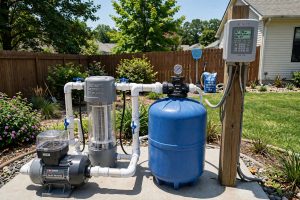
How to Install a Salt Water Chlorinator: A Step by Step Guide
April 7, 2026 0 views