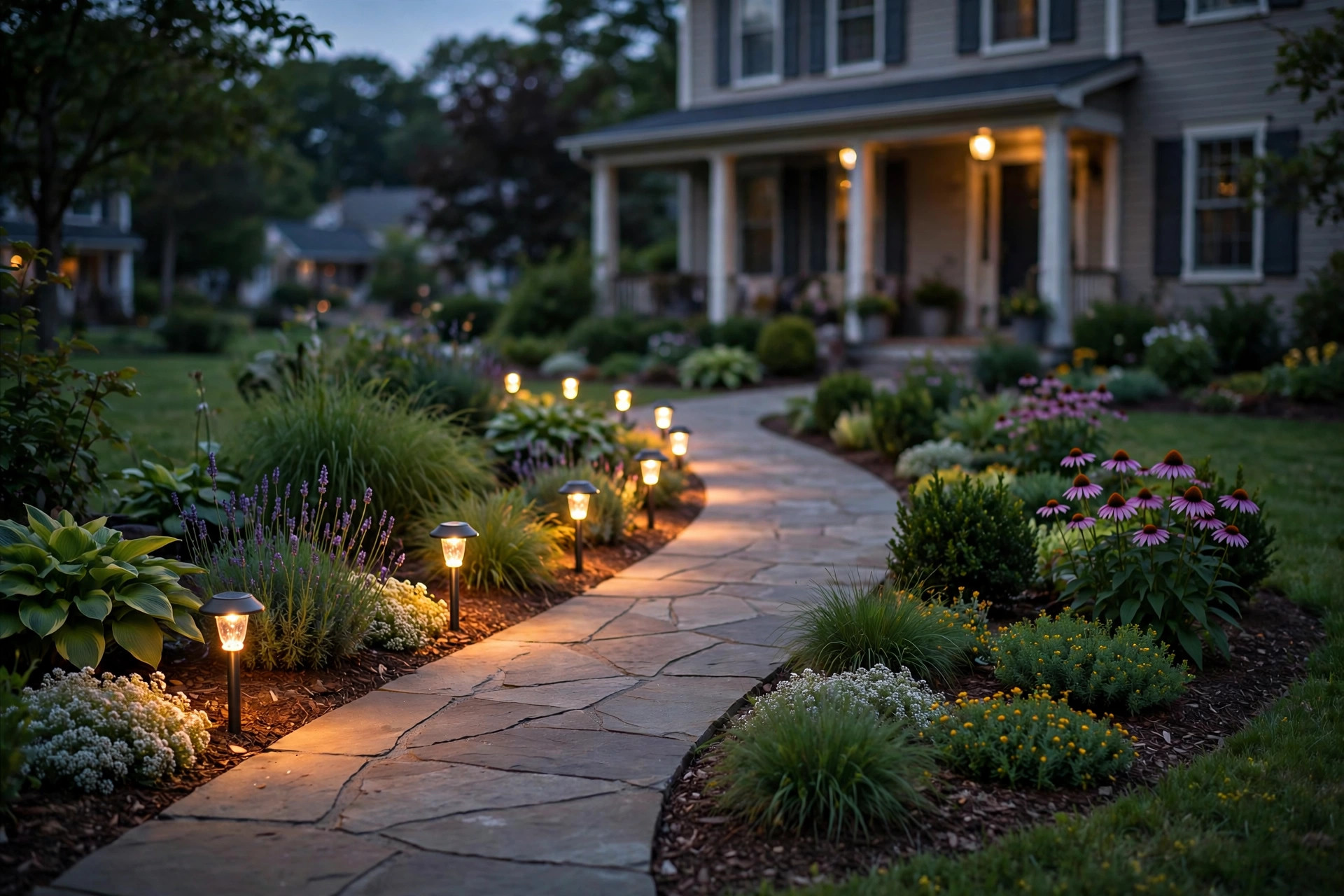

A dark walkway is a problem no home should keep. Every year, people trip on garden paths they could not see. Guests miss the front step. A quiet yard feels less safe after sunset. The best solar path lights reviews 2026 USA readers are looking for all point to the same simple fix: small lights that charge by day and glow by night, with no wires and no power bill.
This guide walks through what matters, what to avoid, and what real American homeowners learned from recent reviews. The aim is plain talk. No sales pitch. Just what helps you choose well.
Why Walkway Lights Matter
A lit path is first of all a safety tool. The Consumer Product Safety Commission notes that falls on steps and walkways send many people to the emergency room each year. A small light at ankle height marks each edge. It shows the rise of a step. It shows a crack in the concrete. When you read reviews of solar security cameras, you see the same idea: light and visibility keep people safe.
Light also shapes how a home feels. A walkway lined with warm lights tells a guest they are welcome. It shows the garden you worked on. Many homeowners say the front of the house looked plain until the path lights went in. After that, it looked finished.
There is a money side too. Solar lights run on the sun. Once you buy them, the running cost is close to zero. Reviewers on sites like CNET often compare solar path lights with wired low-voltage systems. Wired systems cost more to install and draw power every night. Solar lights need no electrician and no trench through the lawn.
What to Look for in Solar Path Lights: Best Solar Path Lights Reviews 2026 Usa
Brightness
Brightness is measured in lumens. For a garden path, most homes do fine with ten to thirty lumens per light. That is enough to mark the path edge and show steps. Very bright lights, above fifty lumens, can glare. Glare blinds the eye and makes the ground between lights look darker. Reviews often favor a soft warm glow over harsh white light for walkways.
Color matters too. Warm white, around two thousand seven hundred to three thousand kelvin, feels like an old porch bulb. Cool white looks bluer and more modern. Most 2026 reviews lean toward warm white for homes and cool white for driveways. Pick one color for the whole path. Mixed colors look sloppy.
Battery and Charge Time
A solar path light has three parts: a panel, a battery, and a bulb. By day the panel charges the battery. By night the battery feeds the bulb. In reviews, the battery is where cheap lights fail. Look for a light that promises at least eight hours of glow on a full day of sun. Some better models store enough for two cloudy nights in a row.
Most modern lights use rechargeable lithium batteries. They last longer than older nickel types. They also keep their charge in cold weather better. A good battery may last two to four years before it weakens. When it weakens, the light grows dim or quits early. Some models let you swap the battery. That feature is worth money because it doubles the life of the light.
Charging needs full sun. The panel must sit where the sun hits it most of the day. A light under a tree will charge poorly. When placing lights, walk the path at noon and note which spots stay in shade. Avoid those spots or trim the bush above them.
Build Quality
Outdoor lights live a hard life. Rain, heat, frost, and mowing all beat on them. Reviews from 2026 keep coming back to housing material. Stainless steel and thick plastic last years. Thin plastic turns brittle and cracks in one winter.
Look at the stake too. The stake is the part that goes into the ground. Cheap stakes snap when you push them into hard soil. Sturdy stakes are thick and ribbed. Some sets include a small tool to pre-dig the hole. That small detail tells you the maker thought about real yards.
Water sealing matters. Good lights carry an IP44 rating or better. That mark means the light can stand rain and splashes. It does not mean the light can sit in a puddle. Set lights a few inches above any spot where water pools.
The Main Types of Solar Path Lights
Stake Lights
Stake lights are the classic kind. A short post, a head with the panel and bulb, and a spike you push into the soil. They line both sides of a path and mark its edges. Most 2026 sets sell in packs of four, six, or eight. Stake lights are cheap, easy to move, and simple to install. No tools beyond a hand to push them in.
The weak point is the spike. In dry clay or rocky soil it can bend or break. Soften the ground with water first, or start the hole with a screwdriver. Many reviewers say this one habit saved their whole set.
Bollard Lights
Bollard lights are taller and heavier. They stand about two feet high and cast a wider pool of light. They suit driveways and long borders. Because they are bigger, their panels and batteries are bigger too. They often glow longer on cloudy days.
Bollards cost more per light. They also resist wind and mower bumps better. If your yard has kids or dogs running through it, bollards stay standing where stake lights get knocked flat.
Spot and Flood Styles
Some solar lights are not meant for paths at all but get used there anyway. Spot lights sit on the ground and throw a beam up at a tree or wall. Smart floodlights and motion-sensor models work the same way for larger areas. For paths, use spots sparingly. Aim one at a house number or a mailbox so guests can read it at night. Too many spots turn a calm walkway into a bright runway.
Cost and Price Ranges
Reviews from 2026 show three clear price bands. Budget sets cost about two to four dollars per light. These work for a season or two. They suit renters and people testing the idea. Expect dimmer bulbs and shorter battery life.
Mid-range lights cost about six to twelve dollars per light. This is where most buyers land. The housings are metal or thick plastic. The batteries are lithium. Light output is steady and the finish looks decent in daylight too.
Premium lights cost fifteen dollars per light and up. They bring glass lenses, brighter panels, replaceable batteries, and longer warranties. Some carry the Energy Star testing standards that review labs like Consumer Reports apply to outdoor gear. Premium sets make sense along a long driveway or around a new home where you want years without thought.
Watch the total math. A path of thirty feet needs about eight to ten lights. Multiply the per-light price. Then compare that total with a wired low-voltage kit plus an electrician. Solar almost always wins on upfront cost for small and medium paths.
Care and Upkeep
Solar lights ask for little, but they do ask. Wipe the panel once a month with a damp cloth. Dust and pollen cut the charge fast. A dirty panel on a bright day can still leave the battery half full. Reviewers who do this one chore report much steadier light.
Check the stakes after heavy rain. Soft soil can tilt them. Straighten them and press the soil back down. At the start of spring, look at each battery. If a light is dim after a full sunny day, the battery may be done. Swap it if the model allows. If not, replace the light.
In winter, expect less glow. Short days and low sun mean less charge. This is normal. Do not toss the lights in December. Most pick back up in March. If you get deep snow, brush snow off the panels so they catch what sun there is.
Trim plants near the lights. A bush that was small in spring can shade a panel by fall. A quick trim each season keeps the charge strong.
Safety Notes
Solar path lights are low voltage and cool to the touch. That makes them safer than wired line-voltage lights, which is why many families prefer them. Still, treat them with sense.
Keep lights out of the way of mowers and trimmers. Set them at least six inches back from the lawn edge. A mower can fling a broken light, and a trimmer line will chew a plastic stake in seconds.
Do not use damaged lights. A cracked lens can let water in and short the circuit. A broken housing can leave sharp edges at foot level. Replace the light rather than patch it.
Think about wildlife too. Very bright cool-white lights can disturb nesting birds and confuse night insects. Warm, low lights along the path give you safety without turning the yard into daylight. Reviewers who care about gardens often mention this balance.
For whole-home safety planning, outdoor cameras and lighting often get reviewed together, and motion-sensor flood lights pair well with path lights to cover both walking safety and yard security.
Frequently Asked Questions
How many solar path lights do I need for a walkway? Space them six to eight feet apart on each side, staggered. A twenty-foot path needs about six lights. A forty-foot path needs about ten to twelve. Staggering the sides avoids a landing-strip look and spreads the light evenly.
Do solar path lights work on cloudy days? Yes, but weaker. Panels still collect diffuse light through clouds. Expect shorter glow times, maybe four to six hours instead of ten. Good batteries and bigger panels handle cloudy stretches better. Two dark days in a row may leave them dim on the third night.
How long do solar path lights last? The housing often lasts three to five years. The battery usually lasts two to four years. Replaceable batteries extend the life a lot. Cheap plastic sets may only survive one or two winters in cold states.
Can I leave solar path lights out all winter? In most of the USA, yes. They are built for rain and cold. Light output drops in winter because days are short. Bring them in only if your area gets ice storms that could crack them, or if you plow snow over the beds where they sit.
Why did my solar light stop working after one season? The usual causes are a dead battery, a dirty panel, or deep shade from grown plants. Clean the panel, move the light to full sun for two days, and see if it recovers. If not, try a fresh rechargeable battery of the same type. Tech reviewers at PCMag and The Verge note that battery wear is the top complaint in long-term tests.
Are solar path lights bright enough for security? They mark paths and steps, which helps safety. They are not floodlights. For real security lighting, pair them with brighter motion-sensor lights or a camera system. Brands like SimpliSafe and ADT design their outdoor gear to work alongside low-level path lighting, and the Google Store smart-home line follows the same idea.
Final Word
The best solar path lights reviews 2026 USA buyers trust all say the same quiet thing: buy for your yard, not for the box. Note where the sun falls. Count the lights you need. Pick warm light, strong stakes, and a battery you can swap. Then spend one afternoon placing them and one minute a month wiping the panels.
Do that, and the path to your door stays clear every night of the year. No wires. No bills. Just a row of small lights doing their job, season after season. Review sources like CNET continue to rate solar path lighting as one of the simplest upgrades a homeowner can make, and the safety data from the CPSC backs up why it matters.
References
ADT. (n.d.). Home security and automation. https://www.adt.com CNET. (n.d.). Technology news and reviews. https://www.cnet.com Consumer Reports. (n.d.). Product reviews and ratings. https://www.consumerreports.org Google Store. (n.d.). Smart home devices. https://store.google.com PCMag. (n.d.). Technology product reviews. https://www.pcmag.com Ring. (n.d.). Smart home security devices. https://www.ring.com SimpliSafe. (n.d.). Home security systems. https://www.simplisafe.com The Verge. (n.d.). Technology news and reviews. https://www.theverge.com U.S. Consumer Product Safety Commission. (n.d.). Product safety information. https://www.cpsc.gov
Was this guide helpful?

About Robert Taylor
The My Garden US editorial team writes practical, in-depth home and garden guides for American homeowners — tested advice, no fluff.
You May Also Like
The Best Smart Doorbell for Hearing Impaired USA Homes
September 6, 2026 0 views
SmartThings vs Hubitat Comparison 2026 USA: Which Smart Home Hub Wins
May 31, 2026 0 views
Best Driveway Motion Sensor Alarm Reviews USA: A Plain Guide
June 21, 2026 0 views