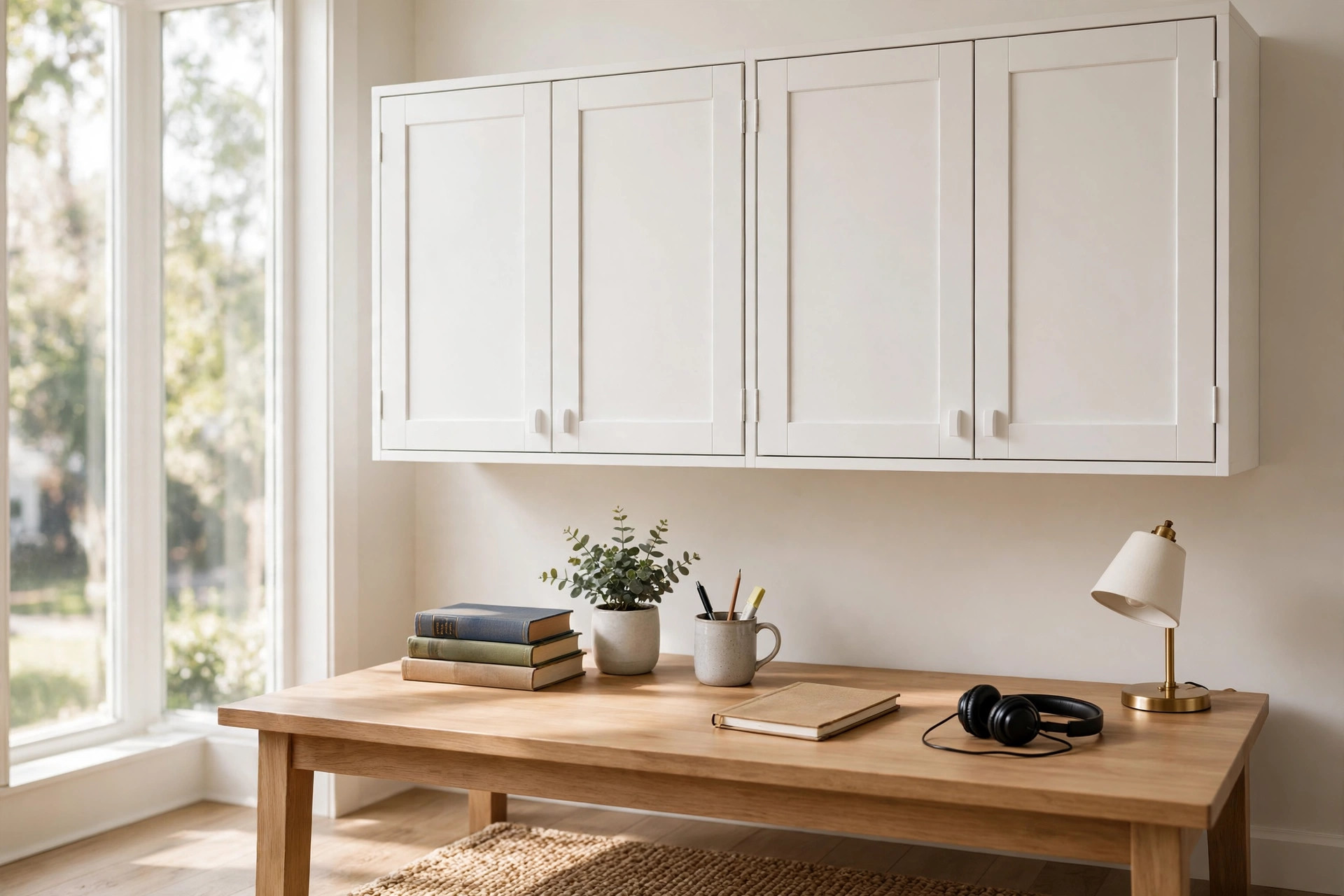

More people now work from home than ever before. Spare bedrooms, corners of living rooms, and garage alcoves have become workplaces. These rooms were never planned for office use. Space is tight, and clutter builds up fast. That is why home office wall mounted storage cabinets have become so popular. They lift storage off the floor and onto the wall, where space often goes unused. This guide explains what these cabinets are, why they matter, and how to choose, mount, and care for them.
Why Wall-Mounted Storage Matters in a Home Office
A home office has two enemies: small rooms and large piles of paper. Filing cabinets sit on the floor and eat space. Desk drawers fill up within a week. Shelves collect dust and look messy. Home office wall mounted storage cabinets solve all three problems at once. They hang on the wall, so the floor stays clear. They have doors, so the contents stay hidden and clean. They sit at eye level, so what you need is always within reach.
A clear floor makes a small room feel larger. It also makes cleaning easier. A vacuum cleaner or broom passes under a wall-hung cabinet with no trouble. In a room that doubles as a bedroom or living room, this matters a great deal. The office can look tidy in seconds when guests arrive.
There is also a health reason. Paper piles and open shelves collect dust, which bothers people with allergies. Closed wall cabinets keep dust out. Files, chargers, and office supplies stay clean and ready to use.
Work habits have changed, too. Many workers now use a laptop instead of a desktop tower. The desk holds less, but the need for storage has not gone away. Printers, tax records, reference books, and spare cables still need a home. A pair of wall cabinets above the desk can hold all of it without shrinking the room.
What to Look For When You Choose: Home Office Wall Mounted Storage Cabinets
Buying home office wall mounted storage cabinets is not hard, but a few details deserve attention before you spend money.
Size and depth. Measure the wall above your desk. Most people leave 18 to 24 inches of clear space between the desktop and the bottom of the cabinet, so the monitor and your head fit underneath. Depth matters as well. A cabinet that is 12 to 15 inches deep holds letter-size files and most office supplies. Anything deeper may feel like it hangs over your head while you work.
Weight rating. Every cabinet has a limit on how much it can hold. The rating should be printed on the box or the maker page. A cabinet rated for 50 pounds or more per shelf will serve most home offices well. Remember that books are heavy. Ten thick books can weigh 40 pounds. Check the rating before you fill every shelf with binders.
Wall mounting hardware. Good cabinets come with a mounting rail or heavy brackets. The rail spreads the weight across several studs in the wall. Cheap hangers that grip only drywall are not safe for loaded cabinets. If the box lists only drywall anchors, buy a proper rail or sturdy L-brackets separately.
Door type. Lift-up doors swing open toward you and stay out of the way. Hinged side doors are simple and familiar. Sliding doors work well in very tight spaces. Soft-close hinges keep doors from slamming, which is worth the small extra cost in a shared house.
Material. Cabinets made of plywood or medium-density fiberboard with a tough laminate finish last for years. Solid wood is heavier and more costly but looks fine and can be repaired. Avoid thin particleboard for large cabinets, since it sags under weight over time.
Finish and color. Light colors like white, birch, and light gray reflect daylight and make a small room feel open. Dark finishes look rich but can make a narrow office feel closed in. Choose a finish that matches or complements your desk.
Adjustable shelves. Shelves that can be moved up or down let you fit tall items like binders and short items like paper trays in the same cabinet. Fixed shelves are cheaper but less flexible.
For inspiration on how these cabinets fit into a full room plan, browse the office furniture collections at IKEA, which show many wall-hung units in real room layouts. Wayfair also carries a wide range of wall cabinets in different sizes and finishes, with buyer reviews that help you judge quality before you order.
Types and Options
Not every wall cabinet is built the same way. The four types below cover most home offices.
Closed Wall Cabinets
These are the classic box cabinets with one or two doors. They hide everything inside. They are the best choice for people who want a clean, calm look. A pair of closed cabinets, each 30 inches wide, can replace a whole filing cabinet while using no floor space at all.
Floating Shelves With Cabinet Doors
These units look like floating shelves but have short doors across the front. They are shallower than full cabinets, often 8 to 10 inches deep. They suit small supplies: pens, chargers, sticky notes, and small notebooks. They are lighter, so they are easier to mount and safer on weak walls.
Overhead Hutches
A hutch is a cabinet unit that sits on the desk but is also fixed to the wall. Some models skip the desk base and hang entirely from the wall. Hutches often have open cubbies on top and closed doors below, which gives you both display space and hidden storage. They work best when the desk is wide enough to match, usually 48 inches or more.
Corner Wall Cabinets
Corner cabinets use the L-shaped space where two walls meet. That corner is often wasted. A corner unit can hold a printer, a scanner, or a stack of files that would otherwise sit on the desk. Because corners involve two walls, mounting is sturdy when both sides are fixed into studs.
If you want to see how wall cabinets pair with desks and seating, the room planners at Herman Miller and Steelcase show complete home workspaces with wall storage built into the design. For standing-desk setups, UPLIFT Desk lists wall cabinets sized to sit above their adjustable desks.
When space above the desk is shared with a monitor mounted on the wall, pair your cabinets with a tidy cable plan. A home office cable raceway for wall mounted tv can hide cords along the same wall, keeping the whole setup neat. If you keep sensitive papers in the cabinets, consider a home office storage cabinet with locking doors instead of an open unit.
Cost and Price
Prices vary widely, and you do not need the most costly unit to get good service.
A small single wall cabinet from a big-box store often costs between 40 and 120 dollars. These units are usually made of laminate-covered board and come with basic mounting hardware. They are fine for light storage such as stationery and small electronics.
Mid-range cabinets cost between 120 and 300 dollars each. At this price you get better hinges, adjustable shelves, and stronger mounting rails. This is the sweet spot for most home offices. A well-chosen mid-range pair can last a decade or more.
Premium units cost 300 dollars and up, sometimes much more. Solid wood fronts, soft-close hardware, and custom sizes push the price up. These make sense when the office is a permanent part of a finished home and looks matter a great deal.
Do not forget the hidden costs. Mounting hardware, wall anchors, a stud finder, and a level may add 20 to 50 dollars if you do not already own them. If you hire a handyman to mount the cabinets, add 75 to 150 dollars for labor, depending on your area.
To compare real prices and read buyer feedback, the buying guides at The Spruce regularly round up wall storage options by price band. The editors at Wirecutter test office gear for durability and value, which helps you avoid units that sag or fail after a year. For checking how a cabinet brand rates on build quality, PCMag product reviews sometimes cover workspace furniture alongside tech gear.
Seasonal sales in January and back-to-school time often bring office furniture prices down.
Care and Upkeep
Wall cabinets need little care, but a small routine keeps them looking new and working well.
Dust the tops and door fronts once a month with a dry cloth. Laminate finishes clean up with a damp cloth and mild soap. Avoid strong cleaners, which can dull the finish over time. Wipe up spills at once, especially near coffee or tea, since standing liquid can seep into seams.
Check the mounting screws twice a year. Walls shift slightly with the seasons, and screws can loosen. Tighten anything that has worked loose. If a door starts to sag or rub, most hinges have a small adjustment screw that brings the door back into line in a minute.
Keep the load balanced. Do not stack all the heavy books on one side of a shelf. Spread weight evenly so the cabinet does not twist on its mounts. Once a year, take everything out, wipe the shelves, and put items back in order. This quick reset also reminds you what you own and what can be thrown away.
If a cabinet is mounted in a damp room, such as a basement office, watch for swelling at the bottom edge. Good ventilation and a dehumidifier will protect the board. Solid wood cabinets can be touched up with furniture wax or polish once a year.
Safety
A loaded wall cabinet can weigh more than a grown person. Mount it well or do not mount it at all.
Always fix cabinets into wall studs, not just drywall. A stud finder costs little and takes the guesswork out of the job. If your wall has metal studs, use fasteners made for metal. If the wall is concrete or brick, use masonry anchors and a proper drill.
Follow the maker’s weight rating and leave a margin. If the cabinet is rated for 60 pounds, keep the load under 50. Children like to climb, so in a home with small children, mount cabinets high enough to be out of reach and consider a locking door for heavy items.
Keep heat in mind. Do not mount a cabinet directly above a radiator or a space heater. Heat dries out board and can warp doors. Leave at least a foot of clear air space around heat sources.
When two people do the job, mounting is far safer. One person holds the cabinet level on the rail while the other drives the screws. A cabinet that slips mid-install can damage the wall, the cabinet, or a foot.
If your office setup includes a comfortable chair and long work hours, remember the room as a whole. An ergonomic executive office chair for home study pairs well with wall storage, since both free your body from clutter and strain during long days at the desk.
Frequently Asked Questions
How high should I mount wall cabinets above my desk? Most people mount the bottom of the cabinet 18 to 24 inches above the desktop. This leaves room for a monitor, a desk lamp, and your head. If you are tall, use the higher end of that range. Measure while sitting at your desk to be sure.
Can I mount a storage cabinet on drywall alone? You can, but only for light loads and only with heavy-duty toggle bolts rated for the weight. For anything holding books, files, or a printer, fix at least two mounting points into wall studs. Drywall alone will fail under a heavy load sooner or later.
What depth is best for a home office wall cabinet? Twelve to fifteen inches is the most useful range. It fits letter-size files, binders, and most office machines. Shallower cabinets of 8 to 10 inches suit small supplies. Deeper than 15 inches can feel like it hangs over you while you work.
Do wall mounted cabinets hold a printer? Yes, if the cabinet is built for it. Look for a unit with a pull-out shelf and a weight rating of at least 50 pounds. Many small laser printers weigh 20 to 30 pounds, so a sturdy cabinet handles them well. Make sure the cabinet has a hole or gap at the back for the power cord and that the door can stay open while printing.
How do I hide the cables behind wall cabinets? Run cables down the wall behind the desk using a raceway or cord cover, then into the cabinet through a small drilled hole with a grommet. Keep power strips inside the cabinet for a clean look, but make sure the cabinet door vents heat and you can reach the strip to switch it off.
A Final Word
A home office works best when it feels calm and open. Clutter on the floor and on the desk fights that feeling every day. Home office wall mounted storage cabinets are one of the simplest upgrades you can make. They use wall space you already have, hide the mess behind doors, and keep supplies within arm’s reach. Choose the right size, mount into studs, and keep the load balanced, and the cabinets will serve you quietly for years. Start with one wall, measure twice, and enjoy a room that finally feels like it was made for work.
References
Herman Miller. (n.d.). Office furniture and ergonomic seating. https://www.hermanmiller.com IKEA. (n.d.). Home furnishings. https://www.ikea.com PCMag. (n.d.). Technology product reviews. https://www.pcmag.com Steelcase. (n.d.). Office furniture and workplace research. https://www.steelcase.com The Spruce. (n.d.). Home and garden advice. https://www.thespruce.com UPLIFT Desk. (n.d.). Standing desks and ergonomic office furniture. https://www.uplift-desk.com Wayfair. (n.d.). Furniture and home goods. https://www.wayfair.com Wirecutter. (n.d.). Product reviews from The New York Times. https://www.nytimes.com/wirecutter
Was this guide helpful?

About Michael Thompson
The My Garden US editorial team writes practical, in-depth home and garden guides for American homeowners — tested advice, no fluff.
You May Also Like
A Guide to the Home Office Pegboard Wall Organizer for Supplies
January 9, 2026 0 views
Wall Mounted Desk Shelf Above Computer Monitor: A Simple Buying Guide
September 26, 2026 0 views
A Small Adjustable Desk for Kids Homework Station: A Plain Guide for Parents
August 8, 2026 0 views