A dark porch is a problem many home owners know well. Keys are hard to find. Steps are hard to see. Guests must walk up in the dark. Sensor porch lights for sale usa listings fix this problem with a simple idea. The light turns on by itself when a person comes near. It turns off again when the porch is empty. This guide explains what sensor porch lights are, what types you can buy, what prices to expect, and how to shop with care.
Why Sensor Porch Lights Matter
A porch light with a sensor does more than an ordinary bulb. The sensor watches the area in front of your door. When it sees movement, it switches the light on. When nothing moves for a set time, the light goes out. This saves power. It also means you never come home to a dark door. Older home owners often find this kind of light the most useful. It answers a knock on the door without any switch. It gives light for the walk from the car to the house. It can also make a house look lived in, which keeps trouble away.
Safety is another strong reason. Falls on front steps are common. A bright light that starts on its own lets you see every step. It also lights up faces at the door, so you can see who is there before you open it. Many police groups advise keeping entry doors well lit at night. A sensor light does this job without wasting power all night long.
Money matters too. A light that burns all night uses far more power than one that runs only when needed. Modern LED sensor lights use very little power when they are on, and nothing at all when they are off. The energy savings guides from Energy.gov show how much a home can save by cutting wasted light and heat. A sensor porch light is a small change that fits that habit.
Types of Sensor Porch Lights for Sale: Sensor Porch Lights for Sale Usa
Shoppers in the USA will find several kinds. Each works in a slightly different way. Knowing the types helps you pick the right one for your home.
Motion-Activated Wall Lights
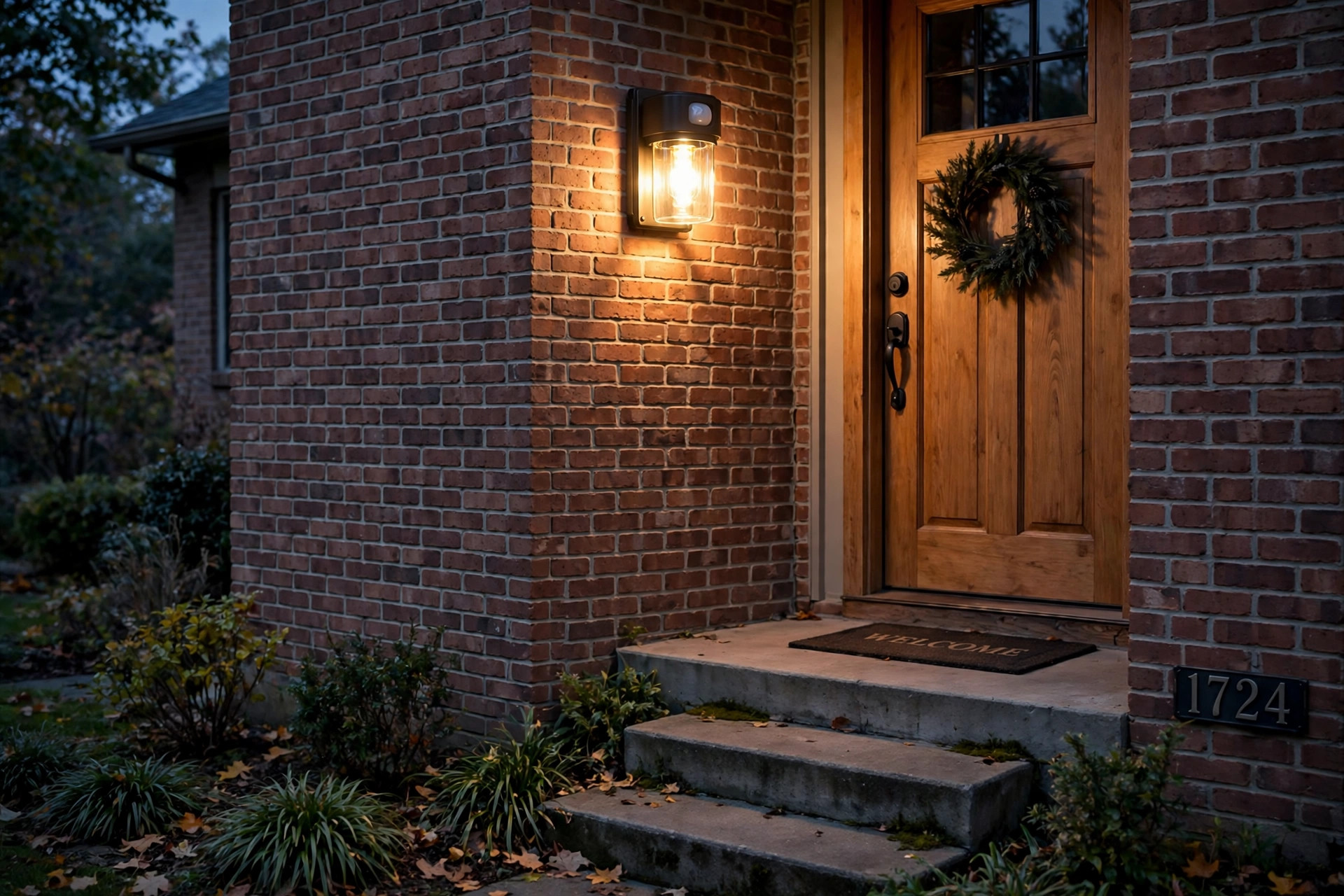
These are the most common type. They fix to the wall beside the door. A small sensor head sits under the lamp. It sees heat and movement in a wide arc. When a person, a pet, or a car enters the zone, the lamp comes on. Most models let you set how long the light stays on, from one minute to twenty minutes. These are a fine match for main entry doors and side doors. If you need stronger light for a wide drive, you may also look at motion flood lights for a wider area.
Dusk-to-Dawn Sensor Lights
Some porch lights use a light sensor instead of a motion sensor. They turn on at dusk and turn off at dawn. They stay on all night, but only in the dark. This type suits porches where people come and go at all hours. The steady light keeps steps safe through the night. It does use more power than a motion type, but an LED model keeps the cost low.
Motion and Dusk-to-Dawn Combo Lights
Many newer models mix the two ideas. The light stays on dim at dusk. When the motion sensor sees movement, it goes to full bright. After a set time it falls back to dim. This gives a porch a warm look all night and strong light when it counts. These models cost a little more, but many home owners like the balance.
Smart Sensor Porch Lights
Smart models join your home network. You can set them with a phone app. Some work with voice tools. You can change the time, the brightness, and the sensor range from your chair. Some record when the light turns on. If you like to watch your home while away, a smart light fits well with other smart gear.
Solar Sensor Porch Lights
Solar models need no wire. A small panel charges a battery by day. The light runs on the stored power at night. They are easy to fit, since you only need screws. The light may be weaker than a wired model, and dark days can leave the battery low. They suit rental homes and porches far from a power point. They pair well with solar path lights along the walk.
How to Choose the Right Light for Your Porch
Start with the size of the area. A small stoop needs one light of 600 to 1,000 lumens. A wide porch may need two lights or one strong one of 1,500 lumens or more. Think about where people come from. A light beside the door covers the steps. A light near the drive covers the walk from the car.
Next, think about the sensor range. Most sensors cover 180 degrees. A few cover 240 or 270 degrees. The range may be 30 to 70 feet. For a normal porch, 30 to 40 feet is enough. A longer range may cause the light to turn on for passing cars, which can annoy neighbors.
Then look at the light color. Warm white, about 2700K, looks like an old porch lamp. It feels warm and friendly. Cool white, about 5000K, looks like daylight. It shows detail well and is common for safety. Many models let you pick the color when you install them.
Also check the power source. A wired light needs a junction box and a wire. If your porch already has a lamp, a wired sensor light can use the same spot. A battery or solar light needs no wire but needs fresh batteries or sun. Wired lights shine brighter and last longer in the long run.
What to Look for When You Shop
Read the box with care. These points matter most when you compare sensor porch lights for sale usa listings.
Brightness is measured in lumens. More lumens means more light. A porch needs less light than a drive or a yard. Aim for 600 to 1,500 lumens for most porches.
Sensor settings should be easy to reach. The best models have simple dials or clear buttons for time, range, and light level. Avoid models where you must climb a ladder to change a setting on a tiny screen.
The sensor type counts. PIR sensors see heat and movement. They are cheap and common. Dual-tech sensors use two methods and give fewer false starts. If your porch faces a busy street, a better sensor saves you from lights that flash all night.
Weather rating is a must. Look for a rating of IP44 or higher. This means the light can stand rain and dust. Porch lights sit out in the weather for years. A weak rating leads to rust and dead sensors.
Style matters on a home. Sensor lights come in many shapes. Lantern styles suit older homes. Box styles suit modern homes. The lighting experts at Lumens show how fixture style changes the look of a home entry. Pick a finish that matches your door hardware. Black, bronze, and white are safe picks that suit most homes.
Certifications give trust. Look for UL or ETL marks. These show the light passed safety tests. ENERGY STAR certified lighting shows the light uses power well. Many states give rebates for certified lights, which can cut the cost.
Cost and Price of Sensor Porch Lights in the USA
Prices run wide. A basic solar sensor light can cost 20 to 40 dollars. A good wired motion light costs 40 to 90 dollars. A smart model with an app costs 80 to 180 dollars. Designer lantern styles can cost more than 200 dollars.
The price on the box is not the whole cost. A wired light may need an electrician if you have no wire in place. That can add 100 to 250 dollars. Solar and battery lights need no install cost. LED bulbs in wired lights last many years, so bulb cost is low.
Where you shop changes the price. Big stores often have the lowest prices. You can browse outdoor lights at Home Depot and at Lowe’s to compare models side by side. Specialist shops like Lamps Plus carry more styles and give advice. Outdoor fixtures from Philips often bring newer LED tech at fair prices. The Spruce lighting guides help you read reviews before you buy. If your taste runs to classic looks, an outdoor wall lantern with a sensor gives the old lamp style with new tech inside.
Watch for sales in spring and fall. Stores clear summer stock in fall. Spring brings new models. Online prices can be lower, but shipping a glass fixture has risk. Read the return rules before you order.
Installation and Care
Many sensor porch lights are easy to fit. If a lamp is already on the wall, the job is simple. Turn off the power at the breaker. Take down the old lamp. Wire the new one in the same way. Most boxes come with wire nuts and a clear diagram. The whole job can take 30 minutes.
If there is no wire, call an electrician. Running new wire through walls is work for a pro. The cost is worth it for a safe job. Never work on live wires. Never guess which wire is which. When in doubt, call a licensed electrician.
Solar lights are the easiest of all. Screw the base to the wall or the post. Aim the panel at the sun. Let it charge for a full day before you judge the light.
Care is simple. Wipe the sensor lens twice a year. Dust on the lens can block the sensor. Wipe the lamp cover too. A dirty cover cuts the light by a lot. Check screws once a year. Wind and rain can work them loose. For battery models, change batteries before winter. Cold drains weak batteries fast.
Safety and Placement
Place the light at the right height. Six to eight feet above the porch floor is best. Too low and the light blinds people. Too high and the sensor may miss movement near the steps. Aim the sensor head slightly down. This keeps it from seeing the street.
Do not point the light at a neighbor’s window. A bright lamp that fires all night can cause real anger. Set the range so it covers your porch and walk only. If the light fires for every passing car, turn the range down.
Keep the area clear. Bushes in front of the sensor cause false starts when the wind moves them. Trim plants back from the sensor by a few feet. Snow can also fool sensors. After a storm, clear snow from the lens.
For homes with kids, pick a light with a cover that stays cool. LED lights run cooler than old bulbs, but the lamp can still get warm. Mount it high enough that small hands cannot reach it.
Frequently Asked Questions
Do sensor porch lights work in winter?
Yes. Good models work down to well below freezing. Cold can shorten battery life in battery and solar models. Wired models have no such problem. If you live in a cold state, a wired light is the safer pick.
Why does my sensor light turn on for no reason?
Small animals, wind-blown plants, and passing cars are the usual causes. Turn the range down. Aim the sensor away from the street. Trim plants near the sensor. If it still fires, the sensor may be weak and need a new unit.
How long do sensor porch lights last?
A good LED model lasts 10 to 15 years. The sensor may wear out sooner than the LED. Look for a warranty of at least three years. Cheap models may last only two or three years in harsh weather.
Can I use a sensor porch light on a rental home?
Yes. Solar and battery models need only screws. They leave small holes that are easy to fill. This makes them fine for renters. Check your lease first. Some landlords want to approve any change to the outside of the home.
Are smart sensor porch lights worth the cost?
They can be. If you travel often, an app lets you check and change the light from far away. If you are home most nights, a simple motion light does the same job for less money. Think about your real needs before you pay extra.
Do I need an electrician to install one?
Only if new wire is needed. If a lamp is already on the wall, most home owners can swap it in 30 minutes with the power off. If no wire exists, hire a pro. The cost is small next to the risk of bad wiring.
A Final Word
Sensor porch lights are a small buy with a big payoff. They greet you with light. They keep steps safe. They save power while they do it. The market for sensor porch lights for sale usa is wide, from 25-dollar solar lamps to smart models with apps. Pick the type that fits your porch, check the weather rating and warranty, and shop with a clear head. A good sensor light will serve your home for many years.
References
ENERGY STAR. (n.d.). Energy efficient products. https://www.energystar.gov Lamps Plus. (n.d.). Lighting and home decor. https://www.lampsplus.com Lowe’s. (n.d.). Home improvement products. https://www.lowes.com Lumens. (n.d.). Lighting and ceiling fans. https://www.lumens.com Philips. (n.d.). Lighting products. https://www.philips.com The Home Depot. (n.d.). Home improvement products. https://www.homedepot.com The Spruce. (n.d.). Home and garden advice. https://www.thespruce.com U.S. Department of Energy. (n.d.). Energy efficiency and renewable energy. https://www.energy.gov
Was this guide helpful?

About Jennifer Lee
The My Garden US editorial team writes practical, in-depth home and garden guides for American homeowners — tested advice, no fluff.