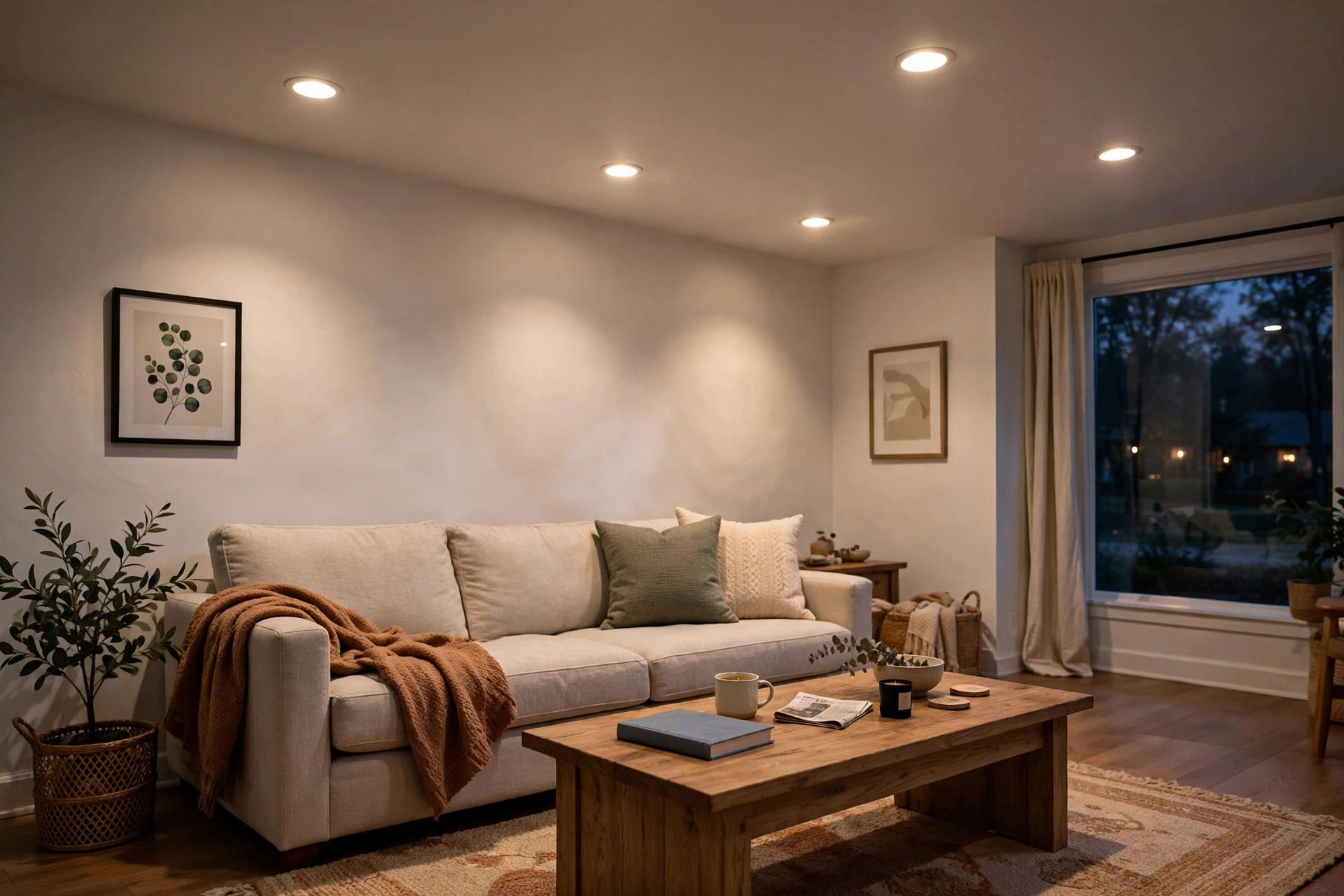

When you look at this led recessed lights reviews buying guide usa, you will learn how to pick the right can lights for your home. Recessed lights sit inside the ceiling. They give a clean look with no hanging fixture. LED models use far less power than old bulbs. They also last for many years. This guide walks you through the main choices, the costs, and the upkeep. It will help you shop with confidence.
Why LED Recessed Lights Matter
Light shapes a room. A bright kitchen helps you cook with care. A soft living room helps you rest. Recessed lights spread light across a room in an even way. They do not block the view. They work well in rooms with low ceilings. They also work well in open rooms where a chandelier would feel too heavy.
LED lights have clear gains over old lamps. A typical LED downlight uses about 9 to 15 watts to give the light of an old 65 watt bulb. That cuts power use by a large share. Many LEDs are rated for 25,000 to 50,000 hours of use. In a normal home, that can mean ten to twenty years of service. You climb a ladder less often. You buy fewer replacement bulbs.
Reviews from buyers point to steady trends. People like the even light and the trim looks. They also like dimming. Many newer models dim down to a low glow without a hum. Buyers do note some risks. Cheap models can fail early. Others may flicker with the wrong dimmer. That is why it helps to read reviews and to check ratings before you buy.
What to Look for When You Choose: Led Recessed Lights Reviews Buying Guide Usa
A good recessed light starts with size. Most homes use four inch or six inch cans. Four inch lights fit small rooms and halls. Six inch lights fit larger rooms and kitchens. There are also small three inch lights for accent work. You should match the size to the room and to the ceiling.
Lumens tell you how much light a unit gives. A four inch light often gives 500 to 800 lumens. A six inch light often gives 800 to 1,200 lumens. For a kitchen, you may want 800 lumens or more per light. For a hall, 500 lumens is often enough. You should check the box for the lumen number. Do not trust watts alone.
Color temperature tells you how warm or cool the light looks. It is read in Kelvin. A 2700K lamp looks warm, like old bulbs. A 3000K lamp looks warm white. A 4000K lamp looks cool white. A 5000K lamp looks like daylight. Most homes in the United States favor 2700K to 3000K in living rooms and bedrooms. Kitchens and baths may suit 3000K to 4000K. You should pick one color for a room so the light looks even.
The Color Rendering Index, or CRI, tells you how true colors look under the light. A CRI of 80 is common. A CRI of 90 or more shows colors in a truer way. In a kitchen or a bath, a high CRI helps you see food and skin tones in a true way. Many top rated models now offer a CRI of 90 at a fair price.
Dimming is another key point. Most LED recessed lights can dim, but they need the right dimmer switch. An old dimmer made for bulbs may cause flicker or buzz. You should check the maker chart for dimmer pairs. Many brands list the tested dimmers on their web pages.
Wet and damp ratings matter in baths and porches. A damp rated light suits a bath. A wet rated light suits a shower or an open porch. You should not use an indoor only light in a damp place. The rating is printed on the box.
Types and Options on the Market
There are two broad types: cans with housings and canless wafer lights. A can light has a metal housing that sits above the ceiling. It holds the bulb or module. An IC rated can may touch ceiling foam. A non IC rated can must stay clear of foam. Canless wafer lights are slim. They fit in tight spaces with no deep housing. They connect to a small junction box. They are easy to add where joists run close together.
Trims change the look. A baffle trim cuts glare. A smooth trim looks modern. An adjustable gimbal trim lets you tilt the light to a wall or a painting. A shower trim seals out damp air. Most trims come in white. Some come in black or brushed nickel. White trims blend into most ceilings.
Smart models add control. Some LED downlights link to a phone app. You can set scenes and timers. Some change from warm to cool white at a tap. These cost more. They suit people who like tech. If you want plain light, a standard dimmable model is fine.
Retrofit kits are a smart buy for old cans. A retrofit kit drops into an old five or six inch can. It turns the old can into an LED light. You keep the housing. You gain LED life and dimming. Retrofit kits cost less than a full new unit. They are a common pick in remodel jobs. If you plan to open the ceiling anyway, you can read a full walkthrough of the process in this led recessed lights installation guide.
Cost and Price
Prices vary by type and brand. A basic four inch LED downlight often costs eight to twenty dollars each. A six inch model often costs twelve to thirty dollars. Retrofit kits often cost ten to twenty five dollars. Canless wafer packs of six often cost forty to eighty dollars for the pack. Smart models often cost twenty five to sixty dollars each.
You should count the full job cost, not just the lights. If you hire an electrician, labor may run fifty to one hundred fifty dollars per light. That includes wiring and cutting the ceiling. A room with six lights may cost five hundred to one thousand dollars in total. If you do the work yourself, the cost is just the lights and basic tools. You must know the local code and turn off the breaker before you start.
LED lights save money over time. A 12 watt LED that runs four hours a day uses about 17 kilowatt hours per year. At fifteen cents per kilowatt hour, that is about two dollars and sixty cents per year. An old 65 watt bulb used five times that much. In a home with twenty lights, the yearly saving can top two hundred dollars. The higher up front cost pays back in a few years. Reviews on sites like Consumer Reports and The Spruce often cite these savings when they rate models.
Care and Upkeep
LED recessed lights need little care. They have no bulb to change for many years. You should dust the trim once or twice a year. A damp cloth works well. You should not spray cleaner straight into the lens. Water can harm the driver inside.
Check the lights once a year. Look for flicker or a change in color. Flicker may mean a bad dimmer or a loose wire. A color shift may mean a failing unit. Most units carry a three to five year warranty. Keep the receipt and the box. If a unit fails early, the maker may send a free replacement.
In kitchens, grease can coat the lens. Wipe the lens with a soft dry cloth first. Then use a cloth with mild soap. Dry it well. In baths, damp air can wear the trim. A damp rated trim will hold up better. If paint peels on a trim, you can touch it up with trim paint.
Safety Points
Safety starts with the breaker. You must turn off power at the panel before you touch any wiring. Test with a non contact tester. Never trust a wall switch alone.
Heat is a real risk. LED lights run cool, but the driver can still make heat. IC rated housings may touch ceiling foam. Non IC housings must keep three inches of space from foam. Read the label on the housing. If you are not sure, treat it as non IC. The rules from the Consumer Product Safety Commission cover many fixture safety basics, and guides from This Old House show safe install practice.
Do not overload a circuit. Most homes run lights on a fifteen amp circuit. Twenty LED lights at twelve watts each draw only about two amps. That leaves room for more. Still, you should count the full load. A licensed electrician can check the math.
Outdoor and bath lights need the right rating. A wet rated light has seals that keep water out. Use it in showers and open porches. You should also use GFCI cover on bath circuits where code calls for it. Check your local code before you start.
Frequently Asked Questions
How many recessed lights do I need in a room?
A common rule is one light for every four to six square feet of ceiling. A ten by ten foot room may take four to six four inch lights. A large kitchen may take eight to ten. You should also think about the task. A kitchen counter needs more light than a hall. Draw a plan on paper first. Space the lights evenly. Keep them two to three feet from walls to cut shadows.
Can I replace old can lights with LED?
Yes. You have two paths. A retrofit kit drops into the old can and takes ten minutes per light. A full new LED unit needs more work. The retrofit path is the most common. It costs less and keeps the old wiring. Make sure the kit fits your can size. Most kits fit five or six inch cans.
Do LED recessed lights get hot?
The lens feels warm, not hot. Old bulbs ran much hotter. LED lights still make some heat at the driver. That heat must leave through the housing. Do not pack foam tight around a non IC housing. Keep vents clear. In normal use, the lights are safe to touch after they cool down.
What is the best color temperature for a living room?
Most buyers pick 2700K or 3000K for living rooms. These look warm and calm. A 4000K light can feel cold in a sitting room. If you like a bright modern look, 3500K is a middle choice. Buy one light first. Test it at night. Then buy the rest in the same color.
Are canless wafer lights as good as can lights?
For most homes, yes. Wafer lights give clean light in a slim case. They fit where cans cannot. The weak point is heat venting. A cheap wafer may run hot and fail early. Buy from a known brand. Check for a five year warranty. Reviews from lighting stores like Lumens and Lamps Plus can help you weigh the top rated models.
Should I buy smart recessed lights?
Buy smart lights if you want app control, scenes, and timers. They cost more per unit. They need a phone app and a home network. If you just want bright even light, a plain dimmable LED is the better buy. You can always add smart bulbs or switches later.
Layering Recessed Lights with Other Fixtures
Recessed lights work best as part of a plan. They give general light. Other fixtures give task and accent light. In a kitchen, pair recessed lights with pendant lamps over the island and under cabinet strip lights over the counters. In a living room, add table lamps for warm pools of light. In a bath, add a vanity bar at face level.
Balance matters. Too many recessed lights can make a room feel flat. Use dimmers on each zone. Dim the ceiling lights low for a film night. Bring them up for cleaning. A good plan uses light in layers, not all from the ceiling.
If you prefer a more open look in the kitchen, kitchen track lighting gives aimable heads that work well with recessed cans. Track heads can point at art or a pantry. The cans give the base light. The track adds the focus.
Where to Research Models and Reviews
You do not need to trust one store alone. Many trusted sources test and review lighting. The U.S. Department of Energy posts facts on LED life and power use. ENERGY STAR lists rated models that meet set tests for light quality. Philips makes a wide range of LED downlights and posts full spec sheets. Big stores such as Home Depot and Lowe’s carry many brands and show buyer reviews. These pages give real user reports on flicker, dimming, and fit.
A Short Final Word
LED recessed lights are a strong buy for most American homes. They last long. They use little power. They give a clean modern look. Pick the right size, lumen level, and color temperature. Check the dimmer chart. Choose the right damp rating for baths. Read a few buyer reviews before you buy. With a sound plan, your rooms will feel bright and calm for years to come.
References
Consumer Reports. (n.d.). Product reviews and ratings. https://www.consumerreports.org ENERGY STAR. (n.d.). Energy efficient products. https://www.energystar.gov Lamps Plus. (n.d.). Lighting and home decor. https://www.lampsplus.com Lowe’s. (n.d.). Home improvement products. https://www.lowes.com Lumens. (n.d.). Lighting and ceiling fans. https://www.lumens.com Philips. (n.d.). Lighting products. https://www.philips.com The Home Depot. (n.d.). Home improvement products. https://www.homedepot.com The Spruce. (n.d.). Home and garden advice. https://www.thespruce.com This Old House. (n.d.). Home renovation guidance. https://www.thisoldhouse.com U.S. Consumer Product Safety Commission. (n.d.). Product safety information. https://www.cpsc.gov U.S. Department of Energy. (n.d.). Energy efficiency and renewable energy. https://www.energy.gov
Was this guide helpful?

About Robert Taylor
The My Garden US editorial team writes practical, in-depth home and garden guides for American homeowners — tested advice, no fluff.
You May Also Like
Patio String Lights Texas Homes USA: A Practical Buying and Care Guide
July 6, 2026 0 views
How to Find the Best Ceiling Fans Lights USA Online Deals
February 23, 2026 0 views
Under Cabinet Strips USA Online Deals: A Practical Buying Guide
June 16, 2026 0 views