Many shoppers look for quietcool whole house fan reviews usa before they buy. A whole house fan pulls cool evening air through open windows. It pushes hot air out through the attic vents. The result is a cooler home at a low cost. QuietCool is one of the best known brands in this field. This article reviews the main QuietCool models. It looks at noise, air flow, cost, and owner feedback.
Why a Whole House Fan Matters
A whole house fan is not the same as an attic fan. An attic fan only cools the attic. A whole house fan cools the whole house. It moves large volumes of air. Most models move between 1,000 and 7,000 cubic feet per minute. This is called CFM. A higher CFM rating means more air moves. It also means the house cools faster.
The idea is simple. In the evening, the air outside is cooler than the air inside. Open a few windows. Turn on the fan. Cool air flows in through the windows. Hot air flows up and out of the attic. In one hour, the fan can replace the entire volume of air in the house. This is called an air change.
Cooling with a fan costs far less than cooling with air conditioning. A typical whole house fan uses about 200 to 700 watts. A central air conditioner can use 3,500 watts or more. The Department of Energy notes that fans and ventilation can cut cooling costs for many homes. Many owners report lower summer power bills after the install.
What to Look for When You Choose: Quietcool Whole House Fan Reviews Usa
Reviews of QuietCool fans often praise the low noise. Older whole house fans were loud. They rattled the walls. QuietCool changed this with better motors and insulated ducts. The fan motor often sits away from the ceiling grille. The duct bends between the motor and the grille. This bend cuts the noise that reaches the living space.
Noise Level
Check the decibel rating before you buy. Many QuietCool models run near 45 to 55 decibels on low speed. This is close to the sound of a quiet room. Some models are louder on high speed. Owners often run the fan on low at night. This keeps the sound down.
Air Flow
Match the CFM to the size of your house. A small house of 1,000 square feet may need about 2,000 CFM. A large house of 3,000 square feet may need 6,000 CFM. When in doubt, choose a model one size up. The extra power is handy on the hottest nights.
Number of Speeds
Most QuietCool fans have at least two speeds. Some have variable speed controls. Low speed is good for night use. High speed is good for fast cooling in the evening.
Mounting and Ducting
Some models hang in the attic with flexible duct. Others mount on a joist. Check your attic space before you buy. You need room for the fan and the duct run.
QuietCool Models Reviewed
QuietCool sells several lines. Each line fits a different need. The models below are the ones most often reviewed by USA owners.
QuietCool Stealth Pro
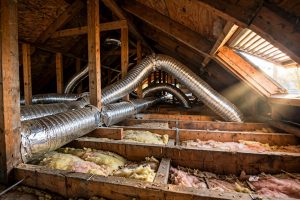
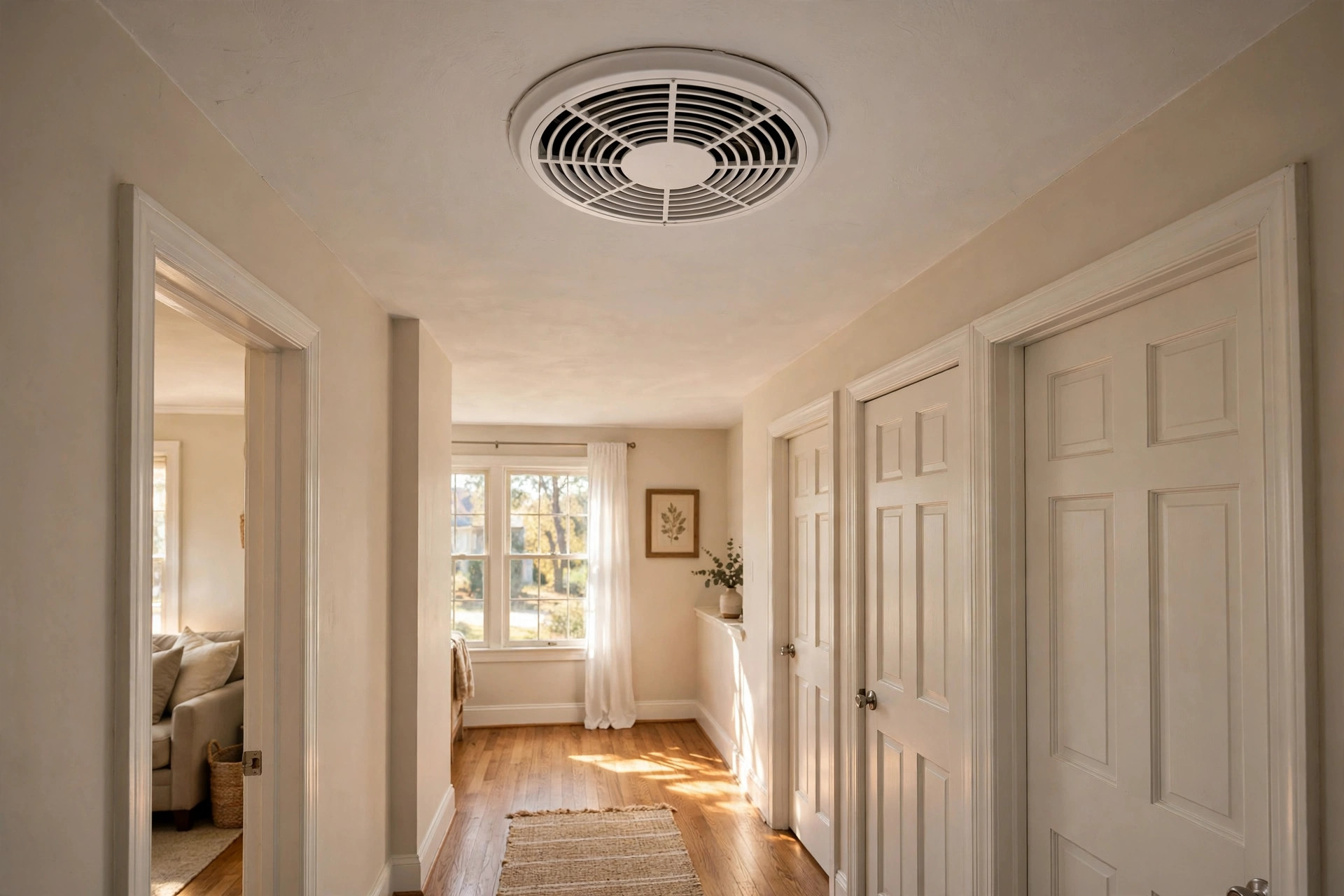
The Stealth Pro line is one of the most reviewed. It hangs in the attic on a joist bracket. A long insulated duct runs from the fan to a ceiling grille. The grille is round and clean. Models range from about 1,500 CFM to 6,500 CFM. Owners praise the quiet low speed. Many say they can sleep with the fan running. Some owners note that high speed is still loud. They use high only for fast evening cool-down.
QuietCool Classic Line
The Classic line is the older design. It mounts directly on a ceiling joist in the hallway. The motor sits closer to the living space. This makes it louder than the Stealth Pro. It is also cheaper. It is a good choice for a small home or a tight budget. Reviews often call it a strong value. The trade-off is the noise.
QuietCool Trident Pro
The Trident Pro is a newer model with three fan heads. It can move a lot of air with low noise. It is made for large homes. Reviewers with homes over 2,500 square feet like this model. The three heads share the load. This keeps the motor speed low. Low motor speed keeps the sound low.
QuietCool Energy Saver
The Energy Saver uses a low-watt motor. It draws less power than most models. It suits buyers who want the lowest running cost. Owners say it cools well in mild climates. It may be slow to cool a large house on very hot nights.
Sizing the Fan for Your House
Size matters more than brand. A fan that is too small will run for hours and still leave the house warm. A fan that is too big will rattle windows. Use a simple rule. Multiply the square footage of your house by two. That gives a rough CFM target. A 1,500 square foot house needs about 3,000 CFM. Add twenty percent if you have high ceilings. Add more if your summers are very hot.
Check the attic vents before you buy a big fan. Many homes have too little vent space. The fan needs an exit path for the air. Measure the net free area of your soffit vents and roof vents. Add them up. You need about one square foot of vent space for every 500 to 750 CFM of fan power. A 3,000 CFM fan needs four to six square feet of vent. If you are short, a contractor can add roof vents or gable vents. This is a small job. It makes a large difference in how well the fan works.
Also check the ceiling joist spacing. Most whole house fans fit standard 16 inch spacing. Some need a bigger opening. Read the cut sheet for the model you pick. Make sure the hole fits your framing. If you are not sure, ask a carpenter to check before you cut.
Cost and Price
A QuietCool whole house fan costs between 800 and 2,500 dollars for the unit. The Stealth Pro models are at the high end. The Classic models are at the low end. Professional install adds 500 to 1,500 dollars. Some handy owners install the fan on their own. The kit includes most parts. A do-it-yourself install can save a large sum.
Running cost is low. The fan draws a few hundred watts. At typical power rates, a night of use may cost less than fifty cents. Compare this to running central air all night. The savings add up fast in a hot summer.
The U.S. Department of Energy states that ventilation and air movement can reduce cooling demand in many homes. Energy Star guidance also notes that air sealing and proper attic venting improve results. Pairing a whole house fan with good blown-in versus batt insulation helps hold the cool air longer.
Installation Basics
The install starts with a hole in the ceiling. Most models go in a hallway ceiling on the top floor. The installer cuts the hole and mounts the grille box. Then the fan hangs in the attic. Duct runs from the fan to the grille. A switch or wireless remote controls the fan. Many models use a radio frequency remote.
Attic ventilation matters. The fan pushes a lot of air into the attic. That air must leave through attic vents. You need about one square foot of net free vent area for every 500 to 750 CFM. If vents are too small, the attic will pressurize. Air will find other paths. It may push dust through ceiling cracks. Check your soffit and ridge vents before you install.
A good HVAC contractor can size the fan and check the vents. An electrician may be needed for the wiring. Most installs take three to six hours. Some attics are hard to reach. Tight attics slow the work.
Care and Upkeep
Whole house fans need little care. Dust the ceiling grille each season. The grille pulls air up all night. Dust collects on it. Wipe it with a damp cloth. Check the duct each year. Make sure it has not sagged or torn. Insulated duct holds up well in most attics.
Lubricate the motor if the manual calls for it. Many newer motors are sealed. They need no oil. Check the damper. Most models have a damper that closes when the fan is off. The damper keeps cold air out in winter. A foam cover over the grille adds more winter protection. Some owners place a cover in late fall and remove it in spring.
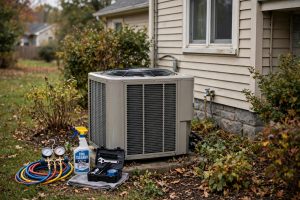
Keep a fall maintenance checklist for your whole heating and cooling system. Add the whole house fan to the list. One yearly check keeps it running for years.
Safety
Open windows before you turn on the fan. The fan needs a path for air to enter. Without open windows, the fan will pull air from any gap. It can pull air down a chimney or a water heater flue. This is a backdraft risk. It can bring exhaust fumes into the house. Never run a whole house fan with a fireplace burning.
Do not run the fan during a dust storm. The fan pulls outside air straight into the house. It has no filter. People with bad allergies may want to use the fan less on high pollen days. Some owners add a window filter screen. This helps a little.
Keep small children away from the attic unit. The fan blade spins fast. Mount the fan where hands cannot reach it. Follow all wiring codes. A fan circuit should have its own breaker. Many models draw less than 10 amps. Still, a separate circuit is best.
FAQ
How quiet is a QuietCool whole house fan?
Most reviews say the Stealth Pro models are very quiet on low speed. They run near 45 to 55 decibels. High speed is louder. The Classic line is louder on both speeds. If quiet matters most, pick a ducted model with the motor away from the grille.
How much does a whole house fan cost to run?
Very little. Most models draw 200 to 700 watts. Running the fan all night may cost less than a dollar in most areas. This is far less than running central air.
Can a whole house fan replace air conditioning?
It depends on the climate. In dry climates with cool nights, many homes can skip air conditioning most of the time. In hot and humid places, the fan helps but may not be enough. The fan works best when night air is at least 10 degrees cooler than the indoor air.
How many windows should I open?
Open three to five windows. Choose windows far from the fan. This pulls air across the whole house. Open each window three to six inches. If the windows rattle, open them a bit more. The fan needs enough air to work with.
How long do QuietCool fans last?
Most owners report ten to fifteen years of service. Some units run longer. The motor is the main wear part. Good care and a clean attic help the fan last.
Do whole house fans work in the rain?
Do not run the fan in heavy rain or wind. Rain can enter through open windows. Strong wind can push against the fan. Wait until the storm passes. Then open the windows and turn the fan on.
A Short Final Word
Quietcool whole house fan reviews usa show a clear pattern. Owners like the low noise and the low cost. They like the fresh air. The Stealth Pro line earns the best marks for quiet night use. The Classic line wins on price. The Trident Pro suits large homes. Measure your house. Check your attic vents. Size the fan right. Then enjoy cool evenings without the roar of an air conditioner.
For more background, see Family Handyman, Carrier, and Trane. For more background, see Lennox, Goodman, and Rheem.
References
Carrier. (n.d.). Heating and cooling systems. https://www.carrier.com ENERGY STAR. (n.d.). Energy efficient products. https://www.energystar.gov Family Handyman. (n.d.). DIY home repair and maintenance. https://www.familyhandyman.com Goodman. (n.d.). Heating and cooling equipment. https://www.goodmanmfg.com Lennox. (n.d.). Heating and cooling systems. https://www.lennox.com Rheem. (n.d.). Heating, cooling, and water heating. https://www.rheem.com Trane. (n.d.). Heating and air conditioning. https://www.trane.com U.S. Department of Energy. (n.d.). Energy efficiency and renewable energy. https://www.energy.gov
Was this guide helpful?

About Jennifer Lee
The My Garden US editorial team writes practical, in-depth home and garden guides for American homeowners — tested advice, no fluff.