
---
Table of Contents
Table of Contents
- Mix Metal Finishes: Pick a Dominant Metal
- Add One Accent Metal
- Know Your Warm and Cool Tones
- Repeat Each Finish at Least Twice
- Mix by Function
- Match the Style, Not the Finish
- Combos That Work
- Where to Put Each Metal
- Mistakes That Make a Mix Look Random
- Start Small If You Are Nervous
- The Two-Finish Rule of Thumb
- References
It used to be a rule: everything in the kitchen had to match. The faucet, the pulls, the light fixtures, all the same finish. That rule is gone. Designers now mix brass with black, nickel with bronze, and chrome with gold on purpose. Done right, it looks layered and collected. Done wrong, it looks like a mistake. Here is how to get it right. If you want to mix metal finishes, start with the basics below.
Mix Metal Finishes: Pick a Dominant Metal
When it comes to mix metal finishes, getting the details right makes all the difference.
Many homeowners find that mix metal finishes is easier than they expected once they know the basics.
Every good mix starts with one metal in charge. Choose the finish that will appear most in the room. It might be brushed nickel on the faucet and pulls, matte black on the hardware, or polished brass on the lighting. This dominant metal should cover roughly two-thirds of the metal in the room. Designing Idea recommends mapping each metal to a cabinet color and style so the dominant finish suits the room from the start.
The dominant metal sets the tone. A warm brass lead feels classic and inviting. Matte black leans modern and architectural. Polished nickel reads crisp and timeless. Pick the one that matches your cabinets and your style, and let it do the heavy lifting. Homes and Gardens quotes designer Shea McGee on the importance of restraint: stick to two finishes where it makes sense, and never more than three in a kitchen.
Add One Accent Metal
Many homeowners find that mix metal finishes is easier than they expected once they know the basics.
The key to mix metal finishes is choosing the right approach for your space and budget.
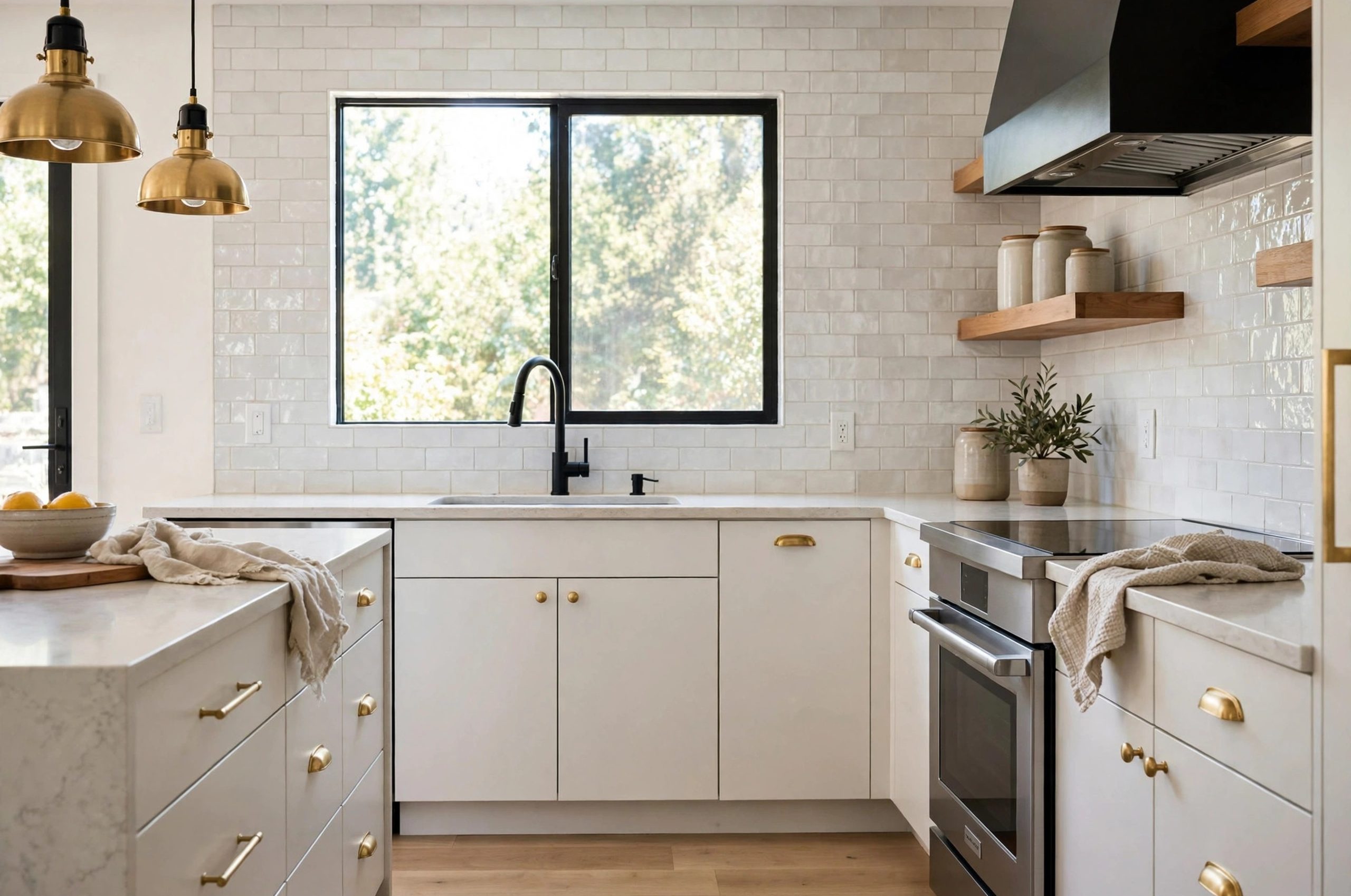
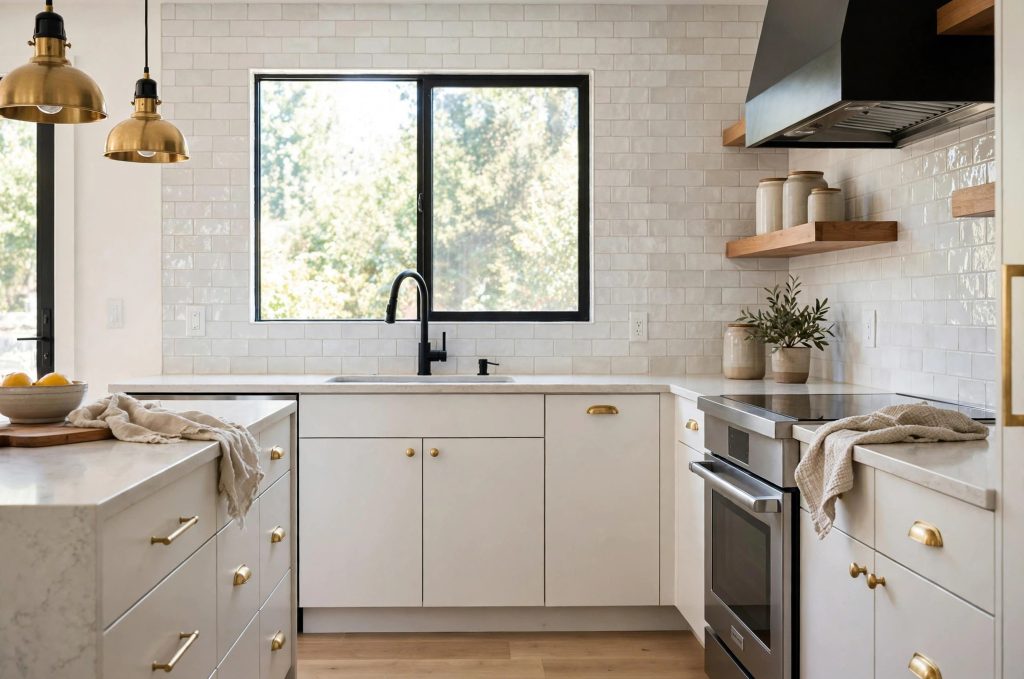
Once the dominant metal is set, add one accent metal for contrast. This is where the personality comes in. A black kitchen with brass pendants. A nickel kitchen with bronze lighting. A chrome kitchen with black pulls. The accent metal should appear in a few places, not just one. The Spruce notes that mixing metals adds interest and character, while matching everything can look dated and flat.
A common kitchen formula: one metal for plumbing, one for hardware, and let lighting pick a side. Or split by zone: brass on the island, nickel on the perimeter. The key is that the accent feels deliberate, not accidental.
Know Your Warm and Cool Tones
The key to mix metal finishes is choosing the right approach for your space and budget.
With a little planning, mix metal finishes can fit even a busy schedule.
Metals have undertones, just like paint. Warm metals include brass, gold, copper, and oil-rubbed bronze. Cool metals include chrome, polished nickel, and stainless steel. Matte black and iron are neutrals that pair with almost anything. OrganizerTone breaks down the warm and cool families and suggests starting with metals in a similar finish, like brushed nickel with satin brass, for a soft cohesive look.
The magic often happens when you pair warm with cool. Polished nickel with brushed brass. Chrome with black. Brass with stainless steel. The contrast creates depth. Nadine Stay shares favorite pairings like brass with black, nickel with black, and bronze with brass, while warning against finishes that are too close in color, like copper and brass, which can look like a near-miss instead of a choice.
Repeat Each Finish at Least Twice
With a little planning, mix metal finishes can fit even a busy schedule.
Before you start, it helps to understand how mix metal finishes works in real homes.
The rule that separates a designed mix from a random one: every metal should appear at least twice in the room. One brass faucet with nothing else brass looks like an error. A brass faucet plus brass pendants looks like a plan. Home Actions makes this a core rule: use each finish at least twice so the mix reads as intentional.
Spread the finishes around the room, both high and low. If your accent metal only appears in one corner, it looks stranded. Brass pendants over the island plus brass knobs on the island drawers. Black faucet at the sink plus black pulls on the nearby cabinets. This distribution guides the eye and balances the room.
Mix by Function
Before you start, it helps to understand how mix metal finishes works in real homes.
A good plan for mix metal finishes saves time, money, and frustration.
An easy way to organize the mix: give each job its own metal. All the plumbing in one finish, all the cabinet hardware in another, lighting in a third. Or plumbing and hardware in the dominant metal, lighting in the accent. Kitchen Solvers suggests exactly this zone approach: gold pulls on cabinets, a statement faucet in bronze, black pendants over the island, stainless appliances tying it together.
This works because the brain reads function before finish. When the faucet, pot filler, and soap dispenser match, they read as a set even if the pulls are different. Pot filler and touchless faucet guides can help you pick plumbing finishes that anchor the room.
Match the Style, Not the Finish
A good plan for mix metal finishes saves time, money, and frustration.
For most people, mix metal finishes comes down to a few smart choices.
Here is the secret most people miss: the style of the hardware matters more than the finish. A matte black industrial pendant and a brushed gold traditional faucet can clash even though both are trendy. But a sleek black pull and a sleek brass pull in the same modern shape look like family. Home Actions advises keeping the design style consistent even as the finishes vary.
Pick one hardware style for the whole kitchen: modern bar pulls, classic cup pulls, or simple knobs. Then vary the finish across zones. The shared shape ties the mix together. This is why many designers mix finishes but keep the hardware profile identical throughout.
Combos That Work
For most people, mix metal finishes comes down to a few smart choices.
Some pairings are nearly foolproof. Polished nickel hardware with brass lighting is a classic that suits white and cream kitchens. Matte black pulls with a brass faucet work in almost any style. Brushed brass with stainless steel appliances gives a warm-modern feel. Chrome with black is crisp and graphic.
Ironmongery Experts adds a useful tip: separate metals by height when you are starting out. One metal for cabinet hardware down low, another for faucets in the middle, a third for lighting up high. The vertical separation gives the eye a buffer and makes the mix feel natural.
Avoid pairing two finishes that are almost the same. Brushed nickel and polished chrome side by side look like you could not decide. Copper and brass together can read muddy. If two metals are close in color, pick one and commit.
Where to Put Each Metal
If you are new to mix metal finishes, start with the simplest option and build from there.
Think of the kitchen in thirds. The top third is lighting: pendants, sconces, the range hood. The middle third is plumbing: faucet, pot filler, sink. The bottom third is hardware: pulls, knobs, appliance handles. Shea McGee describes this thirds approach as a way to plan the mix tastefully.
A reliable recipe: dominant metal on hardware and plumbing, accent metal on lighting. Or dominant metal on hardware and lighting, accent metal on plumbing as the statement. The faucet is often the best place for an accent, since it is a natural focal point. A brass faucet against white counters and nickel pulls is a look that works in kitchen after kitchen.
Do not forget the small stuff. The paper towel holder, the soap dispenser, the outlet covers, the vent. These tiny metals add up. If they are all chrome from the builder, consider swapping the visible ones to match your plan. Details are what make a mix feel finished.
Mistakes That Make a Mix Look Random
When it comes to mix metal finishes, getting the details right makes all the difference.
A few traps turn a planned mix into a mess. The first is too many metals. Four or five finishes in one kitchen will always look busy, no matter how carefully you place them. Stick to two, three at most in a large kitchen with clear zones.
The second is the one-off. A single copper pot filler in a kitchen with no other copper looks like a leftover, not a choice. If you love a finish, repeat it. Put it on the faucet and the pendants, or the pulls and the mirror frame. Repetition is what makes a mix read as intentional.
The third is clashing styles. An ornate bronze faucet with sleek black bar pulls fights itself. The finishes are fine; the shapes disagree. Keep the hardware family consistent and let the finishes vary. And watch the small metals: the vent cover, the outlet plates, the paper towel holder. If they are all leftover chrome, they can quietly undermine an otherwise clean mix. Swap the visible ones to match your plan.
Start Small If You Are Nervous
If mixing metals feels risky, start with lighting. Swap two pendants over the island for a new finish while keeping everything else the same. Live with it for a month. If you love it, extend the new finish to the faucet or the hardware. Brushed nickel faucet guides show how one finish change can shift the whole room.
Or start with hardware. New cabinet pulls in a contrasting finish are a weekend project that costs little. If the mix does not work, you can change pulls back in an afternoon. Hardware is the lowest-risk place to experiment.
The Two-Finish Rule of Thumb
When in doubt, use two metals. One dominant, one accent. Repeat each at least twice. Keep the hardware style consistent. Pair warm with cool or use black as the neutral bridge. This simple formula covers most kitchens and almost always looks good. Three metals can work in a large kitchen with clear zones, but two is the safe, stylish choice for most homes. A little care goes a long way when you mix metal finishes.
References
Designing Idea. (n.d.). How to mix metal kitchen hardware like a designer. https://designingidea.com/how-to-mix-metal-kitchen-hardware/
Home Actions. (n.d.). Mixing metals: How to get it right. https://newsletter.homeactions.net/archive/full_article_pdf/17000/3852988/5389307/233863
Homes and Gardens. (n.d.). How Shea McGee mixes metals in a kitchen. https://www.homesandgardens.com/kitchens/shea-mcgee-on-mixing-metals-in-kitchens
Ironmongery Experts. (n.d.). How to mix hardware finishes. https://ironmongeryexperts.co.uk/blog/how-to-mix-hardware-finishes/
Kitchen Solvers. (n.d.). Mixing metals: The right way to use gold, bronze, and black accents. https://kitchensolvers.com/mixing-metals-the-right-way-to-use-gold-bronze-and-black-accents/
Nadine Stay. (n.d.). How to mix metal finishes in a bathroom or kitchen. https://nadinestay.com/how-to-mix-metal-finishes/
OrganizerTone. (n.d.). A designer's guide to perfectly mixing metal finishes. https://organizertone.com/en/a-designer-s-guide-to-perfectly-mixing-metal-finishes-4765697/
The Spruce. (n.d.). Still doing this in your kitchen? https://www.thespruce.com/what-makes-a-kitchen-look-dated-12008385
Was this guide helpful?

About My Garden US
The My Garden US editorial team writes practical, in-depth home and garden guides for American homeowners — tested advice, no fluff.
You May Also Like

Dining Room Sets Texas Homes USA: A Practical Buying Guide
April 22, 2026 3 views
Velvet Living Sofas Florida Homes USA: What to Know Before You Buy
July 18, 2026 4 views
Living Room Ottomans for Texas Homes USA: A Plain Guide to Choosing Well
April 10, 2026 3 views