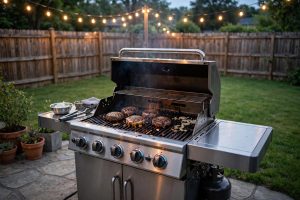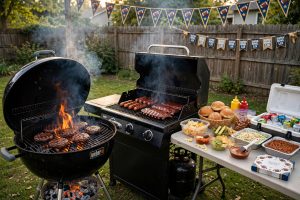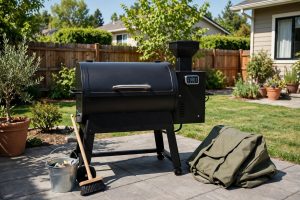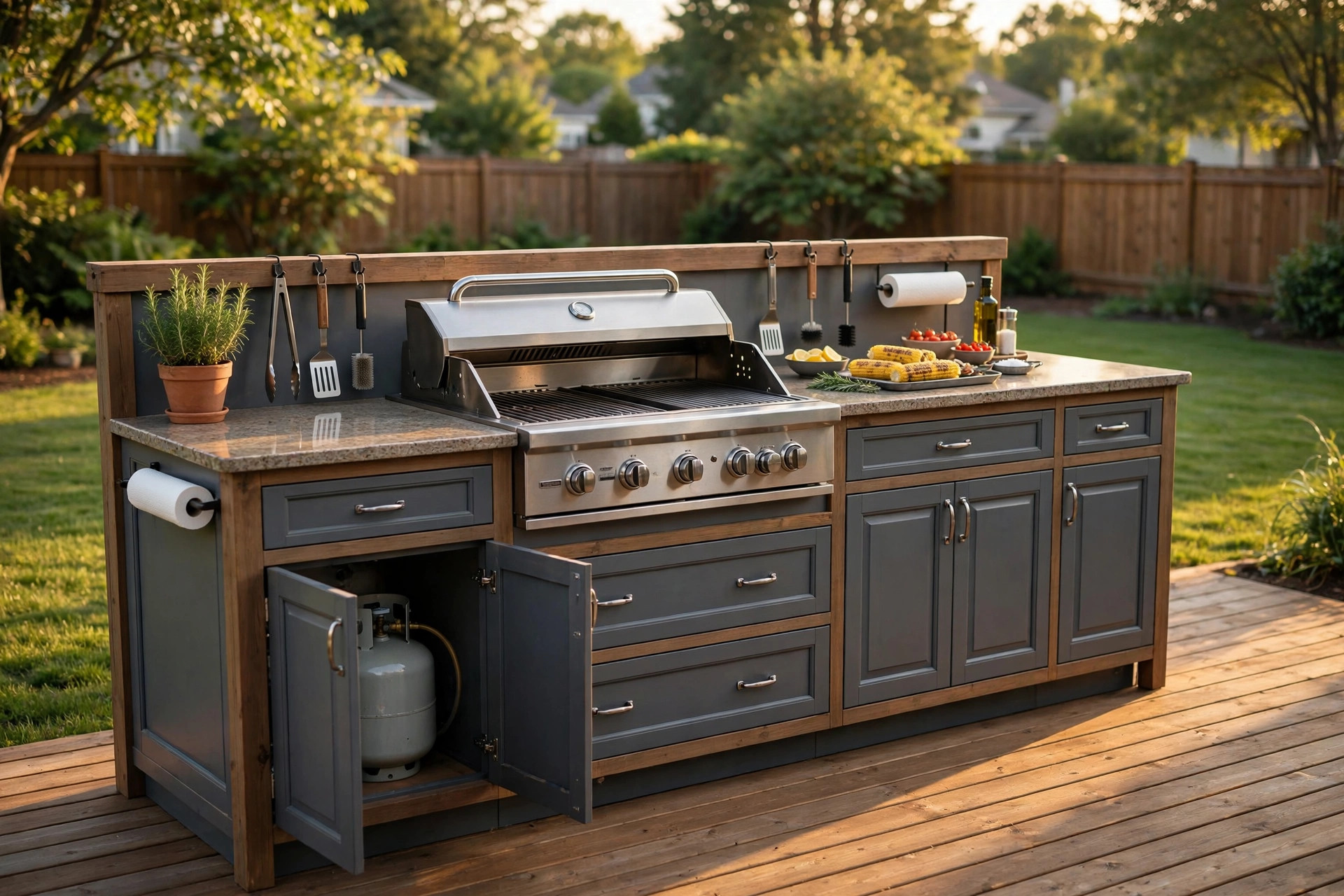
A cook who grills often knows the trouble of running back and forth to the kitchen. The best outdoor grill station with storage puts the grill, the tools, and the supplies in one place. It turns a patch of patio into a small outdoor kitchen. This guide explains what a grill station is, what kinds are sold, how to choose one, what it costs, how to care for it, and how to use it safely.
Why a Grill Station With Storage Matters
Grilling is more pleasant when everything is near. A grill station with storage holds the spatulas, tongs, charcoal or propane tank, cutting board, plates, spices, and cleaning brush. The cook does not need to leave the grill to fetch a missing tool. Food cooks more evenly because the cook stays with it.
A station also keeps the yard tidy. Loose tools and bags of charcoal spread across a patio look messy and trip people. Doors and shelves hide them. Many stations also give extra work space. A wide side counter makes room to rest a tray of raw meat on one side and a tray of cooked food on the other. That habit alone makes grilling safer, because raw and cooked food never share a plate.
For people who grill every week in the summer, the station saves time. Setting up takes minutes instead of a long hunt through the garage. For people who host guests, the station looks smart and gives a place to serve. It becomes the center of the patio, much like a guide to grilling corn on a gas grill can become the center of a cookout.
What an Outdoor Grill Station Is: Best Outdoor Grill Station with Storage
A grill station is a piece of outdoor furniture built around a grill. Some stations come with a grill built in. Others are carts or cabinets that hold a separate grill, such as a kettle or a gas grill head. The storage part may be open shelves, closed cabinets, drawers, or a mix.
Most stations stand on a patio, a deck, or a concrete pad. Some have wheels so they can be moved. Some are fixed islands made for a permanent spot. The market also sells modular pieces that connect together, so a buyer can start small and add sections later. Large home centers carry a wide range of these units, and browsing the selection at Home Depot gives a good sense of the shapes and sizes on the market.
Types and Options
Freestanding grill carts with cabinets
A cart holds a grill on top and has shelves or a cabinet below. It is the simplest kind of station. Carts suit small patios. Many roll on casters, which helps when the wind shifts smoke toward the seating area. The weak point is storage space. A cart may hold only a few tools and one bag of fuel.
Modular outdoor kitchen islands
These are wider cabinets with a grill head set into a countertop. They look like real kitchens. They offer the most storage: drawers for tools, cabinets for a propane tank, and space for a cooler or a trash bin. They cost more and need a flat, level spot. A buyer who wants the best outdoor grill station with storage for daily use often lands on this type.
Prep tables and side stations
A prep table is a lower cabinet with a work top and no grill. It stands beside the grill and adds work space and storage. It is a good answer for someone who already owns a grill they like and only needs the storage part.
Built-in islands
Some homeowners build a masonry or steel island and set a grill head into it. This is a permanent choice. It needs planning for gas lines, drainage, and local rules. It gives the most polished result and the most storage, but it is also the most expensive and the least flexible.
What to Look for When You Choose
Size and layout
Measure the patio first. Leave at least three feet of clear space behind the station for the cook to stand and move. Leave room to open cabinet doors fully. A station that is too large crowds the yard. One that is too small gives no gain over a plain grill. Think about where the food will rest, where the tools will hang, and where the fuel will sit.
Materials and weather strength
The frame should resist rain and sun. Stainless steel, powder-coated steel, and heavy resin are common. Stainless steel costs more but holds up well. Powder coating protects steel from rust as long as it does not chip. Wood looks warm but needs regular sealing. Check that hinges, handles, and drawer slides are also made for outdoor use, because small metal parts rust first.
Storage layout
Look inside before buying. Are the shelves tall enough for a propane tank? Do the drawers slide well? Are there hooks for tongs and a brush? A cabinet that holds the tank, a drawer that holds tools, and a shelf that holds trays and spices is a practical mix. Open shelves are easy to reach but collect dust and rain. Closed doors keep things cleaner.
Work surface
The counter should be heat resistant and easy to wipe. Stone and metal tops handle hot trays. Thin plastic tops can warp. A cutting board that fits over a sink or drawer adds work space without taking room.
Grill fit
If the station has no grill of its own, check that it fits the grill you own or plan to buy. Gas grill heads need room for the lid to open. Charcoal grills need space for ash. Some makers, such as Weber and Char-Broil, publish the cutout sizes for their grill heads, which helps when matching a head to an island.
Cost and Price
Prices run wide. A simple rolling cart with a small cabinet may cost a few hundred dollars. A modular island with a good grill head and full storage can cost several thousand. Built-in masonry islands cost the most once labor and gas work are added.
A fair way to set a budget is to list what the station must do. If the goal is storage for tools and one fuel supply, a mid-price cart or prep table is enough. If the goal is a full outdoor kitchen that replaces trips indoors, the island is worth the cost. Reviews and test reports from groups such as Consumer Reports can help compare build quality before spending.
Keep an eye on added costs. A cover is not always included. Assembly may take hours. A gas line for a permanent station needs a licensed worker. Delivery fees for heavy islands can be large. Planning these costs at the start avoids surprise.
Care and Upkeep
A grill station lasts longer with simple care. Wipe the counters after each cook. Brush the grill grates while they are warm. Empty the grease tray often, because old grease can catch fire. Once a season, wash the cabinets inside and out with mild soap and water, then dry them.
Check the small parts each spring. Tighten loose screws. Oil hinges that stick. Look for rust spots on steel and touch them up with paint made for outdoor metal. If the station has a cover, use it. A cover blocks rain and sun, which are the two forces that wear outdoor furniture down fastest.
For the grill itself, read the maker’s manual. Pellet and gas makers such as Traeger and Broil King give clear seasonal steps for their units. A clean grill heats more evenly and smokes less.
Wood parts need sealing once a year in most climates. Stone tops may need a sealant made for the stone type. In cold regions, drain any water lines and store soft items like covers and cushions indoors for the winter.
Safety
Safety starts with placement. Put the station at least ten feet from the house, the fence, and any overhang. Never grill under a roof, an awning, or inside a garage. Smoke and heat rise, and a fire under a roof spreads fast.
Keep a fire extinguisher rated for grease fires within reach, and know how to use it. Never pour water on a grease fire. Keep children and pets away from the hot zone while cooking. Use long-handled tools and thick gloves; a look at bbq gloves for handling hot meat shows how much protection a good pair gives.
Store propane tanks upright, outdoors, away from heat. Check gas hoses for cracks each season and replace any that look worn. For charcoal stations, let ashes cool fully before moving them, and keep them in a metal can with a lid. The site AmazingRibs keeps a helpful library of fire and food safety notes for backyard cooks.
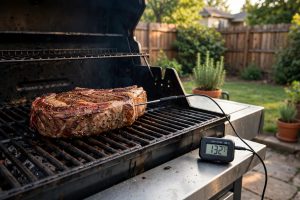
Food safety matters too. Keep raw meat cold until it goes on the grill. Use one tray for raw food and a clean tray for cooked food. A meat thermometer is the only sure way to know food is done. The Big Green Egg community and recipe writers at The Spruce Eats both stress resting meat after cooking, which keeps it juicy and safe.
How to Set Up Your Station
Start with a level spot. A wobbly station is unsafe and annoying. Lay a grill mat or pavers under it if the ground is soft. This also catches grease drips and protects the deck.
Arrange the storage by use. Put the tools in the nearest drawer. Put the fuel in the cabinet under or beside the grill. Put plates and trays on the shelf closest to the serving side. Hang the brush and tongs on hooks at hand height. The first few cooks will show what needs to move. At higher elevations, heat and timing shift a little, so cooks there may want to read about grilling at high altitude as well.
Keep a small kit in the station: thermometer, extra foil, paper towels, a spray bottle of water, and trash bags. With these on hand, most cooks run without a trip indoors.
FAQ
How much should I spend on the best outdoor grill station with storage?
Spend what matches your use. A few hundred dollars buys a good cart. One to three thousand buys a solid modular island with real storage. More than that buys a built-in. Set the budget from the storage and cooking space you truly need, not from the largest model in the store.
Can I use my current grill with a new station?
Often yes. Many stations are made to hold standard kettle grills or grill heads. Measure your grill and compare it with the station’s opening or mounting points. If the station comes with its own grill head, check the fuel type: gas, charcoal, or pellet.
Do grill stations survive winter outdoors?
Most do if they are covered and cared for. Stainless steel and quality resin handle cold well. Wood needs sealing. Remove the propane tank to a ventilated outdoor spot for winter, never into the house. In heavy snow regions, a hard cover or indoor storage is safer.
What is the best storage layout for a small patio?
A narrow cart with a cabinet below and hooks on the side gives the most storage per square foot. Choose closed doors so tools stay dry. If there is room for one more piece, a slim prep table adds work space without a big footprint.
Gas, charcoal, or pellet for a grill station?
Gas is quick and easy to control. Charcoal gives a strong smoky taste and costs less to start. Pellet grills add wood smoke with push-button ease but need power. The storage needs differ too: gas needs a tank cabinet, charcoal needs dry space for bags and a metal ash can, pellet needs dry space for pellets.
How do I keep the storage cabinets dry inside?
Close the doors fully after each use. Make sure the cover fits over the whole station. If rain still gets in, drill-free vent plugs or small desiccant packs help. In very wet climates, choose a station with raised feet so water does not sit under it.
A Short Final Word
The best outdoor grill station with storage is the one that fits your yard, your cooking habits, and your budget. Measure first. Choose weather-strong materials. Pick storage that holds your tools, your fuel, and your trays. Keep it clean and covered. Done well, the station pays back every week in shorter setup, tidier patios, and better food.
References
AmazingRibs.com. (n.d.). Barbecue and grilling science. https://www.amazingribs.com Big Green Egg. (n.d.). Kamado grills and outdoor cooking. https://www.biggreenegg.com Broil King. (n.d.). Gas and charcoal grills. https://www.broilkingbbq.com Char-Broil. (n.d.). Gas and charcoal grills. https://www.charbroil.com Consumer Reports. (n.d.). Product reviews and ratings. https://www.consumerreports.org The Home Depot. (n.d.). Home improvement products. https://www.homedepot.com The Spruce Eats. (n.d.). Recipes and cooking guides. https://www.thespruceeats.com Traeger. (n.d.). Wood pellet grills. https://www.traeger.com Weber. (n.d.). Grills and outdoor cooking. https://www.weber.com
Was this guide helpful?

About Lisa Anderson
The My Garden US editorial team writes practical, in-depth home and garden guides for American homeowners — tested advice, no fluff.