
Finding the Best Grill for High Altitude Cooking
Cooking on a grill at high altitude is not the same as cooking at sea level. Above 5,000 feet, the air grows thin and dry. Water boils at a lower temperature. Heat escapes faster. Gas burns with less force. Many grill owners in Colorado, Wyoming, Utah, and New Mexico learn this the hard way: their grill takes longer to heat, struggles to hold a steady flame, and cooks food unevenly.
The best grill for high altitude cooking is one that fights back against thin air. It should have strong heat output, good wind protection, a tight lid, and thick walls that hold heat in. Some grill types handle these conditions far better than others.
This guide explains what happens to grills at altitude, which types perform best, and what to look for when you shop. Whether you live in the Rockies or camp at 8,000 feet on weekends, these ideas will help you grill better food with less trouble.
Why High Altitude Changes Grilling: Best Grill for High Altitude Cooking
Air at high altitude has less oxygen. That fact shapes everything about outdoor cooking.
Gas grills burn fuel by mixing propane or natural gas with oxygen. With less oxygen in the air, the burner flame weakens. A grill rated at 40,000 BTU at sea level may put out noticeably less heat at 8,000 feet. Food takes longer to cook. Searing a steak becomes harder because the grill cannot reach the same peak temperature.
Charcoal grills face a similar problem. Charcoal needs oxygen to burn hot. In thin air, briquettes burn cooler and die out faster. You may need more charcoal than usual, and you may need to leave the vents open wider.
Wind is another enemy. Mountain air moves fast and changes direction. Wind pulls heat out of a thin-walled grill in seconds. A grill that keeps 450 degrees in calm air may drop to 350 when a gust hits.
Dry air matters too. At altitude, meat dries out faster on the grill. Lids and covers help, but the best defense is a grill that cooks food quickly at high heat so less moisture escapes.
What to Look for in a Grill at High Altitude
The best grill for high altitude cooking shares a few key traits. Keep these in mind while you shop.
High BTU output. More power means more heat in thin air. For gas grills, look for at least 36,000 to 50,000 BTU across the cooking surface. Higher output gives you a cushion when altitude steals some of your flame.
Thick walls and a heavy lid. Ceramic kamado grills and heavy steel grills hold heat far better than thin aluminum bodies. A tight-fitting lid keeps hot air around the food instead of letting it escape.
Wind resistance. Look for grills with few open gaps, deep fireboxes, and lids that seal well. Some gas grills have flame tamers that protect the burners from gusts. A grill cart with solid sides also blocks wind better than open legs.
Good temperature control. At altitude, small changes in air flow or gas flow have a bigger effect. Precise knobs, good thermometers, and adjustable vents help you hold a steady temperature.
A strong, even heat zone. Grills that spread heat evenly across the grate cook better when total output drops. Poor heat spread shows up as hot spots and cold spots, and the problem gets worse in thin air.
Sources like Weber and Napoleon publish guides on heat management that are worth reading before you buy. Retailers such as Home Depot list BTU ratings for most models, which makes comparison shopping easier.
Which Grill Types Work Best at High Altitude
Kamado Grills
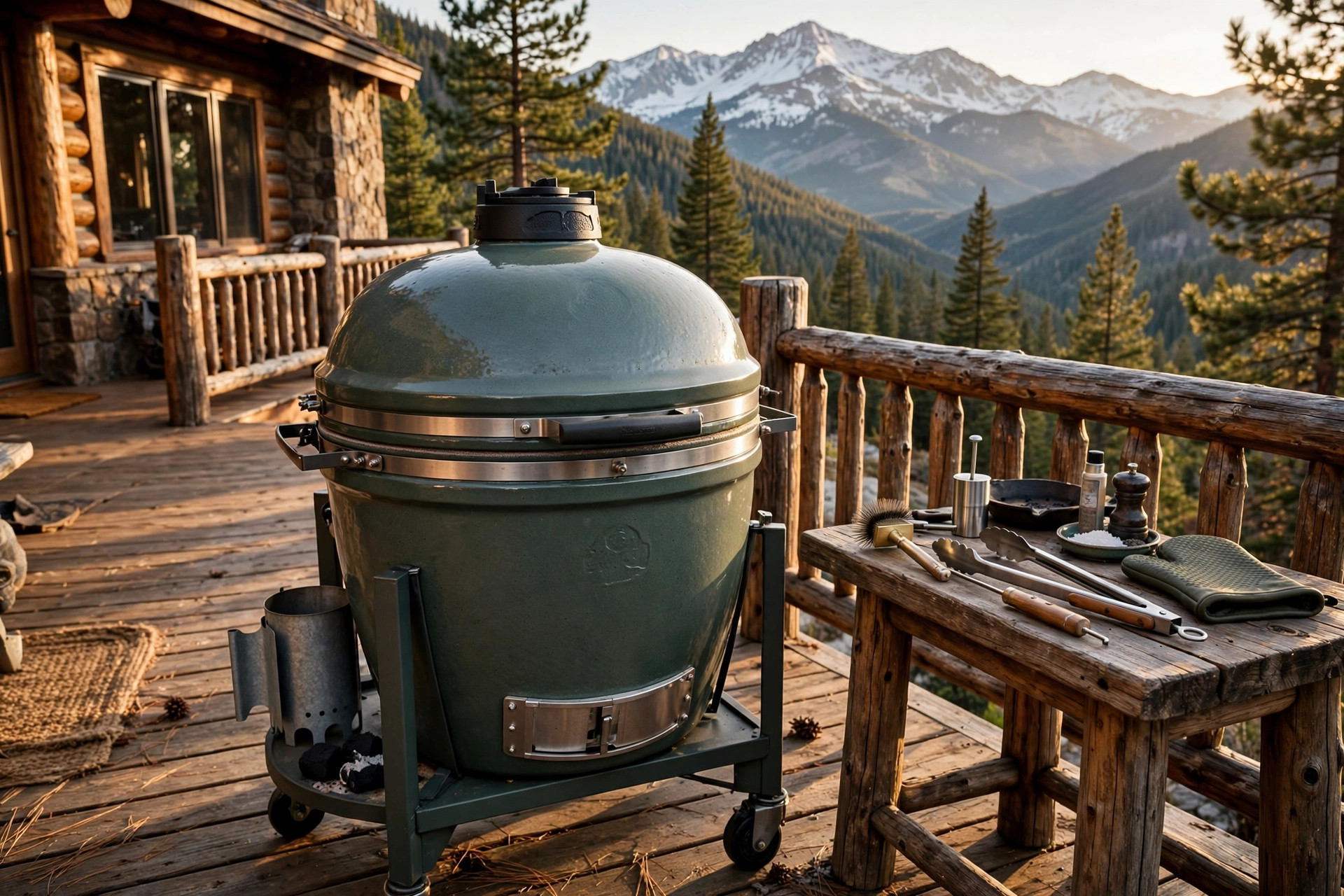
Kamado grills, made famous by brands like Big Green Egg, are among the best choices for high altitude cooking. Their thick ceramic walls trap heat and hold it steady for hours. They are naturally well sealed, so wind steals less heat. They also use charcoal efficiently, which matters when charcoal burns faster at altitude.
A kamado can sear at very high heat or smoke low and slow. That range is hard to beat in the mountains. The main drawback is price and weight. Kamados cost more than basic kettle grills and are heavy to move. If you want one grill that does everything at altitude, a kamado is hard to argue against. For value shoppers, our guide to the best kamado grill for the money compares the top options.
Pellet Grills
Pellet grills use wood pellets and an electric fan to feed the fire. That fan is a real advantage at altitude because it pushes air into the firebox, partly making up for the thin air. A pellet grill from Traeger can hold a set temperature with remarkable steadiness, even when conditions outside are rough.
Pellet grills shine for slow cooking, smoking, and roasting. They are less ideal for fast, hot searing, though many models now include a sear zone or direct-flame mode. They also need electricity, so they are not the best pick for remote campsites. To understand the trade-offs between fuel types, read our comparison of pellet grill vs gas grill pros cons.
Gas Grills
Gas grills are the most popular choice in America, and they can work well at altitude if you choose wisely. Look for models with high BTU ratings, heavy lids, and good burner design. Brands such as Broil King build grills with deep cook boxes and strong heat that handle mountain conditions better than thin, low-cost models.
One catch with gas at altitude: propane itself behaves differently. Propane pressure drops in cold weather, and cold weather is common at altitude. Keep your tank full and store it in a sheltered spot. Some owners switch to natural gas if their home has a line, since natural gas pressure is steadier.
Charcoal Kettle Grills
A classic charcoal kettle can still cook good food at altitude, but it demands more work. You will use more charcoal, fight more wind, and adjust vents more often. That said, a kettle with a tight lid and thick steel can turn out excellent burgers and steaks if you learn its habits. For beginners, a kettle is a cheap way to learn how altitude affects fire before investing in a bigger grill.
Flat Top Grills
Flat top griddles cook on a solid steel surface rather than open grates. They are less affected by wind because the cooking surface shields the burners. A flat top is a strong pick for cooking breakfast, smash burgers, and vegetables at altitude. Our review of the best flat top grill for outdoor kitchen setups covers the leading models. The main limit is that you cannot get the same smoky flavor or open-flame char that other grill types offer.
Cost and Price Ranges
Prices vary widely, and you do not always need the most expensive model to cook well at altitude.
Budget gas grills in the 200 to 400 dollar range can work, but thin walls and low BTU output are common. They struggle the most when air is thin. Mid-range gas grills from 500 to 1,000 dollars usually have better heat retention and stronger burners, making them a safer bet for mountain homes.
Kamado grills typically run from 700 to 1,500 dollars depending on size. Pellet grills range from about 500 to 2,000 dollars. Flat top grills sit in the 300 to 1,000 dollar range. Charcoal kettles remain the bargain of the group at 100 to 300 dollars.
Independent testing from Consumer Reports can help you compare real-world performance across price bands. Recipe and technique advice from The Spruce Eats and Amazing Ribs can sharpen your skills once the grill is home.
Care and Upkeep at Altitude
High altitude is hard on grills, so care matters more than usual.
Clean your burners often. Dust, insects, and spider webs clog burner tubes faster in dry mountain air, and a clogged burner in thin air performs even worse. Check the tubes at the start of every season.
Protect your grill from the weather. Sun, snow, and wind wear down covers and rust thin metal. A heavy-duty cover helps, but storing the grill in a garage or shed during harsh months is better.
Check propane fittings for leaks more often. Temperature swings at altitude stress hoses and seals. A simple soapy-water test on the connections takes two minutes and can prevent a dangerous surprise.
For charcoal and kamado grills, keep charcoal dry. Mountain storms arrive fast, and damp charcoal lights poorly at altitude. Store bags indoors or in sealed bins.
Empty ash and grease pans regularly. Good airflow is precious in thin air, and a clogged grill chokes its own fire.
Safety Tips for High Altitude Grilling
Safety rules do not change at altitude, but a few points deserve extra care.
Never grill in an enclosed space. This rule matters even more at altitude because your body is already getting less oxygen. Carbon monoxide from a grill in a garage or under a low tent is deadly.
Watch for fire danger. Many mountain areas have burn bans during dry months. Check local rules before you light up, and keep a fire extinguisher or hose nearby.
Give propane tanks room to breathe. Do not store a spare tank in direct sun or in a hot car. Cold mornings followed by warm afternoons can swing tank pressure, so check connections when the temperature changes sharply.
Keep children and pets away from the hot grill, and use long-handled tools. Wind gusts can blow flames sideways, so stand upwind when you open the lid.
Frequently Asked Questions
Do gas grills lose power at high altitude? Yes. With less oxygen in the air, gas flames burn weaker. A grill may lose 10 to 20 percent of its effective heat at 8,000 feet. Choosing a grill with a higher BTU rating helps offset the loss.
What is the best grill for high altitude cooking overall? Kamado grills are the top pick for most mountain cooks because their thick ceramic walls hold heat in thin, windy air. Pellet grills are a close second thanks to their fan-fed fire and steady temperature control.
Do I need to adjust cooking times at high altitude? Yes. Food usually takes longer because the grill runs cooler and water evaporates faster. Use a meat thermometer instead of guessing, and expect steaks, chicken, and roasts to need extra minutes.
Can I use a pellet grill at 10,000 feet? Yes. Pellet grills handle altitude well because the electric fan feeds air to the fire. You may burn more pellets than at sea level, so keep the hopper full and expect slightly longer cook times.
Should I buy a grill with a rotisserie for altitude cooking? A rotisserie can help because the food turns through the heat zone and cooks more evenly. It is a nice extra, but it does not fix a weak grill. Focus first on heat output and heat retention.
Is natural gas better than propane at high altitude? Natural gas has steadier pressure because it comes from a fixed line, while propane pressure drops in cold weather. If your home has a natural gas hookup, it is a reliable choice for mountain grilling.
A Short Final Word
The best grill for high altitude cooking is the one that keeps its heat when the air turns thin and the wind picks up. Kamado grills lead the pack, pellet grills follow close behind, and a strong gas grill with high BTU output can serve you well too. Match the grill to how you cook, protect it from the weather, and learn how altitude changes your fire. Do that, and mountain grilling becomes one of the great pleasures of living high up.
References
AmazingRibs.com. (n.d.). Barbecue and grilling science. https://www.amazingribs.com Big Green Egg. (n.d.). Kamado grills and outdoor cooking. https://www.biggreenegg.com Broil King. (n.d.). Gas and charcoal grills. https://www.broilkingbbq.com Consumer Reports. (n.d.). Product reviews and ratings. https://www.consumerreports.org Napoleon. (n.d.). Fireplaces, grills, and heating products. https://www.napoleon.com The Home Depot. (n.d.). Home improvement products. https://www.homedepot.com The Spruce Eats. (n.d.). Recipes and cooking guides. https://www.thespruceeats.com Traeger. (n.d.). Wood pellet grills. https://www.traeger.com Weber. (n.d.). Grills and outdoor cooking. https://www.weber.com
Was this guide helpful?

About Robert Taylor
The My Garden US editorial team writes practical, in-depth home and garden guides for American homeowners — tested advice, no fluff.
You May Also Like
Pellet Grill Cover for Winter Reviews: What the Best Cold-Weather Covers Share
February 19, 2026 0 views
Best BBQ Rub for Ribs: A Homemade Guide
February 21, 2026 0 views
The Best Portable Grill for Camping Reviews: A Plain Guide
September 28, 2026 0 views