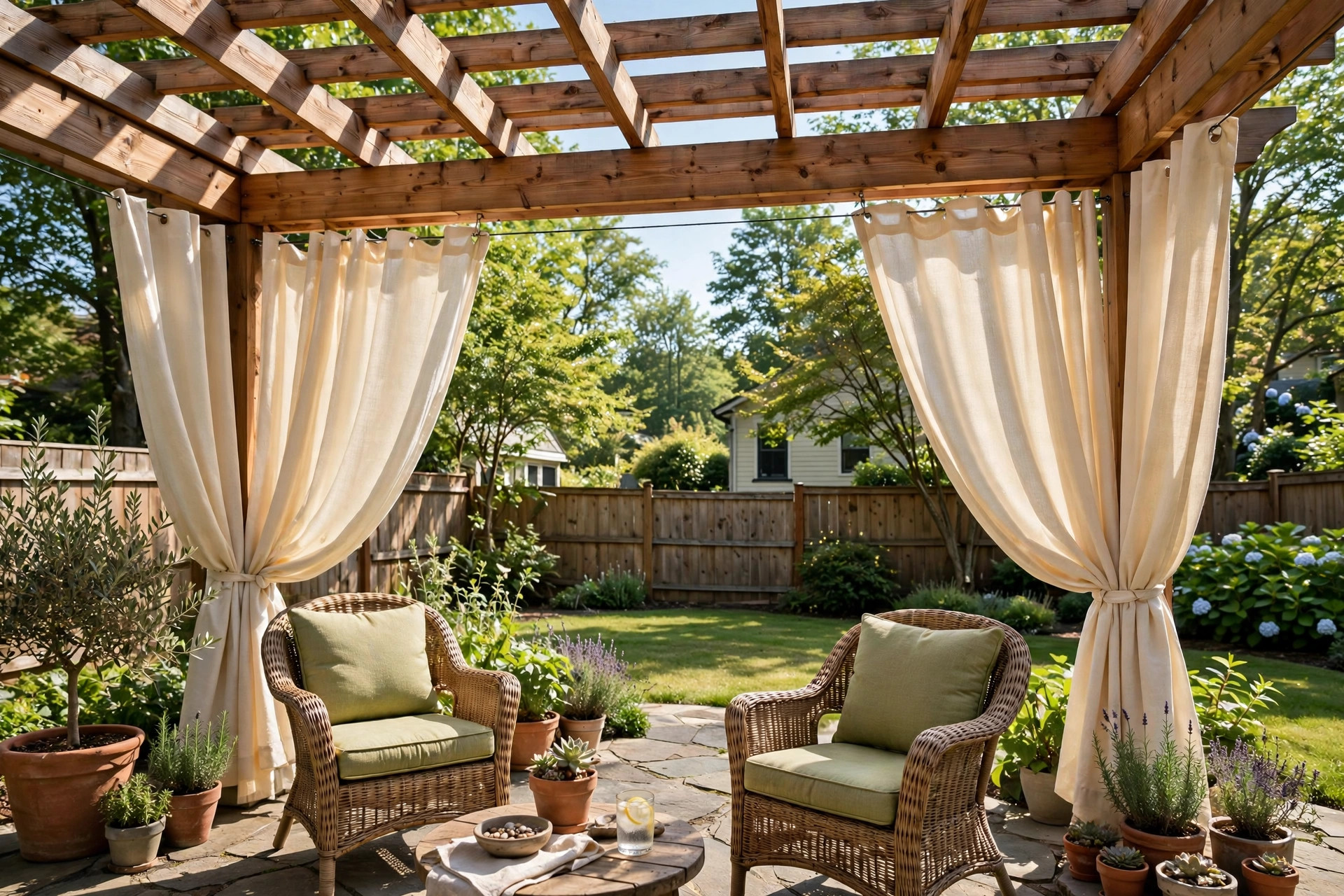

Learning how to hang patio curtains on pergola posts and beams is one of the simplest ways to change an open backyard into a room with walls. The work takes a day or less. The tools are common. The result gives shade in the heat of the day, privacy from the street, and a soft look that wood alone cannot give.
Many homeowners put up a pergola for shade and then find the sun still comes through at an angle. Curtains answer that need. They slide open when you want the breeze and close when you want quiet. This guide walks through the whole task in plain order: why curtains matter, what to buy, the ways to hang them, what it costs, how to keep them clean, and how to stay safe while you work.
Why It Matters
A pergola is an open frame. Its slats throw lines of shade, but they do not stop low sun in the morning or the evening. They do not stop the wind from blowing through at dinner. They do not stop a neighbor’s view. Curtains add the missing walls, and they do it without the cost of a full porch addition.
Shade is the first reason. A panel of outdoor fabric can cut heat on a west-facing patio by a clear margin. The air under the curtains feels calmer. Chairs stay cooler. A glass of water lasts longer in the shade. For families who eat outside in summer, this turns a hot corner into the most used room of the house.
Privacy is the second reason. Many yards sit close together. A fence gives privacy at ground level, but second-story windows and decks can see right over it. A row of curtains at the side of the pergola closes that sight line. You can sit with coffee in the morning without waving to the whole street.
Comfort is the third reason. Curtains break the wind. They soften harsh light. They make string lights glow in a nicer way at night. When the evening cools, the fabric holds a little of the day’s warmth. Guests notice the change at once.
What to Look For When You Choose Curtains: How to Hang Patio Curtains on Pergola
Not every curtain will do. Indoor fabric fades, rots, and mildews in a season. Outdoor curtains are made for this work. Look for cloth labeled for outdoor use, made from spun polyester, olefin, or acrylic. These fibers resist the sun and dry fast after rain.
Weight matters. Light sheers give privacy without blocking air. They move in the wind and catch the light. Heavy canvas panels block sun and wind but need strong hardware. A good middle ground is a medium-weight outdoor drape that lets some light through while still giving real shade.
Color matters more than people think. Light colors reflect heat and keep the space cool. Dark colors absorb heat and fade faster. Sand, light gray, and soft blue hide dust better and still look fresh for years.
Size matters too. Measure each open side of the pergola. The curtains should reach from the beam to about an inch above the floor or deck. For fullness, plan on fabric that is one and one half to two times the width of the space. A panel that hangs flat looks thin. A panel with folds looks rich and blocks more light.
Check for grommets or rod pockets. Grommets are metal rings set in the top hem. They slide on rods or hooks and hold up well in wind. For a pergola, grommets or tab tops are the practical choice.
Types of Hanging Hardware and How to Choose
There are four common ways to hang the panels. Each suits a different pergola and a different budget.
Curtain rods. A rod across each beam gives the neatest look. Outdoor rods are made of rust-proof metal or heavy plastic. Brackets screw into the beam ends or the posts. Rods work best when the span is under ten feet. Longer spans sag in the middle unless you add a center bracket. Choose a rod at least one inch thick so the weight of wet fabric does not bend it.
Wire cable systems. A steel cable strung between two posts, with clips or rings on the curtains, is the strongest option. Cable kits come with turnbuckles to pull the line tight. This method suits long spans and heavy panels. Many homeowners hide the cable behind the front beam so only the curtains show.
Hooks and eye screws. For a low-cost job, screw eye hooks into the underside of the beams and hang each grommet on a hook. This is fast and cheap. It works well for light panels. The drawback is that curtains cannot slide. Each panel stays where you put it. For a side that will stay closed all season, this is fine.
Tension rods between posts. Where two posts face each other, a tension rod wedges in place with no screws. This suits renters or anyone who does not want holes in the wood. Tension rods hold light curtains only. Check them after storms, since vibration can work them loose.
When you shop for hardware, stainless steel and powder-coated aluminum last the longest. Plain steel rusts and stains the fabric with brown streaks. Retailers such as IKEA and Wayfair carry outdoor-rated rods, cables, and curtain sets, and independent testing groups such as Consumer Reports publish guidance on which outdoor fabrics hold up best under sun and rain.
Step by Step: How to Hang Patio Curtains on Pergola Beams
Plan the job on a calm day. Wind makes ladders and long panels hard to handle. Set out all tools first: ladder, tape measure, pencil, drill, level, hardware, and the curtains still in their wraps.
Step 1: Measure. Measure the width of each side you plan to cover and the height from the beam to the ground. Write the numbers down. Count how many panels you need for fullness. Order the curtains and let them sit out of the package for a day so folds relax.
Step 2: Mark the lines. For a rod or cable, mark bracket points on the beams with a pencil. Use a level so the line runs true. A rod that slopes will send every curtain sliding to one end. For hooks, mark each spot the same distance apart, about one foot between marks.
Step 3: Install the hardware. Drill pilot holes first. Wood splits when a screw goes in dry. A pilot hole slightly smaller than the screw stops the split. Drive the brackets or eye screws in firm but not so tight that the wood cracks. For cable, mount the anchor eyes, thread the cable, and tighten the turnbuckle until the line is taut.
Step 4: Hang the panels. Slide grommets onto the rod before you lift it into the brackets, or clip the rings onto the cable. Hang one side at a time. Step back and check the hang. Panels should just clear the floor. If they drag, raise the hardware or hem the curtains.
Step 5: Weight the hems. Wind is the enemy of outdoor curtains. Sew or clip small weights into the bottom hems, or buy panels with weighted hems. Some homeowners thread a short length of chain through the hem. This small step keeps the curtains from blowing over the table in a gust.
Step 6: Tiebacks. Add tiebacks at each post. Rope, canvas straps, or metal holdbacks all work. Tiebacks let you pull the curtains open on fine days and keep them neat in a storm. They also show off the folds and give the patio a finished look.
Test the full range of motion. Open and close each panel. They should slide without catching. If a grommet sticks, check that the rod or cable is level and free of burrs.
Cost and Price
A basic job costs less than most patio upgrades. Here is what to expect in plain numbers.
Outdoor curtain panels run from about fifteen to sixty dollars each, based on size and fabric. A standard 54 by 84 inch panel sits near the middle of that range. A ten-foot side needs three to four panels for good fullness. Plan on sixty to two hundred dollars per side for fabric.
Hardware adds to the bill. A pair of brackets with an outdoor rod costs twenty to fifty dollars. A cable kit with turnbuckles and clips runs thirty to seventy dollars. Eye screws and hooks are the cheapest route at under fifteen dollars for a whole side. Tiebacks cost five to fifteen dollars per pair.
For a four-sided pergola done with mid-range fabric and rods, the full project often lands between three hundred and six hundred dollars. Labor is the main savings. A hired handyman would charge two hundred to four hundred dollars for the same day of work.
Watch for sales at the end of summer. Outdoor fabric goes on clearance in August and September. Buying panels a season ahead can cut the fabric cost by a third. Just store them dry through the winter.
Care and Upkeep
Outdoor curtains last three to seven years with steady care. Sun is the main wear. Even the best fabric fades in time. Rotating panels between the sunny side and the shady side each season evens out the fade.
Wash the panels twice a year. Most outdoor curtains go in a home washer on gentle with mild soap. Skip the bleach. Hang them back on the rod to dry. A full guide to how to clean outdoor furniture cushions covers the same gentle methods that work for curtain fabric.
Take the curtains down before winter in cold states. Ice and snow load stretch the hems and strain the hardware. Fold the panels dry and store them in a bin in the garage.
Check the hardware each spring. Tighten loose screws. Look for rust at the brackets. A five-minute check each year stops a panel from tearing free in the first storm.
Safety
This is a simple job, but it still calls for care. Most of the work happens on a ladder. Set the ladder on firm, level ground. Keep your hips between the rails. Do not lean out to reach a far mark. Move the ladder instead. A second person to hold the ladder is worth the trouble.
Drilling overhead throws dust. Wear safety glasses. A dust mask helps if you are sensitive. Keep the drill cord or battery clear of the ladder rungs.
Check what is above before you drill. Some pergolas carry wiring for lights or fans. If your pergola has lights, find the wire path first and mark your holes clear of it. When in doubt, drill by hand with a small bit and stop if you feel resistance that is not wood.
Mind the weight. Wet canvas is heavy. A long rod with four wet panels can weigh more than it looks. Make sure brackets bite into solid wood, not just trim boards. If a beam feels soft or rotted, fix the wood before you hang anything from it.
In storm season, tie the curtains back or take light panels down. A sail of fabric in high wind can pull a weak bracket clean out of the post. Your best patio umbrella for wind faces the same rule: fabric and wind do not mix in a storm.
Frequently Asked Questions
Do patio curtains on a pergola really block the sun? Yes, within reason. A medium-weight panel cuts direct sun and glare on the side where it hangs. It will not cool the patio like a solid roof, but it takes the harsh edge off the afternoon sun.
What is the cheapest way to hang them? Eye screws with hooks cost the least. A full side can be done for under fifteen dollars in hardware. The trade-off is that the panels do not slide. If you want curtains that open and close, a rod or cable is worth the extra cost.
Will the curtains survive rain? Outdoor-rated fabric dries fast and resists mildew. Light rain is no trouble. After a hard storm, spread the panels so air moves through them. Do not let wet panels sit bunched up for days. That is how mildew starts.
Can I hang curtains on a metal pergola? Yes. Use clamps made for the post size instead of screws, or hang a cable between posts with beam clamps. Do not drill a metal frame unless you know the wall thickness. A clamp system holds well and leaves no holes.
How do I stop the curtains from blowing around? Weight the hems, use tiebacks, and choose grommet tops that grip the rod. In windy spots, a cable system holds panels steadier than a rod. Some homeowners add a second cable near the bottom hem for extra control.
Should the curtains touch the ground? No. Let them hang about an inch above the deck or patio. Panels that drag collect dirt, soak up puddles, and wear through at the hem. If your panels are too long, hem them or raise the hardware.
A Short Final Word
Curtains turn a pergola from a frame into a room. The work is plain, the cost is fair, and the change is felt the first evening you sit behind them. Measure with care, buy fabric made for the outdoors, and hang the hardware level. Pair the new curtains with soft seating touches such as waterproof outdoor throw pillows for patio use, and the space will draw you outside for one more hour every day.
References
IKEA. (n.d.). Outdoor furniture and patio products. https://www.ikea.com Wayfair. (n.d.). Outdoor furniture and patio decor. https://www.wayfair.com Consumer Reports. (n.d.). Outdoor product ratings and buying guides. https://www.consumerreports.org
Was this guide helpful?

About David Wilson
The My Garden US editorial team writes practical, in-depth home and garden guides for American homeowners — tested advice, no fluff.
You May Also Like

A Guide to Choosing an Outdoor Bar Table Set for Four
January 17, 2026 0 views
Outdoor Kitchen Island With Storage Reviews: A Plain Buyer’s Guide
June 7, 2026 0 views
How to Clean Aluminum Patio Furniture: A Plain Step-by-Step Guide
February 2, 2026 0 views