Introduction
A good outdoor patio heater cover waterproof reviews roundup can save you both money and trouble. Patio heaters cost far too much to leave out in the rain without a guard. Water finds every crack. Rust starts small and then eats the frame. Burners clog with dust and leaves. A waterproof cover stops these problems before they start.
This guide pulls together what buyers actually say in their reviews of waterproof patio heater covers. It does not repeat sales talk from box labels. It looks at fabric, fit, seams, vents, and price. By the end you will know what to look for, what to skip, and how to keep your heater safe through rain, snow, and summer heat.
Why a Waterproof Cover Matters: Outdoor Patio Heater Cover Waterproof Reviews
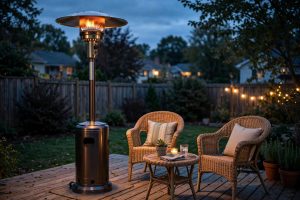
An uncovered heater faces the weather every day. Rain settles on the emitter screen and the reflector. In cold states, frost gets into joints and cracks them. In coastal towns, salt spray speeds up rust. Even in dry places, dust builds up on the pilot and burner. All of this shortens the life of the heater.
Reviewers on trusted retail sites make the same point again and again. A heater kept under a cover runs for many more seasons than one left bare. The cover keeps the steel dry. It keeps leaves out of the burner box. It blocks bird droppings from the reflector. A cover that costs forty dollars can guard a heater that costs three hundred. That is a trade worth making.
Waterproof covers also save cleaning time. Without a cover, you must wipe the heater down each week. With a cover, you lift it off and the heater looks much the same as when you left it. Many buyers say the cover pays for itself in the first rainy month.
What Reviews Teach You: How to Choose
Fabric and Waterproof Rating
The fabric is the first thing reviewers talk about. Most covers use polyester or PVC-backed polyester. Good covers have a tight weave and a waterproof coating on the inside. The best covers feel thick in the hand. Thin covers tear at the seams after one season.
Look for covers that list a denier rating. Denier measures fabric thickness. A 600D or 900D cover is stronger than a 210D cover. Reviewers note that heavy denier covers resist wind, hail, and falling branches. They also last longer under strong sun.
Avoid covers that claim to be only water resistant. Water resistant means rain beads up for a while, then soaks in. Waterproof means rain cannot pass through at all. Read the label with care. If it does not say waterproof in plain words, assume it is not.
Fit and Size
Fit is the second most common complaint in reviews. A cover that is too small will not close at the bottom. A cover that is too large will flap in the wind and let rain blow under it. Measure your heater before you buy. Measure height, width, and depth at the widest point.
Tall pyramid heaters need long covers. Round tabletop heaters need short, wide covers. Most makers list the heater models their covers fit. Match your heater to that list. If your model is not listed, pick a cover a little larger than your measure. A snug drawstring at the bottom can take up the slack.
Seams, Vents, and Closures
Double-stitched seams hold up far better than single seams. Water finds weak stitching first. Some covers add seam tape on the inside. This tape keeps rain from leaking through the needle holes.
Vents sound odd on a waterproof cover. Yet reviewers praise covers with small vents near the top. Vents let trapped moisture escape. Without them, condensation forms under the cover and causes rust anyway. The vents on good covers have flaps that keep rain out while letting damp air leave.
Drawstrings, buckles, and zippers matter more than most buyers expect. Wind is the enemy of a loose cover. Look for a drawstring hem plus at least one buckle strap. Zippers make it easy to slip the cover on and off. Plastic buckles hold up better in salt air than metal ones.
Types of Waterproof Patio Heater Covers
Covers for Standing Propane Heaters
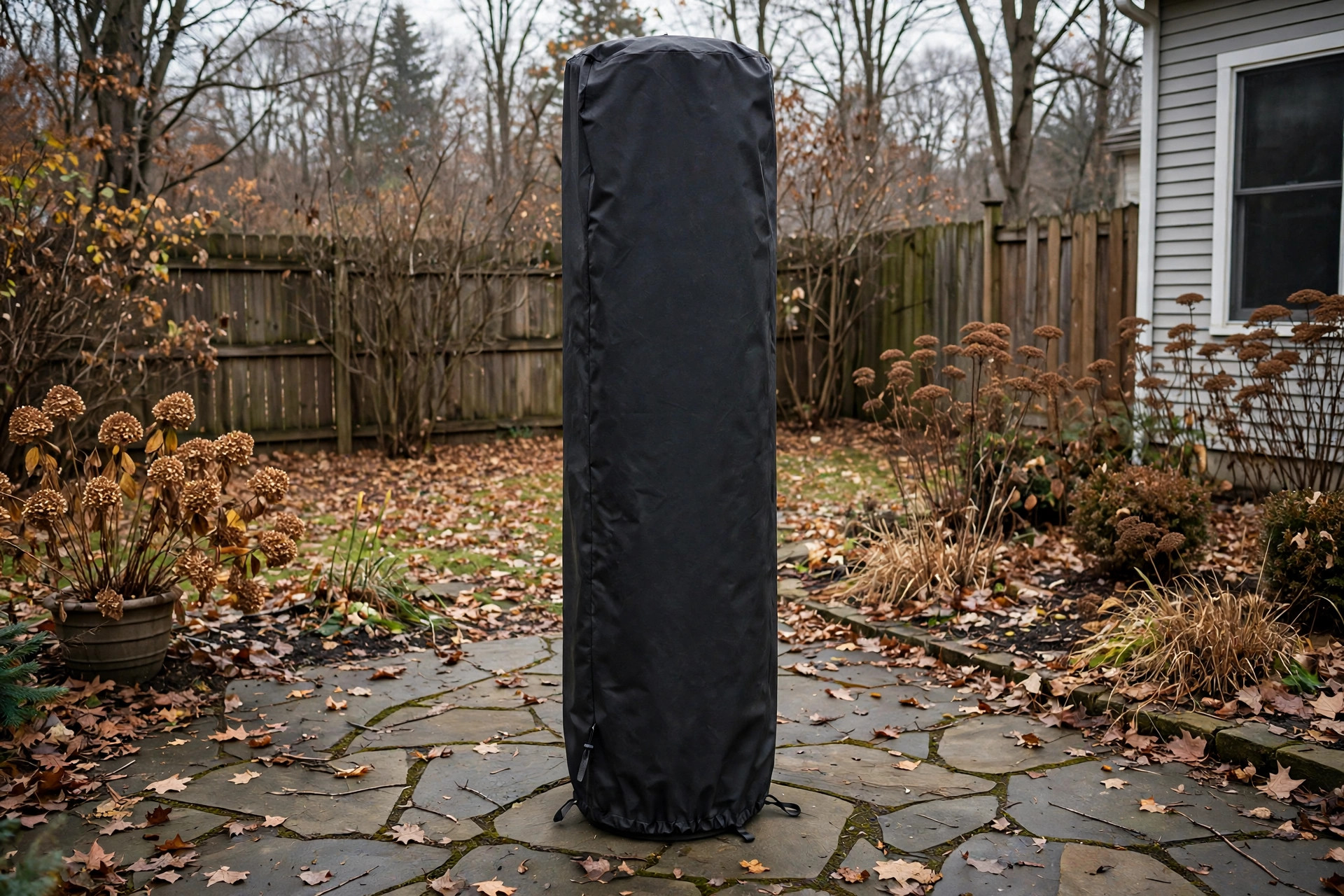
The tall mushroom-style heater is the most common type. Its cover is a long tube with a closed top. Good ones have a reinforced top edge because the sun hits that spot hardest. Reviewers warn against covers that taper too fast at the bottom. Those will not fit over the wide base of many heaters.
Covers for Pyramid Flame Heaters
Pyramid heaters are glass towers. Their covers are slimmer and longer. Fit matters even more here because the glass needs full guard from hail. Many pyramid covers include a soft inner layer to keep the glass from scratching. Buyers say this padding is worth the extra cost.
Covers for Tabletop Heaters
Tabletop heaters are small. Their covers are cheap, often under twenty dollars. Do not skimp here. Cheap thin covers crack in the sun within months. A thicker cover for a small heater still costs less than a new heater.
Universal Fit Covers
Universal covers fit many shapes. They cost less than brand-matched covers. Reviews are mixed. Some universal covers fit fine with the drawstring pulled tight. Others sag and pool water on top. A sagging top is bad. Pooled water adds weight and finds leaks. If you buy a universal cover, check the height range on the label with care.
Cost and Price Range
Waterproof patio heater covers fall into three price bands. Budget covers run from about fifteen to thirty dollars. They use thin fabric and simple drawstrings. Reviewers say they last one to two seasons. They are fine if you store the heater indoors for winter.
Mid-range covers run from about thirty to sixty dollars. This is where most five-star reviews cluster. The fabric is thicker. Seams are stronger. Buckles and vents are common. Most buyers in this band report three to five years of use.
Premium covers run from sixty to one hundred dollars or more. They use heavy fabric, taped seams, and extra padding. Brand-name covers made for a specific heater model sit in this band. Reviews say they fit best and last longest. If your heater cost over four hundred dollars, a premium cover is a sound guard.
Watch out for hidden costs. Shipping can add ten dollars on heavy covers. Some cheap covers need replacing every year, so the true cost over five years can pass the price of one good cover. Do the math before you buy.
Care and Upkeep
A cover needs care too. Brush off leaves and dirt once a month. Hose it down twice a year and let it dry fully before putting it back on. A damp cover left on a heater causes the very rust it should stop.
Check the seams each spring. Small tears can be patched with repair tape made for outdoor fabric. Do not sew new holes unless you seal them after. Each needle hole is a leak.
Take the cover off on calm sunny days to air out the heater. This lets any trapped moisture dry. Put the cover back on before storms. Many reviewers keep the cover in a deck box near the heater so it is always close at hand.
In winter, brush snow off the top of the cover. Snow is heavy. It can pull a cover down and tear the seams. Store the cover indoors if you take the heater in for the season. Fold it loosely. Do not crush it under heavy boxes.
Safety Rules
Never use the heater with the cover on. This sounds clear, yet accidents happen. Covers are made of plastic fabric. They can catch fire if the heater lights with the cover still on. Remove the cover fully. Store it well away from the heater before you light the pilot.
Let the heater cool before you put the cover on. Metal stays hot for a long time after the gas shuts off. Wait at least thirty minutes. A cover placed on a hot heater can melt or stick to the surface.
Keep the gas tank valve closed when the heater sits under its cover. Check the gas hose for cracks each season. Covers do not guard against gas leaks. Only the shut-off valve does that.
Choose covers that carry a fire safety note on the label. Some cheap covers have no safety marks at all. Stick to brands sold by known retailers such as Home Depot, Lowes, Wayfair, and IKEA. These stores test their products and follow safety rules.
Buying Tips from Real Reviews
Read reviews with a sharp eye. Skip reviews that say nothing but “great cover.” Look for reviews that name the heater model, the climate, and how long the cover lasted. A review that says “fit my forty-eight-inch pyramid heater through two Ohio winters” tells you far more.
Photos in reviews are gold. Buyers often post pictures after a year of use. Look at the seams in those photos. Look for fading, cracking, and loose threads. A cover that still looks new after two years is a safe buy.
Guides from Bob Vila, The Spruce, and Consumer Reports test covers in controlled settings. These tests catch problems that only show up in year three or four. HGTV and Polywood also publish patio care guides that cover weather protection. Frontgate carries higher-end covers with detailed size charts that help you match fit.
The same rules that guard patio heaters also guard other outdoor gear. Readers often look up weatherproof patio furniture covers for their sofas and tables. Metal patio furniture rust prevention uses many of the same ideas. Even patio umbrella wind reviews share the same lesson: measure first, then buy.
Frequently Asked Questions
How long should a waterproof patio heater cover last?
A mid-range cover should last three to five years. Budget covers last one to two years. Premium covers can last six years or more. Sun exposure is the biggest factor. Covers in the desert Southwest fade and crack faster than covers in the cloudy Pacific Northwest.
Will a waterproof cover cause rust by trapping moisture?
It can if it has no vents. That is why reviewers stress vents. Buy a cover with vented flaps near the top. Take the cover off on dry days to air the heater. Store the cover dry. With these habits, a waterproof cover fights rust instead of causing it.
Can I use a generic cover instead of a brand-name cover?
Yes, if the size is right. Generic covers cost less. Brand-name covers fit best. Measure your heater and compare to the size chart. A well-fitted generic cover beats a poorly fitted brand cover every time.
Do I need a cover if I store my heater in a garage?
You still need one for the patio season. Rain can strike any week of summer. A cover also keeps dust off during the months the heater stands outside. In the garage, a light dust cover is enough.
What size cover fits a standard propane patio heater?
Most standard mushroom heaters are about eighty-seven inches tall and thirty-three inches wide at the base. Buyers report good fit with covers marked for eighty-nine-inch heaters. Pyramid heaters run taller, often near ninety-one inches. Always check your own measure against the chart.
Final Word
Reviews point to one clear lesson. Buy a thick waterproof cover that fits your heater well. Spend in the mid-range or higher. Check for vents, taped seams, and strong closures. Keep the cover clean and dry. Your heater will run for many more seasons, and you will spend far less on repairs and replacements.
References
Bob Vila. (n.d.). Home improvement advice. https://www.bobvila.com Consumer Reports. (n.d.). Product reviews and ratings. https://www.consumerreports.org Frontgate. (n.d.). Outdoor furniture and decor. https://www.frontgate.com HGTV. (n.d.). Home and garden ideas. https://www.hgtv.com IKEA. (n.d.). Home furnishings. https://www.ikea.com Lowe’s. (n.d.). Home improvement products. https://www.lowes.com Polywood. (n.d.). Outdoor furniture. https://www.polywood.com The Home Depot. (n.d.). Home improvement products. https://www.homedepot.com The Spruce. (n.d.). Home and garden advice. https://www.thespruce.com Wayfair. (n.d.). Furniture and home goods. https://www.wayfair.com
Was this guide helpful?

About David Wilson
The My Garden US editorial team writes practical, in-depth home and garden guides for American homeowners — tested advice, no fluff.