
Introduction
A walkway is the first thing guests see when they arrive at a home. When a homeowner searches for premium paver walkway installation near me, they want more than a simple path from the curb to the door. They want a walkway that looks rich, lasts for decades, and raises the value of the whole property. Pavers offer color, texture, and strength that plain concrete cannot match. This guide walks you through the whole process. You will learn why premium pavers matter, what to look for in a contractor, which types and patterns fit your home, what the job should cost, and how to keep the walkway in fine shape for years.
Why It Matters: Premium Paver Walkway Installation near Me
First Impressions and Home Value
A plain slab of gray concrete tells visitors nothing. A walkway of rich clay brick pavers, or one of cut stone, tells them that the homeowner cares about detail. Real estate agents note that curb appeal can sway a buyer before they even step inside. A premium walkway can return a large share of its cost when the home is sold. It also makes daily life nicer. The path looks good in every season and feels solid underfoot.
Strength That Lasts
Premium pavers are made to handle weight and weather. Concrete pavers are pressed under high pressure, which makes them denser than poured concrete. Clay pavers are fired in kilns at very high heat, so they keep their color for decades. Both kinds resist cracking better than a single slab because each paver can shift a little with the ground. If one paver breaks, a crew can lift just that piece and set a new one. A cracked concrete slab needs a much bigger repair. This simple fix keeps the walkway looking new for a long time.
What to Look For When You Search for Premium Paver Walkway Installation Near Me
Signs of a Good Contractor
A search for premium paver walkway installation near me will turn up many names. The best contractors share a few traits. They visit the site before they quote a price. They dig test holes or check the soil type. They carry insurance and a state license where the law requires it. They show a photo album of past walkway jobs, not just patios. They give a written quote that lists the base work, the paver brand, the edge restraint, and the finish. Ask how long the crew has been laying pavers. A crew that only builds decks may not know the fine points of a walkway base. Guides like This Old House explain what a proper installation process should look like, step by step.
Questions to Ask Before You Sign
Ask about the base depth. A strong base runs four to six inches of crushed stone, plus one inch of bedding sand. Ask what brand of paver they plan to use and whether the color runs through the whole paver. Ask if the quote covers polymeric sand for the joints and a sealer coat. Ask who handles the final grade so water runs away from the house. Ask how many days the job will take and what happens if it rains. A good contractor answers each question in plain words and writes the answers into the contract.
Red Flags to Avoid
Be wary of a bid that is far lower than the rest. That bid may skip the crushed stone base or use thin pavers meant for patios, not walkways. Be wary of a contractor who wants full payment up front. A common plan is a small deposit, a payment when the base is done, and the rest when the job passes a final walk-through. Be wary of anyone who will not put the scope in writing. Verbal promises are hard to enforce when a problem shows up a year later.
Types and Options
Concrete Pavers
Concrete pavers are the most common choice for a premium walkway. They come in many shapes, colors, and face textures. Some mimic cut stone. Others copy old brick. High end lines offer blended colors that look natural. Retailers such as The Home Depot and Lowe’s carry many brands, and review sites like Bob Vila compare the top lines. Concrete pavers come in thicknesses of two and three-eighths inches or more. The thicker pavers suit driveways, but the standard thickness works well for a walkway. They cost less than natural stone but still give a rich look.
Clay Brick Pavers
Clay pavers carry a classic charm. Their color comes from the clay itself, not from dye, so it never fades. Fired clay resists salt, oil, and freeze-thaw cycles. The color range is narrower than concrete, mostly reds, browns, and buff tones, but the look is timeless. Clay pavers cost more than concrete but less than most natural stone. Many owners of older homes choose clay brick to match the house.
Natural Stone Pavers
Natural stone pavers include bluestone, slate, travertine, and granite. Each piece is cut from real rock, so no two pavers look alike. This gives the walkway a one-of-a-kind look. Stone costs the most of the three types, both for the material and for the skilled labor to cut and fit it. Stone also needs a bit more care, since some types stain or flake in harsh winters. For a grand entry, though, nothing beats real stone.
Patterns and Borders
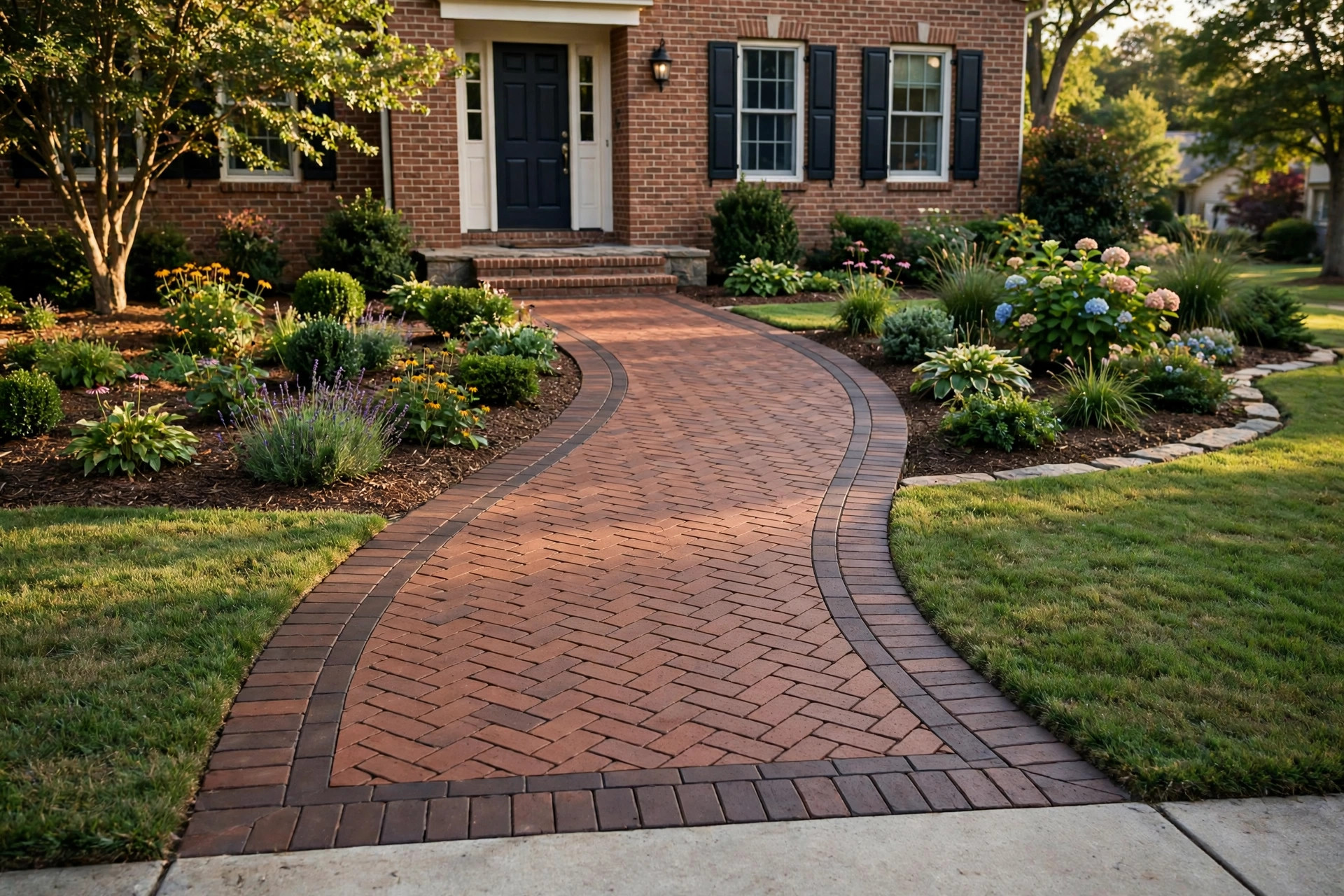
The pattern changes the whole feel of the walkway. A running bond gives a classic brick look. A herringbone pattern looks formal and locks the pavers tight. A basket weave suits older homes. Many premium jobs add a soldier course border, a row of pavers set on edge around the field, often in a darker color. The border frames the walkway and keeps the edge pavers from shifting.
Cost and Price
What Drives the Price
Several factors shape the final bill. The size of the walkway matters most. A longer or wider path needs more pavers and more base work. The paver type matters too. Standard concrete runs less than clay, and clay runs less than natural stone. Site work adds cost. If the crew must remove old concrete, grade a slope, or cut through tree roots, the price rises. Local labor rates vary by region, so a quote in one state may look very different from a quote in another.
Typical Price Ranges
For a premium job with a full crushed stone base, expect a broad range. A plain concrete paver walkway often runs in the lower to middle teens per square foot installed. Clay brick pavers usually run higher. Natural stone can run much higher still, since both the stone and the labor cost more. A small walkway of one hundred square feet might total a few thousand dollars. A long curving path can run well past ten thousand. Always get three written quotes so you can compare like with like. For a deeper look at numbers, see this guide to paver walkway installation costs.
How to Compare Quotes Fairly
Make sure each quote covers the same work. Check the base depth, the paver brand and thickness, the edge restraint type, and whether polymeric sand and sealer are included. Ask if the price covers removal of the old walkway and haul-away of debris. Ask about the warranty on labor. A contractor who stands behind the base work for several years shows real confidence in the craft.
The Installation Process
Site Preparation
The crew marks the walkway line and digs out the soil to the right depth. They shape the soil so the finished walkway slopes gently away from the house. A slope of about one inch per eight feet keeps water from pooling. They compact the soil with a plate compactor so it will not settle later.
The Base
Crushed stone goes in next, laid in thin lifts. Each lift gets compacted before the next one goes down. This step is the heart of a premium job. A weak base leads to dips and loose pavers within a few years. A proper base can last for decades. Geotextile fabric between the soil and the stone keeps the layers from mixing in wet climates.
Laying the Pavers
The crew spreads one inch of coarse bedding sand and screeds it level. Then they set the pavers by hand, tapping each one into place. They cut pavers at the edges with a wet saw for clean lines. Plastic or metal edge restraints go around the border and get spiked into the ground. These restraints hold the whole field tight.
Finishing Touches
Polymeric sand is swept into the joints and misted with water. It hardens and locks the pavers together while keeping weeds out. A final pass with the compactor settles everything. Many premium jobs end with a sealer coat that deepens the color and guards against stains. The crew then walks the job with the homeowner to check every detail.
Care and Upkeep
Regular Cleaning
Sweep the walkway every few weeks to keep dirt out of the joints. Wash it once or twice a year with a garden hose and a stiff brush. A pressure washer works, but keep the spray at a safe distance and use a wide fan tip so it does not blast the joint sand out. For oil spots, a degreaser made for pavers usually lifts the stain. Care guides at The Spruce offer more detail on keeping exterior surfaces in fine shape.
Resealing
A quality sealer lasts two to four years, depending on sun and foot traffic. When water stops beading on the surface, it is time to reseal. Clean the walkway well and let it dry fully before the new coat goes on. Resealing keeps colors rich and makes stains easier to wipe up.
Weeds and Ants
Polymeric sand blocks most weeds, but a few may still sprout in the joints. Pull them by hand before the roots spread. Ant hills can push sand out of joints. Treat the nest with a paver-safe product and refill the joint with fresh polymeric sand. A yearly check in spring catches these small problems early.
Safety
Slip Resistance
Wet pavers can be slick, especially smooth stone. Choose pavers with a textured face for the walking surface. A sealer with a non-slip additive keeps the surface safer when it rains. Keep the walkway clear of leaves and algae, since both turn slippery when wet.
Trip Hazards
A well-built walkway sits level, but tree roots and frost heave can lift pavers over time. Walk the path each spring and look for lips or dips. A lifted paver can be reset in an hour by pulling it up, re-leveling the sand, and setting it back. Good lighting along the path helps guests see the surface at night. Pair the walkway with a neat concrete driveway resurfacing plan and a solid retaining wall where the yard slopes, and the whole front of the home stays safe and trim.
Drainage
Water should sheet off the walkway and away from the house. If puddles sit on the pavers after rain, the grade may have settled. A contractor can lift the low area, add base material, and reset the pavers. Never let water pool against the foundation, since it can seep into the basement or crawl space.
Frequently Asked Questions
How long does a premium paver walkway last?
A well-built paver walkway can last thirty years or more. Concrete and clay pavers hold up for decades. The base does most of the work, so a proper base is the key to a long life. Sealers and joint sand need renewal every few years, but the pavers themselves last a very long time.
Can pavers go over my old concrete walkway?
Sometimes. If the old concrete is sound, level, and free of big cracks, thin overlay pavers can be glued on top. This saves the cost of tearing out the old slab. But if the old concrete is heaved or broken, it is better to remove it and build a full base. A contractor can judge the old slab during the site visit.
Do pavers fade in the sun?
Clay pavers keep their color because the color runs through the fired clay. Concrete pavers use color mixed through the body in premium lines, but surface-only color can fade over many years. A sealer with UV protection slows fading and keeps the color deep. Ask the contractor whether the paver line uses through-body color.
How do I keep ice off the walkway in winter?
Use a deicer that is safe for pavers. Plain rock salt can pit some concrete pavers over time. Calcium chloride or magnesium chloride products are gentler. Shovel with a plastic blade rather than a metal one to avoid chipping the paver faces. Never use a sharp pick on the surface.
Will weeds grow between the pavers?
Polymeric sand hardens in the joints and blocks most weed growth. A few weeds may still appear at the edges or in wide joints. Pull them early. A pre-emergent weed product applied in spring adds another layer of defense. Keep the joints full of sand so weed seeds have no place to settle.
Should I seal my new paver walkway?
Sealing is wise for most premium walkways. It deepens the color, guards against oil and rust stains, and slows weed growth in the joints. Some natural stones need a special breathable sealer. Ask the installer which sealer suits your paver type, and plan to recoat every two to four years.
Final Word
A premium paver walkway is one of the smartest upgrades a homeowner can make. It greets guests with style, stands up to weather and wear, and lifts the value of the home. Makers of exterior products such as James Hardie and CertainTeed note that a well finished exterior raises the whole look of a house. Take time to find a skilled local contractor, compare written quotes, and choose a paver that suits your house and climate. With a strong base and a little yearly care, your walkway will look beautiful for decades.
References
Bob Vila. (n.d.). Home improvement advice. https://www.bobvila.com CertainTeed. (n.d.). Building materials and exterior products. https://www.certainteed.com Family Handyman. (n.d.). DIY home repair and maintenance. https://www.familyhandyman.com James Hardie. (n.d.). Fiber cement siding and exterior products. https://www.jameshardie.com Lowe’s. (n.d.). Home improvement products. https://www.lowes.com The Home Depot. (n.d.). Home improvement products. https://www.homedepot.com The Spruce. (n.d.). Home and garden advice. https://www.thespruce.com This Old House. (n.d.). Home renovation guidance. https://www.thisoldhouse.com
Was this guide helpful?

About Sarah Mitchell
The My Garden US editorial team writes practical, in-depth home and garden guides for American homeowners — tested advice, no fluff.
You May Also Like
Buy Vinyl Replacement Windows Online in the USA: A Simple Guide
August 13, 2026 0 views
Insulated Vinyl Siding Price Comparison USA
May 5, 2026 0 views
Top Rated Garage Door Replacement Reviews: A Plain Guide for Homeowners
January 20, 2026 0 views