
Why Outdoor Wall Lanterns Matter for Texas Homes
The right outdoor wall lanterns make a Texas home look warm and safe after dark. A dark porch is not inviting. It is also harder to use. Guests cannot see the steps. A lock is hard to find in the dark. A well lit entry feels calm and secure.
In Texas, outdoor wall lanterns texas homes usa is a common search because the weather shapes every choice. The sun is strong for much of the year. Summer heat bakes anything mounted on a wall. Sudden storms roll through with heavy rain and wind. A lantern that works in a mild climate may fade, rust, or fail in Texas. For this reason, Texas homeowners do well to choose fixtures made for heat, humidity, and rough weather.
Good porch lighting also keeps energy use low. A bright lantern that runs all night can waste money. A right sized lantern with an efficient bulb gives plenty of light for less. In the long run, small choices about bulbs and timers save real money on the electric bill. These savings add up year after year.
What to Look for When You Choose: Outdoor Wall Lanterns Texas Homes Usa
Size and Scale
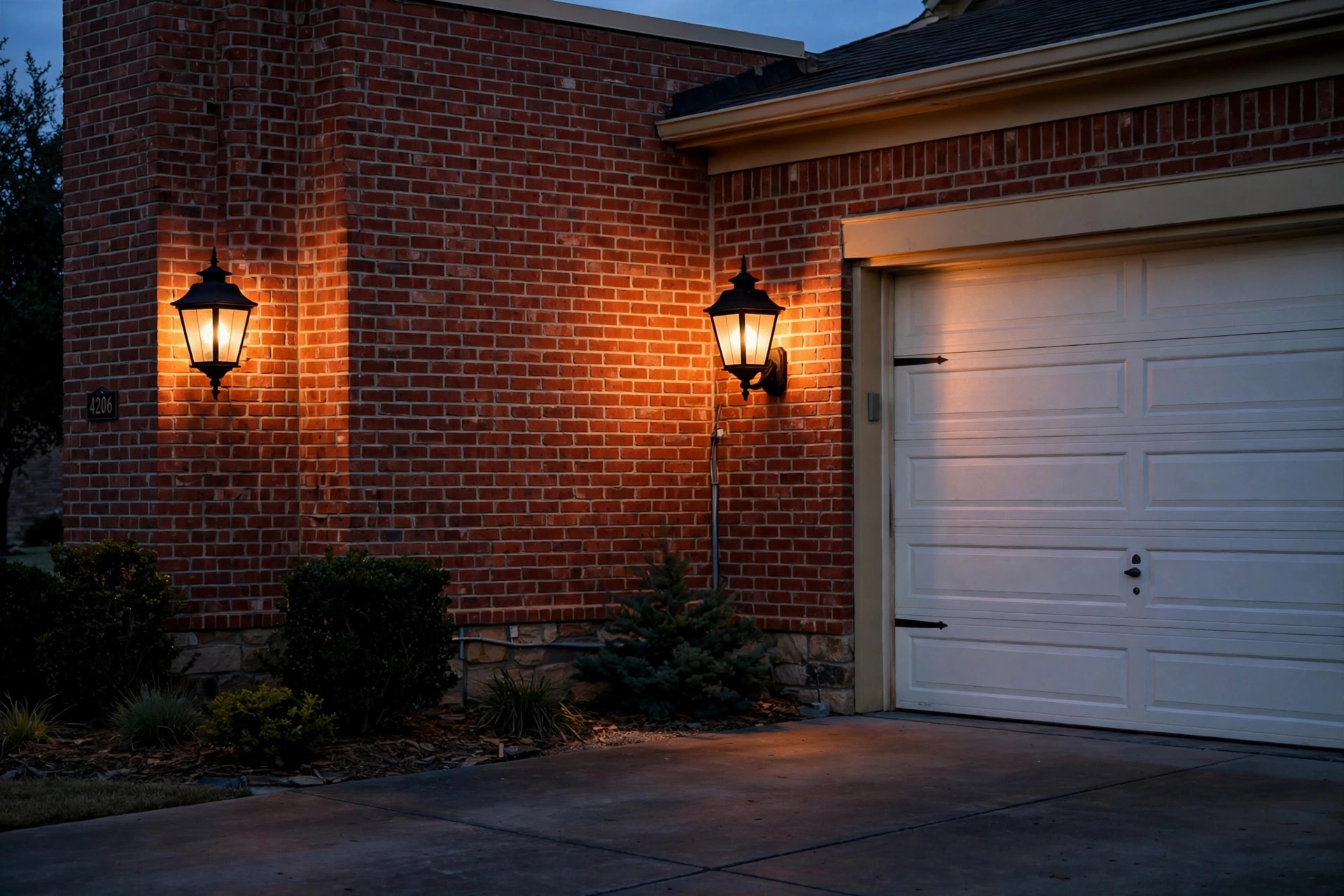
Size is the first thing to check. A small lantern on a wide garage door looks lost. A large lantern beside a narrow side door looks crowded. As a simple rule, the height of the lantern should be about one quarter to one third of the height of the door it sits beside. For an eight foot garage door, a lantern between two and two and a half feet tall looks balanced.
When two lanterns flank a door, they should sit at eye level. The center of each lantern belongs about sixty six inches from the ground. This height spreads light across the door and the walk. It also keeps the light out of your eyes when you stand near it.
For a porch with one lantern, place it on the same side as the door handle. That puts light right where your hand goes. For a wide porch, two lanterns, one on each side, give even light and a finished look.
Matching the Style of Your Texas Home
Texas homes come in many styles, and the lantern should fit the house. A ranch house with brick walls looks best with a classic black or bronze lantern. A Spanish style home with stucco walls suits a lantern with a curved top and an aged metal finish. A modern farmhouse pairs well with a matte black lantern that has simple lines and clear glass.
When you are unsure, look at the other metals on your home. Door hardware, house numbers, and mailbox posts give you a finish to match. Matching these small details makes the whole front of the house feel planned. Lighting experts at Lamps Plus and Lumens often suggest picking one finish for all exterior lights, from the porch lantern to the garage sconce, so the look stays calm and unified.
Finish and Material
The finish decides how the lantern looks and how long it lasts. In Texas, powder coated aluminum is a smart choice. It resists rust and stands up to heat. Bronze and oil rubbed finishes look classic and hide dust. Black finishes suit many styles but can show dust after a windy day.
Glass matters too. Clear glass gives the most light and shows the bulb. Seeded glass, with its small bubbles, spreads light softly and suits a farmhouse look. Frosted glass gives a gentle glow and hides the bulb. In hot states, look for glass that is rated for outdoor heat. Cheap plastic lenses can warp under a Texas sun.
Light Source and Brightness
Most new lanterns use LED bulbs or have built in LED modules. LEDs use far less power than old bulbs and last for years. A warm white bulb, about 2700 Kelvin, gives the cozy glow most people want at a front door. A bright white bulb, about 3000 to 4000 Kelvin, gives a cleaner look and works well at garages and side doors.
Brightness is measured in lumens. For a porch, 450 to 800 lumens is often enough. For a garage or a large yard wall, 800 to 1600 lumens lights the area well. More is not always better. Too much light creates harsh glare and annoys neighbors.
Motion sensor models turn on when someone walks by. They save power and startle no one when set right. Dusk to dawn models use a small sensor to turn on at sunset and off at sunrise. Both are good for homes where lights are often left on by mistake. The Sensor Porch Lights Buying Guide USA covers motion and dusk to dawn options in more detail.
Types of Outdoor Wall Lanterns
Traditional Lantern Styles
Traditional lanterns look like the lamps carried in earlier times. They have a cage frame, clear glass panels, and a pointed or flat top. Colonial and farmhouse styles are common in Texas neighborhoods. These lanterns suit brick and wood homes. They also match gas style lanterns if you want an old world look without real flame.
Modern and Contemporary Styles
Modern lanterns use clean lines and simple shapes. Many have open frames or geometric metalwork. They suit newer Texas homes with flat roofs and wide windows. Modern styles often pair with warm white LEDs to soften the hard edges. Some have solar panels on top, though wired models give more steady light.
Motion Sensor and Dusk-to-Dawn Lanterns
Some lanterns come with built in motion sensors or photocells. A motion sensor lantern stays dark until someone enters the area. This is useful at back doors and garages. A dusk to dawn lantern turns on by itself each night. It is the best choice for a front porch that should always look lit. Both types are worth a look when you compare styles in an Outdoor Wall Lanterns Buying Guide USA.
Cost and Price in the USA
A basic outdoor wall lantern costs between thirty and eighty dollars. These are simple metal frames with clear glass. They look neat and work well on sheds and side doors. Most are easy to install on an existing wall box.
Mid range lanterns cost between eighty and two hundred dollars. This is the best range for most Texas homes. You get better finishes, thicker glass, and solid weather sealing. Many models in this range include motion sensors or dusk to dawn controls.
High end lanterns cost two hundred dollars or more. These are made by known lighting brands with long warranties. They often use solid brass or marine grade metals. They suit fine homes and coastal Texas towns where salt air eats cheap metal.
Do not forget the bulb cost. If the lantern needs a separate bulb, plan five to fifteen dollars for a good outdoor LED. Built in LED modules cost nothing extra until they wear out, often after ten or more years.
Care and Upkeep in Texas Heat
Heat, dust, and insects are the main enemies of porch lights in Texas. A quick cleaning each spring keeps the glass clear. Turn off the power, let the bulb cool, then wipe the glass with a damp cloth and mild soap. A dirty lens can block a third of the light.
Check the seal around the glass once a year. Sun and heat can dry out rubber gaskets. If you see gaps, replace the gasket or add outdoor rated caulk around the base where the lantern meets the wall. This keeps rain and bugs out of the wiring box.
Bulbs need little care. LEDs last so long that many owners never change them. If you use older bulbs, switch to outdoor rated LEDs. They run cooler, which helps the lantern parts last longer in summer heat. The experts at This Old House often remind readers that outdoor fixtures last longest when heat has a clear path out of the fixture, so avoid wrapping the lantern in insulation or sealing every vent.
Safety Notes
Always turn off the circuit breaker before you touch a wired lantern. Do not rely on the wall switch alone. A wire can still be live at the fixture. Use a simple voltage tester to check that the power is off.
Buy fixtures listed by a safety testing lab such as UL. The listing mark should say the lantern is rated for wet locations if it will face rain. A damp rated fixture is fine only under a deep porch roof. In Texas, where wind drives rain sideways, wet rated is the safer pick.
Mount the lantern on a proper outdoor electrical box. The box should be rated for outdoor use and firmly fixed to the wall framing. A loose box can let water in and put stress on the wires. If your old box is cracked or rusted, replace it before you hang the new lantern. Family Handyman guides are a good reference for safe box replacement steps.
Frequently Asked Questions
What size outdoor wall lantern do I need for a standard front door?
A standard front door is about eighty inches tall. A lantern between twenty and twenty six inches tall looks right beside it. For a double door or a wide porch, two lanterns of the same size, one on each side, give the best balance.
Are LED outdoor wall lanterns good for Texas heat?
Yes. LEDs run much cooler than old bulbs, so they stress the fixture less. Choose a model rated for wet locations and a brand that lists a high temperature rating. A warm white LED around 2700 Kelvin gives the classic porch glow.
Should I choose motion sensor or dusk to dawn for my porch?
For a front porch, dusk to dawn is usually best. The light is on every evening, which looks welcoming and keeps the entry lit. For a side door, garage, or back yard, a motion sensor saves power and still gives light when you need it.
How many lumens do outdoor wall lanterns need?
For a small porch, 450 to 800 lumens per lantern is enough. For a garage wall or a dark yard corner, 800 to 1600 lumens works better. If you use two lanterns on one door, each can be a little dimmer since the light adds up.
Do outdoor wall lanterns need to be wired by an electrician?
Replacing an old lantern on an existing box is a simple job many owners do themselves. Running a new line to a wall with no box is harder and should go to a licensed electrician. When in doubt, hire help. The cost is small next to the risk of a wiring mistake.
How do I keep bugs away from my porch lanterns?
Warm white LEDs attract fewer bugs than bright white bulbs. A yellow bug light bulb attracts even fewer. Keep the glass clean, and seal gaps around the fixture so insects cannot nest inside. A dusk to dawn model that is on all night will draw more bugs than a motion sensor model.
A Final Word
Outdoor wall lanterns texas homes usa may seem like a small detail, but they shape how a home feels each evening. The right size, a finish that beats the heat, and an efficient bulb turn a dark wall into a warm welcome. If you plan to light a wider area, you may also like the ideas in the Patio String Lights Buying Guide USA, which pairs well with wall lanterns over decks and seating areas. Take your time, measure your door, and pick a fixture you will enjoy for years.
For more background, see The Spruce, ENERGY STAR, and Philips. Buying guides are also published by The Home Depot and Lowe’s.
References
ENERGY STAR. (n.d.). Energy efficient products. https://www.energystar.gov Lamps Plus. (n.d.). Lighting and home decor. https://www.lampsplus.com Lowe’s. (n.d.). Home improvement products. https://www.lowes.com Lumens. (n.d.). Lighting and ceiling fans. https://www.lumens.com Philips. (n.d.). Lighting products. https://www.philips.com The Home Depot. (n.d.). Home improvement products. https://www.homedepot.com The Spruce. (n.d.). Home and garden advice. https://www.thespruce.com U.S. Department of Energy. (n.d.). Energy efficiency and renewable energy. https://www.energy.gov
Was this guide helpful?

About Sarah Mitchell
The My Garden US editorial team writes practical, in-depth home and garden guides for American homeowners — tested advice, no fluff.
You May Also Like
Solar Path Lights Buying Guide USA
May 14, 2026 0 views
Indoor Grow Lights Reviews Buying Guide USA: Grow Healthy Plants Without Sunlight
June 1, 2026 0 views
Indoor Wall Sconces Reviews Buying Guide USA
May 16, 2026 0 views