
Introduction
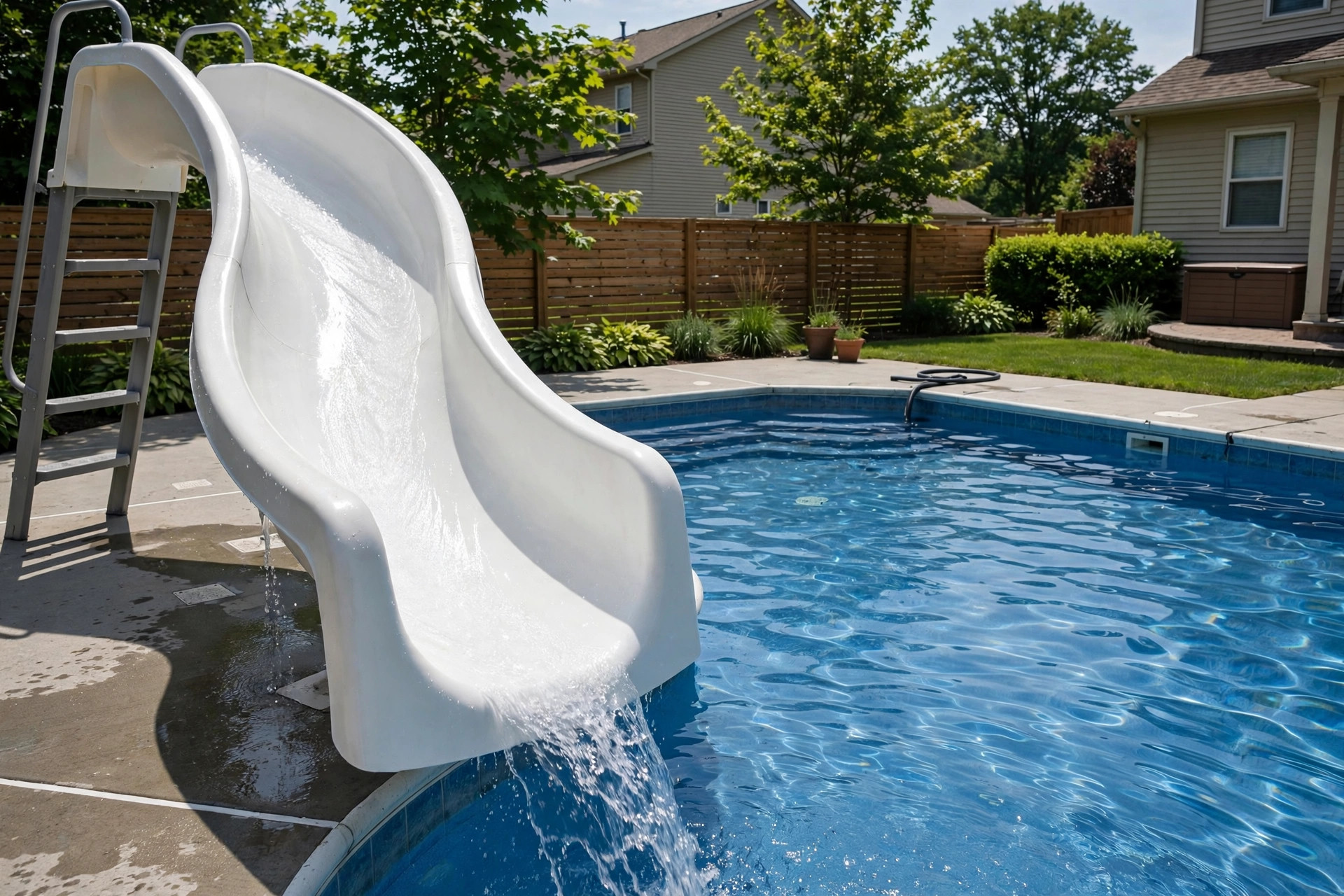
Finding the best pool slide for inground pools is a bigger job than it looks at first. A pool slide is not a toy you can fold up and store in a closet. It is a fixed piece of equipment that must be safe, strong, and well matched to the pool it serves. This guide walks through the whole process in plain language. It covers why a slide is worth the money, how to pick one that fits your pool, the main types on the market, what you can expect to pay, and how to keep it in good shape for years. It also explains the safety rules that matter most. If you are opening your pool for the season, you may also want to read how to open your pool for the summer season before the season starts.
Why a Pool Slide Is Worth Considering: Best Pool Slide for Inground Pools
A pool slide changes the character of a backyard pool. A plain pool is good for swimming and floating, but children often tire of the same routine. A slide adds a new center of action. It gives young swimmers a reason to move, climb, and play, and it brings friends and cousins to the backyard instead of the street. For many families the slide becomes the most used feature of the pool within a week of installation.
There is also a practical side. A well built slide adds value to the property in the eyes of future buyers with children. A sturdy, permanently mounted slide signals that the pool is a family pool, cared for and complete.
The key is to choose the best pool slide for inground pools rather than the cheapest one. Inground pools are permanent structures, and a slide for them should be permanent too. A flimsy slide that wobbles or cracks under weight is worse than no slide at all. This guide treats the purchase as a long term investment, because that is what it is.
What to Look For When Choosing a Slide
Size and Shape
Slides are sold in three rough size groups: small, medium, and large. A small slide rises about four feet above the deck. A medium slide rises five to six feet and suits the average family pool. A large slide rises seven feet or more and belongs on deep, open pools with plenty of space around the landing zone.
Measure your pool deck before you shop. The slide needs a flat area for its base, and it needs clear space at the entry and at the bottom where riders land. Many owners forget the landing zone. A rider should enter the water without hitting the far wall, the ladder, or another swimmer. Allow at least ten to fifteen feet of open water in front of the slide exit.
Weight Capacity
Every slide has a published weight limit. Common limits range from 175 pounds for basic models to 275 or 300 pounds for heavy duty ones. Buy a slide with a limit well above the heaviest person who will use it. Adults use pool slides too, and a slide rated only for children will wear out fast if grownups ride it on weekends.
Deck Space and Mounting
Most residential slides are deck mounted. They bolt to the pool deck with anchor bolts that sit in the concrete or stone.
Water Feed
Most modern slides have a water feed that wets the flume while riders slide down. The feed usually connects to the pool’s return line or to a garden hose. A wet slide is much faster and kinder to bare skin than a dry one.
Materials and Build Quality
The best slides are made from rotomolded polyethylene or fiberglass reinforced plastic. These materials resist sun, pool chemicals, and years of heavy use. Metal parts should be stainless steel or powder coated so they do not rust. Cheaper slides use thin plastic that fades and cracks after two or three seasons in strong sun.
Types of Pool Slides
Straight Slides
Straight slides are the simplest and most common type for home pools. The rider climbs a ladder and slides straight down a gentle or steep flume into the water. The ride is short but reliable, and young children learn to use them quickly. Resources such as Swim University explain how straight slides fit into ordinary residential pool setups.
Curved and C-Shape Slides
Curved slides bend to one side, which makes the ride longer and more fun without raising the slide much higher. Guides such as The Spruce note that the curve also helps aim the rider into the deep part of the pool. These slides need more deck space because the base is wider, and they cost more than straight models. They are a good middle choice for families with teenagers who want a bigger thrill.
Tall Slides
They need deep water at the landing zone, often six feet or more, and a large clear deck. They are a good match for large pools and for families who entertain often. They also draw more attention from insurers, so check your homeowner policy before you buy.
Inflatable Slides
Inflatable slides sit on the deck or float at the pool edge and are filled with air. They cost much less than fixed slides and can be removed in the off season. The trade is clear: they are less stable, wear out faster, and can shift under weight. They suit renters or families who want to test whether a slide will get used before they commit to a permanent one.
Cost and Price Expectations
Prices for the best pool slide for inground pools span a wide range. Small deck mounted slides usually cost between 500 and 1,500 dollars. Medium models with water feeds run from 1,500 to 3,000 dollars. Large or tall slides can cost 3,000 to 6,000 dollars or more.
Installation adds to the total. If your deck is ready and you can do the work yourself, installation may cost nothing but a weekend. Professional installation typically adds 300 to 1,000 dollars depending on the job. Retailers such as Home Depot publish prices for many models, which makes comparison easy.
Do not forget ongoing costs. A slide adds very little to water and chemical use, but it may add to your insurance premium. Call your insurer before you buy and ask how a slide affects your policy. Some carriers require extra liability coverage or a locking fence with self closing gates. The United States Consumer Product Safety Commission publishes guidance on pool safety at CPSC, and its rules are worth reading before installation.
Matching the Slide to Your Pool
The best pool slide for inground pools is the one that fits your specific pool. Start with water depth at the landing zone. The slide maker will state the minimum depth it needs. Shallow water and tall slides do not mix. A common mistake is to mount a large slide on a pool whose deep end is only five feet. The maker’s depth chart is a requirement, not a suggestion.
Next, consider the pool’s shape. Walk around your deck and look for a spot where the base will sit flat and the exit will face open water. Mark it with tape and stand there. Can you see the whole landing zone? If not, keep looking.
Also think about the pool’s circulation. Slides with water feeds work best when tied to a return line with steady pressure. If your pump is old or undersized, the feed may run weak, so review your equipment with our guide to the best pool pump for inground pools.
Families comparing pool types should also note that slides are made mainly for inground pools. Above ground pools use a different class of slide, and you can read more in our review of the best above ground pool for families.
Safety Rules That Matter
A slide is safe only when the rules around it are clear and enforced. Start with the maker’s weight limit and age guidance. Post them where everyone can see them. One rider at a time is the oldest rule in pool safety, and it applies doubly to slides. No one should climb the ladder while another rider is on the flume.
The landing zone must stay clear. Swimmers should learn to move away from the slide exit right after they land. Teach children to look down the flume before they climb, the same way they look both ways before crossing a street. Never allow headfirst sliding. Feet first, sitting up, is the only safe position on a home slide.
Adult supervision is not optional. A slide makes the pool more attractive, which means more use and more need for watchful eyes. The Commission’s pool safety pages at CPSC stress constant, undistracted supervision whenever children are in or near the water.
Check the slide itself at the start of each season. Look for cracks in the flume, loose bolts at the base, wobbly ladder rails, and a water feed that runs weak. Tighten what is loose and replace what is worn. Pool supply specialists such as Leslie’s Pool Supplies and Pool Warehouse stock replacement hardware for common models.
Lighting matters for evening use. If your family swims after dark, the slide, the ladder, and the landing zone should all be well lit.
Installation Basics
Most homeowners can install a small or medium slide in a day with basic tools. The steps are similar across brands. First, pick the mounting spot and mark the bolt holes using the template that comes with the slide. Second, drill into the deck with a masonry bit and set the anchor bolts in epoxy or concrete anchors. Third, assemble the ladder and flume according to the manual, which is usually a one or two person job. Fourth, connect the water feed to the return line or hose. Fifth, test the slide with an adult rider before children use it.
A few tips from experience help. Do not overtighten plastic parts; they crack under too much force. Use a level on the flume so water runs down evenly. Keep the manual and the parts list in a dry place.
If any step feels beyond your skill, hire a pool contractor. A slide that is mounted wrong is dangerous, and the cost of a professional visit is small next to the cost of an injury.
Care and Upkeep Through the Seasons
A good slide needs little care, but it needs regular care. Wash the flume with mild soap and water a few times each season to remove the film that pool chemicals leave behind.
Check bolts and fasteners every spring and midsummer. Concrete decks expand and contract with heat, and bolts can work loose over time. A quarter turn with a wrench is often all it takes.
At season’s end, give the slide a full inspection and note what needs repair before next spring. Sites focused on pool care such as Swim University publish seasonal checklists that are easy to follow.
Common Mistakes to Avoid
The first mistake is skipping the water feed connection. A dry slide is slow, hot in the sun, and hard on skin. If the slide offers a feed, connect it.
The second mistake is weak mounting. Anchor bolts must sit in solid deck, not in thin pavers or rotted wood. If the base rocks when an adult pushes it, the mounting is wrong. Fix it before anyone rides. The third mistake is ignoring the weight limit. Limits are set from testing, and they include a safety margin that should not be treated as extra room.
Finally, do not buy based on looks alone. Read owner reviews, check the weight rating, and favor makers with long histories in pool equipment. Brand pages from spa and pool makers such as Hot Spring Spas and Bullfrog Spas show the build standards serious manufacturers follow.
Frequently Asked Questions
How deep must the water be under a pool slide?
It depends on the slide. Makers publish a minimum depth for the landing zone, often three to five feet for small slides and six feet or more for tall ones. Always follow the maker’s chart.
Can adults use a residential pool slide?
Yes, if the slide’s weight limit allows it. Many slides are rated to 250 pounds or more. Check the rating plate and respect it. Adults should use the same feet first position as children.
Do pool slides need a water connection?
Most fixed slides work far better with one. The water feed wets the flume and speeds the ride. Plan the feed connection before installation day.
How long does a pool slide last?
A well made polyethylene or fiberglass slide lasts ten to fifteen years with basic care. Sun exposure and harsh winters shorten that span. Regular washing and off season covering add years to any slide.
Will a slide raise my home insurance?
It can. Many insurers treat a slide as an attractive nuisance and may ask for added liability coverage. Call your agent before you buy so there are no surprises.
Can I install a pool slide myself?
Most small and medium slides are designed for homeowner installation with ordinary tools. Large slides, slides needing new plumbing, and any mount on a questionable deck are jobs for a contractor. Never guess at the mounting; a loose slide is dangerous.
A Short Final Word
The best pool slide for inground pools is not the tallest or the fastest. It is the one that fits your pool, your deck, and your family, and that you can keep safe and well cared for year after year. Take measurements, read the weight ratings, plan the water feed, and set clear rules from the first day. Do that, and the slide will earn its place as the happiest corner of your backyard for many summers to come.
References
Bullfrog Spas. (n.d.). Hot tubs and spas. https://www.bullfrogspas.com Hot Spring Spas. (n.d.). Hot tubs and spas. https://www.hotspring.com Leslie’s Pool Supplies. (n.d.). Pool supplies and equipment. https://www.lesliespool.com Pool Warehouse. (n.d.). Pool equipment and supplies. https://www.poolwarehouse.com Swim University. (n.d.). Pool and hot tub care guides. https://www.swimuniversity.com The Home Depot. (n.d.). Home improvement products. https://www.homedepot.com The Spruce. (n.d.). Home and garden advice. https://www.thespruce.com U.S. Consumer Product Safety Commission. (n.d.). Product safety information. https://www.cpsc.gov
Was this guide helpful?

About Michael Thompson
The My Garden US editorial team writes practical, in-depth home and garden guides for American homeowners — tested advice, no fluff.
You May Also Like
Salt Water Pool Maintenance Schedule Guide for a Clean and Safe Pool
May 8, 2026 0 views
Best Inflatable Hot Tub for Couples: A Practical Buying Guide
July 17, 2026 0 views
Your Inground Pool Maintenance Schedule Weekly Checklist
May 24, 2026 0 views