
A failing septic drain field is one of the more costly problems a homeowner can face. When the search for septic drain field repair cost near me begins, most people want two things: a clear price range and a way to avoid paying for work that is not needed. This guide gives both. It explains what a drain field does, why it fails, what repairs cost in plain dollars, and how to pick a contractor with care. Read it before you sign any work order.
The drain field, also called the leach field, is the final stage of a home septic system. Liquid waste leaves the septic tank and flows into a network of buried pipes or chambers. There, the soil filters the liquid and nature finishes the cleaning. When the soil can no longer take in water, the system backs up. Drains run slow. The yard smells bad. Wet spots appear above the field. A honest diagnosis is worth more than a low bid. Many calls for septic drain field repair cost near me turn out to be clogged lines or a full tank, not a dead field. A pump-out and a line cleaning may solve the problem for a few hundred dollars instead of several thousand.
Why the Drain Field Matters
What the Field Does
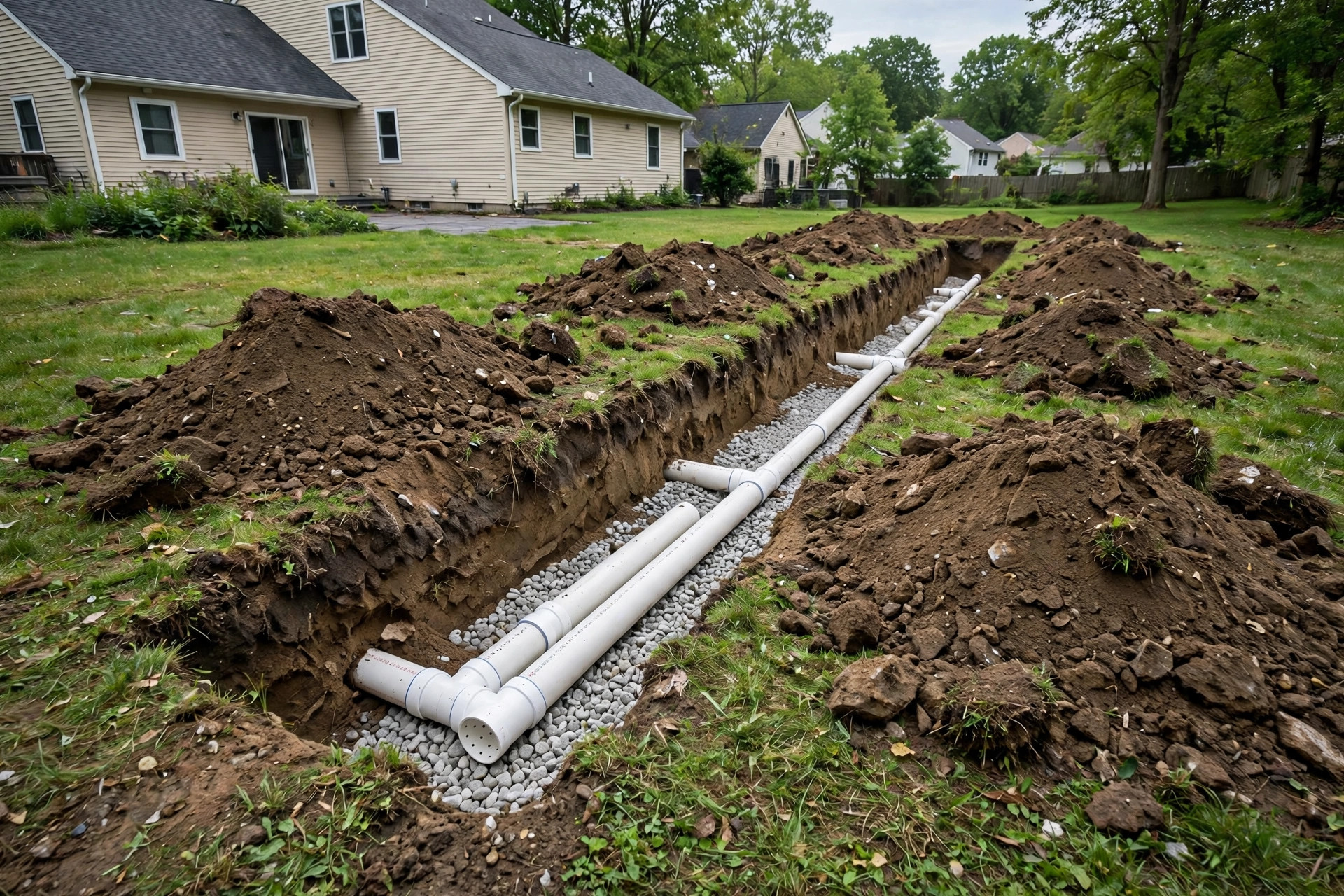
A septic system has three main parts: the tank, the distribution box, and the drain field. The tank holds solids. The box sends liquid out to the field. The field is a set of trenches filled with stone or molded chambers, buried one to three feet below the grass. Soil microbes treat the water as it sinks. This quiet work runs day and night with no pump and no power.
How a Field Fails
Most fields last twenty to thirty years. Some last forty. Failure comes from a few common causes. Too much water overloading the field is the first. A leaky toilet or a running faucet can send hundreds of extra gallons a day into the field. Poor care is the second. A tank that is never pumped sends sludge into the field lines and plugs them. Heavy loads are the third. Cars, trucks, and sheds press the soil and crush the pipes. Old age is the fourth. Even with good care, soil pores seal over time. When the field fails, waste water has nowhere to go. It comes back up in the home or breaks out to the surface. That is a health risk and a code violation. It cannot be left alone.
For owners of older homes, learning septic tank replacement cost near me 2026 can also help, since a tank at the end of its life often goes with a field that is near the end of its life too.
What to Look For When You Get Estimates: Septic Drain Field Repair Cost near Me
The Right Kind of Contractor
A septic repair is not handyman work. Look for a licensed septic installer or pumper with repair experience. Ask for a state license number. Ask for proof of insurance. Ask for three local references and call them. A good contractor starts with a site visit and a soil check, not a price on the phone. Get three written bids. A bid should list labor, materials, machine time, permits, and the size of the field in square feet. Bids that quote by the job with no detail are hard to compare. Do not pick the cheapest bid without reading the fine print.
The Inspection Comes First
A camera inspection of the field lines tells you a great deal. It shows roots, broken pipe, and settled sections. Some contractors charge one hundred fifty to four hundred dollars for a full inspection with a written report. That fee is often credited toward the repair if you hire them. If a contractor refuses to inspect before quoting, find another contractor. Local health departments also give free advice on permits and soil rules. The team at This Old House keeps a steady library of septic care basics that any homeowner can use before calling a contractor.
Types of Septic Drain Field Repair
Minor Repairs
Not every field problem means a full rebuild. Minor repairs cover a single broken line, a crushed distribution box, or root intrusion in one trench. A crushed box costs about five hundred to one thousand five hundred dollars to replace. Jetting a clogged line with high pressure water runs three hundred to eight hundred dollars. Spot repairs of a single pipe section run eight hundred to two thousand dollars. These fixes make sense when the field is under fifteen years old and the soil still takes water well. A perc test or a load test proves it.
Partial Replacement
When one zone of the field is dead but the rest works, a partial replacement adds new trenches to share the load. The old section is rested or capped. Costs run three thousand to seven thousand dollars in most areas. Partial work needs a permit in almost every state. It also needs a reserve area. Some older lots have no room left for new trenches. In that case the only answer is a full new field or an alternative system.
Full Field Replacement
A full replacement removes the old field and builds a new one. Crews dig new trenches, set new pipe or chambers, backfill with stone, and reseed the grass. Costs run five thousand to fifteen thousand dollars for a typical three bedroom home. Hard soil, high water tables, and steep lots push the price up. Sand mound systems and aerobic treatment units cost more, from fifteen thousand to twenty five thousand dollars. These are used where the soil cannot treat waste on its own. A septic system installation cost for a 3 bedroom search gives a wider view of what full system work runs in your state.
Alternative Treatments
Before a full dig, some contractors offer rejuvenation treatments. These include flushing the lines with water jets, breaking up the clogged layer under the trenches, or dosing the field with rest periods and bacteria products. Prices run five hundred to three thousand dollars. Results are mixed. They work best on young fields with early clogging. They do not work on fields with crushed pipe or failed soil. Ask the contractor for written proof of past results. Read the EPA guidance on septic systems for a clear picture of what safe treatment looks like.
Cost and Price Ranges
National Price Ranges
The table below shows typical ranges for septic drain field repair in the United States. Local soil and labor set the final price.
– Camera inspection: $150 to $400 – Line jetting and cleaning: $300 to $800 – Distribution box replacement: $500 to $1,500 – Single trench repair: $800 to $2,000 – Partial field replacement: $3,000 to $7,000 – Full field replacement: $5,000 to $15,000 – Sand mound or aerobic system: $15,000 to $25,000 – Permits: $100 to $500
These are 2026 figures for typical single family homes. Prices run higher in the Northeast and on the West Coast. They run lower in many rural counties in the South and Midwest.
What Drives the Price Up or Down
Soil type is the biggest factor. Sand takes water fast and is cheap to work in. Clay holds water and needs larger fields. A high water table may force a mound system, which doubles the cost. Access matters too. A field under a fence or behind a deck costs more to reach than an open back yard. Depth matters. Deeper lines need more machine time. Season matters. Frozen ground in winter raises the price of digging. The size of the home sets the field size. More bedrooms means more water and a larger field. A four bedroom home needs about one third more field than a three bedroom home.
How to Get Real Local Prices
The phrase septic drain field repair cost near me works best when you add your county name to the search. Look for contractors within thirty miles. Call your county health department for the list of licensed installers. Ask each bidder the same five questions: What failed and why? What is the fix? How many square feet of new field? What permits are needed? What is the warranty? A one year warranty on labor is standard. Compare bids line by line. If one bid is far below the rest, ask what is missing. Home improvement retailers like Home Depot and Lowe’s also rent the tools and materials many homeowners use for small above-ground parts of the job.
Care and Upkeep After the Repair
Daily Habits That Protect the Field
Water care is the first rule. Fix leaks fast. A dripping faucet can add twenty gallons a day to the field. Spread out laundry through the week instead of doing five loads on Sunday. Keep roof drains and sump pumps away from the field. Keep trees and shrubs at least thirty feet from the field so roots do not find the lines. Never drive cars or trucks over the field. Never build decks, sheds, or pools on it. The soil needs air to do its work.
Pumping Schedule
Pump the tank every three to five years. A full tank is the fastest way to ruin a new field. Homes with garbage disposals or many people need more frequent pumping. Mark the pump date on a calendar and keep the record. Read our guide on how often to pump a septic tank to set a schedule that fits your home. The staff at Family Handyman keeps a useful set of septic care articles for do-it-yourself owners.
What Not to Flush
Only human waste and toilet paper go in the septic system. Do not flush wipes, even those marked flushable. Do not pour grease, paint, oil, or chemicals down the drain. Do not use the toilet as a trash can for dental floss, cotton swabs, or medicines. Use septic-safe paper and go easy on harsh cleaners. A light touch with bleach and drain cleaner keeps the good bacteria alive. See our roundup of the best septic tank treatment reviews if you want a maintenance product, and use it as directed.
Safety
Health Risks
A failing field can send raw sewage to the surface. Keep children and pets away from wet spots. Do not let surface water from the field run into wells, streams, or play areas. Wash hands and boots after walking near the failure. If sewage backs up into the home, call a plumber at once and do not use the drains until the line is clear.
Legal and Code Rules
Septic systems are ruled by state and county health codes. Repairs need permits in almost every county. The work must meet setback rules from wells, streams, and property lines. An unpermitted repair can block a future home sale. A septic inspection cost when buying a home guide is worth reading if a sale is in your plans. Sellers in many states must disclose a known septic failure. Keep all permits, invoices, and as-built drawings in one folder. The EPA septic pages explain the federal standards that state codes build on.
Working With the Contractor
Mark the field lines and the tank before the crew digs. Keep kids and pets inside during machine work. Ask where the spoil piles will sit. Ask how the lawn will be restored. Get the warranty in writing before the first shovel goes in.
Frequently Asked Questions
How do I know my drain field is failing?
Slow drains through the whole house, sewage smells in the yard, and wet or spongy grass over the field are the main signs. Toilets may gurgle. Sewage may back up into the lowest drain. A plumber can rule out a simple clog first.
Can I repair a drain field myself?
You can handle surface work, like fixing a crushed riser cap or redirecting roof water. Digging, pipe work, and soil tests need a licensed installer in most states. Permits and health department sign-off are almost always required. A bad do-it-yourself job can cost twice as much to fix.
How long does a repair take?
A minor line repair takes one day. A partial replacement takes two to four days. A full field replacement takes three to seven days, plus permit time. Permit review can add one to four weeks before work starts. Plan the calendar around it.
Will homeowners insurance cover the repair?
Most policies exclude septic wear and tear. Some riders cover sudden damage, like a tree root crushing a line. Read your policy and call your agent before you pay out of pocket. A written cause from the contractor helps a claim.
How long will the new field last?
A new field built to code and cared for well lasts twenty to thirty years. Regular pumping, water care, and no heavy loads over the field are the keys. Ask the installer what soil type you have and what the expected life is.
Should I repair or replace the whole system?
Repair the field when it is young and the failure is local. Replace it when it is past twenty five years, when the soil is sealed, or when more than half the lines are dead. If the tank is also past its life, price the whole job together. Bundling the tank and field can save on machine time and permits.
A Short Final Word
A search for septic drain field repair cost near me ends well when you start with an inspection, get three written bids, and hire a licensed installer with a warranty. Prices range from a few hundred dollars for a simple fix to fifteen thousand dollars or more for a full new field. Care for the new field with regular pumping, light water use, and no heavy loads, and it will serve the home for decades. For parts, filters, and water care products along the way, stores like Aquasana and brands like Kohler, Moen, and Delta Faucet offer fixtures and treatment options that support a healthy home water system.
References
Aquasana. (n.d.). Water filtration systems. https://www.aquasana.com Delta Faucet. (n.d.). Kitchen and bathroom faucets. https://www.deltafaucet.com Family Handyman. (n.d.). DIY home repair and maintenance. https://www.familyhandyman.com Kohler. (n.d.). Bathroom and kitchen fixtures. https://www.kohler.com Lowe’s. (n.d.). Home improvement products. https://www.lowes.com Moen. (n.d.). Faucets and plumbing fixtures. https://www.moen.com The Home Depot. (n.d.). Home improvement products. https://www.homedepot.com This Old House. (n.d.). Home renovation guidance. https://www.thisoldhouse.com U.S. Environmental Protection Agency. (n.d.). Protecting human health and the environment. https://www.epa.gov
Was this guide helpful?

About Jennifer Lee
The My Garden US editorial team writes practical, in-depth home and garden guides for American homeowners — tested advice, no fluff.
You May Also Like

How Much Does a Walk In Tub Cost Installed Near Me?
May 21, 2026 0 views
Bacteria in Well Water Treatment Options USA
June 15, 2026 0 views
Thermostatic Shower Valve Pros Cons USA Homeowners Should Know
May 10, 2026 0 views