
Introduction
When you search for the best thinset mortar for floor tile usa, you will find many brands, many bags, and many opinions. All of them promise a strong bond and a long life. The truth is simpler than the marketing. Most floor tile failures do not come from a bad brand. They come from a wrong choice for the job or from poor mixing and poor application. A kitchen floor, a bathroom floor, and an entry hall do not always need the same mortar. Large format tile needs a different product than small mosaic tile. A plywood subfloor needs a different approach than a concrete slab. This guide walks through the facts in plain terms so you can buy with confidence and set tile that stays put for decades.
Why Thinset Choice Matters for Floor Tile: Best Thinset Mortar for Floor Tile Usa
Tile is only as strong as what holds it down. Floor tile takes far more abuse than wall tile. Feet, shoes, furniture, pets, and dropped pans all pound the surface. If the mortar bond is weak, tile edges lift, grout cracks, and tiles loosen. A loose tile is not just ugly. It is a trip hazard and a path for water to reach the subfloor.
The best thinset mortar for floor tile usa creates a full, even bond between the tile and the surface below. It must resist moisture in kitchens and baths. It must flex slightly over wood subfloors without cracking. It must hold heavy, large tiles without sagging. Cheap or wrong mortar can fail within a year. The right mortar can hold tile for thirty years or more. That difference is worth a careful choice.
How to Choose the Best Thinset Mortar for Floor Tile
Know Your Tile Type
Ceramic tile is the most common floor tile in American homes. Standard unmodified thinset works for most ceramic floors on concrete. Porcelain tile is denser and less porous. It drinks almost no water, so the mortar must grip the surface rather than soak in. For porcelain, a modified thinset with added polymers is the safe choice. Natural stone tile is heavy and porous. It needs a white or light-colored mortar so the color does not show through, and a strong polymer-modified product to hold its weight. Large format tile, any tile with a side longer than 15 inches, needs a medium-bed or large-format thinset that will not shrink and pull back from the tile edges.
Know Your Subfloor
Concrete slabs are the simplest base. They are rigid and stable. Most standard mortars bond well to clean, cured concrete. Plywood and OSB subfloors move. Wood expands and contracts with humidity and temperature. Over wood, use a polymer-modified thinset rated for the application. Many installers also add an uncoupling membrane or cement backer board over wood. The membrane absorbs movement so the mortar bond stays intact. Radiant heated floors need a mortar that can handle repeated heating and cooling. Look for a product rated for use with in-floor heat systems.
Read the ANSI Rating
Thinset sold in the United States follows ANSI standards. A118.1 is unmodified thinset. It is mixed with water only. A118.4 is modified thinset with polymers for extra bond strength. A118.15 is improved modified thinset with even higher bond strength, often called a premium or ultimate mortar. For most floor tile, A118.4 or A118.15 is the right level. The rating is printed on the bag. You can learn more about mortar standards in the project guides at The Spruce and This Old House.
Types of Thinset Mortar Explained
Unmodified Thinset
Unmodified thinset is dry mortar mixed with water only. It costs the least. It works for standard ceramic tile on concrete in dry areas. It is not the best pick for porcelain, stone, large format tile, or wet areas. Many pros skip it for floors entirely because modified mortar costs only a little more and performs much better.
Modified Thinset
Modified thinset contains dry polymers mixed in at the factory. When you add water, the polymers activate and create a stronger, more flexible bond. This is the workhorse product for American floor tile. It suits porcelain, most ceramic, and many stone floors. If you buy one bag for a general floor job, this is the one. Stores like Home Depot and Lowe’s stock several modified mortars in the tile aisle.
Medium-Bed and Large-Format Thinset
Large tiles need a thicker mortar bed, often up to three quarters of an inch after the tile is set. Standard thinset is rated for beds up to about three sixteenths of an inch. A medium-bed mortar holds its shape under a thick layer without shrinking. If your tile is large format, do not use standard thinset and hope for the best. Buy a product labeled for large and heavy tile. Tile makers such as Daltile publish setting guides that name the right mortar class for their large tiles.
Rapid-Set Thinset
Rapid-set mortar hardens in two to four hours instead of twenty-four. It costs more and gives you less working time, often thirty minutes or less. It is useful when a room must be back in service fast, such as a single bathroom in a busy home. For first-time installers, rapid-set is risky. The short open time leaves no room for mistakes.
Epoxy Mortar
Epoxy mortar is a two-part chemical product with extreme bond strength and full water resistance. It is common in commercial kitchens and industrial floors. For homes, it is overkill in most cases. It is hard to mix, hard to clean, and costs far more than cement thinset.
Best Thinset Mortar for Floor Tile USA: What the Top Products Share
Rather than naming one magic bag, it helps to know what the best products have in common. The leading mortars share these traits:
– Polymer modified formula. Extra polymers mean extra bond strength and flexibility. This is the single most important trait for floor tile. – High ANSI rating. Look for A118.4 at minimum, A118.15 for premium performance. – Long open time. Open time is how long the spread mortar stays workable. Thirty minutes or more gives you room to set tile carefully. – Non-sag performance. The mortar must hold tile in place without slipping, even on slightly uneven floors. – Moisture resistance. Kitchens, baths, and laundry rooms need mortar that resists water and supports waterproofing systems. Our guide to waterproofing shower before tile covers the steps that come before the mortar goes down. – Wide availability. The best product is one you can actually buy. Major brands are stocked at big retailers and flooring specialists such as LL Flooring, Shaw Floors, and Mohawk Flooring.
Read the bag before you buy. It lists the tile types, the bed thickness, the open time, and the surfaces it suits. Product reviewers at Bob Vila regularly test and compare popular mortars for home use.
Cost and Price: What to Expect
Thinset is one of the cheapest parts of a tile job, which makes it a poor place to cut corners. A fifty-pound bag of unmodified thinset often costs between eight and fifteen dollars. A fifty-pound bag of quality modified thinset usually costs between fifteen and thirty dollars. Premium A118.15 mortars can run thirty to forty-five dollars a bag. Large-format and rapid-set products sit at the high end of the range.
One fifty-pound bag covers roughly seventy-five to one hundred square feet at standard bed thickness with a half-inch by half-inch notched trowel. Large format tile with bigger trowel notches uses more mortar, so coverage drops. Buy ten percent more than your math says. Running out mid-job forces a second trip and risks a color or batch mismatch.
For a typical two-hundred-square-foot kitchen floor, plan on three to four bags of modified thinset. That is sixty to one hundred twenty dollars of mortar to protect thousands of dollars of tile and labor. Seen that way, the upgrade to a premium mortar is a bargain. If your project mixes tile types, the zellige tile backsplash cost and reviews guide shows how specialty tile affects material budgets elsewhere in the home.
How to Mix and Apply Thinset Correctly
Even the best thinset mortar for floor tile usa will fail if it is mixed wrong. Follow these steps.
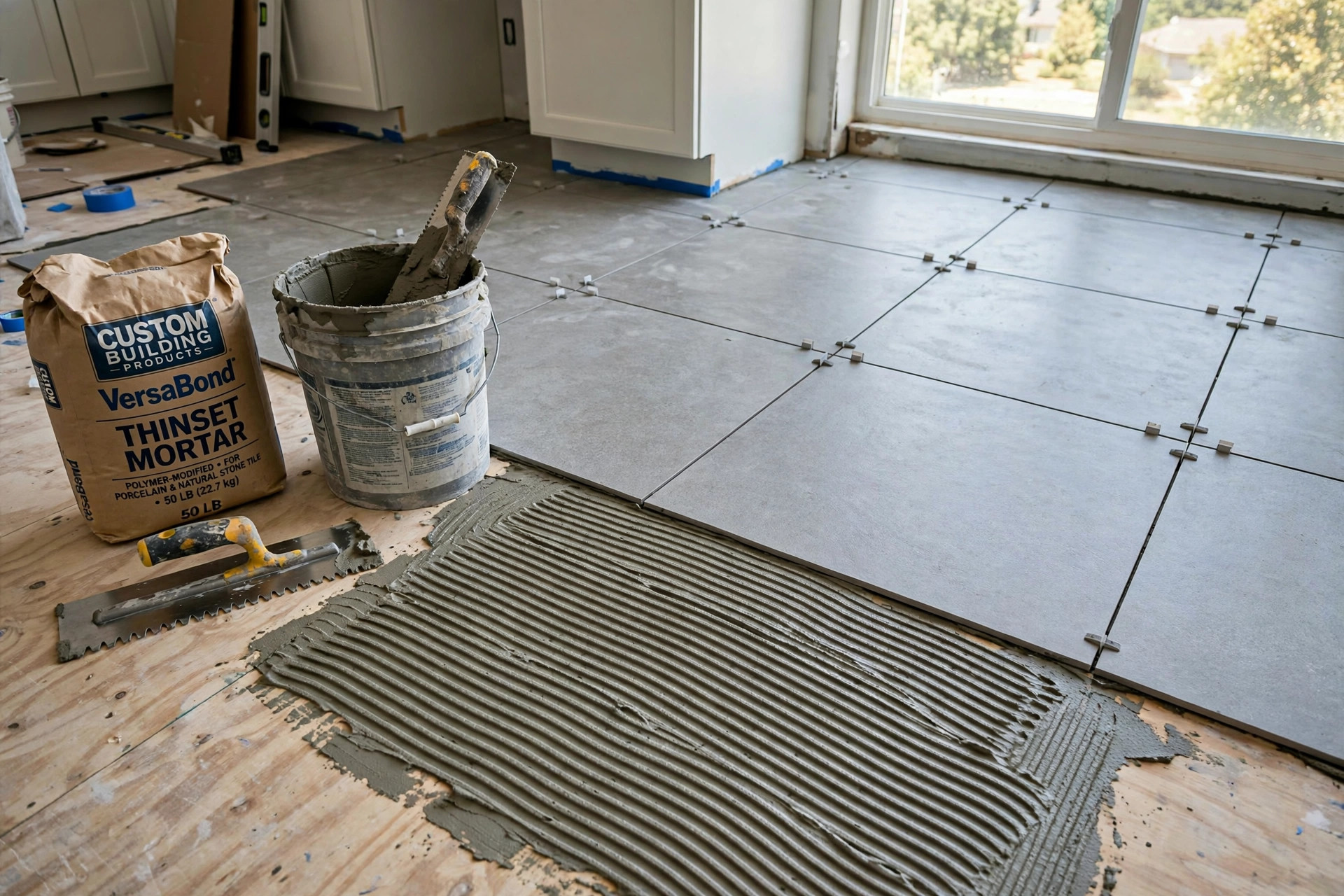
1. Start with clean water and a clean bucket. Old mortar chunks in the bucket weaken the new mix. 2. Add powder to water, not the reverse. Pouring water onto powder creates lumps. Add powder to the water while mixing. 3. Mix to a smooth peanut-butter texture. Use a half-inch drill with a mixing paddle. The mix should hold a notch but still be spreadable. 4. Slake the mortar. Let it rest for five to ten minutes after the first mix. Then remix briefly. Slaking lets the chemicals fully activate. 5. Do not add extra water later. If the mix stiffens in the bucket, remix without water. Adding water weakens the final bond. If it has stiffened too much, throw it out and mix fresh. 6. Spread with the right trowel. Use the notch size the tile maker recommends. For most floor tile, a half-inch by half-inch square notch is standard. Large format tile often needs a larger notch plus back-buttering. 7. Work in small sections. Spread only as much as you can tile in fifteen to twenty minutes. If the mortar skins over, scrape it up and spread fresh. 8. Back-butter large tiles. Spread a thin flat layer on the back of each large tile in addition to the troweled bed. This fills voids and ensures full coverage. 9. Check coverage as you go. Lift a tile now and then. The back should show mortar contact over at least eighty percent of the surface in dry areas and ninety-five percent in wet areas.
Take your time. Rushing the mortar stage is the most common cause of tile failure in do-it-yourself jobs. If you are also refinishing nearby floors, our review of concrete polishing service options may help you plan the full project.
Care and Upkeep After Installation
Thinset needs time to cure. Do not walk on the new floor for at least twenty-four hours. Wait at least forty-eight to seventy-two hours before placing heavy furniture or appliances. Keep the room at normal living temperature during the cure. Cold slows the cure. Heat and direct sun can dry the mortar too fast and weaken it.
Grout usually goes in one to three days after the tile is set, depending on the mortar. Read the bag for the exact wait. Once grouted and sealed, a tile floor needs little care. Sweep or vacuum often. Mop with a neutral cleaner. Avoid harsh acids and bleach, which can attack grout over time. The mortar itself is buried and needs no maintenance. If a tile ever loosens, it can be lifted and reset with fresh thinset without redoing the whole floor.
Safety Tips for Working With Thinset
Thinset powder is fine cement dust. It irritates eyes, skin, and lungs. Take these precautions on every job:
– Wear a dust mask or respirator. A basic N95 mask is enough for mixing small batches. Wear it every time you pour powder. – Wear safety glasses. Powder and splashes can burn eyes. – Wear gloves. Wet mortar is alkaline and dries out skin fast. Long exposure can cause chemical burns. – Work with ventilation. Open windows and run a fan. Dust should not hang in the air. – Keep children and pets away. Set up a barrier until the floor is set and grouted. – Clean tools promptly. Wash buckets and trowels before the mortar hardens. Hardened thinset is nearly impossible to remove.
FAQ: Best Thinset Mortar for Floor Tile
What is the best thinset mortar for porcelain floor tile?
A polymer-modified thinset rated A118.4 or higher is the best choice for porcelain floor tile. Porcelain is dense and non-porous, so it needs the extra bond strength that polymers provide. Unmodified thinset is not recommended for porcelain floors.
Can I use the same thinset for floor and wall tile?
Often yes, but check the bag. Many modified mortars work for both. Wall tile needs non-sag performance more than floor tile does. Floor tile needs the higher bond strength and flexibility. A quality A118.4 modified mortar usually covers both jobs in a home.
How thick should thinset be under floor tile?
After the tile is set and pressed, the mortar bed should be between three thirty-seconds and three sixteenths of an inch for standard tile. Large format tile uses a medium-bed mortar that can go up to three quarters of an inch thick. Follow the trowel size on the bag and the tile maker’s instructions.
How long does thinset take to dry before grouting?
Most modified thinsets are ready for grout in twenty-four hours at normal room temperature. Premium and rapid-set products may allow grouting in as little as four hours. Cold rooms and thick beds need more time. Read the bag for the exact window.
Is expensive thinset worth it for a rental or flip?
In most cases, yes. The price gap between basic and premium mortar is small compared with the cost of tile, grout, and labor. A failed floor costs far more to redo than a few extra dollars per bag. Even in a rental, a floor that stays down for years beats a floor that loosens in months.
Can thinset be used over old tile or vinyl?
Sometimes. The old surface must be clean, sound, and firmly attached. Glossy surfaces need to be roughed up. Many installers prefer to remove old flooring first. If you bond over old tile, use a premium modified mortar and check the manufacturer’s approval for that use.
A Short Final Word
The best thinset mortar for floor tile usa is not a secret. It is a polymer-modified product matched to your tile, your subfloor, and your room. Read the bag. Mix it right. Give it time to cure. Those three habits matter more than any brand name. Do that, and your floor tile will stay flat, tight, and beautiful for a very long time.
References
Bob Vila. (n.d.). Home improvement advice. https://www.bobvila.com Daltile. (n.d.). Ceramic and porcelain tile. https://www.daltile.com LL Flooring. (n.d.). Hardwood, vinyl, and tile flooring. https://www.llflooring.com Lowe’s. (n.d.). Home improvement products. https://www.lowes.com Mohawk Flooring. (n.d.). Flooring products. https://www.mohawkflooring.com Shaw Floors. (n.d.). Flooring products. https://www.shawfloors.com The Home Depot. (n.d.). Home improvement products. https://www.homedepot.com The Spruce. (n.d.). Home and garden advice. https://www.thespruce.com This Old House. (n.d.). Home renovation guidance. https://www.thisoldhouse.com
Was this guide helpful?

About Emily Rodriguez
The My Garden US editorial team writes practical, in-depth home and garden guides for American homeowners — tested advice, no fluff.
You May Also Like

Engineered Hardwood Flooring Cost per Square Foot: A Plain Guide for American Homeowners
August 23, 2026 0 views
Travertine Tile for Bathroom Floor Reviews: What Homeowners Say
January 20, 2026 0 views
Flooring That Increases Home Value Most in the USA
July 26, 2026 0 views