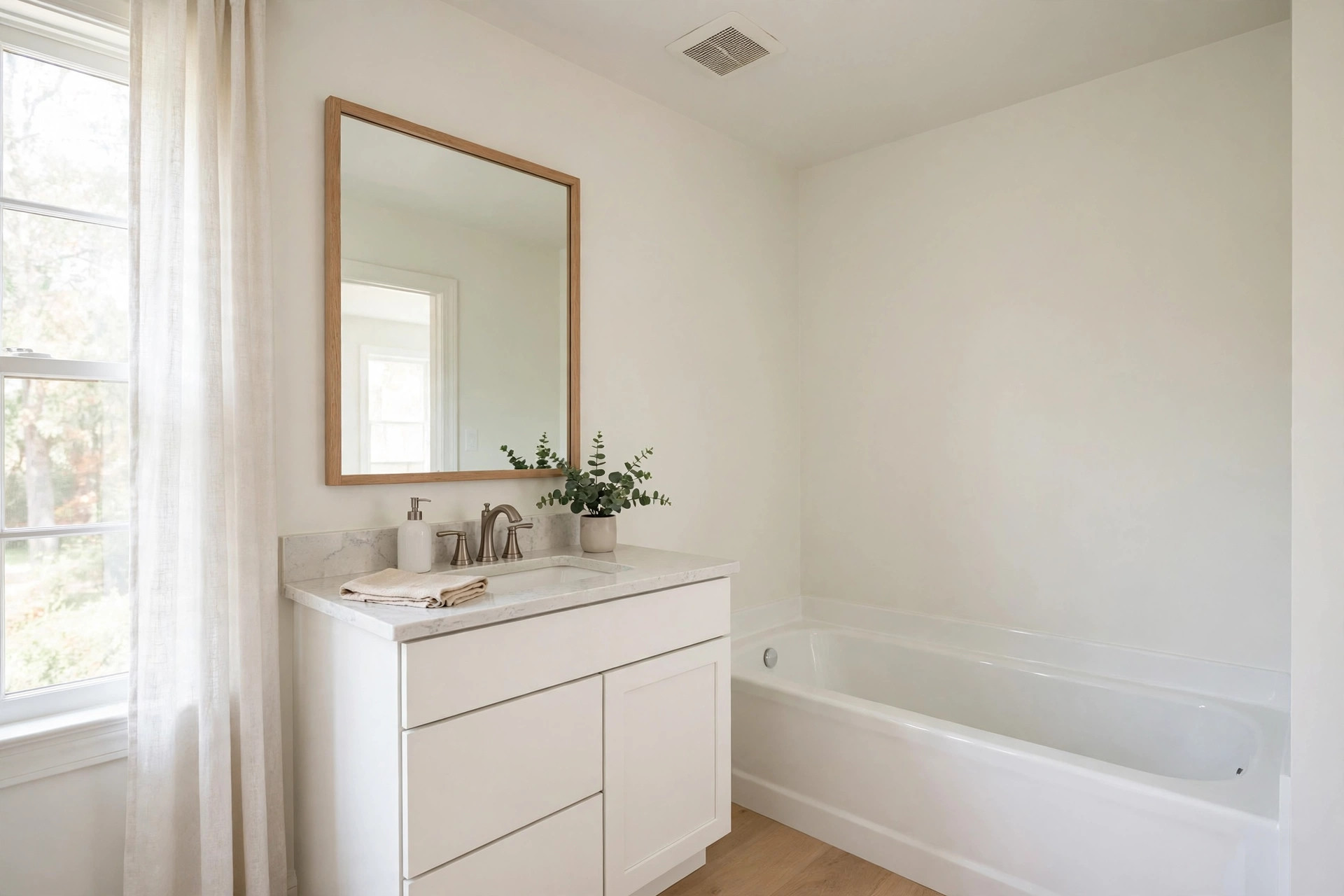

The search for the best paint for high humidity bathrooms usa begins in a room that never fully dries. Every shower fills the air with steam. Every bath leaves moisture on the walls. Ordinary wall paint softens, bubbles, and spots under this daily test. The right paint holds its color, resists mold, and wipes clean for years. This guide explains how to choose it.
Why Bathroom Paint Matters So Much
A bathroom is the hardest room for paint in a house. Hot water turns into vapor and settles on every surface. Walls stay damp for hours. In homes without a strong exhaust fan, moisture lingers even longer. Standard flat wall paint soaks up this water like a sponge. Over time the film breaks down. Peeling starts at the edges. Dark spots of mildew appear near the ceiling and behind the toilet.
Moisture damage goes beyond looks. Paint that traps water lets mildew grow under the surface. Caulk lines turn black. Drywall softens behind the paint film. A full repair then costs far more than a can of proper paint. The paint experts at Sherwin-Williams have long advised bathroom-specific paints for rooms that see daily steam, and their guidance matches what most professional painters say: use a paint made for wet rooms, or plan to repaint often.
Choosing well also saves labor. A quality bathroom paint needs fewer coats and lasts longer between repaints. For a room that costs little in materials but much in time, durability is the whole game.
What to Look For in a High Humidity Bathroom Paint: Best Paint for High Humidity Bathrooms Usa
Finish Comes First
The sheen of the paint matters as much as the brand. Flat and matte finishes hide wall flaws, but they hold moisture on the surface. In a steamy bathroom, that is a mistake. Choose a sheen that sheds water:
– Satin or eggshell is the standard pick for most bathroom walls. It has a soft glow, resists moisture, and wipes clean. – Semi-gloss works well on trim, doors, and around the tub and shower. It is the most moisture-proof common finish. – High-gloss is the toughest of all but shows every flaw, so it suits small areas more than full walls.
A safe rule: use satin or eggshell on the walls and semi-gloss on the trim. This pairing is what most paint stores recommend for bathrooms.
Mildew Resistance Is Essential
Look for the words “mildew resistant” on the label. These paints contain agents that slow the growth of mold and mildew on the paint film. They do not make the wall waterproof, but they buy real time in a humid room. Shoppers comparing mildew resistant bathroom paint reviews usa often find that this single feature separates good bathroom paint from ordinary paint.
A Stain-Blocking Primer Helps
Bathroom walls often carry old stains, soap scum, and ghost marks from past mildew. A stain-blocking primer seals these marks so they cannot bleed through the new coat. It also gives the topcoat a sound surface to grip. In older bathrooms with flaking paint, primer is not optional. It is the step that keeps the new paint on the wall.
Low or Zero VOC for Comfort
Bathrooms are small and often windowless. Strong paint fumes linger in such spaces. Low-VOC or zero-VOC paints release far fewer fumes and make the job safer for the painter and the household. Most major brands now offer low-VOC lines, and the large selection at Home Depot makes it easy to compare these lines side by side.
Types of Paint That Work in Humid Bathrooms
Acrylic Latex Paint
Acrylic latex is the workhorse of bathroom walls in the USA today. It cleans up with water, dries fast, and flexes with temperature change instead of cracking. A 100 percent acrylic formula holds up best in steam. This is the type behind most products sold as bathroom paint, and advice at HGTV regularly lists acrylic latex as the top pick for bath walls.
Enamel and Alkyd Paint
Traditional enamel gives a hard, glossy shell that moisture cannot enter. Oil-based alkyd versions are durable but smell strong and clean up with solvents. Water-based enamels now give nearly the same hardness with easier cleanup. Many painters use water-based enamel on bathroom trim and doors where the surface takes direct splashes.
Specialty Bathroom Paints
Some brands sell paints labeled only for kitchens and baths. These formulas pack extra mildew agents and tighter moisture resistance into the film. They cost a little more per gallon but need no extra additives. For a homeowner who wants one product that does it all, these specialty lines are worth the small premium.
Epoxy for Extreme Cases
Two-part epoxy paint is the toughest option of all. It is often used on commercial bathrooms and shower surrounds. For a home bathroom, epoxy is more work than most people need. It suits only the wettest rooms, such as a bath with a steam shower and no window. For most homes, a quality acrylic latex is enough.
Mildew-fighting additives sold in small bottles are another option. You stir them into any gallon of paint to add mildew resistance. They help, but they are no match for a paint built for bathrooms from the factory. Use them only when the exact color you want comes in no bathroom-grade line.
How to Choose the Right Can
Start with the room itself. A powder room with no shower needs less protection than a full bath used by a family of five. Match the paint to the moisture load:
1. Count the daily showers. One shower a day is light duty. Three or four is heavy duty and calls for the toughest mildew-resistant paint you can find. 2. Check the vent fan. A good fan changes everything. It pulls steam out fast and lets any paint last longer. If the fan is weak or missing, buy the strongest bathroom paint and plan to upgrade the fan. 3. Look at the ceiling. Paint peels first on ceilings, where steam gathers. Use the same bathroom-grade paint on the ceiling, not plain ceiling white. 4. Test colors in the light. Bathroom light runs warm or cool. Paint a small sample and watch it through a full day before you commit.
Practical bathroom paint ideas at Bob Vila stress the same order: finish and moisture rating first, color second. A pretty color in the wrong paint is a short-lived project.
When comparing brands, read the label for bathroom use, mildew resistance, and washability. Big paint names publish clear product sheets online, including the Behr paint collections and the Benjamin Moore catalog. Comparing two or three product sheets takes ten minutes and pays off in years of good walls.
Cost and Price of Bathroom Paint
Paint is one of the cheapest parts of a bathroom project. A gallon of quality bathroom paint in the USA typically runs from about thirty to sixty dollars, depending on brand and finish. One gallon covers a standard bathroom with two coats. A stain-blocking primer adds roughly twenty to thirty dollars. Brushes, rollers, tape, and drop cloths add another twenty dollars or so.
Hiring a painter changes the math. Professional painting for a small bathroom often costs between two hundred and five hundred dollars for labor, on top of materials. Many homeowners handle this room themselves because it is small and simple. Price guides at This Old House show that labor, not paint, drives the cost of most interior paint jobs.
Spending more on the paint itself is smart economy. A ten-dollar saving on a cheap gallon can mean a full repaint in two years. The dearer can that lasts eight years costs less per year and far less in labor.
Care and Upkeep After Painting
Good paint lasts longer with simple care. Let the new paint cure fully before it faces heavy steam. Latex paint feels dry in hours but needs about two to four weeks to reach full hardness. Run the vent fan during this period and for twenty minutes after every shower for the life of the bathroom.
Wipe the walls down every few months with a damp cloth and mild soap. This removes soap film and body oils that feed mildew. Do not use harsh scrubbing pads, which wear the paint film. Check the caulk around the tub and toilet once a year. Fresh caulk keeps water out of the wall behind the paint.
If small mildew spots appear, clean them early with a diluted bleach solution or a bathroom cleaner, then dry the area well. Paint with mildew agents resists growth but does not stop it forever in a badly vented room. The care tips at The Spruce remind readers that ventilation does more for a bathroom than any paint can do alone.
Watch for the early signs that a repaint is due. If the walls look dull after wiping, or if small cracks appear at the joints, the film is wearing thin. Repainting at this stage is quick, because the surface is still sound. Waiting until paint peels means scraping, sanding, and priming again. Most well-painted bathrooms ask for a fresh coat every six to eight years.
Safety While Painting a Bathroom
Work safe in this small space. Open any window and run the vent fan while painting. Wear a mask rated for paint fumes, even with low-VOC paint. Keep the door open if you can. Store paint cans away from heat sources and never near the water heater or furnace.
If the home was built before 1978, test old paint for lead before sanding. Lead dust is dangerous, and federal rules cover how to handle it. Call a certified contractor for lead work rather than doing it yourself. Ladders in a small bathroom are also a risk. Use a short step stool instead of a tall ladder near the tub.
Frequently Asked Questions
Can I use regular interior paint in a bathroom?
You can, but it will not last. Regular flat paint absorbs steam, and mildew grows on it faster. A bathroom-grade paint with mildew resistance costs only a little more and lasts much longer.
What is the best sheen for bathroom walls?
Satin or eggshell for the walls, semi-gloss for trim and doors. These finishes shed moisture and clean easily. Flat paint is the one finish to avoid in a bathroom.
Do I need a special primer for a bathroom?
A stain-blocking primer is strongly advised, especially in older bathrooms. It seals old stains, blocks water marks, and helps the topcoat bond. Skipping primer is the most common cause of peeling bathroom paint.
How long should bathroom paint last?
A quality bathroom paint in a well-vented room lasts five to eight years, sometimes more. Poor ventilation, flat paint, or skipped primer can cut that life to two years or less.
What color works best in a small bathroom?
Light colors make a small bathroom feel larger and show less water spotting. White, pale blue, soft gray, and warm beige are classic picks. Dark colors look rich but show every water mark and demand the toughest paint finish.
Should I paint the bathroom ceiling with the same paint?
Yes. The ceiling takes the most steam. Use the same mildew-resistant bathroom paint there. Plain ceiling paint lacks the moisture protection the ceiling needs most.
A Short Final Word
The best paint for high humidity bathrooms usa is not a mystery. It is a quality acrylic latex or specialty bathroom paint, in satin or semi-gloss, with mildew resistance on the label, over a stain-blocking primer. Good ventilation does the rest. Shoppers who also plan a full refresh can compare bathroom vanity paint options and, for damp lower levels, read about mold resistant paint for basement walls. For stock and pricing, the paint departments at Lowes carry the full range discussed here. Pick the finish first, the brand second, and the color last. Follow that order and the walls will stay clean and bright for years.
References
Behr. (n.d.). Paints, primers, and stains. https://www.behr.com Benjamin Moore. (n.d.). Paints and stains. https://www.benjaminmoore.com Bob Vila. (n.d.). Home improvement advice. https://www.bobvila.com HGTV. (n.d.). Home and garden ideas. https://www.hgtv.com Lowe’s. (n.d.). Home improvement products. https://www.lowes.com Sherwin-Williams. (n.d.). Paints and coatings. https://www.sherwin-williams.com The Home Depot. (n.d.). Home improvement products. https://www.homedepot.com The Spruce. (n.d.). Home and garden advice. https://www.thespruce.com This Old House. (n.d.). Home renovation guidance. https://www.thisoldhouse.com
Was this guide helpful?

About James Carter
The My Garden US editorial team writes practical, in-depth home and garden guides for American homeowners — tested advice, no fluff.
You May Also Like
How to Find an Aluminum Siding Painting Service Near Me
July 7, 2026 0 views
Kitchen Cabinet Refinishing Service Cost USA
September 6, 2026 0 views
Best Washable Paint for Kids Rooms USA: A Plain Guide for Parents
March 29, 2026 0 views