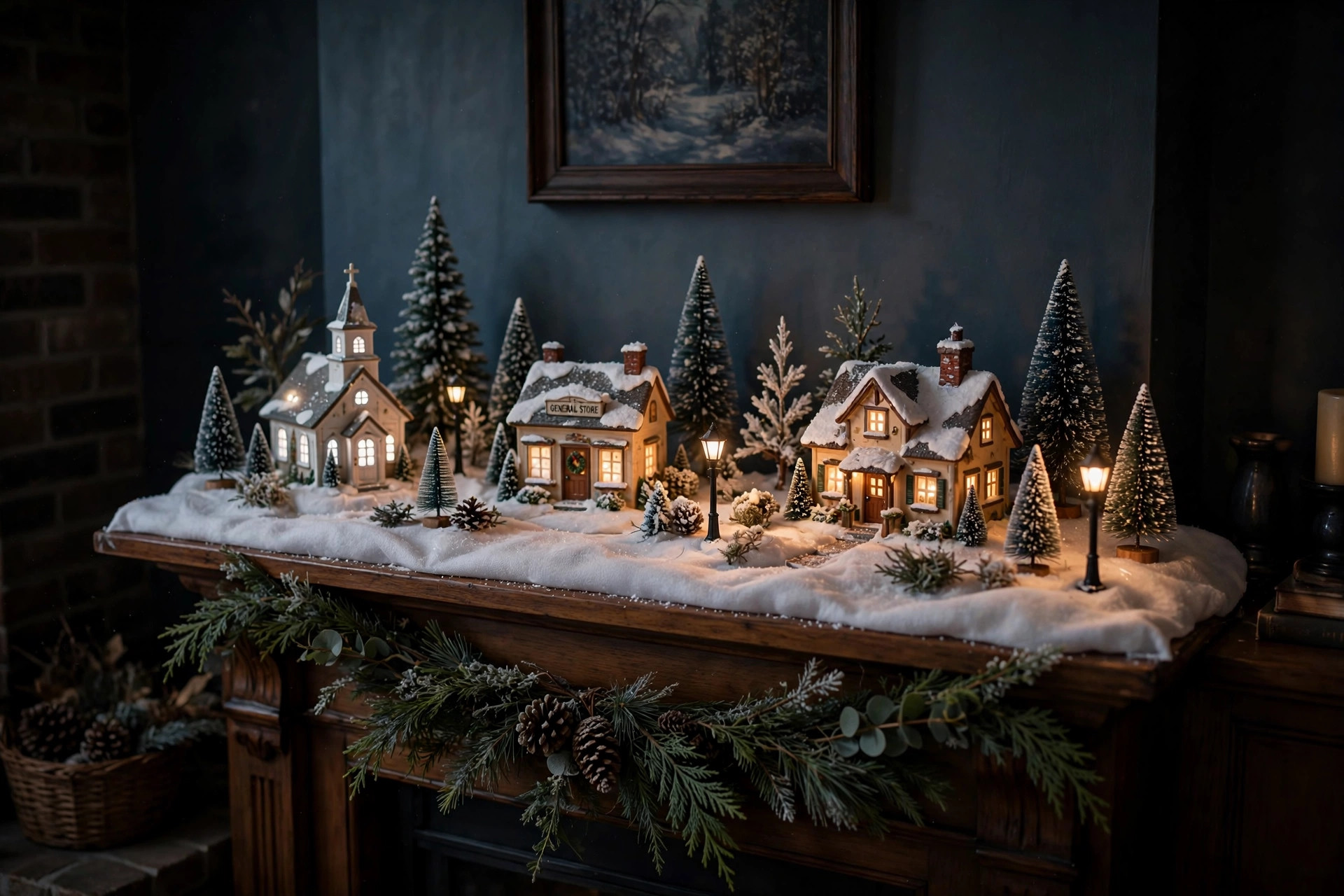

A small Christmas village can fill a room with the feeling of an old winter town. The houses, the trees, and the little people all take shape when the lights come on. Choosing the right christmas village lights for miniature display usa setups is the key to that warm glow. In the years when electric light strings first became common in American homes, families learned quickly that the right lamp makes all the difference between a pretty scene and one that looks harsh or flat.
This guide will help you pick lights that suit your village, place them with care, and keep them safe through the season.
Why Good Lighting Matters for a Miniature Village
A miniature village is built to be seen up close. Each tiny house has painted windows, small doors, and little bits of trim. Without light, these details sit in shadow. With the right light, the windows seem to glow from within, just as real homes do on a winter night.
The best lights for a miniature village do three things. They add warmth to the scene. They draw the eye to the parts you want people to see. And they hide the parts you do not, such as cords and plugs. A department store display village can look charming in daylight, but the true magic of the hobby shows after dark when the lamps are lit.
People in the United States often set their villages on mantels, sideboards, or beneath the tree. The American style of display tends to use a snowy white base and many small glowing points. This is a tradition that grew through the middle of the last century, when cheap electric lights let ordinary families build scenes that once only belonged in shop windows.
Types of Christmas Village Lights: Christmas Village Lights for Miniature Display Usa
Not every light string suits a tiny scene. The choice depends on the size of your houses and the look you want.
Incandescent Mini Lights
These are the small warm bulbs many of us remember from childhood trees. They give a soft amber glow that feels true to an old village. They run warm, so they must be kept clear of paper snow and cotton batting. A guide from Good Housekeeping notes that warm white light reads as the most natural choice for classic holiday decor.
LED Lights
LED strings are the modern choice. They stay cool to the touch, use very little power, and last for years. Many sets made for villages are tiny, sometimes called rice lights or fairy lights. They come in warm white and multicolor. Because they give off almost no heat, they are the safest pick near small houses made of porcelain or painted resin.
Battery-Operated Lights
Battery strings free you from the wall outlet. This matters when your village spreads across a wide mantel with no socket nearby. Most battery sets have a small pack that hides behind a house or under the snow cloth. A timer switch on the pack is worth seeking out, as it will turn the lights on and off on a schedule and save the batteries.
Lighted Accessories
Some pieces come with their own lamps built in. Street lamps, church steeples, and lighthouse beacons often have tiny bulbs inside. These add depth to the scene. If you want your church to stand above the rooftops, a small clip-on spotlight aimed from the front can lift it from the rest of the town.
Candle and Window Glow
Some collectors place a small electric candle behind a row of houses so the light spills around them. The look is gentle and old-fashioned. Articles on holiday home style at Country Living often show this layered approach to seasonal light.
How to Choose Lights for Your Display
Start by measuring your display area. A mantel of four feet needs fewer strings than a village that runs across a whole dining table. Most sets made for villages run from three to ten feet. Buy one set and test it before you buy five.
Match the bulb size to your houses. Tiny porcelain houses, the kind about two or three inches tall, call for the smallest bulbs. Taller houses of five or six inches can take standard mini lights without the bulbs looking out of scale.
Choose warm white for a classic look. Cool white can make the snow look blue and the scene feel cold. Multicolor sets can work for a village fair or carnival area, where bright color is the point. Keep to one color family across the whole scene so the display feels of one piece.
Look at the wire color. Green wire fades into tree branches. Clear or white wire is better for snow scenes. The wire should be thin enough to tuck under the white batting or behind the houses.
Check the plug type and voltage. Village accessories sold in the United States run on standard household current, but the tiny bulbs themselves are often low voltage with a small adapter or battery pack. Make sure the set is rated for indoor use if your village sits inside.
Think about the houses you already own. If you have mantel display houses in porcelain, LED strings are the safe match. For tabletop village trees, a short battery string wrapped through the branches gives a fine sparkle.
Setting Up Your Village Lights
Plan the layout before you plug anything in. Place the unlit houses, roads, and trees on the base first. Then run the light strings where the eye will travel: along the main street, around the town square, and up the church steeple.
Hide the cords. Run them under the snow cloth, behind the rows of houses, or through a folded piece of white batting. Nothing breaks the spell of a tiny town faster than a black cord cutting across the white snow.
Work in layers. Put the longest string through the background first, then add short accent strings near the pieces you want to feature. A common trick is to place one string low and one higher so the village has depth, not just a flat row of lit windows.
Use warm candle-style glow for windows. Tiny electric candles placed behind the houses can make whole streets seem to shine. Many collectors pair these with timed window candles on the wall above the mantel for a matched look.
Let the village rest at night. A timer that turns the display on in the late afternoon and off near bedtime keeps the scene fresh and saves power. It also protects the bulbs and batteries from long hours of strain.
Keep a small kit nearby during the season: spare bulbs, a fresh set of batteries, and a few cable ties. When a string goes dark in the middle of December, a quick fix saves the evening.
Cost and Price Guide
The price of christmas village lights for miniature display usa shoppers is modest compared to most holiday decor. Simple battery sets of twenty tiny LEDs often sell for under ten dollars at large home retailers. Mid-range LED sets of fifty to one hundred lights, with timers and several modes, usually run from fifteen to thirty dollars.
Special pieces cost more. A hand-painted street lamp with a built-in bulb can run twenty to forty dollars. A lighted church or lighthouse, sold as part of a village collection, may cost fifty dollars or more. If you are building a large village over several years, spread these costs across seasons.
Power costs are small. A ten-foot LED string draws so little power that running it through the season costs only pennies. Battery costs add up faster, so look for sets with timers and use rechargeable batteries where the pack allows it. The Department of Energy offers plain advice on how LED holiday lights save power over older incandescent types.
Watch for sales just after the holidays. Craft stores and furniture and decor shops often mark seasonal lights down by half or more in January. Buying for next year at that time is a simple way to build a bigger village for less.
Care and Upkeep
Treat the lights as part of the village, not an afterthought. When the season ends, coil each string loosely around a piece of cardboard and store it in a dry box with the houses. Do not wrap strings tight around your hand; the small wires break easily.
Check each set before you store it. Plug it in, look for dark bulbs, and replace them while the problem is fresh in your mind. Write a small note on the box saying which sets worked and which need new batteries.
Keep the bulbs clean. Dust dulls the glow. A soft dry cloth wiped gently over the bulbs at the start of the season brings back the shine. Do not use water or cleaners on the strings.
Store batteries outside the packs. Batteries left in a pack through the summer can leak and ruin the contacts. Keep the packs and the batteries in separate bags inside the storage box.
Inspect the cords each year for cracks or bare spots. If a cord is damaged, throw the set away rather than patch it. Small strings are cheap, and safety is worth more than saving a few dollars.
Safety
Miniature villages sit near curtains, paper snow, and dry mantel garlands. These are all quick to catch fire, so light safety matters.
Use only lights rated for indoor use on an indoor village. Outdoor strings are made for weather, not for close contact with cloth and paper. The Consumer Product Safety Commission warns each year about the safe use of seasonal lights and urges buyers to look for proper safety marks.
Keep bulbs away from anything that can burn. Even cool LEDs should not rest directly on paper snow or cotton for weeks on end. Give each bulb a finger’s width of air.
Do not overload a single outlet. A village with many lighted houses, lamps, and trees can draw more power than it looks. Spread the plugs across two outlets if you have many pieces, and unplug the whole display when you leave the house for a long trip.
Keep the setup dry. Melted snow from a window draft or a knocked-over drink can reach the cords. If anything gets wet, unplug the set, let it dry fully, and check it before use.
Place the village out of reach of small children and pets. The little bulbs, cords, and battery packs are not toys. A low table display should have its cords taped down so they cannot be pulled.
Frequently Asked Questions
How many lights does a small village need?
A village of six to ten houses usually looks full with fifty to one hundred tiny lights. Start with one fifty-light string and add more only where the scene looks thin. Too many lights can wash out the detail you worked to build.
Are LED lights better than incandescent for miniature villages?
For most collectors, yes. LEDs run cool, last longer, and use less power. Incandescent bulbs give a lovely old-style warmth, but they run hot and need care near small houses. Many collectors use LEDs for the village and keep one incandescent string for a nostalgic corner.
Can I use outdoor lights on an indoor village?
It is better not to. Outdoor strings are heavier, the bulbs are larger, and the wire is thick. They will look out of scale next to tiny houses, and they are not made for close contact with indoor display materials. Buy sets made for indoor or village use instead.
How do I hide the battery packs?
Place the pack behind the tallest house or under a folded piece of white batting. Some collectors build a small hill of batting around the pack and set a tree on top. Make sure you can still reach the switch or timer without moving the whole village.
What color light looks best for a Christmas village?
Warm white is the classic choice. It makes windows glow the way real homes do on a winter evening. Cool white can work for an icy or moonlit corner of the display, but keep it as an accent. Multicolor sets suit fairgrounds and shops where bright color feels right.
How long should I leave the village lights on each day?
Four to six hours in the evening is enough for most homes. A timer set from late afternoon to bedtime gives you the full effect without wasting power or wearing out the bulbs. Turn the display off when you go to sleep.
A Final Word
A miniature village is a slow pleasure. You build it piece by piece, year by year, and each December it comes back a little larger and a little brighter. The lights are what bring it to life, turning painted windows into warm rooms and dark streets into paths home.
Choose lights that fit your houses, hide the cords with care, and keep safety in mind. Then stand back when the room goes dark and let the little town shine. That quiet glow is the whole reason for the hobby, and it has charmed American homes for generations.
Related guides on this site include best artificial christmas tree for small apartments, outdoor christmas lights for house roofline usa, and best halloween inflatables for front yard decor.
References
Country Living. (n.d.). Country home and lifestyle. https://www.countryliving.com Good Housekeeping. (n.d.). Product reviews and home advice. https://www.goodhousekeeping.com HGTV. (n.d.). Home and garden ideas. https://www.hgtv.com Michaels. (n.d.). Arts and crafts supplies. https://www.michaels.com The Home Depot. (n.d.). Home improvement products. https://www.homedepot.com The Spruce. (n.d.). Home and garden advice. https://www.thespruce.com U.S. Consumer Product Safety Commission. (n.d.). Product safety information. https://www.cpsc.gov U.S. Department of Energy. (n.d.). Energy efficiency and renewable energy. https://www.energy.gov Wayfair. (n.d.). Furniture and home goods. https://www.wayfair.com
Was this guide helpful?

About Lisa Anderson
The My Garden US editorial team writes practical, in-depth home and garden guides for American homeowners — tested advice, no fluff.
You May Also Like

Christmas Santa Decorations for Indoor Display: A Complete Buyer’s Guide
April 12, 2026 0 views
Best Christmas Window Silhouette Decorations Lighted: A Plain Guide
April 25, 2026 0 views
Best Fall Door Mat for Entryway Harvest Welcome
July 3, 2026 0 views