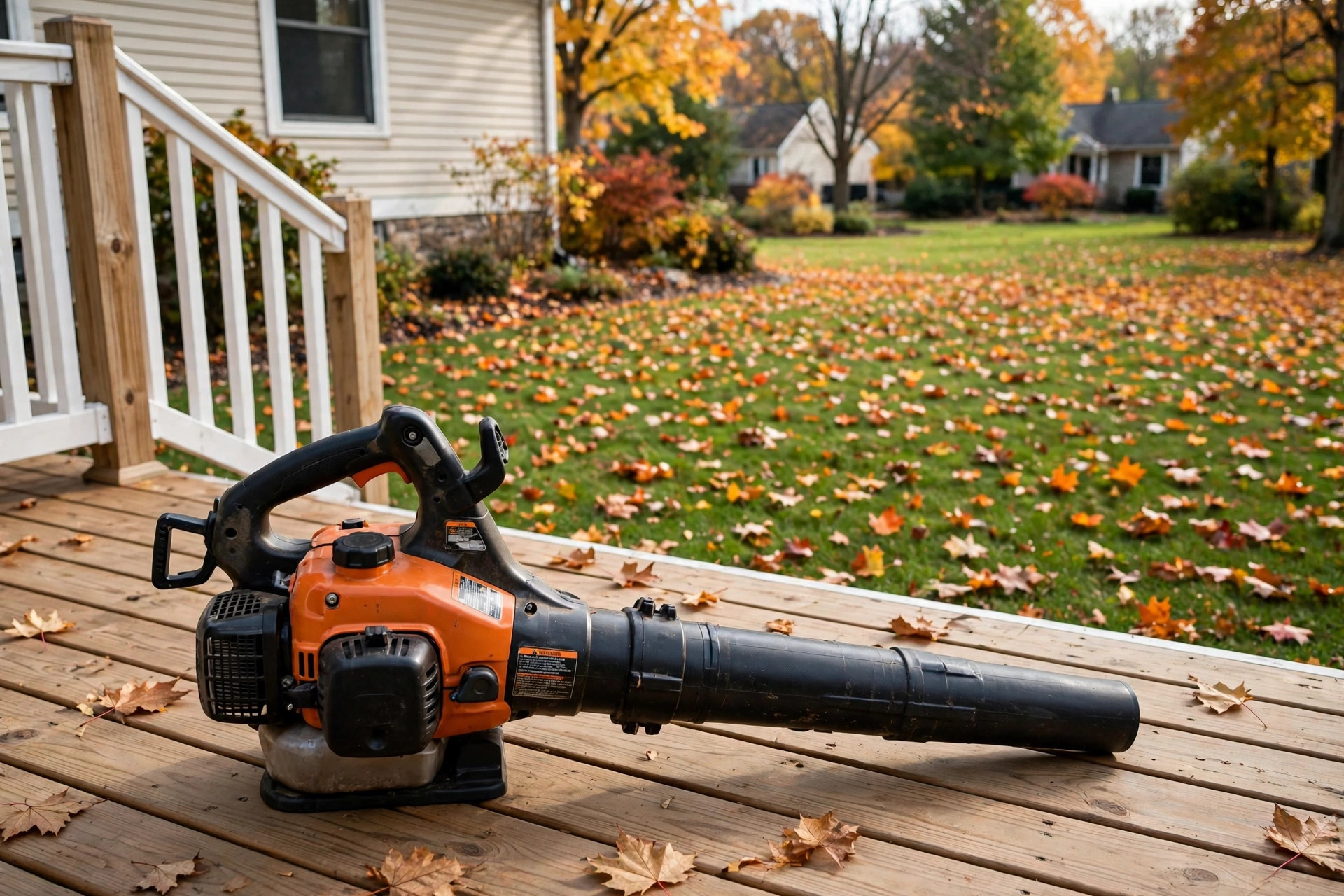

Every autumn, American lawns disappear under leaves. Maples drop their red sheets. Oaks let go of thick brown layers. A rake can take a whole weekend. A good blower can clear the same yard in an hour. Many homeowners ask what the best gas leaf blower under 300 dollars looks like. Three hundred dollars is a fair line in the sand. It is enough money to buy real power. It is not so much that a failed machine feels like a disaster. This guide will walk through the choice in plain terms. It will cover power, weight, fuel, and value. By the end, the reader will know what to look for and what to skip.
Why a Gas Blower Still Makes Sense
Battery blowers have improved in recent years. They are quiet. They start with one button. Yet gas still holds the top place for heavy yard work. The reason is simple. A gas engine can run at full power for a long stretch. It does not fade as a battery drains. On a big lot with wet leaves, that steady power matters.
Gas blowers also tend to cost less per unit of power. Under the three hundred dollar line, the shopper can find handheld gas models with strong air speed. The same money in the battery world buys a decent tool, but often with only one battery in the box. A second battery adds cost. For a yard of a half acre or more, gas still wins on work done per dollar.
That said, gas is not for every home. A small patio with a few pots does not need a two-stroke engine. For such spaces, a battery leaf blower for patios is lighter and quieter. But for lawns, long driveways, and thick leaf cover, the best gas leaf blower under 300 dollars is the right class of tool.
What to Look for Before You Buy: Best Gas Leaf Blower under 300 Dollars
Leaf blowers are sold on two big numbers. Shoppers should learn both before they read a single review.
Air Volume (CFM)
CFM stands for cubic feet per minute. It tells how much air the machine moves. For a gas handheld blower under three hundred dollars, look for 400 to 550 CFM. That range will move dry leaves fast and handle damp piles with some patience. Backpack models in this price band can reach 500 to 650 CFM. Higher CFM moves a wider path of leaves in one pass.
Air Speed (MPH)
MPH tells how fast the air leaves the nozzle. It matters for stuck leaves. Wet leaves cling to grass. A speed of 180 to 220 MPH will lift them. Numbers above 220 MPH help on muddy patches. Below 150 MPH, the tool will feel weak on a real autumn lawn.
Engine Size
Gas blowers use small engines measured in cubic centimeters (cc). In this price range, handheld models run from 25 to 30 cc. Backpack models may reach 40 to 50 cc. Bigger is not always better. A well-built 27 cc engine can beat a cheap 34 cc engine. The Briggs & Stratton engine guides explain how small engines are rated and what the numbers mean in daily use.
Two-Stroke Fuel Mix
Most blowers in this class use two-stroke engines. They need a mix of gas and two-cycle oil. Common ratios are 50 to 1. The owner must mix the fuel before each fill. Some owners dislike this chore. Premixed fuel cans are sold at hardware stores, but they cost far more per gallon. The best gas leaf blower under 300 dollars for a busy owner may be a model with a large fuel tank, since fewer refills mean fewer mixing sessions.
Weight
Handheld gas blowers weigh 9 to 13 pounds with fuel. That is easy to carry for most adults. Backpack models weigh 15 to 22 pounds, but the weight rests on the shoulders and hips. For a big yard, a backpack can feel lighter after forty minutes than a heavy handheld. Check the balance in the store if the dealer allows it.
Noise
Gas blowers are loud. Most run from 65 to 75 decibels at fifty feet. Some towns have rules about when blowers may run. Many forbid them on Sunday mornings. A few ban gas blowers outright in city limits. Check local rules before buying. Ear protection is wise for any gas model.
Starting Ease
Look for a spring-assisted starter. It cuts the effort of the pull cord. Prime bulbs and easy-access chokes also help. Some models add cruise control on the throttle. This lets the owner set one speed and hold it without pressing a trigger the whole time.
Warranty
A good warranty at this price is two years for home use. Some makers stretch to five years on the engine. Read the terms. A few warranties drop to ninety days if the tool is used for paid work.
The Main Types in This Price Range
Handheld Gas Blowers
Handheld models are the most common choice under three hundred dollars. The owner holds the machine in one hand. The tube points at the leaves. They suit yards up to a half acre. They are light and simple. Most weigh under twelve pounds. For quick driveway cleanup and weekly leaf rounds, a handheld is enough. The trade is fatigue. After an hour of use, the arm and shoulder feel it.
Backpack Gas Blowers
Backpack models ride on the back like a pack frame. The engine sits behind the shoulders. A flexible tube runs to a hand-held nozzle. At this price point, entry-level backpack blowers exist from value brands. They offer more CFM than handhelds for similar money. They suit larger yards, corner lots, and homes with many trees. The downside is heat and noise close to the body. A padded harness helps. For comfort over long sessions, many owners move up to a backpack leaf blower guide for homeowners to compare features side by side.
Blower-Vacuums
Some handheld models include a vacuum kit. The owner swaps the tube and collects leaves into a bag. A mulching blade inside chops the leaves as they enter. The chopped leaves take far less space. A full bag of mulched leaves equals many bags of whole leaves. If the household keeps a compost pile, this feature is gold. Pair it with a leaf mulcher for compost review to learn how fine the chop should be for a healthy pile.
Gas Versus Battery, Once More
It bears repeating. Gas gives long run time and strong power per dollar. Battery gives quiet, clean starts and no fuel mixing. Under three hundred dollars, the best gas leaf blower under 300 dollars will outwork most battery models on raw output. But if the yard is small and the neighbors are close, quiet may matter more than power. Match the tool to the yard.
Cost and What Your Money Buys
The market under three hundred dollars breaks into three tiers.
The first tier is 150 to 200 dollars. Here the buyer finds basic handheld gas blowers from budget brands. They move air well enough for small yards. Build quality can vary. Read reviews for complaints about starting trouble after one season.
The second tier is 200 to 250 dollars. This is the sweet spot. Name-brand handheld blowers live here. They carry better warranties, smoother throttles, and stronger dealers behind them. The best gas leaf blower under 300 dollars for most buyers will be found in this tier. Service parts are easy to order. Local shops know how to fix these models.
The third tier is 250 to 300 dollars. This buys premium handhelds or entry-level backpacks. Power steps up. Harness comfort improves. Some models add anti-vibration mounts that spare the hands. A shopper with a full acre of oaks should look here first.
Keep in mind the running costs. Two-stroke oil costs a few dollars per bottle. A gallon of mixed fuel costs little more than plain gas. Ear plugs and safety glasses are cheap. Over five years, the total cost of owning a two-hundred-dollar blower stays modest. Replacement parts, like a new air filter or a spark plug, cost under fifteen dollars each.
Care and Upkeep
A gas blower rewards simple care. Treat it well and it can last eight to ten years.
Fuel Discipline
Two-stroke engines dislike old fuel. Gas mixed with oil starts to go stale after thirty days. Use fresh fuel. At the end of the season, run the tank dry. Let the engine burn the last drops in the lines. This one habit prevents most spring starting failures.
Air Filter
The air filter keeps dust out of the engine. Check it every few uses. Tap out the dust. Wash foam filters with warm soapy water and let them dry fully. A clogged filter makes the engine run rich and weak. Replacements cost little.
Spark Plug
A fresh spark plug fires stronger. Once a year, pull the plug. Look at the tip. If it is dark and crusty, replace it. A new plug costs a few dollars and takes five minutes with the wrench from the box.
Tube and Nozzle
Check the tube joints for cracks. A cracked tube leaks air and robs power. Tighten clamps now and then. Keep the nozzle clear of string and vines. A blocked nozzle makes the engine strain.
Storage
Store the blower in a dry shed or garage. Hang it on a wall hook if space is tight. Keep it away from open flame. Never store mixed fuel in the house. The Toro line of outdoor power tools and the John Deere dealer network both publish seasonal checklists that cover these steps in plain language.
Safety Rules
Gas blowers are safe when used with respect. Follow these rules every time.
Wear eye protection. Leaves and sticks fly at speed. A pair of safety glasses costs little and saves much. Wear ear plugs or ear muffs. The engine note is sharp at close range. Wear long pants and closed shoes. Sandals have no place near a blower.
Never point the nozzle at people, pets, or windows. A small stone picked up by the air stream can crack glass. Keep children and animals indoors while working. Work with the wind when possible. It saves fuel and time. Never refuel a hot engine. Let it cool for several minutes. Wipe up any spilled fuel before starting. Store fuel cans in a cool spot away from the house.
Dust is a real concern in dry months. A simple dust mask helps on dusty driveways. Blowers stir up pollen and mold from old leaf piles. People with allergies should wear a mask as a matter of course.
Frequently Asked Questions
How long will a gas blower under 300 dollars last? With fresh fuel and a clean filter, five to eight years is normal. Some owners get ten. The engine is simple. Most failures come from old fuel left in the tank over winter.
Can I use regular car gas in the blower? Yes, but only when mixed with two-cycle oil at the right ratio. Never pour straight gas into a two-stroke engine. It will seize. Check the manual for the ratio, usually 50 to 1.
Are gas blowers allowed in my town? It depends on the town. Some cities limit hours. A few ban gas blowers in certain zones. Check the town website or call the clerk before buying. Fines are not worth the risk.
Should I buy a backpack or a handheld model? For a yard under a half acre, handheld is fine. For a half acre to a full acre, or for many large trees, a backpack moves more leaves with less arm strain. Try both styles at a dealer if one is near.
What does the mulching ratio mean? A 16 to 1 ratio means sixteen bags of whole leaves shrink to one bag of chopped leaves. Higher ratios save space and bag runs. They matter most for vacuum-style models.
Is the best gas leaf blower under 300 dollars powerful enough for wet leaves? Yes, with care. Pick a model with at least 200 MPH air speed. Work the edges of the pile first. Do not try to move the whole pile at once. Wet leaves are heavy. Even strong blowers work slower on them.
A Final Word
Choosing the best gas leaf blower under 300 dollars comes down to honest math. Measure the yard. Count the trees. Weigh the need for power against the need for quiet. A name-brand handheld in the two hundred dollar range will serve most suburban homes for years. A big lot calls for a backpack at the top of the budget. Fresh fuel, a clean filter, and a little care will keep the machine strong season after season. Autumn will return every year. With the right blower in the shed, it need not be a burden.
References
Toro. (n.d.). Outdoor power equipment. https://www.toro.com John Deere. (n.d.). Lawn and yard care equipment. https://www.deere.com Briggs & Stratton. (n.d.). Small engine support. https://www.briggsandstratton.com
Was this guide helpful?

About Emily Rodriguez
The My Garden US editorial team writes practical, in-depth home and garden guides for American homeowners — tested advice, no fluff.
You May Also Like

Japanese Maple Tree for Front Yard: A Complete Planting and Care Guide
February 18, 2026 0 views
Lawn Care Franchise Opportunities in USA: A Plain Guide for New Owners
June 6, 2026 0 views
The Best Time to Plant Grass Seed in the Northeast
June 19, 2026 0 views