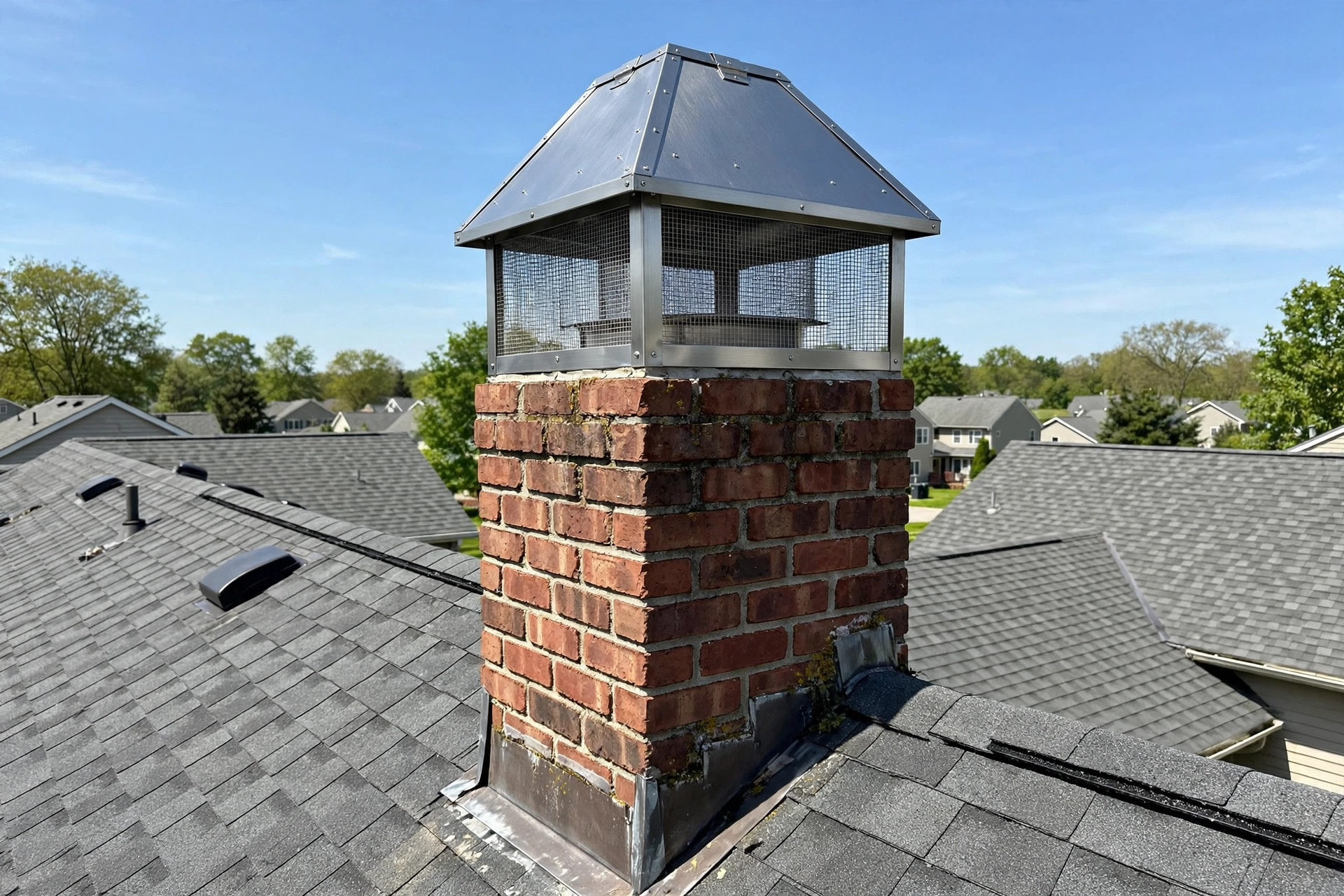

A chimney cap is a small metal cover that sits on top of the flue. Most owners never look at it. This chimney caps and covers reviews and buying guide will change that. A good cap keeps rain out of the chimney. It keeps birds and small animals out. It stops hot sparks from landing on the roof. It costs far less than a chimney repair.
Why a Chimney Cap Matters
An open flue is a hole in the top of the house. Rain falls straight into it. Water mixes with ash and soot inside the flue. That mixture turns into a harsh substance that eats away at mortar and brick. Over time the joints crack. The liner breaks down. A simple metal cover stops this slow damage before it starts.
Animals cause a second problem. Birds love to nest inside a warm, sheltered chimney. Raccoons and squirrels climb down flues in search of a dry place. A mother raccoon can raise her young inside a chimney all spring. Their nests block the passage of smoke. Blocked smoke can push carbon monoxide back into the rooms below. A cap with a tight mesh screen keeps every creature outside where it belongs.
Wind is a third enemy. A strong gust can push smoke back down the flue. It can also carry live sparks up and out onto a dry roof or into nearby leaves. The screen on a well-made cap catches those sparks. Some caps are shaped to break up downdrafts. That keeps the fire burning clean and the room free of smoke smell.
A cap also helps the flue dry faster after a storm. Sun and wind move across the raised top of the cap. Water that does reach the area runs off the sides instead of pooling on the crown. Drier masonry lasts longer. These small gains add up over the life of a chimney. Homeowners who read chimney caps and covers reviews often say the cap paid for itself by stopping just one animal nest or one round of water damage.
What to Look for When You Choose: Chimney Caps and Covers Reviews and Buying Guide
Start with the size of the flue. Measure the inside opening of each flue tile. Also measure the outside edge of the tile. Many chimneys have more than one flue, and each one needs its own fit. A cap that is too small lets rain blow in from the sides. A cap that is too large looks clumsy and can shift in high wind. Bring your numbers with you when you shop. Most product pages from stores like Lowe’s show clear size charts for their chimney products.
Next, look at the mesh. The screen should have openings of about three quarters of an inch or less. That size keeps out birds and most rodents while letting smoke pass freely. A finer mesh traps creosote faster and needs more cleaning. A wider mesh lets in small birds. Stainless steel mesh holds up best in wet weather. It does not rust, and it keeps its shape after many hot and cold cycles.
Check how the cap mounts. Some caps slide into the flue tile and tighten with a bolt. Others clamp around the outside of the tile. A third kind bolts to the chimney crown with masonry screws. Inside-mount caps are easy to fit on standard flue tiles. Outside-mount caps suit chimneys with odd shapes or cracked tiles. Crown-mount caps cover the whole top of the chimney at once. Choose the style that fits your chimney and your skill level.
Look at the lid design. A flat lid sheds rain well and costs less. A hip lid, shaped like a small house roof, sheds water faster and handles heavy snow. A lid with a wide overhang protects the crown from drip lines. The legs that hold the lid should feel solid. Thin legs bend in wind and make the cap rattle.
Think about the material. Reviews of chimney caps and covers agree on one point: stainless steel lasts longest. It resists rust in rain, snow, and salt air. Copper is beautiful and lasts even longer, but it costs much more and stains the brick green over time. Galvanized steel costs the least but rusts within a few years in wet climates. Aluminum stays light and never rusts, though it dents more easily than steel.
Types of Chimney Caps and Covers
Single-Flue Caps
A single-flue cap fits one flue tile. It is the most common type. It mounts in minutes with one or two bolts. Homeowners with a single fireplace use this kind. It is cheap, light, and easy to replace. Most chimney caps and covers reviews give high marks to stainless steel single-flue caps for their balance of price and life span.
Multi-Flue and Top-Mount Caps
Some chimneys hold two or three flues side by side. A top-mount cap covers them all with one wide frame. It bolts to the crown of the chimney. This style also shields the crown itself from rain. Owners like it because one purchase protects the whole top of the stack. The frame is heavier, so check that your crown is solid before you buy.
Chimney Covers and Shrouds
A chimney cover, sometimes called a shroud, wraps the top of the chimney in a decorative shell. It looks like part of the house design. Inside the shell sits a normal cap and screen. Shrouds cost more and are chosen for looks as much as for function. They work best on large masonry chimneys. Guides from The Spruce explain how shrouds differ from plain caps and when the extra cost makes sense.
Draft-Increasing Caps
A few caps are shaped to pull air upward as wind passes over them. The shape works like the wing of an airplane in reverse. These caps can improve a weak draft in a short or sheltered chimney. They do not fix a badly built flue, but they can stop smoke from spilling into the room on windy days. Chimney pros often suggest this type when a homeowner reports downdraft trouble.
Electric and Decorative Options
Not every fireplace burns wood. Some homes use freestanding electric stoves that need no flue at all. If you have converted your fireplace to electric, you may still want a simple cover on the old chimney to keep rain and animals out. A plain rain lid without a spark screen does the job and costs very little.
Cost and Price
Prices run from about thirty dollars to several hundred. A basic galvanized single-flue cap costs thirty to sixty dollars. It will work for three to five years in a mild climate. A stainless steel single-flue cap costs eighty to two hundred dollars. It can last twenty years or more. Copper caps start near three hundred dollars and can last a lifetime.
Top-mount multi-flue caps cost more. A stainless steel top-mount model runs from two hundred to six hundred dollars, based on the size of the crown. Custom copper shrouds can cost over a thousand dollars. They are built to order and fitted by a sheet metal shop.
Paying a pro to install a cap adds one hundred to three hundred dollars. The job takes under an hour on most roofs. Many owners do it themselves with a ladder and a wrench. If your roof is steep or high, hire a chimney sweep. A fall costs far more than the service fee. Big retailers such as The Home Depot sell caps in store and online, and their product pages list current prices side by side for easy comparison.
When you compare chimney caps and covers reviews, weigh price against life span. A sixty-dollar cap replaced four times costs more than one two-hundred-dollar stainless cap that lasts twenty years. It also costs more in time and ladder trips. In most cases, stainless steel is the smart middle choice.
Care and Upkeep
A cap needs little care, but it is not care-free. Check it once a year, ideally in early fall before the burning season. Look from the ground with binoculars or climb up with care. Make sure the screen is whole and the lid is tight. Shake off leaves and twigs. A clogged screen traps smoke and sends it back into the house.
Clean the mesh when creosote builds up. A stiff brush and warm soapy water remove most deposits. Do not use a wire wheel on stainless mesh. It scratches the surface and invites rust. If the screen is bent or torn, replace the cap. A damaged screen is little better than no screen.
Watch the mounting bolts. Heat and cold loosen them over the years. Tighten them with a wrench during your yearly check. If a bolt has rusted solid, cut it off and fit a new one. Stainless hardware avoids this trouble.
Have the flue swept on a regular schedule. A clean flue keeps the cap working well. Heavy creosote on the cap screen is a sign that the flue needs sweeping too. Many sweeps check the cap as part of the visit. Articles on This Old House describe the yearly chimney routine in plain steps that any owner can follow.
If your chimney has a clay tile liner, inspect it when the cap is off. Cracked tiles let heat reach the wood framing of the house. A pro can slip a new liner into the old flue. Shoppers often buy chimney liners online in california and other states to save money, then hire a local pro for the install.
Safety Notes
Chimney fires start in dirty flues. Creosote is the fuel. A hot fire in a coated flue can send flames roaring up the stack. A good cap screen catches sparks, but it cannot stop a chimney fire. Burn only dry, seasoned wood. Keep the flue clean. These two habits matter more than any product.
Carbon monoxide is the silent risk. A blocked flue pushes this odorless gas into the living space. Fit a carbon monoxide detector on each floor of the home. Test it every month. If the alarm sounds, leave the house and call the fire department. Safety pages from the Consumer Product Safety Commission explain detector placement in clear terms.
Roof work is risky. Wet shingles are slick. A steep pitch is no place for a first-timer. If you feel unsure on a ladder, hire the job out. A chimney sweep or roofer will fit a cap in one visit. Your safety is worth more than the money saved.
The Environmental Protection Agency runs a program that teaches owners how to burn wood cleanly. Dry wood, small hot fires, and a clean flue cut smoke and creosote. Less creosote means a safer chimney and a cleaner screen on your cap.
Keep children and pets away from the work area when you fit or clean a cap. Tools fall. Screens have sharp edges. A few minutes of care keeps a small job safe.
Frequently Asked Questions
Do I really need a chimney cap?
Yes, in most cases. An uncapped flue lets in rain, animals, leaves, and wind. Rain breaks down the masonry. Animals build nests that block smoke. A cap is cheap insurance. The U.S. Department of Energy notes that a sound chimney system wastes less heat, and a cap is part of that system.
How do I measure for a cap?
Measure the inside of each flue tile, length and width. Then measure the outside of the tile. Write both sets of numbers down. For a top-mount cap, measure the length and width of the whole chimney crown. Take the numbers to the store or enter them on the product page. When in doubt, round up. A slightly large cap can be shimmed. A small cap cannot be stretched.
Can a cap stop downdrafts?
A standard cap helps a little. A draft-increasing cap helps more. Its shape pulls air up and over the flue when wind blows. If smoke still spills into the room, the cause may be a short flue, a nearby tall tree, or negative pressure in the house. A chimney pro can test the draft and name the true cause.
Will a cap rust?
It depends on the metal. Galvanized steel will rust in time. Stainless steel resists rust for decades. Copper does not rust, though it changes color. In coastal air with salt spray, choose stainless steel or copper. DIY guides on Family Handyman show how salt air attacks cheap metal and why the upgrade pays off.
How long does a chimney cap last?
A cheap galvanized cap lasts three to five years. A stainless steel cap lasts fifteen to twenty five years. A copper cap can last fifty years or more. The screen wears out before the lid in most cases. Yearly checks catch wear early.
Can I install a cap myself?
Most owners can. You need a steady ladder, a wrench, and about thirty minutes. Inside-mount caps are the easiest. Crown-mount caps need masonry screws and a drill. If the roof is steep, high, or wet, call a pro. Product makers like Napoleon and Heatilator ship caps with clear fitting guides in the box.
A Short Final Word
A chimney cap is one of the smallest purchases a homeowner makes. It is also one of the wisest. It guards the flue against rain, animals, sparks, and wind. It costs little and lasts for years. Read the chimney caps and covers reviews, measure your flue, and pick a stainless steel model that fits. Then enjoy your fires with a clear mind. If you are also updating the hearth, our guide to fireplace glass doors reviews and buying guide pairs well with this one.
References
Family Handyman. (n.d.). DIY home repair and maintenance. https://www.familyhandyman.com Heatilator. (n.d.). Fireplaces and fireplace products. https://www.heatilator.com Lowe’s. (n.d.). Home improvement products. https://www.lowes.com Napoleon. (n.d.). Fireplaces, grills, and heating products. https://www.napoleon.com The Home Depot. (n.d.). Home improvement products. https://www.homedepot.com The Spruce. (n.d.). Home and garden advice. https://www.thespruce.com This Old House. (n.d.). Home renovation guidance. https://www.thisoldhouse.com U.S. Consumer Product Safety Commission. (n.d.). Product safety information. https://www.cpsc.gov U.S. Department of Energy. (n.d.). Energy efficiency and renewable energy. https://www.energy.gov U.S. Environmental Protection Agency. (n.d.). Protecting human health and the environment. https://www.epa.gov
Was this guide helpful?

About James Carter
The My Garden US editorial team writes practical, in-depth home and garden guides for American homeowners — tested advice, no fluff.
You May Also Like
Outdoor Firewood Storage Sheds: Reviews and Buying Guide
April 13, 2026 0 views
Freestanding Electric Stoves Reviews and Buying Guide
January 22, 2026 0 views
Top Rated Fire Pit Tables for Texas Homes
March 20, 2026 0 views