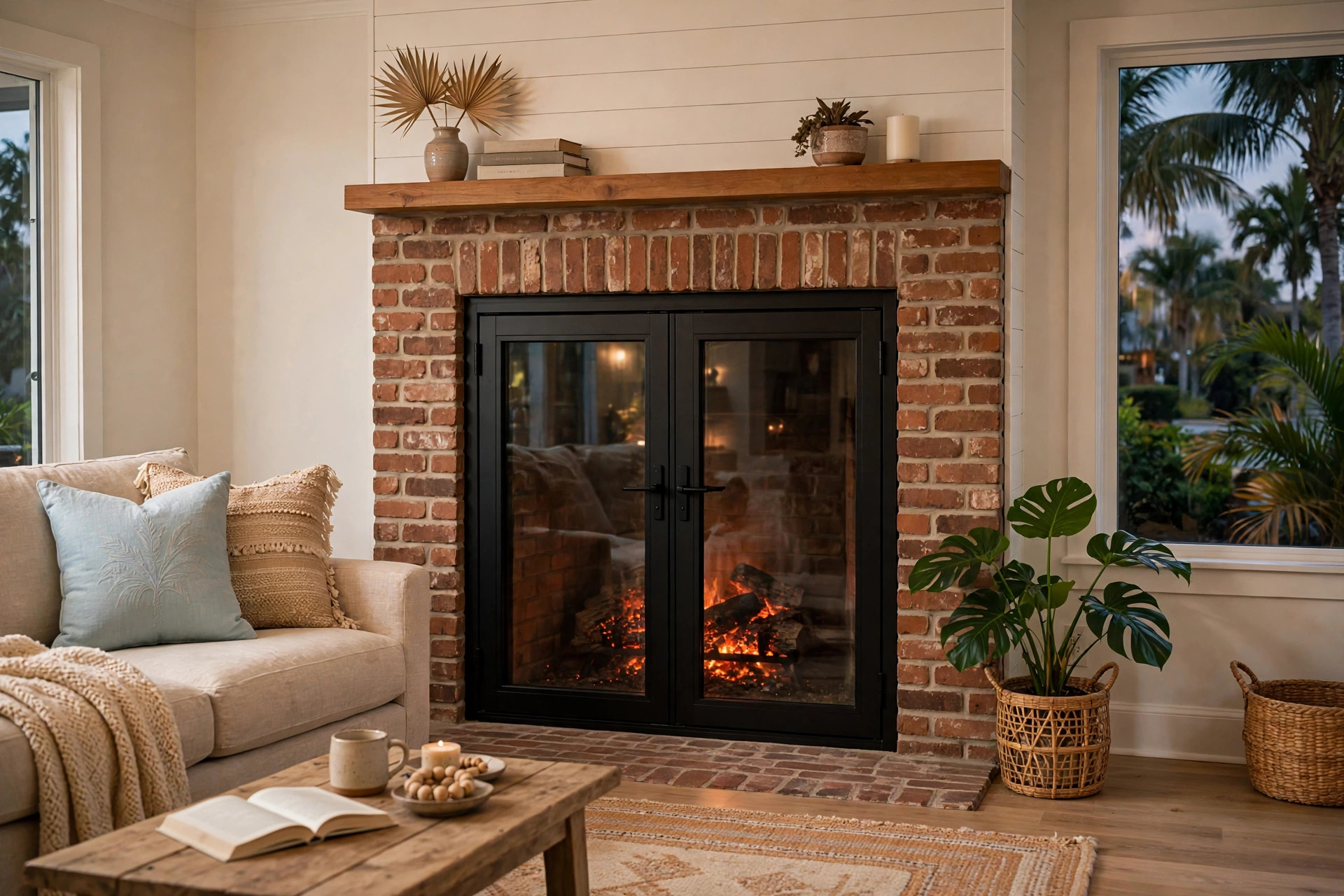

Few home details change a room like a finished fireplace. If you are shopping for top rated fireplace glass doors for Florida homes, you want doors that fit the climate, the home, and the way you use the fire. Florida houses face heat, humidity, salt air near the coast, and insects all year. A plain open fireplace loses cool air in the summer months. Glass doors stop that waste. They keep the fire where it belongs. They also make an old brick opening look new again. This guide walks through the best choices, the prices, the sizes, and the safety rules. It gives you the plain facts so you can buy with care.
Why Glass Doors Matter in Florida
Florida winters are short, but they are real. On cool nights in January and February, a wood fire feels welcome. The rest of the year, that same fireplace opening is a hole in your wall. Warm air rises up the flue all day. Cold air from the air conditioner slips out with it. Glass doors close the opening when the fire is out. They cut drafts. They lower energy waste. That matters in a state where the air conditioner runs most of the year.
Glass doors also bring safety. Sparks cannot fly out of a closed door. Pets and small children cannot reach into the coals. Florida homes often have open floor plans, so a fire is close to the living space. A door with a tempered or ceramic glass panel stands between the fire and the room. It adds a clear layer of protection. Homeowners near the coast like them too. Salt air speeds rust on iron parts. Good doors use brass, aluminum, or stainless trim that holds up near the sea.
Look is the last reason. An old rusty grate and a black hole look tired. Glass doors give the fireplace a finished face. Many Florida homes have stucco and tile fireplaces in Mediterranean or coastal styles. A slim black or brushed nickel frame fits those rooms well. The result is a hearth that looks cared for all year, not just in winter.
What to Look For Before You Buy: Top Rated Fireplace Glass Doors for Florida Homes
Measure Your Fireplace Opening
Measure twice. Use a steel tape. Measure the width and the height of the opening where the doors will mount. Write both numbers in inches. Most glass doors mount as a frame that covers the opening and seals to the face of the fireplace. You need the full clear opening plus the face around it. Many makers sell doors in standard sizes. Some sell custom sizes. A custom size costs more but fits perfectly. For more sizing help, read our guide on fireplace glass doors reviews and buying guide.
Check Your Fireplace Type
Not every door fits every firebox. Masonry fireplaces built of brick or stone take most door sets. Prefabricated metal fireplaces have rules from the maker. Some prefab units allow only doors that the maker tested and listed for that model. Check the plate on your unit or the manual before you buy. Gas log sets also change the rules. If you burn gas logs, see our guide to high efficiency childproof fireplace screens for american homes for child-safety options that pair well with gas units.
Pick the Right Glass
Most doors use tempered glass. It handles normal wood and gas fires. It is strong and safe. For hotter fires, some doors use ceramic glass. Ceramic glass stands up to more heat and shows less heat stress. Ask the seller which glass the doors use. Make sure the glass is rated for a fireplace, not just for a window.
Choose the Frame Finish
Black is the most common finish. It hides soot and suits most rooms. Brushed nickel and brass add a bright touch. Near the Florida coast, brass and stainless steel resist salt better than plain steel. Iron-look finishes suit rustic or Spanish-style homes. Pick a finish that matches your room, not just the store display.
Vents and Dampers
Good doors have air vents or draft controls at the bottom. These let air feed the fire in a measured way. They also let you shut the fire down fast when you leave. In Florida, where many people burn short evening fires, vents help the fire burn clean and keep smoke out of the room.
Types and Options
Cabinet Style Doors
Cabinet doors mount on a frame that sits over the fireplace opening. They open like cabinet doors on hinges. This style is the most common. It fits masonry fireplaces well. The frame hides small cracks and rough edges around the opening. Most top rated sets sold today use this style.
Trackless or Sliding Doors
Some sets use doors that slide or swing on hidden tracks. These give a clean, modern look. They work well in rooms with little swing space in front of the hearth. Check that the track is easy to clean. Sand and pet hair can clog cheap tracks over time.
Three-Sided and Bay Front Doors
Bay front doors bow outward from the opening. They give a wider view of the flames. They suit large masonry openings. They cost more than flat cabinet doors. For a standard Florida living room fireplace, a flat cabinet set is usually enough.
Gas Fireplace Doors
If your fireplace runs gas logs, you may want doors made for gas units. These often have tighter seals and safety pilot features. Never use wood-burning doors on a gas unit without checking the maker list. The wrong doors can trap gas or block needed air flow.
Decorative and Safety Screens
Some homeowners use a mesh screen with or behind the glass doors. A mesh panel adds spark control when the doors stand open. It also keeps children back from the heat. For EPA guidance on wood heating equipment, see the EPA website for current standards. Our article on epa certified fireplace tool sets for sale covers the tool sets that pair with these doors.
Cost and Price
Prices vary by size, finish, and glass type. A standard steel-frame set with tempered glass for a 36-inch opening often costs between two hundred and five hundred dollars. Custom sizes run higher. Large or bay-front sets can reach eight hundred dollars or more. Brass and stainless frames cost more than black steel.
Measure your budget with the full job in mind. You may need new firebrick, a flue sweep, or a hearth pad at the same time. Many Florida homeowners buy doors during a fall chimney check. A sweep can measure the opening and mount the doors in one visit. Labor for a simple mount often adds one hundred to two hundred dollars. Ask for the full price in writing before work starts.
Watch for deals at large home stores. Online sellers also ship free. Read reviews before you buy. A low price means little if the hinges sag in a year. Look for solid hinge hardware and thick steel in the frame. The best rated doors hold their shape for a decade or more.
Care and Upkeep
Glass doors need little care, but they do need some. Soot builds on the glass with wood fires. Wipe the glass when it cools. Use a soft cloth and a cleaner made for fireplace glass. Do not use oven cleaner or steel wool. They scratch the glass and dull the finish.
Check the hinges and latches twice a year. Tighten loose screws. In humid Florida homes, watch for rust on screws and springs. A drop of light oil on the hinge pins keeps them smooth. Wipe the frame with a damp cloth. Dry it well.
Keep the track or sill clean. Ash and sand gather at the base. A small brush clears them out. If the doors have gaskets, check them each fall. Cracked gaskets leak air and smoke. Most makers sell replacement gaskets at low cost.
Never close the doors while a wood fire is still burning hard unless the maker allows it. Some doors are built for closed-door burning. Others must stand open while wood burns. Read the manual. Wrong use can crack the glass or overheat the frame.
Safety Rules That Matter
Fireplace doors add safety, but they do not remove risk. Keep a working smoke alarm and carbon monoxide alarm near every fireplace. Test them each month. Change the batteries each fall.
Keep rugs, toys, and furniture at least three feet from the firebox. Never leave a fire with children or pets in the room alone. Glass gets very hot. A child who touches it can be burned in seconds. Teach children that the glass is always hot. A mesh safety screen helps, but watching children is the real answer.
Burn only dry, seasoned wood. Green wood makes smoke and creosote. Creosote builds in the flue and can catch fire. The U.S. Consumer Product Safety Commission offers safety guidance for hearth products at their site. Have your chimney swept each year before the first cool night. Florida homes that burn little still gather nests and dust in the flue.
Make sure the flue damper is open before you light any fire. With glass doors closed and the damper shut, smoke will pour into the room. This is a common mistake. Open the damper first. Then open the doors. Then light the fire.
If you smell gas or see smoke when doors are closed, do not wait. Open the doors and the damper. If the problem stays, leave the room and call for help. Good doors work with the whole system: the flue, the hearth, and the room air. One weak link spoils the rest.
Frequently Asked Questions
Can I install glass doors on a prefab fireplace?
Maybe. Many prefab units accept only doors the maker tested and listed. Check your unit manual or the maker plate. If you buy outside the list, you may void the listing and the warranty. When in doubt, call the maker with your model number.
Do glass doors make the fireplace more efficient?
Yes, when used right. Closed doors cut heat loss up the flue when no fire burns. During a fire, doors with vents let you control air and burn cleaner. They will not turn an open fireplace into a furnace, but they trim waste.
What size do I need for a standard 36-inch opening?
Most makers sell sets sized for common openings. Measure your exact width and height. A set marked for a 36-inch opening usually covers openings from about 30 to 37 inches wide. Check the maker chart. Custom sizes cost more but fit best.
Are glass doors safe for homes with small children?
They help, but they are not a full answer. Glass gets hot enough to burn skin. Use doors plus a mesh safety screen. Keep a hearth gate in place. Never leave small children alone near a fire.
How do I clean soot off the glass?
Wait until the glass is cool. Use a soft cloth with a cleaner made for fireplace glass. Rub in small circles. For heavy soot, damp ash on newspaper works as a gentle scrub. Rinse and dry. Do not use sharp tools or oven cleaner.
Do I need doors if I only use my fireplace a few times a year?
Yes, and here is why. In Florida, the fireplace sits idle most of the year. That open hole lets your air-conditioned air escape up the flue. Doors seal it shut. They also keep out insects, dust, and attic air. For a Florida home, doors pay back even if you burn only a few fires.
A Final Word
Top rated fireplace glass doors for Florida homes do three jobs at once. They seal the opening against wasted air. They guard the room against sparks and burns. They give the hearth a clean, finished look. Pick doors that fit your opening, your fireplace type, and your climate. Measure with care. Check the maker rules for prefab units. Choose glass and finish that suit Florida heat and salt air. With good doors and steady care, your fireplace will serve you well for many years, on the few cool nights and the long warm days alike.
For more background, see This Old House, Family Handyman, and The Spruce. For more background, see Lowe’s, The Home Depot, and Napoleon. See Heatilator for more detail.
References
Family Handyman. (n.d.). DIY home repair and maintenance. https://www.familyhandyman.com Heatilator. (n.d.). Fireplaces and fireplace products. https://www.heatilator.com Lowe’s. (n.d.). Home improvement products. https://www.lowes.com Napoleon. (n.d.). Fireplaces, grills, and heating products. https://www.napoleon.com The Home Depot. (n.d.). Home improvement products. https://www.homedepot.com The Spruce. (n.d.). Home and garden advice. https://www.thespruce.com This Old House. (n.d.). Home renovation guidance. https://www.thisoldhouse.com U.S. Environmental Protection Agency. (n.d.). Protecting human health and the environment. https://www.epa.gov
Was this guide helpful?

About Robert Taylor
The My Garden US editorial team writes practical, in-depth home and garden guides for American homeowners — tested advice, no fluff.
You May Also Like
Buy Ventless Gas Fireplaces Online in Arizona
June 16, 2026 0 views
How to Buy Fireplace Mantel Shelves Online in California
March 22, 2026 0 views
Best Propane Fire Pits Buying Guide for American Homes
March 1, 2026 0 views