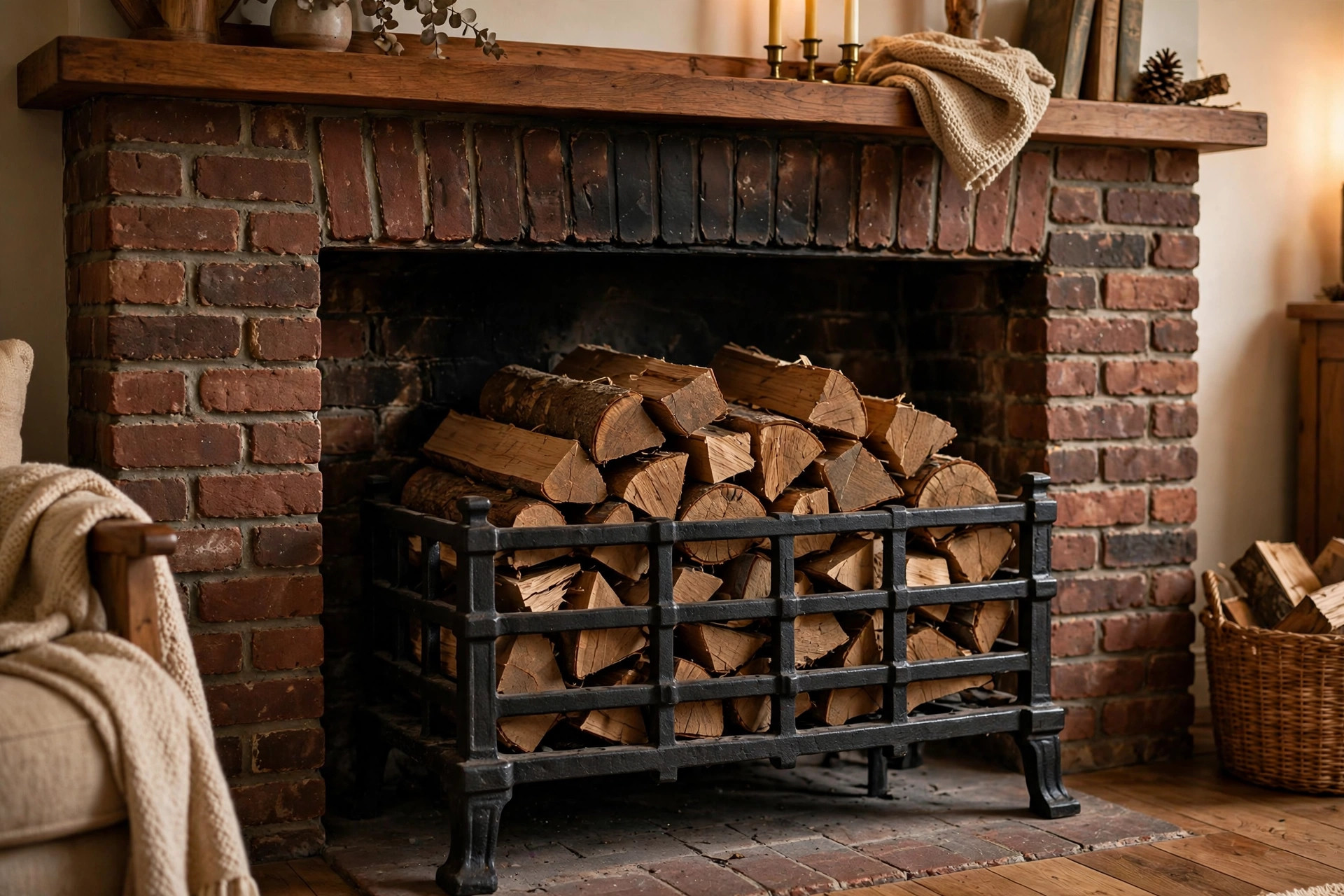

A fireplace grate is the steel or iron frame that holds firewood above the floor of the firebox. A good fireplace grates price comparison USA study shows that prices run from under thirty dollars for a plain steel bar grate to well over three hundred dollars for a heavy cast iron model. This guide explains what you pay for and how to get fair value.
Why a Fireplace Grate Matters
A fire needs air to burn. A grate lifts the logs so air can move under and around them. This gives a hotter fire with less smoke. It also keeps the logs from rolling onto the hearth.
A grate protects the floor of your firebox too. Burning wood sits on the grate, not on the masonry or metal floor. This adds years of life to the fireplace. For these reasons, nearly every wood-burning fireplace in America needs a good grate. The small cost is easy to justify.
What a Fireplace Grate Is: Fireplace Grates Price Comparison Usa
A fireplace grate has two main parts. The front and back legs raise the frame. The horizontal bars or slats hold the logs. Some grates have a back panel called a fireback that throws heat into the room.
Grates come in fixed sizes. The right size depends on the width of your firebox. Measure from the inside of one side wall to the other. Then subtract six inches. The grate should be at least this much narrower than the firebox. This leaves room for air flow and keeps the grate from touching the walls.
What to Look for When You Buy
Weight is the first thing to check. A heavier grate lasts longer. Cast iron grates often weigh twenty to forty pounds. Thin steel grates may weigh under ten pounds. Heavy grates hold heat better and do not warp.
Bar spacing is the second thing to check. Narrow bars hold small pieces of wood. Wide bars suit large logs. If you burn mostly split firewood, choose bars spaced about two inches apart.
Feet and legs should be sturdy. The grate will carry a full load of wet wood. Thin legs bend with heat and weight. Look for legs that are at least three quarters of an inch thick on cast iron models.
Finish matters for looks and life. Some grates are bare cast iron. Others have a high heat paint finish. Paint will wear off over time but can be touched up with stove paint.
Types of Fireplace Grates
Cast Iron Grates
Cast iron is the old standard. It is heavy and holds heat. A cast iron grate can last twenty years or more. Prices run from about seventy to three hundred dollars. These grates suit large fireboxes and full-time wood burners. A helpful buying guide for fireplace parts can explain how grates work with other hearth parts.
Steel Bar Grates
Steel bar grates are lighter and cheaper. They cost about twenty-five to ninety dollars. They heat up fast but cool down fast too. Thin bars may warp after a few seasons of heavy use. They are a good choice for a fire you burn now and then.
Stainless Steel Grates
Stainless steel resists rust and holds up well. These grates cost about ninety to two hundred dollars. They suit damp climates and homes near the coast. They do not have the rough classic look of cast iron.
Self-Feeding and Basket Grates
Some grates are shaped like a basket or a V. These cradle the logs and feed them toward the center as they burn. They cost about fifty to one hundred and eighty dollars. Many owners find they use less wood with this design.
Zero Clearance Grates
Some factory-built fireplaces need special grates made for them. A fireplace maker’s site lists the right grate size for each model. Never force a standard grate into a unit that calls for a listed part.
Cost and Price: A Fireplace Grates Price Comparison USA
Price ranges in the United States fall into four clear bands. A plain steel bar grate costs twenty-five to fifty dollars. You will find these at big home stores and local hardware shops. They burn fine but may need replacement in three to five years.
A mid-range cast iron or heavy steel grate costs sixty to one hundred and forty dollars. This is the sweet spot for most homes. The grate is heavy enough to last and priced within reach.
A premium cast iron grate costs one hundred and fifty to three hundred dollars. These are thick, well made, and often carry a long warranty. Full-time wood burners get the best value here.
Custom or large grates cost three hundred dollars and up. A wide grate for a big stone fireplace is made to order. The price reflects the size and the labor.
Shipping can add twenty to fifty dollars for heavy models. Check whether the store offers free delivery. A price guide from a home improvement retailer often shows delivered prices side by side.
Where to Buy
Local hearth shops let you lift the grate and feel its weight. The staff can measure your firebox and pick the right size. Prices may be a bit higher than online, but the advice has value.
Large home centers carry a wide stock. Prices are fair and returns are easy. Online marketplaces offer the lowest prices but check the seller’s rating first. A consumer guide to hearth products can help you compare store policies before you order.
How to Get the Best Value
Measure your firebox before you shop. A grate that is too large will not fit. A grate that is too small wastes heat. Write down the width and depth and carry the numbers with you.
Buy for your burn habits. A weekend fire needs only a modest steel grate. Daily winter burning calls for heavy cast iron. Spending more than you need gains nothing. Spending too little means buying twice.
Check the warranty. Many cast iron grates carry a five or ten year warranty. Read the terms. A warranty that covers warping is worth more than one that does not.
Compare the cost per year. A thirty dollar grate that lasts three years costs ten dollars a year. A one hundred and eighty dollar grate that lasts fifteen years costs twelve dollars a year. The gap is small, and the dearer grate burns better all along.
Care and Upkeep
Let the ashes cool fully before you clean. A metal ash shovel and a covered bucket are the right tools. Empty the ash when it builds up to the bottom of the grate. Thick ash can block air flow.
Check the bars each season. Look for thin spots, cracks, and bent legs. A damaged grate can drop a burning log. Replace it before the next fire.
Brush off loose rust in the spring. A coat of high heat stove paint keeps the grate looking well. Do this outdoors and let the paint cure before the first fall fire.
Store a spare grate in a dry place if you buy in pairs. Two mid-priced grates bought on sale can cost less than one bought in a hurry in January. A home repair reference has plain steps for end-of-season fireplace care.
When to Replace Your Grate
A grate does not last forever. The bars thin out where the hottest part of the fire sits. You can see this as a bright worn spot in the middle of the frame. When a bar is half its old thickness, the grate is near the end.
Legs give out too. A leg that rocks or tilts means the metal has softened. Do not try to bend it back. Bent metal is weak metal and will fail again. Replace the whole grate.
Rust is normal on cast iron but deep pitting is not. Pitted metal crumbles under load. If flakes fall off when you tap a bar with the poker, buy a new grate before the next burn.
Many owners replace the grate when they change other hearth parts. A new screen, new andirons, and a new grate make the fireplace look fresh. The cost of all three is still less than a service call for a chimney problem caused by a collapsed log pile.
Safety
Never use a fireplace without a screen or glass doors. Sparks can jump past the grate and land on the rug. A mesh screen is cheap and stops most sparks.
Keep the hearth clear. Move kindling, papers, and rugs at least three feet from the opening. A fire safety page from the EPA notes that wood smoke is a health concern, so burn only dry seasoned wood.
Have the chimney swept each year. Creosote builds up in the flue and can catch fire. A certified sweep will check the damper and the flue while he is there.
Use a carbon monoxide alarm in the room. Wood fires are safe when the flue draws well. An alarm guards against the rare bad draw on a still night. A home safety guide covers detector placement in plain terms.
Frequently Asked Questions
How much should I pay for a fireplace grate?
Most American buyers pay between sixty and one hundred and forty dollars. This band buys a solid cast iron or heavy steel grate that fits a standard firebox and lasts for years. Lighter use justifies less. Heavy daily use justifies more.
What size grate do I need?
Measure the inside width of your firebox. Subtract six inches. Buy a grate no wider than that number. For depth, the grate should be at least two inches shorter than the firebox depth. A grate that is too large will block the damper or press on the walls.
Is cast iron better than steel?
For most homes, yes. Cast iron holds heat, resists warping, and lasts longer. Steel costs less and weighs less. If you burn only a few fires each winter, a steel grate is fine. If you heat with wood, cast iron pays for itself.
Why does my grate warp?
Heat and weight bend thin metal. Cheap steel grates warp when loaded with heavy wet logs. Letting the fire burn too hot can also bend the bars. A warped grate should be replaced, since it may drop logs.
Can I use a grate in a gas fireplace?
No. Gas fireplaces use ceramic logs and special burners, not wood grates. A wood grate in a gas unit can block the burner and cause soot. Buy parts made for your gas model only.
Where can I compare fireplace grate prices?
Check local hearth shops, large home centers, and two or three online sellers. Write down the model, weight, and material for each. Then compare on equal terms. A chimney caps and covers reviews and buying guide pairs well with grate shopping, since caps and grates wear out on similar schedules. You may also like a childproof fireplace screens reviews and buying guide if young children visit your home, and an affordable fireplace tv stands for sale roundup if you are dressing up the hearth wall.
A Short Final Word
A fireplace grate is a small part with a large job. Spend a little time on a fireplace grates price comparison USA shoppers can trust, match the grate to your firebox and your burn habits, and you will enjoy warm fires for many winters. The cheapest grate is rarely the best deal. The dearest is rarely needed. The middle band, bought with care, serves most homes very well.
References
Family Handyman. (n.d.). DIY home repair and maintenance. https://www.familyhandyman.com Heatilator. (n.d.). Fireplaces and fireplace products. https://www.heatilator.com Lowe’s. (n.d.). Home improvement products. https://www.lowes.com Napoleon. (n.d.). Fireplaces, grills, and heating products. https://www.napoleon.com The Home Depot. (n.d.). Home improvement products. https://www.homedepot.com The Spruce. (n.d.). Home and garden advice. https://www.thespruce.com This Old House. (n.d.). Home renovation guidance. https://www.thisoldhouse.com U.S. Environmental Protection Agency. (n.d.). Protecting human health and the environment. https://www.epa.gov
Was this guide helpful?

About James Carter
The My Garden US editorial team writes practical, in-depth home and garden guides for American homeowners — tested advice, no fluff.
You May Also Like
Where to Buy Firewood Storage Racks in Arizona
May 10, 2026 0 views
Ventless Vented Gas Log Sets with Free Shipping: A Complete Buyer’s Guide
May 8, 2026 0 views
Ventless Propane Patio Heaters With Free Shipping: A Complete Buying Guide
July 1, 2026 0 views