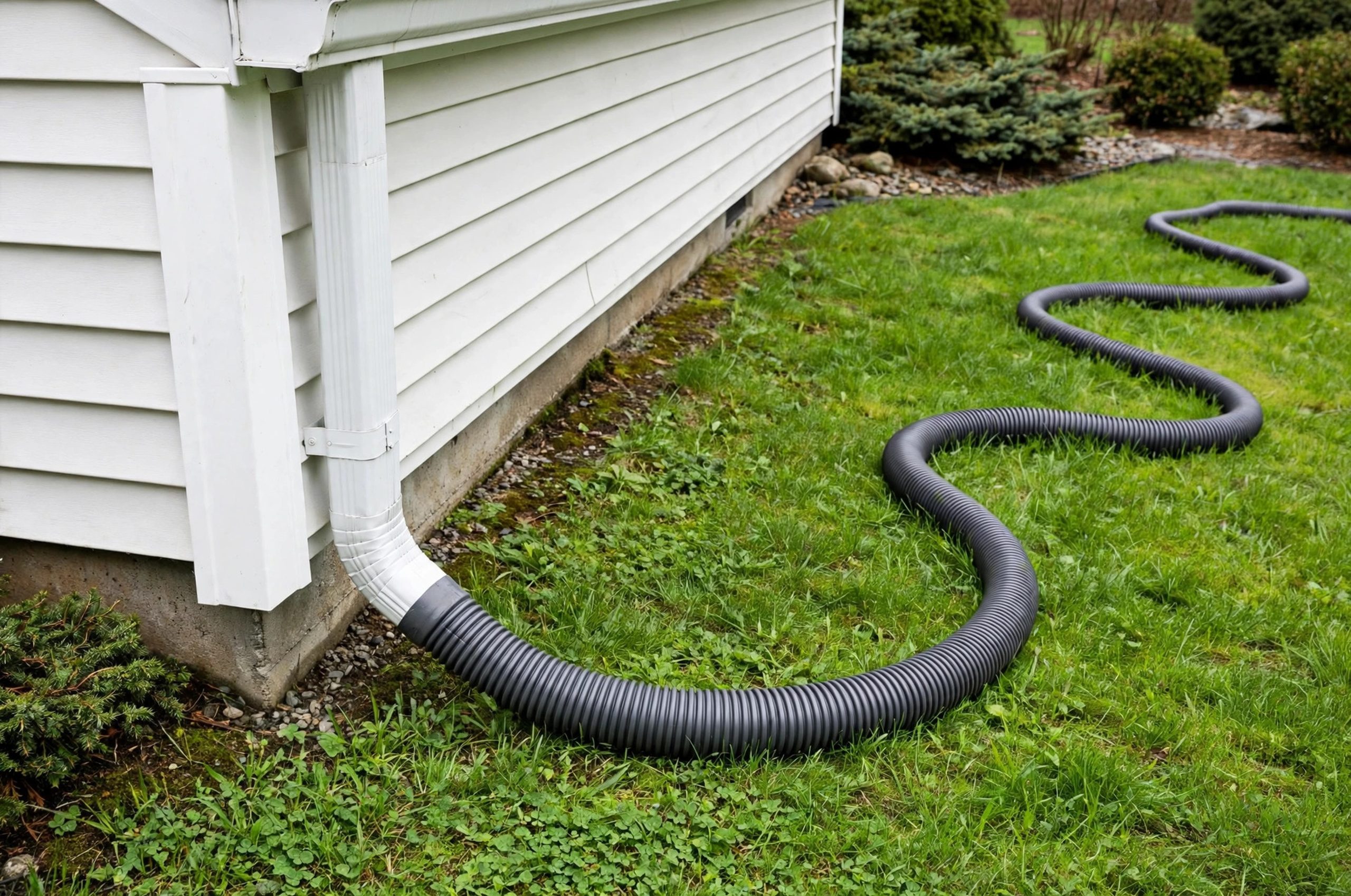
Your gutters do their job. They catch the rain. Then the downspout dumps it all right next to your foundation. In a heavy storm, that is hundreds of gallons of water soaking the soil against your basement wall. Over time, that water finds its way in. Basements leak. Crawl spaces flood. Foundations crack. The rest of this guide covers gutter downspout extensions for heavy rain in plain language.
Table of Contents
Table of Contents
- Gutter Downspout Extensions for Heavy Rain: Why Extensions Matter in Heavy Rain
- How Far Is Far Enough?
- Types of Downspout Extensions
- Flexible Corrugated Extensions
- Roll-Out Extensions
- Rigid PVC or Aluminum Extensions
- Buried Drain Lines
- Splash Blocks
- What to Look for in Heavy Rain
- Installation Basics
- Maintenance
- When Extensions Are Not Enough
- The Bottom Line
- References
The fix is simple and cheap. A downspout extension carries roof water away from the house before releasing it. For heavy rain regions, the right extension is not optional. It is the difference between a dry basement and a wet one.
This guide covers the best gutter downspout extensions for heavy rain. You will learn the main types, how to size them, how to install them, and when extensions are not enough.
Gutter Downspout Extensions for Heavy Rain: Why Extensions Matter in Heavy Rain
When it comes to gutter downspout extensions for heavy rain, getting the details right makes all the difference.


Many homeowners find that gutter downspout extensions for heavy rain is easier than they expected once they know the basics.
Do the math on a typical roof. A 2,000-square-foot roof sheds about 1,200 gallons of water in a single inch of rain. All of that runs to the gutters and down the downspouts. Without extensions, it lands in a concentrated stream at the base of your foundation.
Soil against the foundation can only absorb so much. In heavy rain, it saturates fast. Then water pools. Then it pushes against the foundation wall. Hydrostatic pressure forces water through the tiniest cracks. A dry basement in light rain becomes a wet basement in a downpour.
Pro Builder's drainage guide puts it plainly: downspouts must discharge well away from the house, ideally with horizontal runs at least ten feet long. That is the standard to aim for.
How Far Is Far Enough?
Many homeowners find that gutter downspout extensions for heavy rain is easier than they expected once they know the basics.
The key to gutter downspout extensions for heavy rain is choosing the right approach for your space and budget.
The general rule: get roof water at least six to ten feet from the foundation. In heavy rain regions or on clay soil that drains slowly, aim for ten feet or more. Sandy soil drains faster, so you can sometimes get away with less, but more distance never hurts.
Watch your yard after a big storm. If water ponds near the house even with extensions, you need longer runs or a buried line to a better discharge point. The goal is simple: water should never flow back toward the foundation.
Types of Downspout Extensions
The key to gutter downspout extensions for heavy rain is choosing the right approach for your space and budget.
With a little planning, gutter downspout extensions for heavy rain can fit even a busy schedule.
Flexible Corrugated Extensions
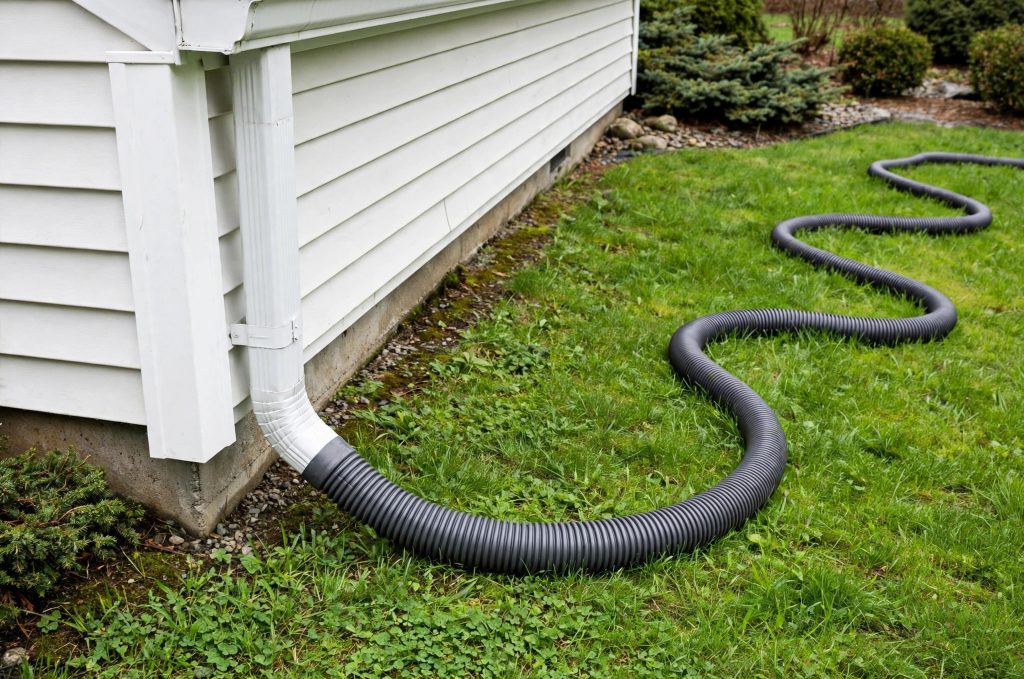
These are the accordion-style plastic tubes you see everywhere. They stretch from about two feet to five or six feet. They bend around corners. They cost little and install in minutes with a screw or two.
Pros: cheap, easy, adjustable, widely available. Cons: the ridges catch leaves and debris, so they clog. They look utilitarian. In heavy rain, a clogged flexible extension backs water up against the house, which defeats the purpose.
For heavy rain, flexible extensions work as a quick fix but need regular cleaning. BestReviews Guide's extension roundup rates several flexible models and notes that thicker material holds up better in harsh weather.
Roll-Out Extensions
These lie flat and unroll when water flows through them, then roll back up when the rain stops. They typically extend four to twelve feet. Because they stay flat when dry, they do not block mowing or foot traffic.
Pros: long reach, mower-friendly, automatic. Cons: they can shift in very heavy flow. Debris can prevent them from unrolling fully. They wear out faster than rigid pipe.
Roll-out extensions are a good middle ground for heavy rain if you keep them clear. Anchor Foundation Repair recommends aiming for eight to ten feet of discharge distance, which the longer roll-out models can reach.
Rigid PVC or Aluminum Extensions
Straight sections of pipe or formed aluminum that bolt to the downspout and run along the ground. They look cleaner than corrugated plastic and clog less because the interior is smooth.
Pros: durable, smooth interior resists clogs, neat appearance. Cons: fixed length, can be a trip hazard, need secure fastening in high wind.
For a permanent above-ground solution in heavy rain, rigid extensions are hard to beat. They handle high flow without collapsing or shifting.
Buried Drain Lines
The premium option. Solid PVC pipe runs underground from the downspout to a discharge point far from the house: a dry well, a curb outlet, or a low spot in the yard. Nothing shows above ground except a small grate or outlet.
Pros: invisible, handles the most water, no mowing hassle, longest lasting. Cons: most work to install, hardest to clear if clogged, costs the most.
US A Plumbing's downspout extension guide walks through the basic buried installation: dig a trench, lay four-inch PVC with proper slope, and daylight the outlet away from the house. Medium's drainage fixes article agrees that buried lines are the most reliable long-term solution for heavy runoff.
Splash Blocks
The concrete or plastic ramps under downspouts. They are better than nothing, but at two feet long, they do not move water far enough for heavy rain. Think of splash blocks as a supplement, not a solution.
What to Look for in Heavy Rain
With a little planning, gutter downspout extensions for heavy rain can fit even a busy schedule.
Before you start, it helps to understand how gutter downspout extensions for heavy rain works in real homes.
Not all extensions handle big storms equally. Prioritize:
- Length. Longer is better. Look for models that reach at least six feet, ideally more.
- Diameter match. Most residential downspouts are 2x3 or 3x4 inches. The extension must fit snugly. Adapters help, but a direct fit seals better.
- Secure fastening. Heavy rain exerts real force. Extensions held by friction alone can blow off. Look for screw mounts or straps.
- Clog resistance. Smooth interiors beat corrugated for heavy debris areas. If you choose corrugated, plan to flush it regularly.
- UV resistance. Cheap plastic gets brittle in the sun. Thicker, UV-rated material lasts years longer.
Claire West Design's tested extension picks and Blue Rock Living's flexible extension review both highlight durability and secure fit as the traits that separate good extensions from junk.
Installation Basics
Before you start, it helps to understand how gutter downspout extensions for heavy rain works in real homes.
A good plan for gutter downspout extensions for heavy rain saves time, money, and frustration.
Most above-ground extensions install in under thirty minutes per downspout.
1. Measure your downspout. Note whether it is 2x3 or 3x4 inches. Buy the matching extension. 2. Clean the gutters first. An extension cannot fix a clogged gutter. Clear leaves and debris so water actually reaches the downspout. 3. Attach the extension. Slide it over the downspout outlet. Secure with sheet metal screws or the included fasteners. In heavy rain zones, use at least two screws. 4. Aim it right. The extension should slope gently away from the house. Water must flow downhill the whole way. Even a small uphill dip creates a trap.
5. Pick the discharge point. Aim for lawn or a drainage swale, not the neighbor's yard and not a walkway that will ice over in cold weather. 6. Test it. Run a hose into the gutter and watch the flow. Check for leaks at the connection and pooling at the outlet.
For buried lines, the work is bigger: trench at least a foot deep, slope the pipe a quarter inch per foot, and use solid PVC, not perforated, for the run from the house. Perforated pipe belongs in the dispersal area, not next to the foundation. Baret News explains why smooth-wall PVC beats corrugated for buried runs: debris catches in the ridges and clogs are harder to clear.
Maintenance
A good plan for gutter downspout extensions for heavy rain saves time, money, and frustration.
Extensions need attention, especially in heavy rain country.
- Flush them each spring and fall. A garden hose run through the extension clears leaves and grit.
- Check fasteners after big storms. High water flow loosens connections.
- Watch the discharge point. If it erodes into a pit, add a splash pad or extend further.
- Keep gutters clean. The best extension in the world cannot move water that never gets past a clogged gutter. Our guides to gutter cleaning tools and gutter cleaning services can help.
- Consider gutter guards. They cut the debris load dramatically. See our seamless gutter guard reviews and price comparison.
When Extensions Are Not Enough
For most people, gutter downspout extensions for heavy rain comes down to a few smart choices.
Sometimes water problems run deeper than downspouts. Call a drainage professional if:
- The basement leaks even with long extensions in place
- Water comes up through the basement floor, which suggests a high water table
- The yard stays soggy for days after rain
- You see new foundation cracks
- The lot slopes toward the house and grading cannot fix it
These situations may need French drains, sump pumps, or regrading. Wichita Gutters lays out the decision well: start with extensions because they are cheap and quick, then upgrade to French drains if water problems continue. If your gutters themselves are failing, our gutter installation guide covers replacement.
The Bottom Line
If you are new to gutter downspout extensions for heavy rain, start with the simplest option and build from there.
The best gutter downspout extensions for heavy rain are long, secure, and clog-resistant. Flexible extensions work as a quick fix. Roll-out models balance reach and convenience. Rigid and buried lines are the durable answers for serious rainfall. Whatever type you choose, get the water at least six to ten feet from the foundation, keep everything clean, and test with a hose.
It is a small project with a big payoff. Dry basements start at the downspout. Keep this guide handy the next time gutter downspout extensions for heavy rain comes up.
References
When it comes to gutter downspout extensions for heavy rain, getting the details right makes all the difference.
Anchor Foundation Repair. (n.d.). Top 4 tips to handle gutters around your home's foundation. https://anchorfoundationrepair.net/blog/tips-gutters-home-foundation/
Baret News. (n.d.). How exterior yard grading and downspout extensions prevent basement flooding. https://lifestyle.baretnews.com/story/209910/how-exterior-yard-grading-and-downspout-extensions-prevent-basement-flooding/
BestReviews Guide. (n.d.). 10 best gutter downspout extensions in the US. https://www.bestreviews.guide/gutter-downspout-extensions
Blue Rock Living. (n.d.). I tested the best flexible gutter downspout extensions. http://bluerockliving.com/flexible-gutter-downspout-extensions/
Claire West Design. (n.d.). I tested 5 gutter downspout extensions and found the best one. https://clairewestdesign.com/best-gutter-downspout-extension/
Pro Builder. (n.d.). Keeping water away. https://www.probuilder.com/home/article/55202631/keeping-water-away
USA Plumbing. (n.d.). Extend a downspout away from your home. https://www.usaplumbing.info/tips/extend-a-downspout-away-from-your-home
Wichita Gutters. (n.d.). French drains vs. gutter extensions: What works best? https://www.wichitagutters.com/french-drains-vs-gutter-extensions-what-works-best-in-wichita
Worthy Construction. (n.d.). Downspout drainage fixes that prevent basement leaks. https://medium.com/@worthyconstruction/downspout-drainage-fixes-that-prevent-basement-leaks-518163b55a71
Was this guide helpful?

About My Garden US
The My Garden US editorial team writes practical, in-depth home and garden guides for American homeowners — tested advice, no fluff.
You May Also Like

Weather Resistant Exterior House Painting Services for Homeowners
July 3, 2026 2 views
Budget Friendly Fiber Cement Siding Panels Buying Guide
August 22, 2026 2 views
Durable Board and Batten Siding for USA Homes
February 1, 2026 3 views