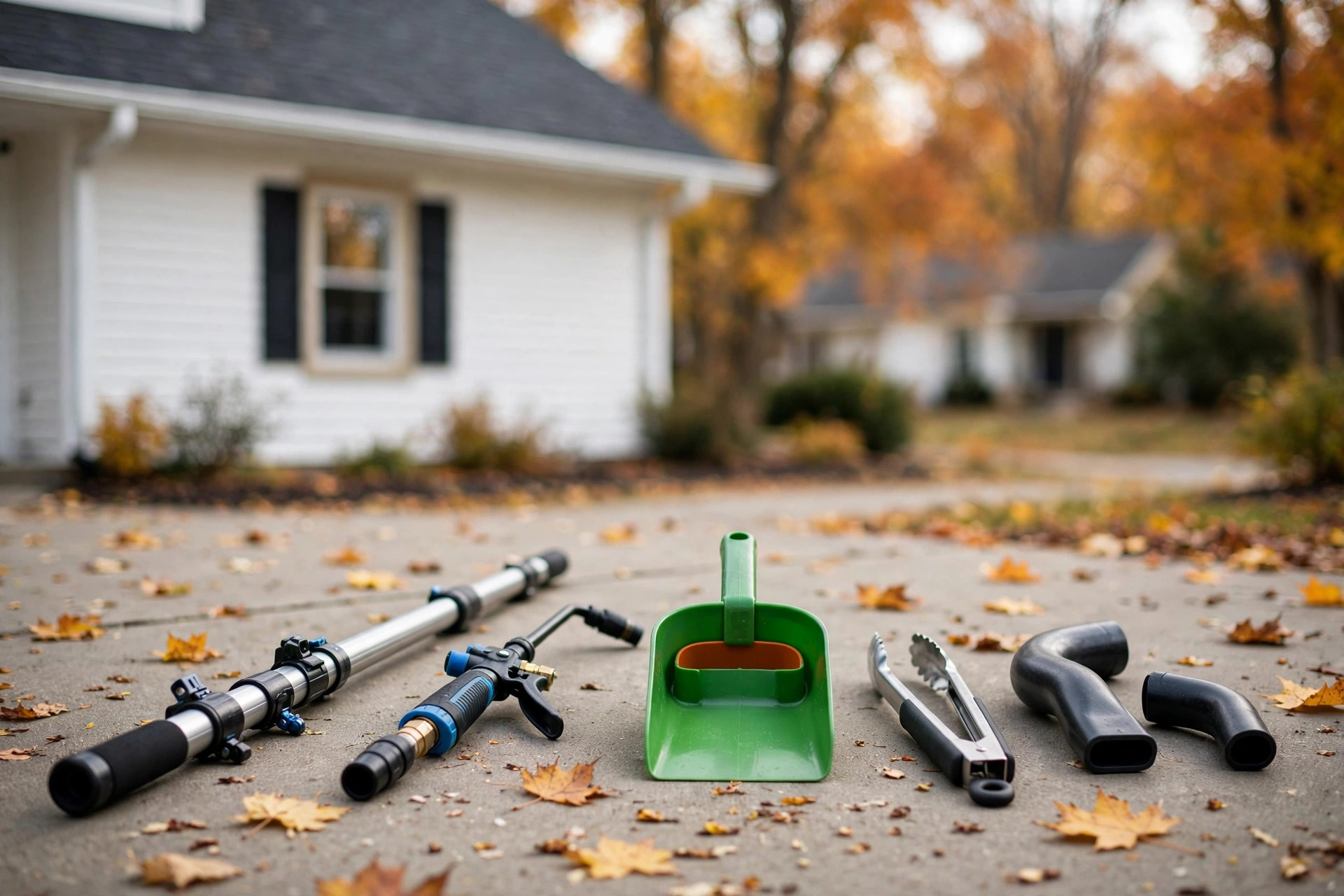

Gutters do quiet work. They catch rain from the roof. They move it away from the walls. They keep the foundation dry. When they clog, the damage starts slow. Water runs over the edge. It stains the siding. It soaks the soil near the house. It can back up under the shingles. This professional grade gutter cleaning tools buying guide will help you pick gear that clears gutters fast, keeps your feet on the ground, and holds up for years of hard use.
Homeowners often clean gutters with a ladder and bare hands. That works, but it is slow and risky. Pro-grade tools change the job. They reach further. They grab more debris per pass. They last longer than cheap store sets. Whether you clean twice a year or run a small service route, the right kit pays for itself in saved time.
Why Gutter Cleaning Matters
Clean gutters protect the whole house. A full gutter weighs more than you think. Wet leaves and sludge can add hundreds of pounds along one run. That weight pulls gutters away from the fascia board. Brackets bend. Seams open. Once water finds a gap, it finds its way inside.
Overflowing gutters also feed pests. Mosquitoes breed in standing water. Birds and rodents nest in packed leaves. Ice dams form in winter when meltwater has no clear path out. A spring and fall cleaning stops most of this. In wooded lots, three cleanings a year may be wise.
Many homeowners wait until water spills over the edge during rain. By then the gutters may already sag. A small habit of regular checks saves large repair bills. Good tools make that habit easy to keep. When the job takes twenty minutes instead of two hours, you will do it on time.
What to Look for When You Choose: Professional Grade Gutter Cleaning Tools Buying Guide
Reach and Length
The best tool keeps you off the ladder. Look for poles that reach 12 to 24 feet. Telescoping poles adjust to the job. Twist-lock poles hold their length better than flip-lock poles under load. Fiberglass poles are light and stiff. Aluminum poles cost less but can feel heavy at full stretch.
Ease of Storage
Think about where the kit will live. Long poles need wall space. Some poles break down into short sections. That helps if your garage is tight. Bags and cases keep small heads together. A kit that is hard to store is a kit you will stop using.
Grip and Weight
You will hold the pole overhead for long stretches. A few ounces matter. Foam grips beat bare metal on cold mornings. Check the total weight of the pole plus the cleaning head. Pros prefer rigs under five pounds. If the kit feels front-heavy in the store, it will feel worse at full reach.
Build Quality
Pro-grade means pro-grade. Joints should fit tight with no wobble. Metal heads should be thick, not stamped thin. Threads should be standard size so heads swap between brands. Consumer Reports has tested home maintenance gear for decades and notes that tool life often comes down to joint and grip design. Plastic scoops should feel solid in the hand, not brittle.
Fit With Your Gutter
Match the tool to the gutter. Standard K-style gutters take most scoops. Half-round gutters need curved tools. Measure your gutter width before you buy. A scoop that is too wide will jam. A wand head that is too narrow leaves debris along the edges. If you own a pressure washer, check thread sizes so attachments fit your machine.
Types of Professional Grade Gutter Cleaning Tools
Telescoping Gutter Wands
These are long poles with angled spray heads. You connect a garden hose. Water blasts leaves loose and flushes the channel. Many heads rotate to match the roof angle. Wands are best for light to medium buildup. They also rinse the fascia boards clean as you work. Look for shutoff valves on the handle. They save water and let you pause without walking back to the spigot.
Gutter Scoops and Tongs
Scoops are the classic tool. They slide into the channel and lift debris out. Pro scoops have a narrow nose for corners and downspout mouths. Tongs and grabbers pull out packed mats of leaves. Some tongs have spring handles that lock open. For ground work, telescoping scoops attach to extension poles. These let you scrape the channel from below. They are slower than wands but pull out heavy, wet clumps that water alone cannot move.
Vacuum and Wet/Dry Attachments
Shop vacuum kits turn a wet/dry vac into a gutter cleaner. Curved nozzles reach into the channel from the ground. The vacuum sucks up leaves, twigs, and sludge. This method is very clean. No mess lands on the lawn or siding. It works best on dry debris. Wet sludge can clog the hose, so check clogs often. Buy a kit with a long enough hose to cover one side of the house without moving the vac.
Pressure Washer Attachments
U-shaped wands fit onto a pressure washer lance. The curve hooks over the gutter lip. Twin jets blast debris along the channel toward you. This is the fastest method for stubborn buildup. It needs care. Too much pressure dents aluminum gutters. Too close a nozzle strips paint. Use a wide fan tip and keep the wand moving. Guides on Bob Vila and This Old House stress testing pressure on a hidden section first.
Gutter Brushes and Guards
Brushes sit inside the gutter all year. Water flows through the bristles. Leaves stay on top and blow away. Guards are mesh or solid covers with a slot. They cut cleaning to a quick surface sweep. They do not end maintenance. Fine seeds and pine needles still slip through. Brushes suit mild leaf fall. Guards suit heavy tree cover. Budget for a full system, because half-covered gutters clog at the open stretch.
Cost and Price
Tool prices vary by type. Expect to pay:
– Hand scoops and tongs: 10 to 25 dollars. – Telescoping wands: 35 to 90 dollars. – Vacuum attachment kits: 60 to 130 dollars. – Pressure washer attachments: 40 to 100 dollars. – Gutter brush sets: 50 to 150 dollars for an average home.
Pro crews buy for durability, not price. A 25-dollar scoop that lasts five seasons beats a 9-dollar scoop that cracks in one. Retailers like Home Depot and Lowe’s carry both pro and homeowner lines side by side. Read the fine print on pole length and head width. Cheap kits often list the pole length only, which hides how little the head reaches.
If you hire the work out instead, a single cleaning runs 100 to 250 dollars for most homes. At that rate, a 70-dollar tool kit pays for itself in one season. Pair your kit with a sturdy caddy to keep small tools in one place. Many shoppers also look at powerful all purpose cleaning caddies for sale to organize scoops, gloves, and sealant tubes in one bucket.
Care and Upkeep
Rinse tools after each use. Gutter sludge is acidic and stains metal. Dry poles before you store them to stop corrosion inside the locks. Oil the threads on screw-on heads once a year. Replace worn rubber seals on vacuum nozzles. Check scoops for cracks each spring.
Store poles flat or hung on wall hooks. Leaned poles bow over time. Keep gutter brushes free of packed grit, which wears the bristles. Inspect guards after storms. A fallen branch can dent mesh and open a gap for leaves. The Spruce and Family Handyman both publish seasonal checklists that fold gutter tool care into fall yard routines.
Safety
Ladder falls send thousands of homeowners to the emergency room each year. The whole point of pro-grade gutter tools is to stay on the ground. If you must climb, set the ladder on firm level soil. Keep three points of contact at all times. Never lean sideways to reach. The U.S. Consumer Product Safety Commission offers ladder safety tips that every homeowner should read before climbing.
Water and electricity do not mix. Keep pressure washer cords and outlets dry. Wear gloves. Gutter debris hides sharp screws, rusted nails, and insect nests. Wear safety glasses when blasting from below. Falling sludge drips straight down onto your face. A hard hat is wise under heavy tree limbs.
If your gutters sit above a steep roof or a second story, think twice. Tall work calls for a pro with proper rigging. If the job feels too large or too high, check the best handyman services for homeowners near me and hire the risky part out. No tool is worth a bad fall.
Frequently Asked Questions
How often should gutters be cleaned?
Most homes need two cleanings a year, in spring and late fall. Homes under pine or oak trees may need three or four. Check after big storms. A quick look from the ground tells you if water is spilling over the edge.
Can I clean gutters without a ladder?
Yes. Telescoping wands, pole scoops, and vacuum kits all work from the ground. For a one-story home, ground tools reach every gutter. For two stories, you may need a 24-foot pole, which gets heavy. Hire help for the high sections.
Are gutter guards worth the money?
Guards cut cleaning time a lot. They do not remove it. Fine debris still gets in. Plan one light cleaning a year even with guards. In heavy tree cover, guards pay for themselves fast. In open lots, a good scoop may be all you need.
What is the best tool for wet, packed debris?
A stiff scoop or tong set. Water-based tools struggle with soaked mats of leaves. Scoop the heavy mass out first. Then flush the channel with a wand. This two-step method is how many pros work.
Will a pressure washer damage my gutters?
It can. High pressure dents thin aluminum. Use a wide fan tip and low to medium pressure. Keep the wand moving. Test on a hidden spot first. Vinyl and steel gutters handle pressure better than thin aluminum.
Do I need to clean the downspouts too?
Yes. A clean gutter with a clogged downspout still overflows. Run water from the hose down each spout. If water backs up, use a plumber snake or a pressure nozzle to clear the blockage from the bottom up.
While you are working the exterior, you may notice dirty upper windows too. For that job, see our notes on where to buy window cleaning robots in Arizona for hands-off glass care ideas.
Buy once and buy well. A cheap kit that breaks mid-season costs more in the end. Talk to neighbors about what worked for them. Ask the store staff which tools get returned least. Read a few long-term reviews before you spend. Then put the cleaning on your calendar twice a year and stick to it. Clean gutters are quiet insurance for the whole house.
Final Word
Good gutter tools turn a dreaded chore into a quick routine. Pick a reach that keeps you off the ladder. Pick a head that fits your gutter shape. Buy for build quality over bargain price. Keep the kit clean and stored flat. The U.S. Environmental Protection Agency notes that keeping roof runoff and yard debris out of storm drains helps local waterways too, so your clean gutters do the neighborhood a favor. Good Housekeeping cleaning guides place gutter care right alongside other fall home tasks, and that is the right mindset. Do it on schedule. Your roof, walls, and foundation will thank you for years.
References
Bob Vila. (n.d.). Home improvement advice. https://www.bobvila.com Consumer Reports. (n.d.). Product reviews and ratings. https://www.consumerreports.org Family Handyman. (n.d.). DIY home repair and maintenance. https://www.familyhandyman.com Good Housekeeping. (n.d.). Product reviews and home advice. https://www.goodhousekeeping.com Lowe’s. (n.d.). Home improvement products. https://www.lowes.com The Home Depot. (n.d.). Home improvement products. https://www.homedepot.com The Spruce. (n.d.). Home and garden advice. https://www.thespruce.com This Old House. (n.d.). Home renovation guidance. https://www.thisoldhouse.com U.S. Consumer Product Safety Commission. (n.d.). Product safety information. https://www.cpsc.gov U.S. Environmental Protection Agency. (n.d.). Protecting human health and the environment. https://www.epa.gov
Was this guide helpful?

About Emily Rodriguez
The My Garden US editorial team writes practical, in-depth home and garden guides for American homeowners — tested advice, no fluff.
You May Also Like
Whole House Water Filters Reviews and Buying Guide
June 7, 2026 0 views
Powerful All Purpose Cleaning Caddies for Sale: A Buyer’s Guide
May 22, 2026 0 views
Buy Grill Cleaning Brushes Online in California: A Complete Buyer’s Guide
January 4, 2026 0 views