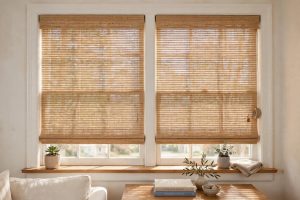
A bay window is one of the finest features a house can offer. It brings in light, opens up a room, and gives a view of the street or garden. But dressing it can test the patience of any homeowner. A straight rod will not fit three angled panes of glass. The best bay window curtain rods for sale solve this problem. They bend at the corners or join with hinges so the rod follows the shape of the window. This guide explains what these rods are, how to choose one, what they cost, and how to hang one with care.
Why a Bay Window Needs a Special Rod
A bay window is not flat. It is made of three or more sections set at angles to each other. In most American homes, the center section faces straight out, and two side sections angle back toward the wall. The angles are often 120 or 135 degrees, though older homes vary.
A standard straight curtain rod cannot span this shape. If you mount three short straight rods, you get gaps at the corners and curtains that do not draw across. A bay window rod made for the job has corner joints or a bendable body. The curtains hang in one line and can slide from one side of the bay to the other.
A well-chosen rod also protects the window trim. Bay windows often have wide sills and deep casings. A rod that clears these by two or three inches lets the fabric hang free and keeps sunlight from leaking around the edges. The result is a window that looks finished and a room that feels settled.
How to Measure Your Bay Window: Best Bay Window Curtain Rods for Sale
Good results begin with good numbers. Take a steel tape measure and a pencil. Measure twice before you buy anything.
Measure Each Section
Measure the width of each window section from trim edge to trim edge. Write down each number on paper. Then add two to four inches on each side of every section. This extra space is where the rod returns will sit, and it keeps the brackets clear of the glass.
Also measure the depth of the window projection. This is the distance the center of the bay juts out from the wall. It tells you how long the corner joints must reach. Many rod kits list the angle range they fit, so bring your notes when you shop.
Allow for Brackets and Returns
Decide how far from the wall the rod should sit. Heavy drapes need more clearance so they clear the sill and any top rated blackout curtains for bedrooms for sale liner you may add behind them. Plan for at least two inches of clearance from the deepest point of the trim. If your bay has a deep seat or cushions below, add another inch so the fabric does not drag on the seat.
How to Choose the Right Rod
The market offers many rods, and most claim to fit every bay window. A careful buyer looks past the claims and checks four things: strength, fit, finish, and ease of hanging.
Check the Weight Rating
Curtains for a bay window can be heavy. Three panels of lined drapery may weigh eight to fifteen pounds. Light rods bow under that load. Look for rods made of steel or thick aluminum rather than thin hollow stock. Wood rods work well for medium weight, but they can sag over long spans unless they have a center support.
If you plan to hang two layers, such as sheers behind drapes, use premium double curtain rod brackets for sale rated for the combined weight. Brackets are the true weak point of most rod systems. Read the rating on the package and keep a small margin of safety.
Match the Finish to Your Room
Rod finishes range from brushed nickel and oil-rubbed bronze to matte black and antique brass. Choose a finish that matches your other hardware: door handles, cabinet pulls, and light fixtures. A mixed set of finishes can still look fine, but the rod should echo at least one other metal in the room.
Finial style matters too. Large ball finials suit traditional rooms. Simple end caps suit modern rooms. Because a bay rod has corners, keep finials modest at the outer ends so they do not crowd the wall.
Types of Bay Window Curtain Rods
Four main designs dominate the market. Each has strengths and limits.
Hinged Corner Rods
These are the most common. Each corner has a hinged joint that swivels to match your bay angle. You lock the joint with a set screw once the angle is right. Hinged rods are simple to install and adjust, and they suit most standard bay windows with 120 to 150 degree angles.
The drawback is the hinge itself. Curtains can catch on the joint if the set screw head sticks out. Choose kits where the hinge is smooth on top, and test the curtain rings over each joint before you finish the job.
Flexible Bendable Rods
Bendable rods are thin metal tracks or rods that you curve by hand to match the window. They fit odd angles that hinged kits cannot reach. They are a good choice for curved bow windows, which have a gentle arc rather than sharp corners.
The trade is strength. Bendable rods hold light and medium curtains well but sag under heavy drapes. They also need more brackets along the curve to hold their shape, so the installation takes longer.
Short Rods Joined by Corner Connectors
This design uses a separate short rod for each window section. Elbow connectors join the rods at the corners. It is the cheapest option and the easiest to find in stores. It works well when each section is short and the curtains stay fixed in place.
The connectors create a hard stop at each corner, so curtains cannot slide across the bay. If you want to draw the drapes closed at night, this design will frustrate you. It also shows a seam at each corner, which some buyers find less clean than a hinged rod.
Ceiling-Mounted Tracks
A ceiling track mounts to the soffit above the bay rather than to the wall. Flexible track bends to any angle. The curtains hang from gliders and move with one finger. Tracks are the best choice for very heavy drapes or for windows where the wall above the trim is too narrow for brackets.
Tracks are less decorative than rods. You can hide the track with a fabric valance or choose a track with a wood or metal face. Installation into a ceiling needs solid anchors, so check whether you are drilling into a joist or into drywall.
Cost and Price
Prices for the best bay window curtain rods for sale range widely. A basic three-piece rod set with corner connectors costs between fifteen and forty dollars. Mid-range hinged kits in steel or wood cost between forty and one hundred dollars. Heavy-duty rods and ceiling track systems can cost one hundred to three hundred dollars or more.
Finials and rings often sell separately. Budget ten to thirty dollars for a set of rings and finials that match your finish. Custom double curtain rod brackets buying guide shoppers should note that double brackets add another ten to twenty dollars to the total.
Retailers such as Home Depot and Lowe’s carry house brands at the low end of the range. Wayfair and IKEA offer mid-range designs with a wider choice of finishes. Specialty shops like Blinds.com and Target stock both budget and premium lines. Compare the total length and weight rating, not just the price tag, before you decide.
Care and Upkeep
Curtain rods ask little, but they reward a little care. Dust the rod and brackets twice a year with a dry cloth. In kitchens, wipe the finish with a damp cloth to remove cooking film, then dry it at once so moisture does not sit on the metal.
Check the set screws at the corner joints once a year. Heat and daily curtain movement can loosen them. A loose joint lets the rod sag, and a sagging rod puts extra strain on the wall brackets. Tighten with a small hex key rather than pliers, which can mar the finish.
Wood rods need a coat of furniture wax every year or two. Metal rods with powder-coat finishes need no wax. If a finish chips down to bare metal, touch it up with a matching paint pen to keep rust from starting.
Safety
Window hardware carries real safety duties. Mount every bracket into a wall stud or use anchors rated for the full load of rod and curtains. A rod that pulls free can fall on a child or pet. Follow the hardware rating printed on the package, and add a safety margin for heavy lined drapes.
Keep cords away from children. If you use corded traverse rods or corded shades on the bay, fit cord cleats high on the wall and wrap cords tight. The U.S. Consumer Product Safety Commission warns that loose window cords are a strangling hazard for small children. Cordless or wand-drawn options remove the risk entirely.
Use a steady step ladder, not a chair, when you mount the rod. Bay windows sit over radiators, seats, or plant ledges, and the footing can be awkward. Have a second person hold the rod while you mark bracket positions.
Frequently Asked Questions
Can I use a straight curtain rod on a bay window?
No. A straight rod cannot follow the angled shape of a bay window. It will leave gaps at the corners and the curtains will not hang right. Use a hinged corner rod, a bendable rod, or a ceiling track made for bay windows. The best bay window curtain rods for sale are built to turn the corner.
How far should the rod extend past each side of the window?
Extend the rod two to four inches past the trim on each outer end. This gives the finials room and lets the curtains stack off the glass when open. For a full, tailored look, some designers extend six inches, but that needs a wall wide enough to hold the brackets.
Do curtains slide around the corners of a bay rod?
On hinged and bendable rods, yes, if the corner joint is smooth. Test your curtain rings over each joint before you finish. On rods joined by fixed elbow connectors, the curtains stop at each corner. If you plan to close the drapes daily, choose a hinged rod or a track.
What size rings fit a bay window rod?
Match the ring inner diameter to the rod diameter, plus one eighth of an inch of play. A one-inch rod takes rings with a one-and-one-eighth-inch inner diameter. Nylon-lined rings slide more quietly over corner joints. Count one ring per four inches of rod, plus one extra per panel.
Can I hang sheers and drapes together on a bay window?
Yes. Use a double rod or a double track. Hang the sheers on the back rod and the drapes on the front rod. Check that the combined weight stays under the bracket rating. Rod pocket panels gather thick when bunched, so size the rod length with that fullness in mind.
A Final Word
A bay window deserves hardware made for its shape. Measure with care, choose a rod strong enough for your fabric, and mount every bracket with solid anchors. Read buying guides from sources such as The Spruce and HGTV when you compare styles, and buy from sellers with clear weight ratings and return policies. Done right, the best bay window curtain rods for sale disappear into the background and let the window do the talking.
References
Blinds.com. (n.d.). Window blinds, shades, and shutters. https://www.blinds.com HGTV. (n.d.). Home and garden ideas. https://www.hgtv.com IKEA. (n.d.). Home furnishings. https://www.ikea.com Lowe’s. (n.d.). Home improvement products. https://www.lowes.com Target. (n.d.). Retail store. https://www.target.com The Home Depot. (n.d.). Home improvement products. https://www.homedepot.com The Spruce. (n.d.). Home and garden advice. https://www.thespruce.com U.S. Consumer Product Safety Commission. (n.d.). Product safety information. https://www.cpsc.gov Wayfair. (n.d.). Furniture and home goods. https://www.wayfair.com
Was this guide helpful?

About Sarah Mitchell
The My Garden US editorial team writes practical, in-depth home and garden guides for American homeowners — tested advice, no fluff.