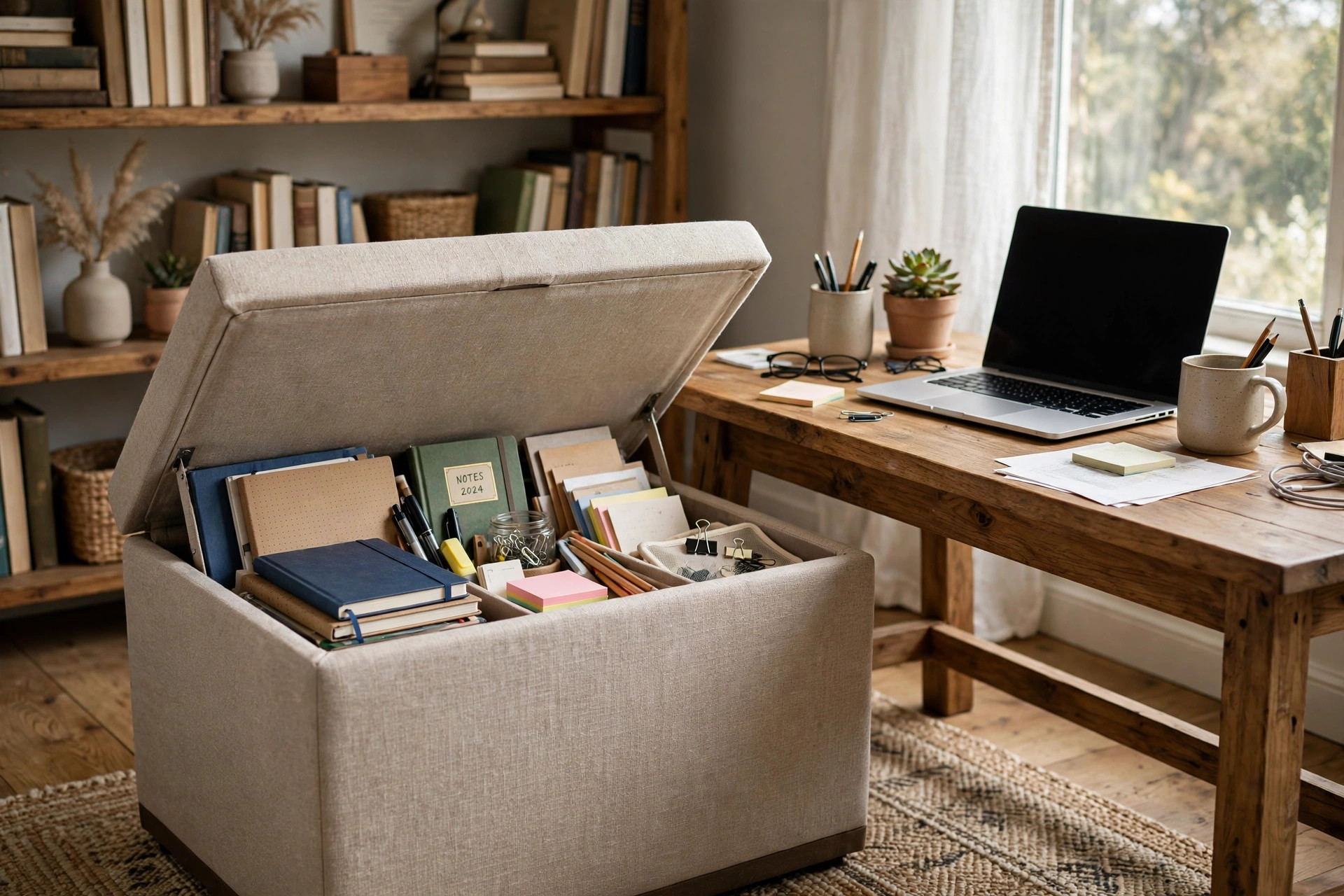

A home office storage ottoman with lid is a simple piece of furniture that solves a common problem. It gives you a place to sit, a place to rest your feet, and a place to hide the small clutter that gathers on every desk. It fits under a desk, beside a bookshelf, or in the corner of a small room. In a home office where every square foot matters, this one item does the work of three.
Most home offices grow more crowded over time. Papers pile up. Cables spread. Office supplies spill out of drawers. A storage ottoman with a lid hides all of it in seconds. Guests who visit your study see a neat room, not a messy one. When you need a file or a charger, you lift the lid and take it out.
Why It Matters
A tidy desk helps clear thought. That idea has been repeated in office handbooks for decades, and it still holds true. When your workspace looks organized, your mind feels more ready to work. A home office storage ottoman with lid supports that feeling. It removes the small items that pull your eyes away from the task at hand.
Many people now work from home at least part of the week. The home office has become a real office, not a corner of the dining table. It deserves real furniture. The storage ottoman fits this change well. It is cheaper than a new desk and smaller than a filing cabinet, yet it adds both seating and storage.
It also helps in small rooms. A spare bedroom turned into an office often has little extra space. A lid-topped ottoman takes up only the floor it sits on. It does not need wall space like a shelf. It does not need clearance like a swinging door. It works in apartments, dorm rooms, and rented houses where you cannot drill into walls.
What to Look For When You Choose: Home Office Storage Ottoman with Lid
Size comes first. Measure the space where the ottoman will sit. A standard office desk is about 29 inches high. An ottoman that will slide under the desk should be no taller than 17 or 18 inches. If it will sit beside the desk or in front of a chair, height matters less, but it should still match the seat height of your chair for comfort as a footrest.
Weight capacity comes next. A cheap ottoman may hold only 50 pounds, which is fine for papers but not for a grown person sitting on it. Look for a stated load rating of 200 pounds or more if you plan to sit on it. The product listing should name this number. If it does not, treat the ottoman as storage only.
The lid itself deserves attention. A lid that lifts off fully is simple and light, but it must be set aside when you open the storage. A hinged lid stays attached and is easier to use one-handed. The best hinged lids have a safety hinge that keeps the lid from slamming shut. This detail matters in homes with children. A heavy lid that falls on small fingers is a real hazard.
Material affects both price and life span. Solid wood frames last longest. Plywood frames are lighter and cost less. Metal frames hold the most weight. For the outer cover, genuine leather looks rich and wipes clean, but it costs the most. Bonded leather and vinyl cost less but may crack after a few years of daily use. Woven fabric covers come in many colors and feel warm, though they stain more easily. Linen-look covers in neutral shades remain a safe choice for offices that also serve as guest rooms.
Comfort is easy to test in a store and harder to judge online. For a footrest, a firm top works best. For a seat, thicker padding feels better. Check whether the top is button-tufted, which can press into bare legs, or smooth, which is easier to wipe clean.
Types and Options
Round ottomans suit small corners. They roll less than square ones and look soft beside a desk. Square and rectangular ottomans hold more storage inside and line up neatly against walls or under desks. Long bench-style ottomans, sometimes called ottoman benches, can seat two people and store large items like a blanket or a laptop bag.
Some models include a flip-top. The lid turns over to reveal a tray, so the ottoman becomes a small table for coffee or a notepad. This is useful in a reading corner of the office. Others include wheels, which make the ottoman easy to pull out from under a desk. Locking wheels are worth the small extra cost so the seat does not roll away when you sit on it.
There are also styles built for looks. An adjustable height desk legs only for diy project pairs well with a matching fabric ottoman for a coordinated desk setup. A mid-century style ottoman with tapered wooden legs fits a classic study. A modern cube with clean lines fits a minimalist room. Choose a style that matches the other furniture, because an ottoman that clashes will draw the eye every day.
For offices shared with the rest of the house, neutral colors win. Gray, beige, navy, and brown work with most paint and wood tones. Bright colors can work in a creative studio but may tire the eye over months of daily work.
Cost and Price
Prices for a home office storage ottoman with lid fall into three broad bands. Budget models cost 30 to 60 dollars. These are usually fabric-covered cubes with light frames. They store papers and light items and work as footrests. They rarely support sitting weight for long.
Mid-range models cost 60 to 120 dollars. This is where most buyers should look. At this price you can find solid wood or plywood frames, hinged safety lids, and covers in leather-look or heavy fabric. Weight ratings often reach 200 to 250 pounds. The storage space is deeper and the stitching holds up to daily use.
Premium models cost 120 to 250 dollars or more. These are often genuine leather or solid hardwood pieces from known furniture makers. They look like fine furniture and last for many years. For a home office that also welcomes clients, the extra cost may be money well spent.
Watch for the small costs around the purchase. Delivery fees add up for heavy items. Some stores charge for assembly, though most ottomans arrive ready to use or need only legs screwed on. A fabric protector spray adds about ten dollars and helps keep covers clean. Retailers such as Wayfair and IKEA list clear prices with delivery shown at checkout, which makes comparison shopping easier.
Sales follow the furniture calendar. January and July often bring discounts as stores clear floor stock. Back-to-school season in August can lower prices on small office furniture. If you are not in a hurry, waiting a few weeks can save 15 to 20 percent.
Care and Upkeep
Care depends on the cover material. For leather and vinyl, wipe with a damp cloth once a week and use a leather conditioner two or three times a year. This keeps the surface from drying and cracking. For fabric, vacuum the top and sides with a brush attachment each month. Treat stains right away with a small amount of mild soap and water. Test any cleaner on a hidden spot first.
The storage space inside needs care too. It can trap dust and damp air. Empty it once a season and wipe the inside with a dry cloth. If you store electronics inside, such as spare chargers or a hard drive, place them in a small pouch so cables do not snag on the frame. Do not store food inside a storage ottoman. Crumbs attract insects and odors settle into fabric.
Check the lid hinges once or twice a year. Tighten any loose screws. A wobbly lid wears out faster and may pinch. If the ottoman has legs, make sure they sit flat on the floor. Felt pads under the legs protect wood floors and reduce noise when the ottoman is moved.
Keep the ottoman out of direct sun when you can. Strong sunlight fades fabric and dries leather over time. A spot two feet from a bright window is fine. A spot in the full afternoon sun will show fading within a year.
Safety
The main safety concern is the lid. A heavy lid can fall on fingers. Choose a model with a safety hinge or a slow-close mechanism. This is especially important if children visit your home office. Teach children not to climb on the ottoman or play with the lid.
Place the ottoman on level ground. An ottoman on thick carpet may rock, and a person standing on it to reach a high shelf can fall. A storage ottoman is not a step stool. Never stand on one to change a light bulb or reach the top of a bookcase.
If the ottoman will hold an adult sitting, confirm the weight rating in the product details. Sitting on an under-rated ottoman can break the frame without warning. The break usually happens at the hinge, and the sharp edge can cut. Ergonomic guidance from Herman Miller and Steelcase stresses that every seat in a work area should be used as rated, and a storage ottoman is no exception.
For offices that double as play areas, keep small items out of the storage box. Loose batteries, paper clips, and thumbtacks inside an ottoman are a hazard for toddlers. A simple rule works well: if a child could reach the lid, keep the contents child-safe.
How It Fits Into a Full Office Setup
A storage ottoman works best as part of a planned workspace. Many home workers pair one with an adjustable standing desk mat with massage bumps to ease long hours at the desk. The ottoman serves as the footrest during seated work, while the mat supports standing time. The two items together cost far less than a new chair and improve comfort for the full workday.
Wall organization completes the picture. A home office bulletin board with wooden frame keeps notes and deadlines off the desk surface. With wall space doing the filing and the ottoman doing the hiding, the desk itself stays clear for the computer, a notebook, and a cup of coffee. That is all a desk needs to hold.
Buyers who want deeper guidance on office layout can consult the buying guides at The Spruce and Wirecutter, both of which test small office furniture in real homes. For desk frames and height-adjustable parts, Uplift Desk publishes clear sizing charts. Tech-minded buyers will find desk setup reviews at PCMag.
Frequently Asked Questions
How much storage does a typical ottoman hold? A cube about 17 inches on each side holds roughly one and a half cubic feet. That is enough for a stack of file folders, a laptop bag, several notebooks, or a season of light office supplies. Bench-style ottomans hold two to three times that amount.
Can a home office storage ottoman with lid replace a filing cabinet? For light filing, yes. It holds hanging folders in some models and stacks of paper in all of them. It is not a match for a true locking file cabinet. If you store tax records or legal papers, keep them in a fire-safe cabinet and use the ottoman for everyday items.
Will the lid stay open on its own? It depends on the hinge. Safety hinges hold the lid open at set angles. Basic hinges do not, and the lid will fall unless you hold it. Check the product description for words like stay-open hinge, safety hinge, or soft-close before you buy.
Is assembly difficult? Most storage ottomans need little assembly. Common tasks are screwing on legs or unfolding a collapsible frame. The whole job usually takes under 15 minutes with no tools beyond a screwdriver. Foldable models need no tools at all.
Can it be used as a regular seat? Yes, if the weight rating allows it. Models rated for 200 pounds or more make fine extra seats for meetings or guests. Lower-rated models should be used as footrests and storage only. When in doubt, check the rating and sit with care the first time.
What is the best color for a shared home office? Neutral tones such as gray, beige, or navy suit most rooms. They hide dust better than black and show less wear than white. If the office is also a guest room, a warm brown or tan leather-look cover reads as fine furniture rather than office gear.
Final Word
A home office storage ottoman with lid is one of the few furniture buys that earns its place three times over. It stores the clutter, seats a guest, and rests your feet at the end of a long day. Measure your space, check the weight rating, and choose a lid you can open with one hand. Do those three things and the ottoman will serve your office well for years.
References
Herman Miller. (n.d.). Office furniture and ergonomic seating. https://www.hermanmiller.com IKEA. (n.d.). Home furnishings. https://www.ikea.com PCMag. (n.d.). Technology product reviews. https://www.pcmag.com Steelcase. (n.d.). Office furniture and workplace research. https://www.steelcase.com The Spruce. (n.d.). Home and garden advice. https://www.thespruce.com UPLIFT Desk. (n.d.). Standing desks and ergonomic office furniture. https://www.uplift-desk.com Wayfair. (n.d.). Furniture and home goods. https://www.wayfair.com Wirecutter. (n.d.). Product reviews from The New York Times. https://www.nytimes.com/wirecutter
Was this guide helpful?

About Michael Thompson
The My Garden US editorial team writes practical, in-depth home and garden guides for American homeowners — tested advice, no fluff.
You May Also Like
Best Cable Clips for Desk Wire Management
September 27, 2026 0 views
Best Mini Fridge for Home Office Under Desk: A Practical Buyer’s Guide
September 5, 2026 0 views
Best Task Lighting for Home Office Desk Setup
June 14, 2026 0 views