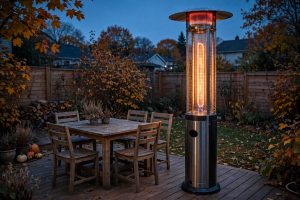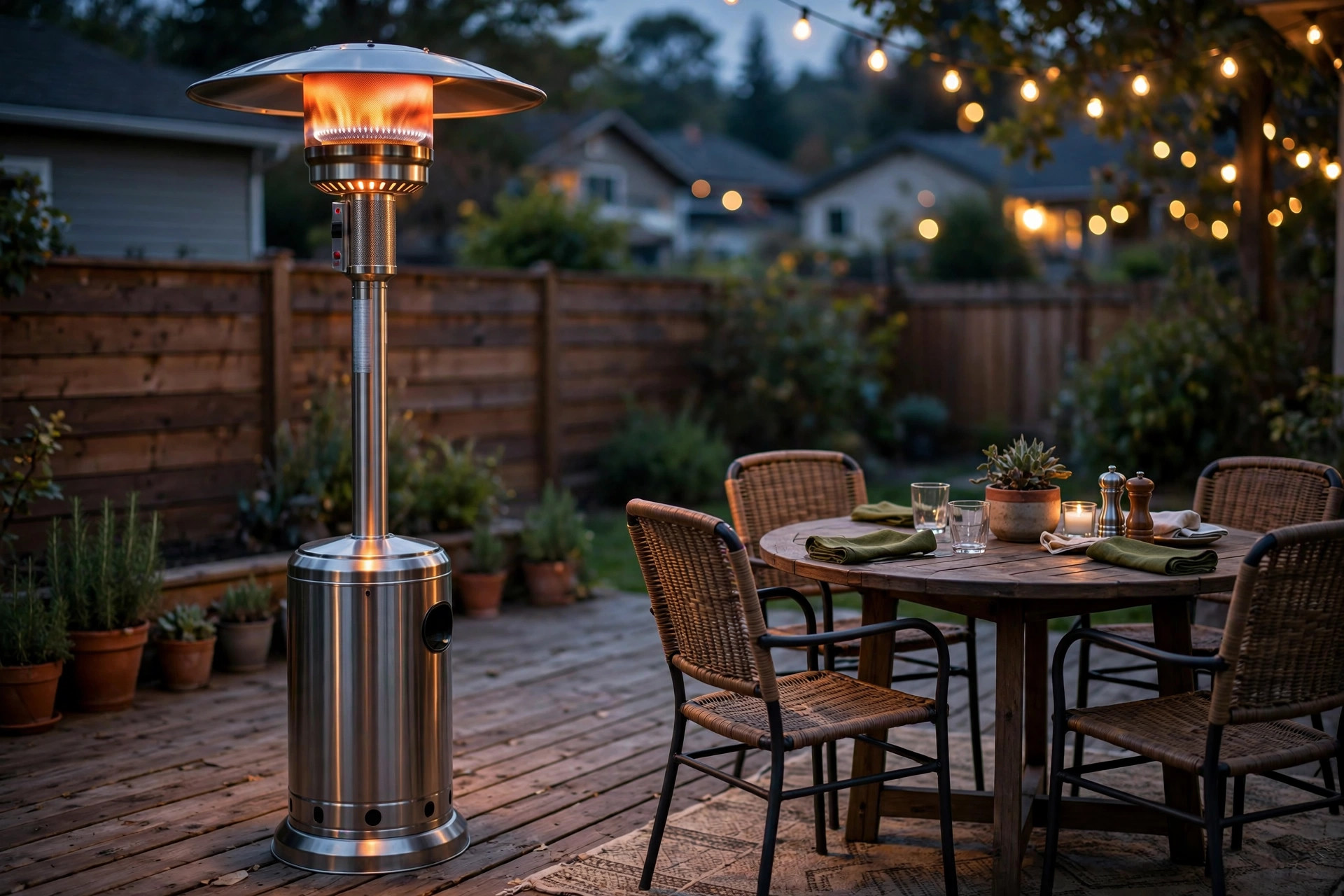

A cool evening can end a good night outside too soon. A warm breeze from the house is not enough once the sun goes down. This ventless outdoor patio heaters buying guide will help you fix that problem. It walks through the types, the costs, the safety rules, and the care steps, all in plain words. By the end, you will know which heater fits your yard and your budget.
Why It Matters
A patio is an extra room of the house, but only when the weather allows it. In spring and fall, the air turns cold after dark. In winter, many parts of the country go months without outdoor use. A good heater changes that. It lets a family eat dinner outside in October. It lets friends sit by the table and talk long after the sun sets. For a homeowner, that is more living space for the price of a single appliance.
Outdoor heaters are called ventless because they need no chimney or flue. The heat goes straight out into the open air, which is what you want on a patio. This makes them simple to set up. There is no vent pipe to cut through a wall. There is no big project. You buy the unit, place it, connect the fuel, and it works. That ease is the main reason people search for this top rated outdoor patio heaters buying guide and similar advice each year.
How a Ventless Patio Heater Works: Ventless Outdoor Patio Heaters Buying Guide
A ventless patio heater burns fuel or uses electric power to make radiant heat. Radiant heat warms objects and people directly, the way the sun does. It does not blow hot air around. That matters outdoors, where wind can carry warm air away in seconds. Radiant heat still reaches you.
Most gas models use a burner and a metal mesh or screen that glows red. The heat then moves outward in all directions, or in one direction if the unit has a reflector. Electric models use infrared lamps or heating elements. They need only an outlet, and they make no flame at all. Both kinds work well. The choice comes down to your patio setup, your fuel supply, and how much heat you need.
Heat Output and Coverage
Heat output is measured in BTUs for gas heaters and in watts for electric heaters. A small tabletop unit may put out 10,000 BTU. A tall standing model may reach 40,000 or 50,000 BTU. An electric model may use 1,500 watts, which is the limit for most standard home outlets.
Match the output to the size of your space. A small balcony needs far less heat than a wide open deck. A good rule is to aim for enough BTUs to warm a circle ten to twenty feet across for a standing model. For a larger patio, two smaller units often work better than one very large one. Two units spread the heat more evenly, and you can turn one off on mild nights. Guides on home heating often stress this point, and testing reports from groups like Consumer Reports show the same result.
What to Look For
A smart purchase starts with five questions. Answer each one before you buy.
Fuel Type
Propane is the most common fuel for portable patio heaters. A standard twenty pound tank sits inside the base of the unit. It is easy to refill at stores and gas stations. Natural gas works for heaters that connect to a home gas line. It runs cheaper over time, but the heater cannot move. Electric infrared models plug into an outlet. They cost the least to buy but can raise the electric bill.
Think about what is near your patio. If a gas line is already there, a natural gas unit may be best. If not, propane gives you freedom to place the heater anywhere. If you want the simplest choice with no flame, look at the affordable infrared outdoor heaters buying guide for electric options.
Size and Style
Patio heaters come in a few main shapes. The standing mushroom style is the most familiar. It is tall, round, and sends heat in all directions. It fits dining sets and lounge areas. Tabletop models are small and sit on a side table. They warm two or three chairs. Wall mounted units save floor space on small patios. They send heat in one direction.
Measure your patio before you shop. Leave at least three feet of clear space around the heater on all sides. Taller ceilings on covered patios also matter. Many units need a set distance from the ceiling. Check the manual for the exact number.
Safety Features
Safety features are not extras. They are the heart of a good heater. Look for an automatic shut off switch that kills the flame if the unit tips over. Look for a thermocouple, a small device that stops the gas flow if the pilot light goes out. Look for a cool touch handle or guard so no one burns a hand. Some models add a timer that shuts the unit off after a set time. Retailers such as Lowe’s and The Home Depot list these features clearly on their product pages.
Portability
A heavy heater can be hard to move. Many models include wheels in the base. If you plan to roll the unit from storage to the patio, wheels matter. Also think about storage. A heater cover protects the unit from rain and sun. A tall model may need a shed or garage in winter. Lighter tabletop models store on a shelf.
Ease of Use
The best heater is one people will actually light. Push button ignition is simple. A dial for heat level lets you adjust the warmth. A model that takes ten minutes to start will sit unused. Read the steps in the manual before you buy, if you can. How to guides at Family Handyman often rate products by how easy they are to start and run.
Types of Ventless Outdoor Patio Heaters
Propane Patio Heaters
Propane heaters are the workhorses of the patio world. They burn the gas from a tank and give strong, steady heat. A full twenty pound tank can run a heater for eight to ten hours on high, and longer on a low setting. They need no cord and no gas line, so they work on any patio, deck, or yard.
The main cost after purchase is the fuel. A tank refill is a regular expense in the cold months. Propane heaters also make a small flame, so they must stay clear of walls, roofs, and fabric. Our top rated propane patio heaters buying guide compares the most popular models in this class.
Natural Gas Patio Heaters
Natural gas heaters connect to a home gas line with a quick connect hose. Once hooked up, they never need a refill. Fuel costs are lower than propane. They are a fine choice for a fixed patio setup where the heater will stay in one spot all season.
The trade off is placement. The heater must sit near the gas outlet. Moving it is not simple. Install also needs a gas line run by a plumber, which adds cost up front. Brands known for hearth and heating products, such as Napoleon and Heatilator, make gas models worth a look.
Electric Infrared Heaters
Electric infrared heaters make no flame and need no fuel. You mount or hang them, plug them in, and switch them on. They heat up fast, in under a minute. They are silent and need almost no care. Many people pick them for small patios, balconies, and covered porches.
The limits are power and range. A 1,500 watt unit warms a small area well, but it cannot match a 40,000 BTU gas model on a big deck. You also need a proper outdoor rated outlet, and the cord must not cross walkways. On the plus side, energy use is clean. The U.S. EPA notes that efficient electric heating can be a smart choice where the power comes from clean sources.
Cost and Price
Outdoor patio heaters span a wide price range. Small tabletop propane units start around sixty dollars. Standard standing propane models run from one hundred fifty to three hundred fifty dollars. High end stainless steel models can reach five hundred dollars or more. Electric infrared wall units often cost between one hundred and three hundred dollars. Natural gas models cost more up front, often three hundred to six hundred dollars, plus the cost of the gas line.
Running costs matter as much as the price tag. Propane refills add up over a season of heavy use. Natural gas is cheaper per hour of heat. Electric cost depends on your local power rate. A 1,500 watt heater running three hours a night can add a clear line to the monthly bill.
Look at the total cost for two or three years, not just the sale price. A cheap unit that eats fuel may cost more in the end than a mid priced unit that sips it. Home project sites like This Old House and The Spruce publish cost breakdowns that help with this math.
Care and Upkeep
A patio heater is simple to keep in good shape. Wipe the reflector and screen clean before the season starts. Dust and spider webs can block the heat. Check the gas hose for cracks or wear each year. Replace a damaged hose before you light the unit. Keep the pilot light area clean so the flame starts well.
Cover the heater when it is not in use. Sun and rain wear down the finish and the moving parts. Store the tank upright in a cool, dry place, never indoors near a flame. At the end of the season, let a propane tank run empty or store it safely outside. A small amount of care will give the unit many years of service.
Safety
Outdoor heaters are safe when used with care, but they make real heat and real flame. Follow these rules every time.
Place the heater on a flat, stable surface. Keep it at least three feet from walls, fences, umbrellas, and plants. Never use a gas patio heater under a low ceiling or in an enclosed space. Carbon monoxide can build up in closed areas, and it is a silent danger. Electric models are safer indoors, but most are still made for outdoor use only. Check the label.
Never leave a lit heater alone. Turn it off when you go inside for the night. Keep children and pets at a safe distance. The metal parts stay hot long after the flame is out. Let the unit cool fully before you touch or cover it. Store propane tanks away from heat and never in a closed garage near the water heater or furnace.
Government safety pages, such as those from the U.S. Consumer Product Safety Commission, give clear guidance on outdoor heating products. Read the manual that comes with your unit. It has the exact clearances and steps for your model.
Frequently Asked Questions
How long does a propane tank last on a patio heater?
A standard twenty pound tank lasts about eight to ten hours on the high setting. On a low or medium setting, it can last twelve to fifteen hours. Cold wind makes the heater work harder, so the tank drains faster on windy nights.
Can I use a ventless patio heater on a covered patio?
You can use one on a covered patio only if the ceiling is high enough and the area is open on the sides. Most manuals call for a ceiling of at least seven or eight feet and clear space all around. Never use a gas heater in a fully enclosed room. For tight spaces, an electric infrared model is the safer pick.
Do patio heaters work in the wind?
Wind is the enemy of outdoor heat. A light breeze is fine. A strong wind carries the heat away and can blow out the pilot light. Wind guards and reflector models help. On very windy nights, no heater will keep a patio warm. Check the forecast before you plan an evening outside.
Are electric patio heaters cheaper to run than propane?
It depends on local prices. Propane refills cost more per hour of heat in most areas. Electric models cost less per hour but warm a smaller space. For a small patio used a few nights a week, electric is often the cheaper choice. For a large deck, propane gives more heat for the money.
How far should people sit from a patio heater?
A good rule is three to four feet from the unit. The heat falls off fast with distance. If the unit is too hot to sit near, move the chairs back or turn the heat down. Never let fabric, such as a jacket or blanket, touch the heater.
Do I need a permit to install a natural gas patio heater?
Rules vary by town. Many areas ask for a permit when a new gas line is run. A licensed plumber will know the local rules. The work is not a do it yourself job. Gas lines must be sized right and tested for leaks.
A Final Word
The right patio heater is the one that fits your space, your fuel, and your habits. A small electric unit can be perfect for a balcony. A tall propane model can be perfect for a big deck. A natural gas unit can be perfect for a fixed patio near the house. Take the time to measure, compare, and read the safety steps. Then buy once and enjoy many warm evenings. This ventless outdoor patio heaters buying guide gave you the facts. The next move is yours.
References
Consumer Reports. (n.d.). Product reviews and ratings. https://www.consumerreports.org Family Handyman. (n.d.). DIY home repair and maintenance. https://www.familyhandyman.com Heatilator. (n.d.). Fireplaces and fireplace products. https://www.heatilator.com Lowe’s. (n.d.). Home improvement products. https://www.lowes.com Napoleon. (n.d.). Fireplaces, grills, and heating products. https://www.napoleon.com The Home Depot. (n.d.). Home improvement products. https://www.homedepot.com The Spruce. (n.d.). Home and garden advice. https://www.thespruce.com This Old House. (n.d.). Home renovation guidance. https://www.thisoldhouse.com U.S. Consumer Product Safety Commission. (n.d.). Product safety information. https://www.cpsc.gov U.S. Environmental Protection Agency. (n.d.). Protecting human health and the environment. https://www.epa.gov
Was this guide helpful?

About James Carter
The My Garden US editorial team writes practical, in-depth home and garden guides for American homeowners — tested advice, no fluff.
You May Also Like

Top Rated Outdoor Patio Heaters Buying Guide
February 5, 2026 0 views
Energy Efficient Fireplace Glass Doors With Free Shipping: A Full Buying Guide
March 4, 2026 0 views
Energy Efficient Tile Fireplace Surrounds for Sale: A Buyer’s Guide
September 5, 2026 0 views