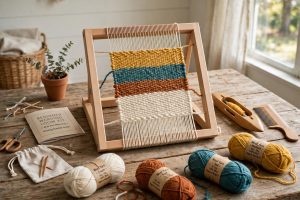

What Is a Knitting Loom Kit for Hats and Scarves Beginners
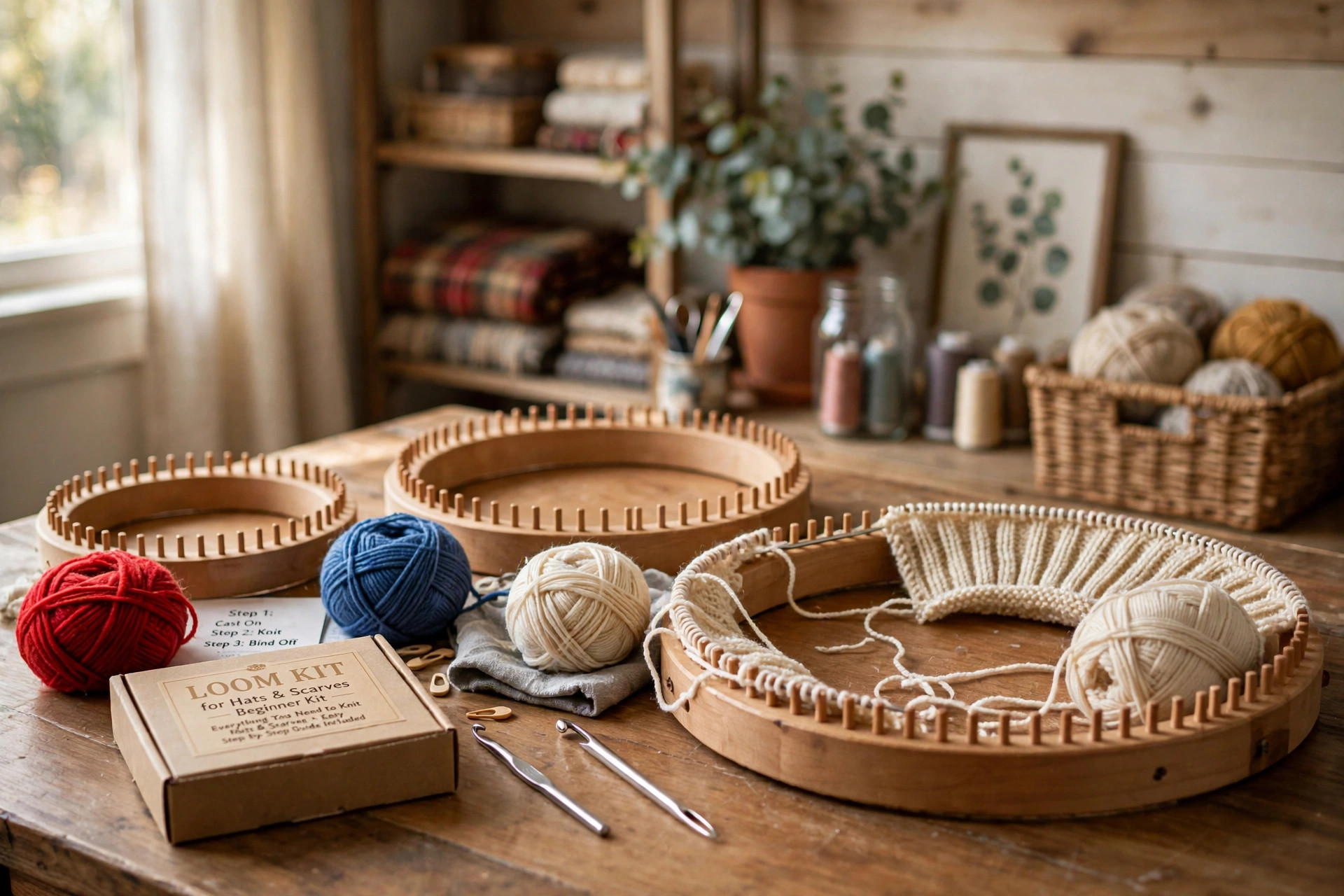
A knitting loom kit for hats and scarves beginners is a set of round or rectangular looms with pegs, a hook tool, and often a yarn needle. It lets you knit without two long needles. You wrap yarn around the pegs in a fixed order. The result is real knitted fabric.
Many adults and children find the loom easier than classic knitting. The pegs hold the loops for you. Your hands do less work. Tension stays more even. Within an hour, a beginner can form a simple tube for a hat or a flat panel for a scarf.
These kits sell well in the United States because they remove the main barrier to knitting. Classic knitting demands two needles, a cast-on, and practice. A loom kit gives you a frame. You only need to learn two or three wraps. That is why a knitting loom kit for hats and scarves beginners shows up in so many craft gift guides. It is a gentle doorway into fiber crafts.
Craft stores such as Michaels carry a wide range of these kits, from simple plastic ring looms to full wooden sets. General craft retailers like JOANN also stock beginner loom kits alongside yarn and notions. Art supply shops such as BLICK list loom kits in their fiber arts sections for students and hobbyists.
Why It Matters: Knitting Loom Kit for Hats and Scarves Beginners
Learning a slow craft helps the mind rest. Loom knitting moves at a steady pace. The hands repeat the same motion. Many people describe it as calming. It also gives a useful finished item. A hat or scarf is not just decoration. It keeps someone warm.
For families, a loom kit is a shared project. An older child can work a large loom while a parent helps with the final steps. The cost is low compared with many hobbies. One skein of yarn and a kit can make two or three gifts. The diy candle making kit for beginners usa offers the same kind of low-cost entry into another craft, and beginners often enjoy both side by side.
Loom knitting also fits into the wider do-it-yourself tradition in American homes. Home project sites such as This Old House and Family Handyman have long covered weekend projects, and hand crafts like loom knitting belong to that same spirit. Advice columnists at Bob Vila remind readers that small home crafts build skills that carry over to larger projects. Craft inspiration sites like The Spruce publish beginner-friendly project guides that pair well with a loom kit.
What to Look for When You Choose a Kit
Loom Sizes and Shapes
Most kits include four round looms. The sizes are often marked in inches, for example 5, 7, 9, and 11 inches. The small loom suits newborn hats. The largest suits adult hats. Some kits add a rectangular loom for flat scarves and blankets. A rectangle loom makes a scarf without the curl of a tube.
Check that the looms feel sturdy. Cheap kits can have pegs that bend or pop out. Wood pegs last longer than thin plastic ones. If you plan to knit often, a wooden loom is worth the extra cost.
What Should Be in the Box
A good beginner kit should include:
– Three or four round looms in different sizes – A loom hook tool with a comfortable grip – A large-eye yarn needle for sewing ends – A plastic needle or stitch holder – Clear printed instructions, not just pictures – Sometimes a pom-pom maker for hat tops
Some kits include a starter ball of yarn. The included yarn is often thin. Plan to buy your own yarn for a thick winter hat. Medium-weight yarn, called worsted weight, is the standard choice for beginner loom projects.
Peg Count and Gauge
Peg count sets the width of the fabric. An adult hat usually needs 36 to 48 pegs on a round loom. A child hat needs 24 to 31 pegs. Many kits print the peg count on the box. The space between pegs is called the gauge. Wide peg spacing makes a loose fabric. Close peg spacing makes a firm fabric. For winter hats, choose a loom with closer pegs so cold air does not pass through.
Age and Skill Fit
Look for an age mark on the box. Many kits say ages 8 and up. The hook tool has a point. Young children need an adult beside them. For a true beginner, avoid kits that promise advanced patterns on the cover. A simple kit with plain looms is the best teacher.
Types of Kits on the Market
Round Loom Sets
Round loom sets are the most common. They come in packs of four or five rings. Each ring is a different size. They make hats, socks, and small tubes. Many crafters start here because the round shape guides the yarn in a circle. The motion is easy to repeat.
Rectangular Loom Sets
Rectangular looms knit flat pieces. They suit scarves, washcloths, and blanket squares. A long rectangle loom can make a scarf in one piece. The pegs sit in two straight rows. You wrap the yarn back and forth instead of around a circle. This motion teaches the basic knit stitch just as well.
Adjustable Looms
Some looms let you move the pegs or add links. You can change the size for each project. These kits cost more. They are a good buy if you want to make hats, scarves, and baby blankets with one set. Read reviews before you buy an adjustable loom. Some designs hold pegs better than others.
All-in-One Gift Kits
Gift kits add yarn, a pom-pom maker, and pattern cards. They cost more than plain loom sets. They save a trip to the store. For a holiday gift, an all-in-one kit is a smart choice. The recipient can start the same day.
Major home improvement and craft retailers like Home Depot also stock craft supplies online, and home and garden publishers such as Better Homes & Gardens and Martha Stewart offer seasonal craft ideas that work well with loom-knitted pieces.
Cost and Price
A basic plastic loom set costs about five to ten dollars. A four-piece set with a hook and needle often sells for eight to twelve dollars. Wooden loom sets cost more, usually fifteen to thirty dollars. All-in-one gift kits with yarn run twenty to forty dollars.
Yarn is the main extra cost. One skein of medium-weight acrylic yarn costs four to eight dollars. It makes one adult hat. A scarf needs two skeins. So a first hat project costs about ten to twenty dollars in total. Later projects cost only the yarn.
Watch for holiday sales. Craft stores discount loom kits in October and November. Online sellers run back-to-school craft sales in late summer. If you plan gifts, buy in September for the best price.
How to Make Your First Hat
Step One: Pick Yarn and Loom
Choose a round loom that fits the head. Wrap the loom around the head of the person who will wear the hat. It should sit snug. Pick medium-weight yarn in a light color. Light colors show the stitches, which helps you learn.
Step Two: Cast On
Tie a slip knot to an anchor peg on the side. Wrap the yarn around each peg once, going around the loom. Then wrap a second time. You now have two loops on each peg. This is called the cast-on.
Step Three: Knit the Tube
Use the hook to lift the bottom loop over the top loop on each peg. Move around the loom. Then wrap once more and lift again. Each round adds one row. Keep going for five to six inches for an adult hat. Fold the brim up if you want a folded edge.
Step Four: Close the Top
When the tube is long enough, cut the yarn with a tail of about twelve inches. Thread the tail through the yarn needle. Run the needle through each loop on the pegs. Lift the loops off one by one. Pull the tail tight to close the top. Knot it on the inside. Sew in the loose ends.
Your First Scarf
For a scarf, use a rectangle loom. Wrap the yarn in a zigzag across the rows. Knit each row with the hook. Keep going until the scarf is about sixty inches long. Take the stitches off the pegs with the needle and tie off. A fringe of short yarn pieces makes a nice finish.
Beginners who enjoy this process often move on to other starter crafts. A quilling paper kit for beginners card making teaches a different kind of patience with paper, and a best watercolor paper pad for painting art pairs well with a quiet craft afternoon. Each craft builds hand skill in its own way.
Care and Upkeep
Looms need little care. Wipe plastic looms with a damp cloth after each project. Yarn dust builds up on the pegs. For wooden looms, rub a small amount of plain wax or oil on the pegs once a year. This keeps the yarn sliding smooth. Store the looms flat. Do not stack heavy boxes on them. Pegs can bend under weight.
The hook tool needs care too. The point can dull. A dull hook snags yarn. Replace the hook if it starts to catch. Keep the yarn needle in a small case. It is easy to lose.
Finished hats and scarves need the right wash. Read the yarn label. Most acrylic yarn washes in warm water and dries in the dryer on low. Wool yarn needs hand washing in cool water. Dry wool flat so it keeps its shape.
Safety
Loom knitting is safe for most people. A few points matter.
The hook tool has a sharp point. Keep it away from small children. Store the kit on a high shelf if toddlers live in the house. The yarn needle is blunt but still a point. Teach children to carry it point-down in the case.
Yarn can wrap around fingers. Take breaks every twenty minutes. Stretch your hands. If your wrist aches, stop for the day. Long sessions can strain the hands, just like typing.
Choose yarn with care for baby items. Avoid yarn with sequins or beads for baby hats. Small parts can come loose. Use soft yarn with no added trim for anything a baby will wear.
FAQ
How long does it take to knit a hat on a loom?
A first hat takes about three to four hours of steady work. After you learn the motion, an adult hat takes about two hours. A child hat takes about one hour. A scarf takes longer, often four to six hours, because it is longer.
Is loom knitting real knitting?
Yes. The fabric is true knitted fabric. It has knit stitches in rows, just like needle knitting. The loom only holds the loops for you. The structure of the cloth is the same.
What yarn works best for beginners?
Use smooth medium-weight acrylic yarn in a light color. Smooth yarn slides on the pegs. Light colors let you see your stitches. Avoid dark yarn, fuzzy yarn, and very thin yarn until you have practice.
Can children use a knitting loom kit?
Yes, with an adult nearby. Most kits list ages eight and up. Children around eight can wrap the yarn and lift the loops. An adult should help with casting on and closing the hat. The hook point needs respect.
Do I need a pattern for my first project?
No. A plain hat or scarf needs no pattern. Just knit round after round until the piece is long enough. Pattern books help later, when you want cables or color stripes. Start plain and add skill with each project.
Why does my fabric curl or look loose?
Loose fabric often comes from wide peg spacing or thin yarn. Try a thicker yarn or a loom with closer pegs. Curl on a scarf edge is normal for knit fabric. A border of two or three rows of a different stitch, or a simple fringe, will calm the curl.
A Short Final Word
A knitting loom kit for hats and scarves beginners is one of the kindest gifts you can give a new crafter. It asks for little money and little skill at the start. It returns warm hats, soft scarves, and quiet hours well spent. Pick a sturdy kit, choose smooth yarn, and make your first piece plain. The second project will feel easy. By the third, you will be teaching someone else.
References
Better Homes & Gardens. (n.d.). Home and garden ideas. https://www.bhg.com Blick Art Materials. (n.d.). Art and craft supplies. https://www.dickblick.com Bob Vila. (n.d.). Home improvement advice. https://www.bobvila.com Family Handyman. (n.d.). DIY home repair and maintenance. https://www.familyhandyman.com JOANN. (n.d.). Fabric and craft supplies. https://www.joann.com Martha Stewart. (n.d.). Home and cooking ideas. https://www.marthastewart.com Michaels. (n.d.). Arts and crafts supplies. https://www.michaels.com The Home Depot. (n.d.). Home improvement products. https://www.homedepot.com The Spruce. (n.d.). Home and garden advice. https://www.thespruce.com This Old House. (n.d.). Home renovation guidance. https://www.thisoldhouse.com
Was this guide helpful?

About Jennifer Lee
The My Garden US editorial team writes practical, in-depth home and garden guides for American homeowners — tested advice, no fluff.
You May Also Like
Wood Craft Sticks for Popsicle Art Projects: A Complete Guide
June 22, 2026 0 views
Stencil Set for Wall Painting DIY Home Decor: A Practical Guide
July 3, 2026 0 views
The Best Craft Knife Set for Precision Cutting: A Complete Buyer’s Guide
July 21, 2026 0 views