
When autumn arrives and the air turns cold, many families leave the patio behind. Yet the patio can stay open for many more weeks. Premium outdoor patio heaters for sale make that possible. These heaters warm open air in a steady and safe way. They let people sit outside long after sunset. This guide explains why they matter, what to look for, the main types, the true cost, and how to keep them in good shape. It also covers safety, answers common questions, and points to trusted sources for more reading.
Why Outdoor Patio Heaters Matter
A patio is often the largest living space a family owns. Without heat, it sits empty for half the year. A good patio heater changes that. It extends the outdoor season from early spring to late autumn. In mild states, it can stretch the season almost all year.
Heat also shapes how a space feels. Warm air invites people to stay. Guests talk longer. Family dinners run late without anyone feeling cold. A patio that stays warm becomes a second dining room or living room. For many homes, that added comfort is worth far more than the price of the heater.
There is also a practical side. Outdoor furniture lasts longer when it is used on a dry, heated patio instead of sitting unused in damp weather. Fewer months of neglect mean fewer cracked cushions and rusted frames. Heat will not protect furniture by itself, but a well-kept patio encourages regular care.
What to Look for When You Shop: Premium Outdoor Patio Heaters for Sale
Not all heaters work the same. The right choice depends on the size of the patio, the fuel available, and how the space is used. These points matter most.
Heating area. Check the square footage a model can warm. Small tabletop heaters cover a few feet. Tall tower heaters cover up to 200 square feet. Measure the seating area before you buy. A heater that is too small leaves people cold. One that is too large wastes fuel.
Heat output. Output is measured in BTUs. Most full-size outdoor heaters produce between 40,000 and 50,000 BTUs. That is enough for a standard patio set. Smaller spaces need less. Very large decks may need two units.
Fuel type. Propane is common and easy. The tank sits inside the base. Natural gas models connect to the home gas line and never run out. Electric models plug into an outlet and need no fuel at all. Each type has its own cost and setup needs.
Build quality. Premium models use stainless steel or powder-coated aluminum. These materials resist rust. Look at the weight and the welds. A heavy, solid unit will stand up to wind and years of weather. Light plastic parts break fast.
Safety features. A tilt switch shuts the heater off if it tips over. A flame failure device cuts the gas if the flame goes out. These features should be standard on any model you consider.
Ease of use. A piezo igniter starts the heater with one push. Wheels make it easy to move. An access door should open without tools so tanks can be swapped fast.
Warranty and brand support. Premium brands back their heaters with long warranties, often two to five years. A good warranty signals that the maker trusts the build. It also means parts like burners and valves stay available for years. Check the warranty terms before you buy. Some warranties cover the burner and the steel frame but not the finish. Clear terms now save trouble later.
Noise level. Gas heaters burn quiet, but some make a soft hiss on high. Electric infrared models make no sound at all. If your patio sits near bedroom windows, pick a quiet model so late evenings do not bother the house.
Types of Outdoor Patio Heaters
Several main types of premium outdoor patio heaters for sale appear in stores today. Each suits a different kind of patio.
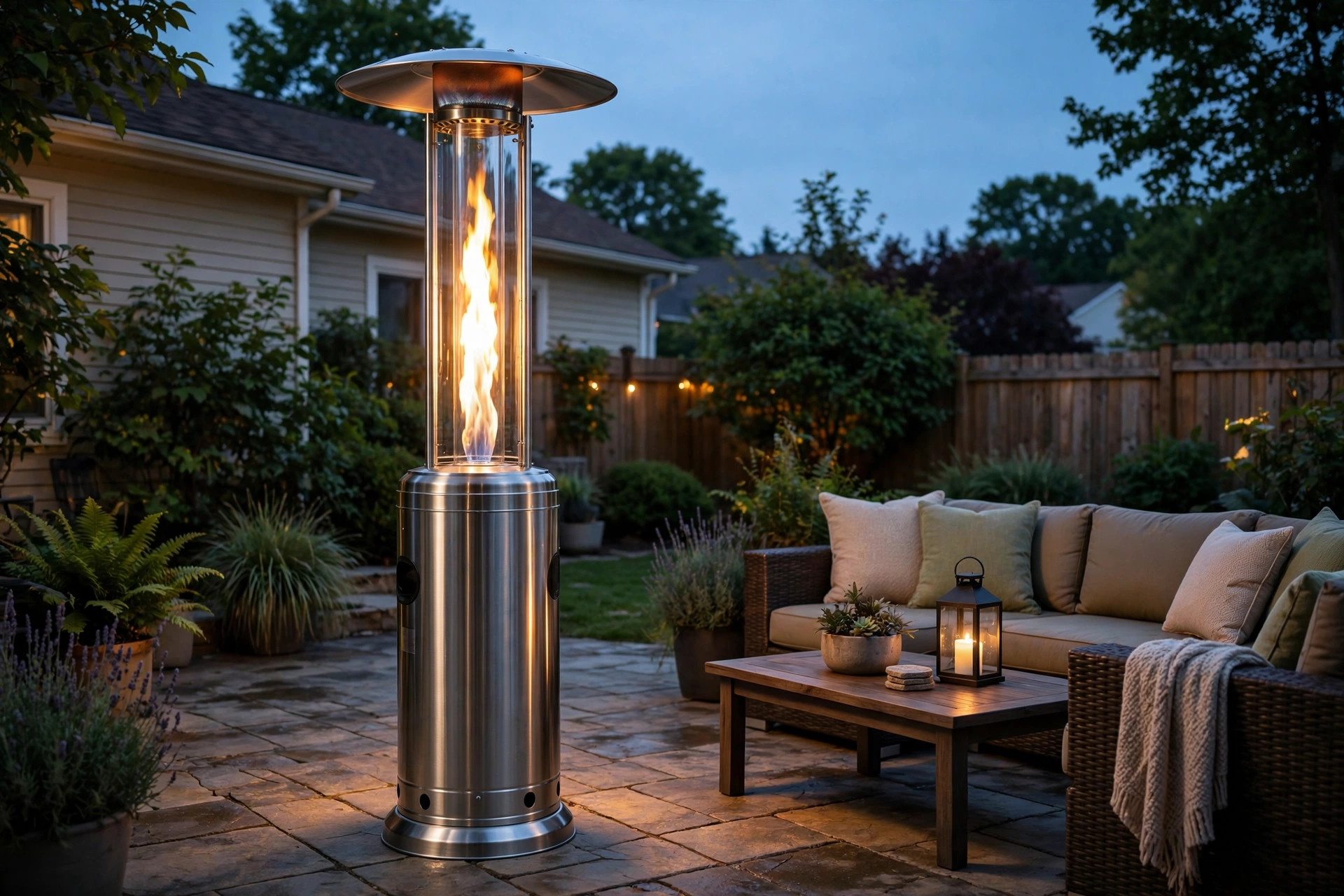
Standing propane heaters. These are the tall mushroom-style units seen at restaurants. They stand about seven feet high. A propane tank hides in the base. They put out strong heat in a wide circle. They work well on large open patios and decks.
Tabletop heaters. These small units sit on a table. They warm one small group of people. They cost less and are easy to carry. They suit balconies and small patios where a tall unit would crowd the space.
Wall-mounted and hanging heaters. These mount on a wall or hang from a ceiling. They stay off the floor and out of the way. Many are electric infrared models. They suit covered patios with solid walls or beams.
Fire pit style heaters. These look like a small fire pit with a wide glass flame tube in the center. They give both heat and light. They serve as a centerpiece for a seating area. Many buyers compare them with outdoor fire pits for humid climates before they decide.
Infrared electric heaters. Instead of warming the air, infrared heaters warm people and objects directly. They work fast. They make no noise and give off no fumes. An affordable infrared outdoor heaters buying guide can help shoppers compare models and prices.
Cost and Price
Prices for premium outdoor patio heaters vary widely. Tabletop models start near 100 dollars. Standard standing propane models cost between 200 and 400 dollars. True premium standing units, built from stainless steel with high output, run from 400 to 900 dollars. Designer fire pit style heaters can reach 1,500 dollars or more.
Running cost matters too. A standard 20-pound propane tank lasts about 8 to 10 hours on high heat. Refills cost roughly 20 to 30 dollars depending on the region. Natural gas costs less per hour but needs a plumber to install the line, which can add several hundred dollars up front. Electric heaters add to the power bill, yet the cost per hour is often low for small models.
Maintenance adds a small yearly cost. Covers cost 30 to 60 dollars. A yearly service check by a gas technician may cost 75 to 150 dollars. Even with these costs, a patio heater pays for itself quickly if it turns the patio into a daily living space for months at a time. A family that eats dinner outside twice a week from April to October gets dozens of extra meals out of a single purchase. Compared with eating out, the heater pays for itself in the first season.
Shoppers who want strong heat with lower running costs often look at energy efficient propane fire pits for sale as a second option. Comparing the two helps many families find the best fit for their budget.
Care and Upkeep
A patio heater lasts many years with simple care. Most problems come from neglect, not from hard use.
Use a cover. Rain and snow cause rust. A fitted cover keeps water off the unit between uses. Remove the cover only when the heater is fully cool.
Clean the burner. Dust and insects block the burner over time. Once a year, turn the heater off and let it cool. Brush away loose dirt with a soft brush. Check the vents for spider webs. Family Handyman publishes step-by-step cleaning guides for common outdoor equipment.
Check the gas connections. Before each season, inspect the hose for cracks. Tighten loose fittings by hand. A soapy water test finds leaks. Brush soapy water on the connections and look for bubbles while the gas is on. If bubbles appear, turn the gas off and replace the hose.
Store fuel safely. Keep propane tanks upright in a shaded, open area. Never store them indoors or in a hot shed. When the heater sits unused for months, remove the tank and store the heater under its cover.
Winterize in cold states. In states with hard winters, move the heater to a garage or shed. Drain nothing, since these heaters have no water parts. Just keep the unit dry and covered.
Safety
Outdoor heaters are safe when used with care. Most accidents come from simple mistakes.
Place the heater on a flat, stable surface. Keep it at least three feet from walls, railings, and furniture. Never use an outdoor heater indoors or in a closed garage. Carbon monoxide from gas heaters can kill in a closed space.
Turn the heater off before you leave the patio. Never leave it running overnight or while you sleep. Keep children and pets away from the hot surfaces. Teach children that the heater is hot even when the flame is low.
Watch the wind. Strong gusts can blow the flame out or tip a tall unit. Most models have a tilt shutoff, but it is still best to lower the flame or turn the unit off in high wind.
Read the manual that comes with your model. The Spruce and This Old House offer general patio heater safety tips. For fuel and emission questions, the EPA offers useful guidance on clean burning and outdoor air quality.
Frequently Asked Questions
How long does a propane tank last in a patio heater? A standard 20-pound tank lasts about 8 to 10 hours on the highest setting. On a medium setting, it can last 12 to 15 hours. Most families find one tank lasts through several evenings of use.
Can I use a patio heater under a covered patio? It depends on the ceiling height and the model. Most gas heaters need an open area above them. Many wall-mounted electric models are made for covered spaces. Always check the manual for clearance rules before you install one under a roof.
Are electric patio heaters cheaper to run than propane? Electric models often cost less per hour for small areas. For large patios, propane usually gives more heat for the money. The best choice depends on local energy prices and the size of the space you want to warm.
Do patio heaters work in the wind? They work, but wind lowers their effect. Place the heater in a sheltered spot. Wind screens or patio walls help. In strong wind, turn the heater down or off to save fuel and stay safe.
What is the difference between standard and premium models? Premium models use thicker steel, better burners, and stronger finishes. They resist rust longer and hold heat settings more steady. They also tend to carry better warranties. The higher price often pays off in extra years of use.
Where can I buy a premium outdoor patio heater? Large home stores carry a wide range. The Home Depot and Lowe’s both stock many models in store and online. Specialty hearth makers like Napoleon and Heatilator sell premium heating products through their dealer networks and websites.
A Final Word
A patio heater is a simple machine with a large effect. It turns cold evenings into warm ones. It gives a family back its outdoor space for months of the year. Shoppers who take time to compare fuel types, heat output, and build quality end up with a heater that serves them for a decade or more. Start with the size of your patio, pick the fuel that fits your home, and choose a solid, well-reviewed model. The warm nights that follow will make the choice feel easy.
References
Family Handyman. (n.d.). DIY home repair and maintenance. https://www.familyhandyman.com Heatilator. (n.d.). Fireplaces and fireplace products. https://www.heatilator.com Lowe’s. (n.d.). Home improvement products. https://www.lowes.com Napoleon. (n.d.). Fireplaces, grills, and heating products. https://www.napoleon.com The Home Depot. (n.d.). Home improvement products. https://www.homedepot.com The Spruce. (n.d.). Home and garden advice. https://www.thespruce.com This Old House. (n.d.). Home renovation guidance. https://www.thisoldhouse.com U.S. Environmental Protection Agency. (n.d.). Protecting human health and the environment. https://www.epa.gov
Was this guide helpful?

About Lisa Anderson
The My Garden US editorial team writes practical, in-depth home and garden guides for American homeowners — tested advice, no fluff.
You May Also Like
Energy Efficient Tile Fireplace Surrounds Buying Guide
May 25, 2026 0 views
High Efficiency Andirons for Fireplaces Buying Guide
March 30, 2026 0 views
Buy Fireplace Glass Doors Online in Arizona: A Simple Buying Guide
March 16, 2026 0 views