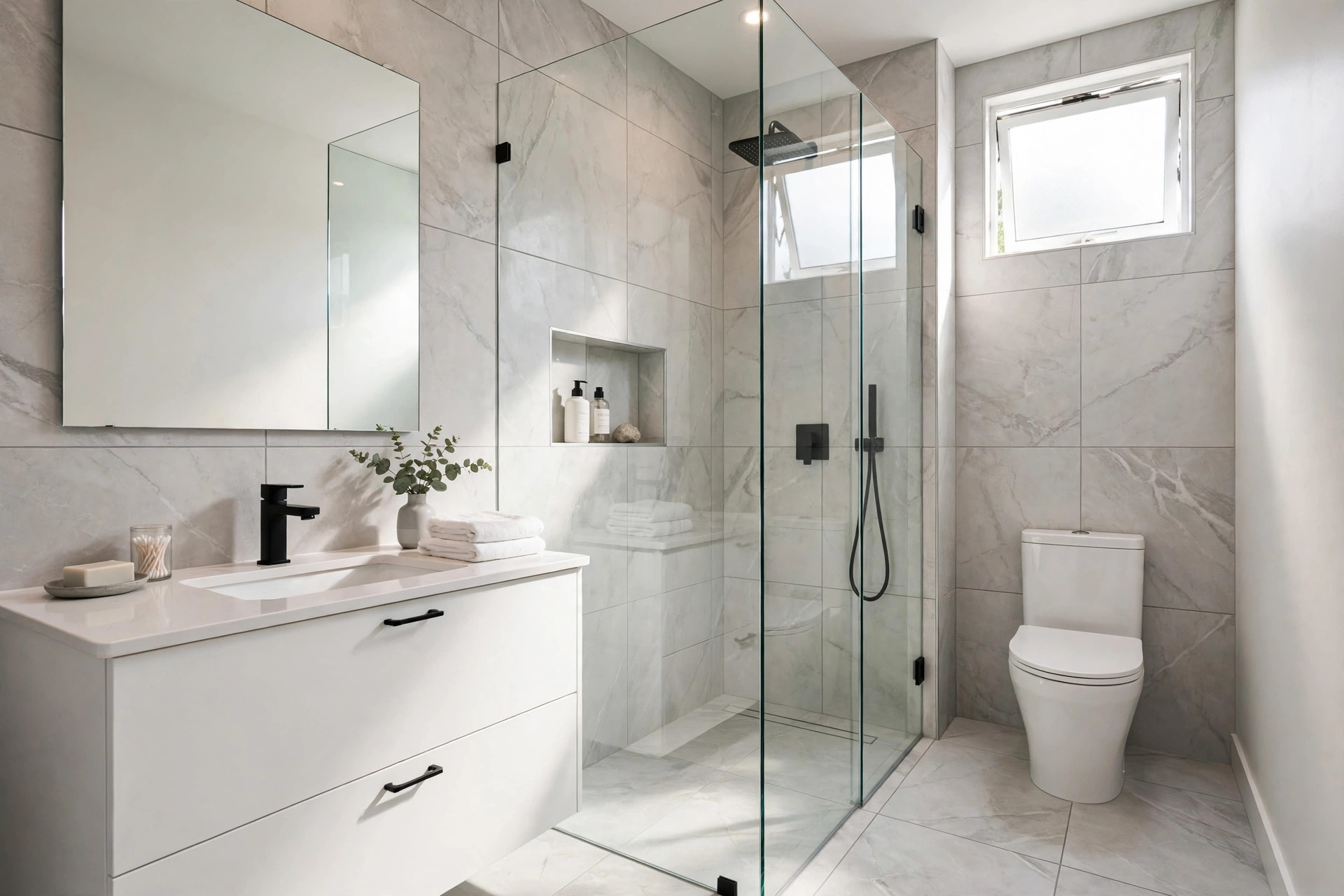

Choosing large format tile for small bathroom usa projects sounds strange at first. Many owners think a big tile will crowd a small room. The truth is the opposite. A large tile has fewer grout lines. Fewer grout lines mean less visual clutter. A wall of three big tiles looks calmer than a wall of thirty small ones. In a small bath, calm reads as open and bright. That is why designers across the country now pick big tile for the smallest baths in the house.
This guide covers what large format tile means, which sizes work best in a small bath, what it costs, and how to keep it looking new for years. It is written in plain terms. No trade jargon that needs a glossary.
Why Large Format Tile Works in a Small Bathroom
A small bathroom has little visual room to spare. Every joint, every pattern break, chops the space into pieces. Standard four-inch wall tile can put fifty grout lines across one shower wall. A 24-by-48-inch tile needs only two or three. The eye glides across a broad surface and the wall reads as one plane. That simple trick can make a 5-by-8-foot hall bath feel a full step wider.
There is a second gain. Large tile often comes in soft stone or concrete looks that run from floor to wall. When floor and wall share the same tile, the corner between them fades. The room loses its edges. Again, the eye is fooled in a good way. Owners in condos and older homes with tight baths report that this one choice does more than a new vanity or a fresh coat of paint.
A third point matters for daily life. Grout is the part of a tile job that stains, cracks, and needs sealing. Less grout means less upkeep. A large format job has a fraction of the grout of a small-tile job. Wiping the bath clean takes minutes. For busy households that is a real gain, not just a design trick.
What Counts as Large Format Tile: Large Format Tile for Small Bathroom Usa
Tile makers call a tile large format when one side is 15 inches or more. Common sizes sold in the United States include 12 by 24 inches, 24 by 24 inches, 24 by 48 inches, and 36 by 36 inches. Wall panels can run larger still. A 12-by-24 tile is the entry point and the most forgiving choice for a small bath. It is big enough to cut grout lines in half, yet small enough for a tile setter to handle without special tools.
Size and Scale for Tight Baths
For a bath under 60 square feet, most installers favor tiles between 12 by 24 inches and 24 by 48 inches. Going larger is possible, but each jump in size raises the risk of lippage, which is a small height gap at the tile edge. A skilled setter with a leveling system handles 24-by-48 tile fine. A first-time do-it-yourselfer may be happier at 12 by 24.
Layout changes the look as much as size does. A running bond pattern, the brick-like offset, reads as classic and relaxed. A stacked grid reads as modern and crisp. A diagonal layout can make the floor feel wider but wastes more tile in cuts. For the largest look, run the tile in the same direction as the longest dimension of the room. Long tiles running away from the door pull the eye toward the back wall, and the bath reads deeper.
Finish Choices: Matte, Polished, or Textured
Finish changes both the mood and the safety of the bath. Polished tile throws light around a dark bath and can make a windowless powder room glow. But polished tile is slick under wet feet. On a bathroom floor, pick a matte or lightly textured finish with a dynamic coefficient of friction of 0.42 or higher, the industry mark for wet-area floors. Matte porcelain hides water spots and soap film better than polished tile, so it looks clean between washings.
Stone-look porcelain is the best seller for large format tile for small bathroom usa jobs. It gives the calm of marble or travertine without the sealing and staining worry. Wood-look porcelain in long plank shapes is another strong pick. It warms a cold bath and suits homes where the owner wants a spa feel.
How to Choose the Right Tile
Start with the bath itself. Measure the room and note the light. A dark bath with one small window wants a pale tile, perhaps a soft white or warm gray, to bounce light. A bath with a big window can carry a deeper color, even charcoal, because daylight keeps it lively. Bring home full-size samples and stand them where they will live. A two-inch chip lies about size. A full tile tells the truth.
Check the tile grade. For floors, porcelain beats ceramic for density and stain resistance. For walls, either works, since walls face little wear. Check shade variation on the box, marked V1 through V4. V1 is nearly uniform. V4 is a strong mix of tones that mimics real stone. In a small bath, V2 or V3 gives gentle movement without visual noise. Many owners love V4 in the store and find it too busy once it covers every wall.
Ask about the rectified edge. Rectified tile is cut square after firing, so edges are sharp and joints can be as tight as one-sixteenth of an inch. Non-rectified tile has a soft pressed edge and needs a wider joint. In a small bath, rectified tile with tight joints looks best because the surface reads as nearly seamless. Ask about the dye lot before you buy, and buy every box from one lot.
Types and Options Worth Knowing
Porcelain is the workhorse. It is dense, hard, and nearly waterproof. Most large format tile for small bathroom usa sales are porcelain. It suits both floor and wall and handles steam, soap, and cleaning chemicals with ease.
Ceramic wall tile in large sizes costs less than porcelain and weighs less. It is a fine pick for walls in a bath where the floor gets a tougher tile. It should not carry the floor load in a bath with heavy foot traffic.
Natural stone in large format, such as marble, travertine, or slate slabs, looks rich and costs much more. Stone needs sealing and gentle cleaners. It stains with hair dye, strong soap, and hard water. For most owners, stone-look porcelain is the safer buy.
Gauged porcelain panels, sometimes called thin slabs, are tiles over three feet on a side and only a quarter inch thick. They can cover a whole shower wall in one sheet with no grout at all. They need a two-person crew, special frames, and a very flat wall. In a small bath they give a stunning result but at a premium price.
If you are weighing the tile against other wet-area surfaces, it helps to read how owners compare porcelain vs ceramic tile for floors usa before you buy, and to study best tile for shower walls reviews usa when the shower is the main feature. These guides set clear expectations on price and upkeep.
Cost and Price in the United States
Price breaks into two parts: the tile and the labor. Large format porcelain tile in common sizes runs from about four dollars to about twelve dollars per square foot at retail stores. Stone looks and premium brands run higher, sometimes twenty dollars a square foot. Natural stone slabs can run thirty dollars or more per square foot for material alone.
Labor for large format tile runs higher than labor for small tile. The tile is heavy. The floor must be dead flat, or the setter must spend hours flattening it. A pro setter often charges eight to twenty dollars per square foot for labor on large format work, depending on the region and the prep needed. For a typical small bath of forty to sixty square feet of floor plus a shower, total installed cost often lands between fifteen hundred and five thousand dollars.
Two items drive the bill up fast. One is floor prep. Large tile magnifies every bump. A wood subfloor may need self-leveling compound or a fresh cement backer board. The other is plumbing work if the owner moves fixtures while the tile is up. Keep the layout where it is and the budget holds.
Cost Basics
Grout choice also touches the budget. The best grout for shower floor reviews usa guides show that epoxy grout costs more up front but never needs sealing, which saves money over the years. Cement grout costs less now and asks for a sealer every year or two.
Installing Large Format Tile in a Small Bath
Flatness is the whole job. The industry rule says the floor should not vary more than one-eighth of an inch in ten feet for large tile. The setter checks with a long straightedge and fixes low spots with leveling compound. Walls get the same check. A wavy wall telegraphs through big tile like a wrinkle under a sheet.
Thinset mortar matters more with big tile. A large-and-heavy-tile mortar, sometimes labeled LHT, holds its ridges and supports the weight. The setter back-butters each tile, spreading mortar on the tile back as well as the floor, to get full coverage. Spot bonding, five dabs of mortar under a big tile, is a recipe for cracked tile and hollow spots. Full coverage is the standard.
Leveling clips are small plastic wedges that hold neighboring tiles at the same height while the mortar cures. They cost little and make a large difference in the finished look. Almost every pro uses them on tile over eighteen inches.
Cure time asks for patience. The floor should not be walked on for at least twenty-four hours, and grout should wait a full day more. Steam showers and heavy use should wait about a week. Rushing the cure is the most common do-it-yourself mistake.
Care and Upkeep
Large format tile is easy to live with. Sweep or vacuum the floor weekly to keep grit from scratching the finish. Mop with warm water and a pH-neutral cleaner made for tile. Skip bleach and acid cleaners on a regular basis; they wear grout and can dull some finishes. Wipe shower walls after use with a squeegee. That one habit cuts soap scum more than any product.
Seal the grout if it is cement based. A penetrating sealer takes an hour to apply and lasts a year or two. Epoxy grout never needs sealing. Check the caulk lines where tile meets the tub or shower pan once a year. Caulk fails before tile does, and a failed joint lets water behind the wall.
For pattern ideas on the floor, browse hexagon tile bathroom floor ideas usa to see how small accents can pair with big tile without cluttering the room.
Safety Points
Wet tile floors cause most bathroom slips. Choose floor tile rated for wet areas and keep bath mats with rubber backing at the tub and the sink. Good lighting matters as much as the tile. A dim bath hides puddles. Bright, even light over the vanity and in the shower helps every member of the household.
If anyone in the home has limited mobility, plan grab bars before the tile goes up. Blocking, solid wood backing inside the wall, lets bars hold firm. Adding blocking after the tile is set means cutting through new tile. A curbless shower entry, where the floor runs level into the shower, removes the trip edge and suits large tile well because the big tile flows without a break.
During installation, keep dust control in mind. Cutting porcelain throws fine silica dust. A pro uses a wet saw and a dust mask. Pets and children should stay out of the work area until cleanup is done.
FAQ
Will large tile really make my small bathroom look bigger? Yes, in most cases. Fewer grout lines and broader surfaces read as open. The gain is strongest with pale colors, tight joints, and a floor-to-wall run of the same tile.
What is the best size for a 5-by-8-foot bathroom? A 12-by-24-inch tile is the safe, popular pick. It fits the scale, needs no special crew, and prices well. A 24-by-24-inch tile also works if the setter is experienced.
Can I install large format tile myself? A handy owner can set 12-by-24 tile on a flat floor with care. Tile over 24 inches is heavy, needs two people, and punishes small errors. Many owners do the demolition themselves and hire a setter for the tile.
How many extra tiles should I buy? Buy ten to fifteen percent more than the measured area. Cuts at edges, around the toilet flange, and at doorways eat tile. One extra box also covers a future repair.
Does large format tile work on shower walls? It works very well. Big panels mean fewer joints for water to find. Use a waterproof membrane behind the tile and slope the shower floor to the drain. Keep wall joints tight and sealed.
Is porcelain or ceramic better for a small bathroom floor? Porcelain is the better floor tile. It is denser, harder, and resists stains and moisture better than ceramic. Ceramic is fine on walls and costs less.
A Short Final Word
Large format tile for small bathroom usa remodels earn their praise. They cut visual noise, trim upkeep, and give a small room a calm, modern feel. Pick a pale porcelain in a workable size, insist on a flat base and full mortar coverage, and choose grout you can live with for a decade. The result is a bath that looks larger than its floor plan, cleans in minutes, and holds its value for years to come. Trusted guides at The Spruce, This Old House, and Lowe’s offer more photo ideas, while retailer and maker sites such as Home Depot, Daltile, Shaw Floors, Mohawk Flooring, and LL Flooring show current sizes, colors, and prices.
References
Daltile. (n.d.). Ceramic and porcelain tile. https://www.daltile.com LL Flooring. (n.d.). Hardwood, vinyl, and tile flooring. https://www.llflooring.com Lowe’s. (n.d.). Home improvement products. https://www.lowes.com Mohawk Flooring. (n.d.). Flooring products. https://www.mohawkflooring.com Shaw Floors. (n.d.). Flooring products. https://www.shawfloors.com The Home Depot. (n.d.). Home improvement products. https://www.homedepot.com The Spruce. (n.d.). Home and garden advice. https://www.thespruce.com This Old House. (n.d.). Home renovation guidance. https://www.thisoldhouse.com
Was this guide helpful?

About Emily Rodriguez
The My Garden US editorial team writes practical, in-depth home and garden guides for American homeowners — tested advice, no fluff.
You May Also Like
Penny Tile Floor Cost Per Square Foot USA: A Plain Guide for Homeowners
September 4, 2026 0 views
Shaw vs Mohawk Vinyl Plank Comparison: Which Brand Wins in American Homes
February 27, 2026 0 views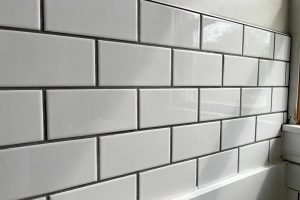
Epoxy Grout vs Cement Grout: A Practical Comparison for USA Homes
June 9, 2026 0 views