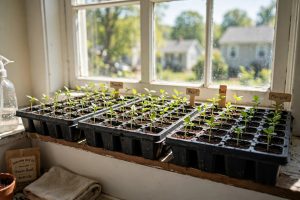
Most bagged seed starting mixes are built on peat moss. It works, but it comes at a cost. Peat is dug out of ancient bogs that took thousands of years to form, and those bogs store enormous amounts of carbon. Growing seedlings without it is easier than most gardeners expect. A peat free seed starting mix made from coconut coir, perlite, and vermiculite gives seeds the same light, airy start, and in some ways it performs better. This guide explains why gardeners are making the switch, shares tested recipes, and walks through mixing and using your own. If you are new to peat free seed starting mix, start with the basics below.
Table of Contents
Table of Contents
- Peat Free Seed Starting Mix: Why Go Peat Free?
- What a Good Seed Starting Mix Must Do
- The Core Ingredients
- Coconut Coir
- Perlite
- Vermiculite
- Worm Castings or Fine Compost
- Leaf Mold
- Recipe 1: The Simple Coir Mix (Best for Beginners)
- Recipe 2: The Living Soil Mix
- Recipe 3: The Classic Thirds Mix
- How to Mix It Right
- Using Your Mix Through the Season
- Troubleshooting Peat Free Mixes
- Storing Leftover Mix
- Beyond Seed Starting: Peat Free Pots
- The Bottom Line
- References
Peat Free Seed Starting Mix: Why Go Peat Free?
When it comes to peat free seed starting mix, getting the details right makes all the difference.
Many homeowners find that peat free seed starting mix is easier than they expected once they know the basics.
Peat moss is harvested from bogs and fens, mostly in Canada and northern regions. These waterlogged places have locked away carbon for thousands of years. When peat is dug up and dried, that stored carbon escapes into the atmosphere. An Oregon State University soil scientist notes that peat bogs cover a small share of the earth's surface yet hold more carbon than all the world's forests combined, and harvesting releases it (Oregon State University).
Digging also wrecks the bog habitat itself, which shelters birds, insects, reptiles, and small mammals. Peat forms so slowly that a harvested bog will not recover in any human lifetime. That is why England moved to ban peat sales for home gardeners, and why many American gardeners are choosing alternatives on their own (Great Garden Plans).
There are practical reasons too. Peat moss is naturally acidic, low in nutrients, and oddly hard to rewet once it dries out completely. Coconut coir, its main replacement, is closer to neutral in pH, rewets easily, and comes from a renewable source: coconut husks, a byproduct of the coconut industry (Mother Earth News).
What a Good Seed Starting Mix Must Do
Many homeowners find that peat free seed starting mix is easier than they expected once they know the basics.
The key to peat free seed starting mix is choosing the right approach for your space and budget.
Seeds ask very little from their mix, but they ask it firmly. A good germinating medium must be:
- Fine and uniform, so tiny seeds make full contact with moisture
- Well aerated, because roots need oxygen as much as water
- Moisture retentive, holding water like a wrung-out sponge
- Low in fertility, since rich mixes can burn tender roots and feed algae
- Free of pests, disease, and weed seeds, which is why garden soil is a poor choice
Oregon State University Extension adds one more test: the mix should be low in soluble salts yet able to hold and move moisture to the seed (Oregon State University Extension). Every peat free recipe below is built to meet these marks.
The Core Ingredients
The key to peat free seed starting mix is choosing the right approach for your space and budget.
With a little planning, peat free seed starting mix can fit even a busy schedule.
Coconut Coir
Coir is fiber from coconut husks. It holds water well, drains freely, and resists compacting, which keeps air around young roots. Unlike peat, it rewets fast after drying out. Buy coir labeled low-salt or pre-washed when you can, since some batches carry residual salt from coastal processing (Mother Earth News). Coir usually sells as compressed bricks that expand in water; one brick makes many quarts of mix (Weekand).
Perlite
These little white volcanic pebbles are the drainage engine of the mix. Perlite holds air pockets open so roots can breathe, and it keeps the mix from packing down after repeated watering.
Vermiculite
Vermiculite is a puffed mineral that holds both water and nutrients, then releases them slowly. It balances perlite's drainage with steady moisture, which matters for seeds that must never dry out mid-germination.
Worm Castings or Fine Compost
A small share of worm castings adds gentle nutrition and living biology without the burn risk of fertilizer. Screen it through a coarse sieve first so no lumps block tiny seedlings. Keep the share modest; a seed starting mix should stay lean (Gardening Know How).
Leaf Mold
Well-rotted leaf mold is the quiet hero of peat free mixes. It is free, it holds moisture beautifully, and it brings beneficial microbes with it. Sift it fine before mixing.
Recipe 1: The Simple Coir Mix (Best for Beginners)
With a little planning, peat free seed starting mix can fit even a busy schedule.
Before you start, it helps to understand how peat free seed starting mix works in real homes.
This is the easiest place to start, and it handles most vegetables and flowers well.
- 2 parts coconut coir
- 1 part perlite
- 1 part vermiculite
Hydrate the coir brick first according to the package directions, then fluff it up and measure. Combine everything in a large tub and mix until uniform. Moisten the blend until it holds together when squeezed but no water drips out. This 2-1-1 ratio shows up in many gardener-tested recipes because it balances moisture and air so forgivingly.
Recipe 2: The Living Soil Mix
Before you start, it helps to understand how peat free seed starting mix works in real homes.
A good plan for peat free seed starting mix saves time, money, and frustration.
For gardeners who want biology in the mix from day one:
- 8 cups hydrated coconut coir (or fine leaf mold)
- 4 cups rice hulls or perlite
- 4 cups sifted worm castings
Rice hulls are a renewable perlite stand-in that adds air space and breaks down slowly. This blend feeds seedlings gently from the start, so it suits heavier feeders like tomatoes and peppers. For very delicate seeds, use the base without castings and feed only after true leaves appear.
Recipe 3: The Classic Thirds Mix
A good plan for peat free seed starting mix saves time, money, and frustration.
Oregon State University Extension suggests a straightforward formula: one third pasteurized compost, one third sand, perlite, or vermiculite, and one third coconut coir (Oregon State University Extension). Swap the coir in for peat and you have a sturdy, economical mix for large batches of seedlings. Pasteurizing the compost (heating it gently) knocks back weed seeds and pathogens that cause damping off.
How to Mix It Right
For most people, peat free seed starting mix comes down to a few smart choices.
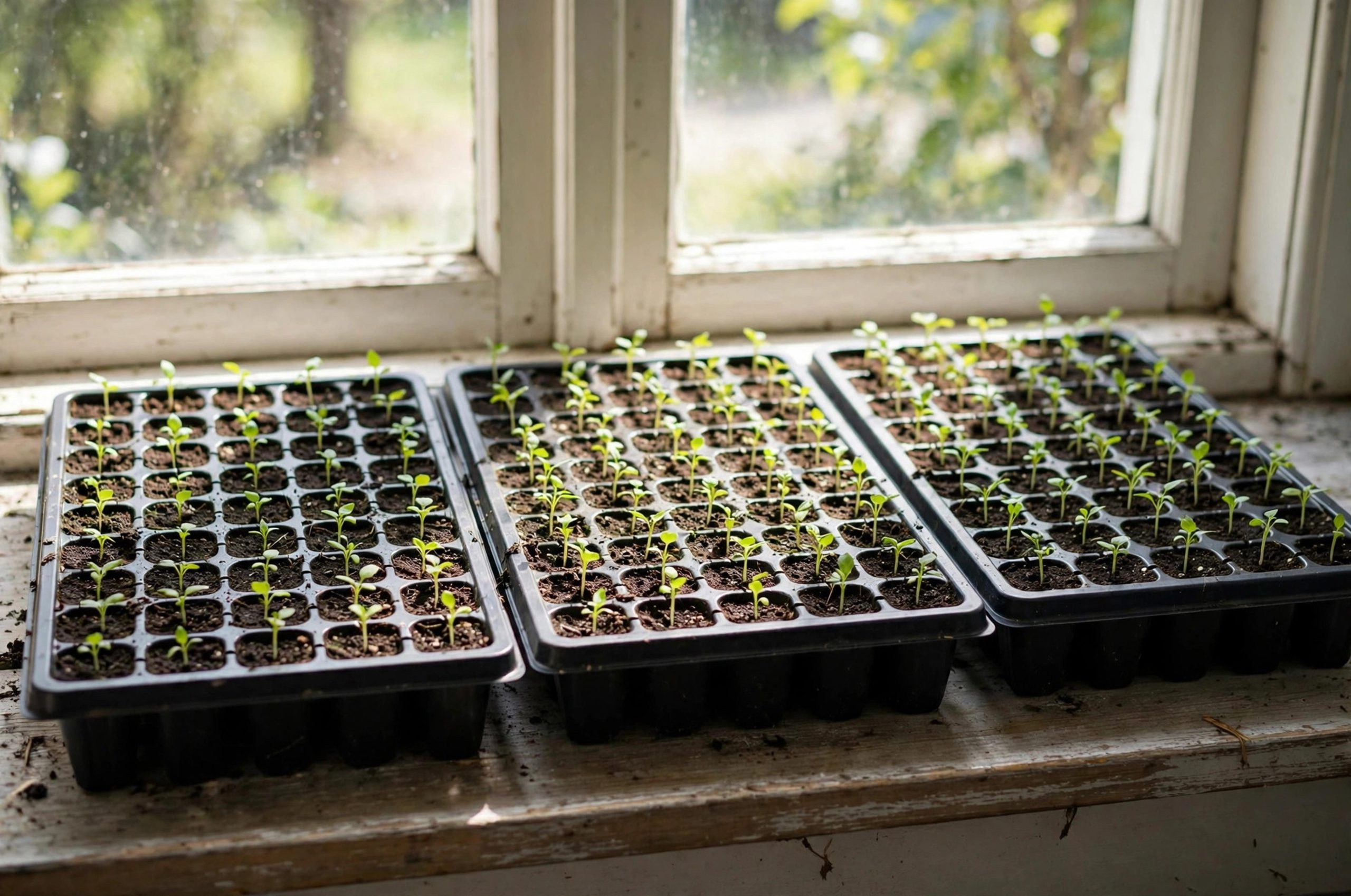
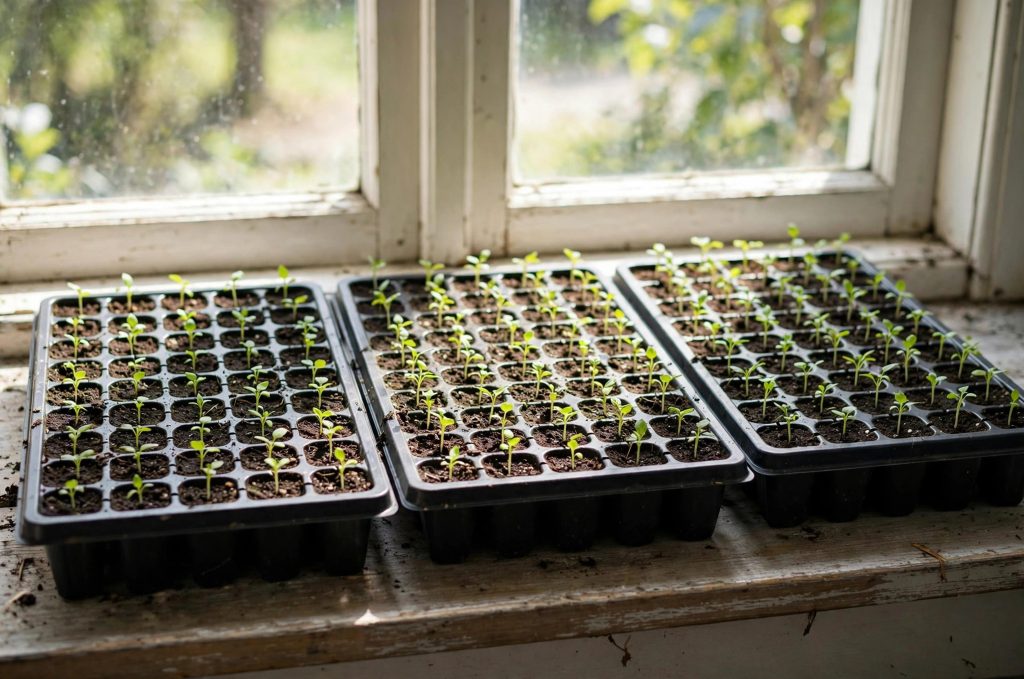
1. Hydrate the coir first. Break the brick into a tub, add warm water, and let it soak until it crumbles apart. Fluff with your hands or a fork. 2. Measure by volume. Use a scoop or bucket and keep the ratios consistent. 3. Mix dry, then wet. Combine the dry ingredients thoroughly, then add water a little at a time. 4. Test the squeeze. Grab a handful and squeeze. It should form a loose ball that crumbles when poked, with no water dripping. That is the famous wrung-out sponge test. 5. Fill trays loosely. Scoop mix into cells without packing it down. Tap the tray to settle, then sow. Roots push through loose mix far more easily than compacted mix.
A good seed starting tray with a humidity dome pairs perfectly with these mixes, holding in the moisture seeds need to wake up.
Using Your Mix Through the Season
If you are new to peat free seed starting mix, start with the simplest option and build from there.
Watering. Peat free mixes dry a touch faster than peat mixes, especially coir blends in small cells. Check trays daily. Bottom watering, setting the tray in a shallow pan of water, wets the mix evenly without disturbing seeds.
Feeding. Lean mixes run out of steam once true leaves appear. Begin a half-strength liquid feed at that point, or top-dress with a sprinkle of sifted worm castings.
Lighting. No mix fixes poor light. Seedlings on a dim windowsill stretch tall and weak no matter what they grow in. Our seed starting light setup for beginners shows how to give them what they need.
Potting up. When roots fill the cells, move seedlings into larger pots. Coir-based mixes transplant cleanly because they hold together without turning to mud.
Troubleshooting Peat Free Mixes
When it comes to peat free seed starting mix, getting the details right makes all the difference.
Coir stays too wet. You may have packed the cells or skipped the perlite. Remake the batch with the full drainage share and fill loosely.
Seedlings look pale. Lean mix plus hungry seedlings equals light feeding time. Start diluted liquid fertilizer once true leaves show.
Algae on the surface. This means constant surface moisture and low light. Water from below, improve air flow, and give the seedlings more light. A thin top dressing of dry vermiculite also helps.
Salt damage on leaf edges. Cheap coir can carry salt. Next time, buy pre-washed coir, or rinse the hydrated coir thoroughly before mixing (Mother Earth News).
Storing Leftover Mix
Mixed seed starting medium keeps well. Let it dry out, seal it in a bag or tub, and store it somewhere it will not freeze solid or bake. Next season, rehydrate and it is ready to go. Many gardeners mix a big batch in the cold months so spring sowing starts the moment seeds arrive (Oregon State University Extension).
Beyond Seed Starting: Peat Free Pots
If you like the peat free idea, carry it into containers. Peat pots and their alternatives pair well with coir mixes, and a seedling heat mat speeds germination no matter which mix you use. The common seed starting mistakes are the same with any medium: sowing too deep, overwatering, and skipping the hardening-off step.
The Bottom Line
A peat free seed starting mix is not a compromise. Coconut coir gives you the moisture holding of peat without the bog destruction, perlite and vermiculite handle air and water, and a little compost brings the mix to life. Mix a batch this weekend, sow with confidence, and your seedlings will never know the peat is gone. A little care goes a long way with peat free seed starting mix.
References
Botanikks. (n.d.). The potential drawbacks of using peat moss and alternatives to consider. https://www.botanikks.com/gardening/the-role-of-peat-moss-in-soil-amendment/14766/1
Gardening Know How. (n.d.). How to make the perfect DIY seed-starting mix: Easy recipes. https://www.gardeningknowhow.com/garden-how-to/seeds/diy-seed-starting-mix
Great Garden Plans. (n.d.). Is peat moss good for your garden? https://greatgardenplans.com/is-peat-moss-good-for-a-garden/
Mother Earth News. (n.d.). Coconut coir vs. peat moss. https://www.motherearthnews.com/organic-gardening/gardening-techniques/coconut-coir-vs-peat-moss-zm0z23zatro/
Oregon State University. (n.d.). Harvesting peat moss contributes to climate change, Oregon State scientist says. https://news.oregonstate.edu/news/harvesting-peat-moss-contributes-climate-change-oregon-state-scientist-says
Oregon State University Extension. (n.d.). Make your own seed-starting mix for winter prep. https://extension.oregonstate.edu/news/make-your-own-seed-starting-mix-winter-prep
The Tree Trove. (n.d.). Can I use peat moss in a vegetable garden: Benefits, tips, and eco-friendly alternatives. https://thetreetrove.com/can-i-use-peat-moss-in-a-vegetable-garden/
Weekand. (n.d.). How to mix coconut coir and soil. https://www.weekand.com/home-garden/article/mix-coconut-coir-soil-18038674.php
Was this guide helpful?

About My Garden US
The My Garden US editorial team writes practical, in-depth home and garden guides for American homeowners — tested advice, no fluff.
You May Also Like

Sunflower Seed Packs: A Guide for American Homes
July 13, 2026 4 views
Sunflower Seed Packs: Reviews and a Buying Guide for USA Gardeners
May 12, 2026 3 views
Garlic Bulbs Planting Texas Homes USA: A Complete Garden Guide
September 15, 2026 2 views