---
Table of Contents
Table of Contents
- Best Spot for a Mini Split in a Bedroom: The Golden Rule: High, Opposite the Bed, Not Over It
- Keep Air Off the Sleeper
- Mind the Sensor: Heat Sources and Sunlight
- Noise: The Bedroom Is Unforgiving
- Sizing for a Bedroom
- Spots to Avoid
- The Condensate Drain: The Detail Everyone Forgets
- Alternatives: When a Wall Unit Does Not Fit
- Keep It Clean for Quiet Nights
- Frequently Asked Questions
- References
A mini split can make a bedroom the most comfortable room in the house, or the most annoying one. The difference is usually placement. A ductless indoor unit blows conditioned air straight into the room, with no ducts to spread it around. Put it in the right spot and the air washes gently across the room. Put it in the wrong spot and it blasts cold air onto your pillow all night, short cycles from bad sensor readings, or drones loud enough to keep you awake. If you are new to best spot for a mini split in a bedroom, start with the basics below.
The best spot for a mini split in a bedroom follows a few simple rules about height, distance from the bed, airflow path, and the outdoor unit on the other side of the wall. This guide lays them out, covers the spots to avoid, and explains how placement affects sizing, noise, and efficiency. For a deeper look at the equipment itself, see our Daikin vs Mitsubishi mini split comparison and the best mini splits for sunrooms, which face similar placement puzzles.
Best Spot for a Mini Split in a Bedroom: The Golden Rule: High, Opposite the Bed, Not Over It
When it comes to best spot for a mini split in a bedroom, getting the details right makes all the difference.
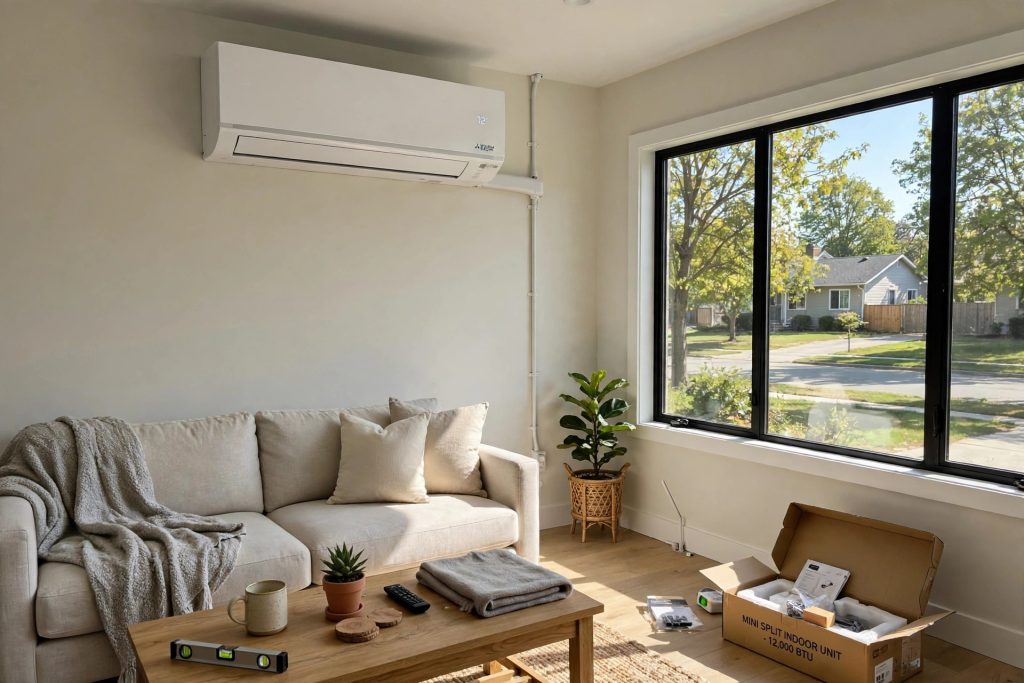
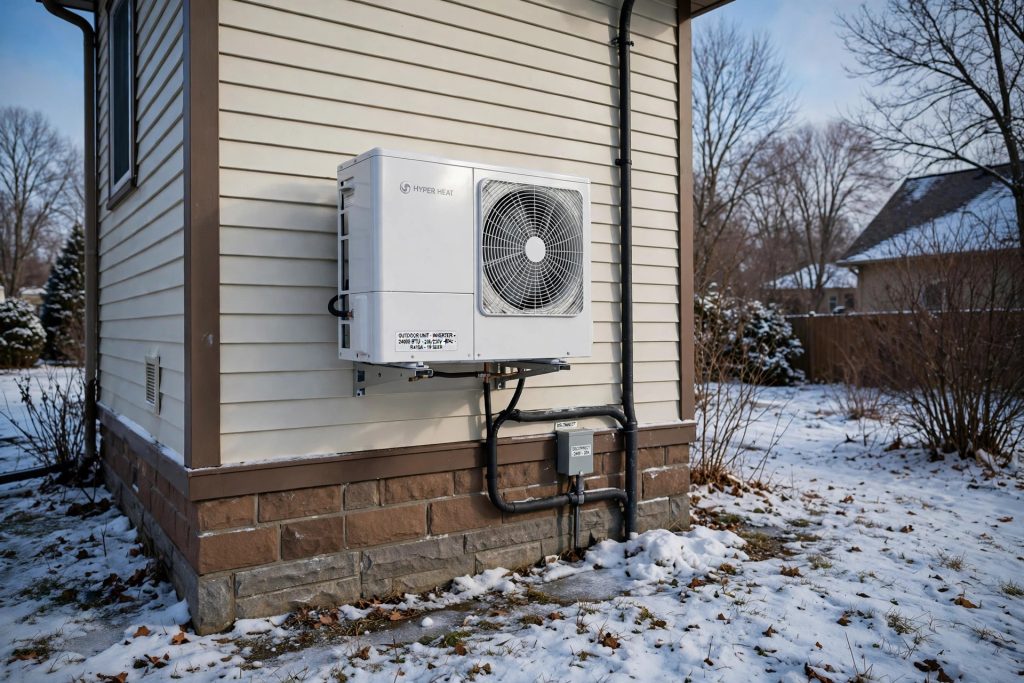
Many homeowners find that best spot for a mini split in a bedroom is easier than they expected once they know the basics.
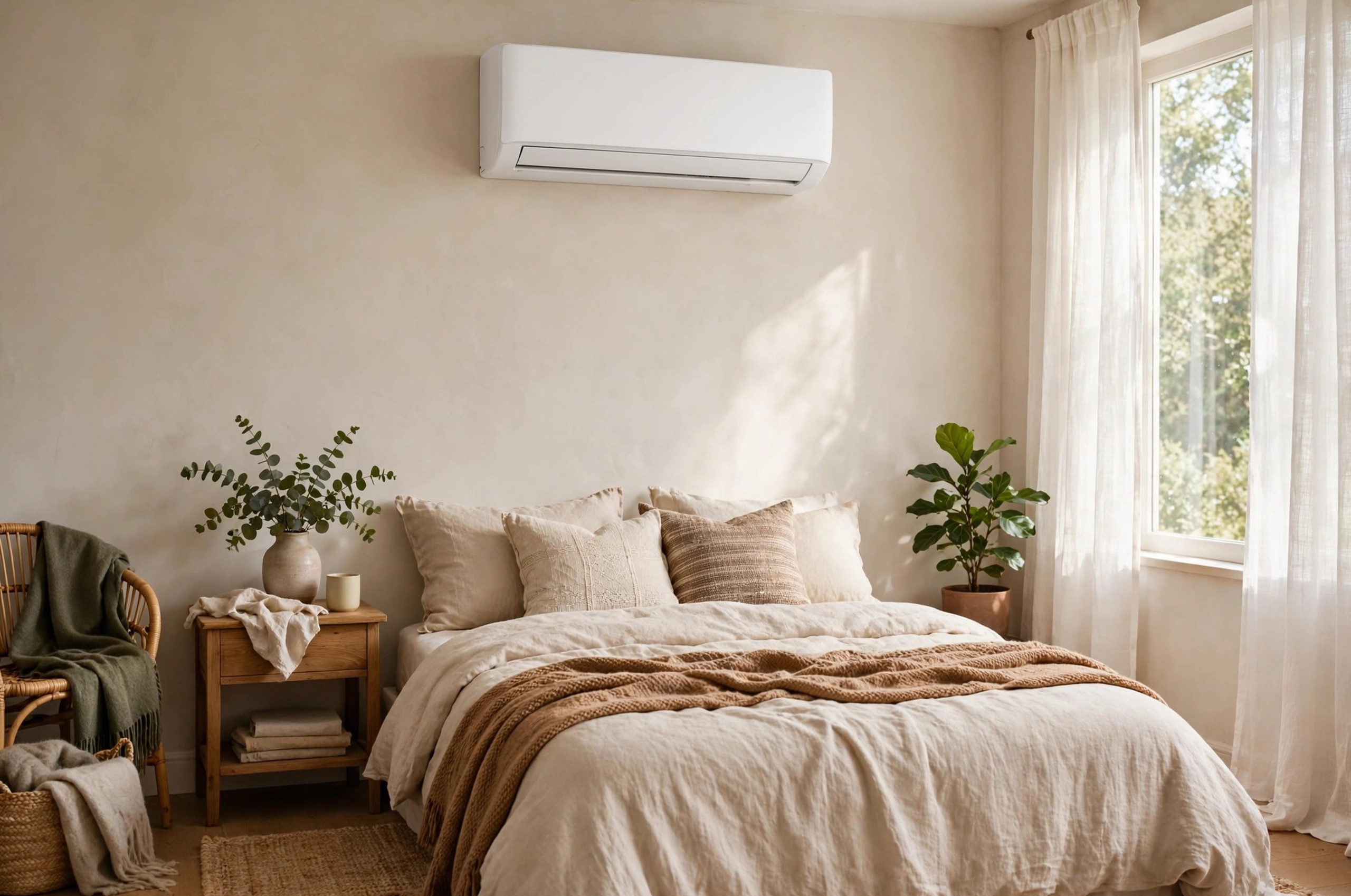
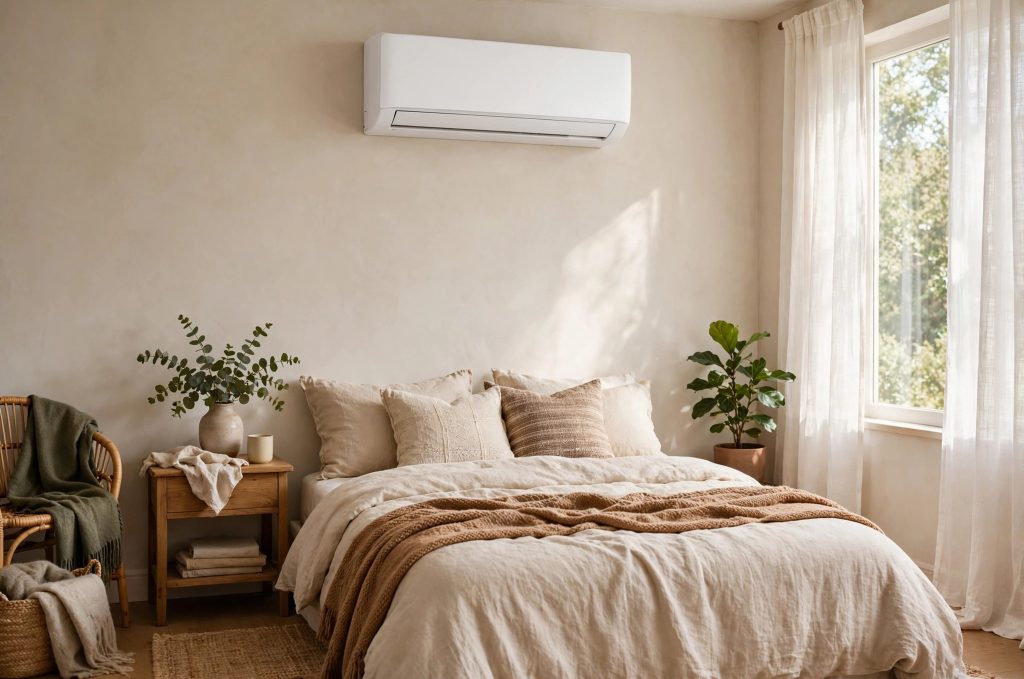
Mount the indoor unit high on the wall, roughly six to eight feet off the floor, or about six to twelve inches below the ceiling. Cold air falls and warm air rises, so a high mount lets the unit throw air across the room at ceiling level, where it spreads and settles gently instead of dumping on one spot.
The ideal wall is the one opposite the bed, or the wall at the foot of the bed. Air travels the length of the room, slows down, and mixes before it reaches you. This room-by-room positioning guide recommends exactly this: the foot-of-bed wall, with airflow traveling the room's length, while warning against the wall beside the bed, which delivers air straight across the pillow at face height.
What about directly above the headboard? Opinions differ, but for sleep comfort it is usually a poor choice. Even with the louvers angled up, some air drops straight down onto the sleeper. Light sleepers notice it. The foot of the bed is the safer bet.
Keep Air Off the Sleeper
Many homeowners find that best spot for a mini split in a bedroom is easier than they expected once they know the basics.
The key to best spot for a mini split in a bedroom is choosing the right approach for your space and budget.
The number one bedroom complaint about mini splits is the draft on the bed. Two controls fix most of it. First, angle the louvers upward so air rides along the ceiling before descending. In cooling mode this creates a gentle, even coolness. Second, use the swing or auto-vane mode rather than fixing the vanes in one position, so no single spot gets a constant stream.
If your unit has a sleep or quiet mode, use it. These modes cap the fan speed and soften the temperature swings, trading a little raw capacity for silence. Aircondlounge's placement guide notes that bedroom units should prioritize indirect airflow, and the sleep mode is the software version of that idea.
Mind the Sensor: Heat Sources and Sunlight
The key to best spot for a mini split in a bedroom is choosing the right approach for your space and budget.
With a little planning, best spot for a mini split in a bedroom can fit even a busy schedule.
The indoor unit reads the room temperature from a sensor in or near the unit. Anything that warms that sensor lies to the system. Do not mount the unit above a lamp, a television, or any heat-producing appliance. Do not mount it where direct sun hits it through a window for hours a day. A fooled sensor short cycles the system or runs it when the room is already comfortable.
The same logic applies to the outdoor unit's side of the wall, but in reverse: keep the indoor unit's wall penetration practical. The best bedroom wall is also one that gives the outdoor unit a sensible home, with short refrigerant lines, good drainage, and easy service access. This Houston homeowner's guide to ductless placement treats placement as an airflow and system-design problem rather than a wall-mounting project, and the outdoor side deserves the same thought as the indoor side.
Noise: The Bedroom Is Unforgiving
With a little planning, best spot for a mini split in a bedroom can fit even a busy schedule.
Before you start, it helps to understand how best spot for a mini split in a bedroom works in real homes.
A living room tolerates a whoosh. A bedroom does not. Modern mini splits are quiet, often whisper-level on low fan, but placement still matters. Mount the unit on an interior wall rather than a thin exterior wall when possible, since the wall itself transmits vibration. Make sure the mounting bracket is solid and level; a loose mount buzzes.
Keep the unit away from the head of the bed for noise as well as airflow. A few feet of distance drops the perceived sound considerably. If you are sensitive to noise, look at the unit's decibel ratings on low fan before you buy, and read our MrCool vs Pioneer comparison for notes on which budget units run quietest. The same mounting and vibration checks in this AC noise troubleshooting guide apply to keeping a bedroom head silent.
Refrigerant lines can also transmit a faint gurgle. Where the line set passes through the bedroom wall, make sure it is insulated and sealed, not rattling loose in the hole.
Sizing for a Bedroom
Before you start, it helps to understand how best spot for a mini split in a bedroom works in real homes.
A good plan for best spot for a mini split in a bedroom saves time, money, and frustration.
Bedrooms are small, which makes oversizing easy. A unit too large for the room cools the air near the thermostat in minutes and shuts off, leaving humidity high and temperatures uneven. For most bedrooms, a 6,000 to 9,000 BTU unit is plenty. Big master suites with tall ceilings or lots of west-facing glass may need more, but the answer is a proper load calculation, not a guess.
An oversized bedroom unit also short cycles, which you will hear all night as the compressor kicks on and off. Lennox describes the short-cycling pattern: brief runs that never finish the job, exactly what ruins both sleep and efficiency. Right-sizing is a comfort decision as much as an efficiency one. Our mini split vs central AC cost comparison puts bedroom-scale pricing in context, and a multi-zone mini split can serve several bedrooms from one outdoor unit if you are outfitting the whole floor.
Spots to Avoid
A good plan for best spot for a mini split in a bedroom saves time, money, and frustration.
For most people, best spot for a mini split in a bedroom comes down to a few smart choices.
- Directly above the pillow. Cold downdrafts ruin sleep.
- The wall beside the bed. Air crosses the pillow at face height.
- Above or behind curtains. Fabric blocks airflow and confuses the sensor.
- Above heat sources. Lamps, TVs, and radiators lie to the temperature sensor.
- In direct sun path. Afternoon sun on the unit skews readings.
- Low on the wall. Mini splits are designed to mount high. Low mounting kills the throw pattern.
- Behind tall furniture. Wardrobes and bookshelves in front of the unit block the airflow the room depends on.
- Far from the outdoor unit. Long line sets cost more, lose efficiency, and complicate drainage.
The Condensate Drain: The Detail Everyone Forgets
For most people, best spot for a mini split in a bedroom comes down to a few smart choices.
In cooling mode, the indoor unit pulls moisture from the air, and that water has to drain outside. The drain line needs a continuous downward slope from the unit to the outdoors. The wall you choose must allow that slope. A unit mounted on an interior wall with no good drain path is a leak waiting to happen.
Where the drain exits, keep the outlet clear of mulch and soil so it cannot clog or freeze. In heating mode the indoor unit does not produce condensate, but the outdoor unit does during defrost, so the outdoor side needs drainage planning too. Mounting height, clearance, and drain routing all interact, so plan them together before the installer drills.
Alternatives: When a Wall Unit Does Not Fit
If you are new to best spot for a mini split in a bedroom, start with the simplest option and build from there.
Some bedrooms resist the standard wall mount. Low ceilings, solid concrete walls, or historic plaster can complicate installation. Options include:
- Floor-mounted units. These sit low like a radiator and work well under windows. See our floor-mounted mini split guide for the trade-offs.
- Ceiling cassettes. Flush-mounted in the ceiling, they distribute air in four directions. Our ceiling cassette pros and cons covers cost and installation.
- A short ducted unit. Hidden in a closet or attic with small ducts to the bedroom, for those who want zero visible equipment.
Each costs more than a standard wall mount, but in a tricky room the right form factor beats a compromised wall placement.
Keep It Clean for Quiet Nights
When it comes to best spot for a mini split in a bedroom, getting the details right makes all the difference.
A bedroom mini split needs its filters cleaned monthly. Dust on the filter restricts airflow, which makes the fan work harder and louder, and can cause musty smells. The job takes five minutes: slide the filters out, rinse, dry, and replace. Our mini split filter cleaning guide shows the exact steps. A clean unit is a quiet unit, and in a bedroom, quiet is the whole point.
Frequently Asked Questions
Many homeowners find that best spot for a mini split in a bedroom is easier than they expected once they know the basics.
Can a mini split go over a bedroom door? It can, but doors swing and the space above them is often tight. The foot-of-bed wall is usually better.
How high should a bedroom mini split be mounted? About six to eight feet off the floor, or six to twelve inches below the ceiling, following your model's clearance specs.
Will a mini split dry out my bedroom air? In cooling mode it dehumidifies, which most people find comfortable. In heating mode it does not add or remove much moisture.
Is one mini split enough for two bedrooms? Only with a multi-zone system and one indoor head per room. A single head cannot properly serve two closed bedrooms. A little care goes a long way with best spot for a mini split in a bedroom.
References
- Micro Climate. (n.d.). How to choose the right place for air conditioner installation at home. https://micro-climate.co.uk/how_to_choose_a_place
- Aircondlounge. (n.d.). Mini split placement: Best location for mini splits. https://aircondlounge.com/mini-split-placement-best-location-for-mini-splits/
- Valderrama Inc. (n.d.). Best placement for a ductless air conditioner: A Houston homeowner's guide. https://medium.com/@valderramainc/best-placement-for-a-ductless-air-conditioner-a-houston-homeowners-guide-40f1b3e0a83a
- U.S. Department of Energy. (n.d.). Home energy checklist. https://www.energy.gov/cmei/femp/home-energy-checklist
- Carrier Corporation. (n.d.). What is AC short cycling? Causes and troubleshooting. https://carrier.com/us/en/residential/hvac-resources/air-conditioners/ac-short-cycling/
- BuildingGreen. (n.d.). 7 tips to get more from mini-split heat pumps in cold climates. https://www.BuildingGreen.com/comment/5050
Was this guide helpful?

About My Garden US
The My Garden US editorial team writes practical, in-depth home and garden guides for American homeowners — tested advice, no fluff.
You May Also Like

Best Insulated Garage Door Reviews 2026 USA: What to Buy and Why It Matters
July 12, 2026 20 views
How to Find Air Duct Leaks USA Guide
June 5, 2026 21 views
Best Through the Wall AC Reviews USA: A Plain Buyer's Guide
September 21, 2026 20 views