---
Table of Contents
Table of Contents
- Keep Workspace Cool: Block the sun before it gets in
- Flush the heat out at night
- Aim the fan at you, not the room
- Delay the heat-makers
- Dress and drink for the heat
- Choose furniture and fabrics that breathe
- Manage the light without losing it
- Watch the thermostat strategy
- Shift your hours when you can
- Know when heat is a health issue
- A heat-wave office checklist
- References
When a heat wave settles in, the home office feels it first. The spare bedroom faces the afternoon sun. The laptop vents blow warm air. By mid-afternoon the room feels like a greenhouse and your focus melts with it. Here is how to keep workspace cool without fuss.
Cranking the air conditioner all day works, but it costs money and taxes the grid. Most heat-wave discomfort in a home office can be fixed with cheaper moves. Start with the heat you can block, then cool the person, not the room.
Keep Workspace Cool: Block the sun before it gets in
When it comes to keep workspace cool, getting the details right makes all the difference.
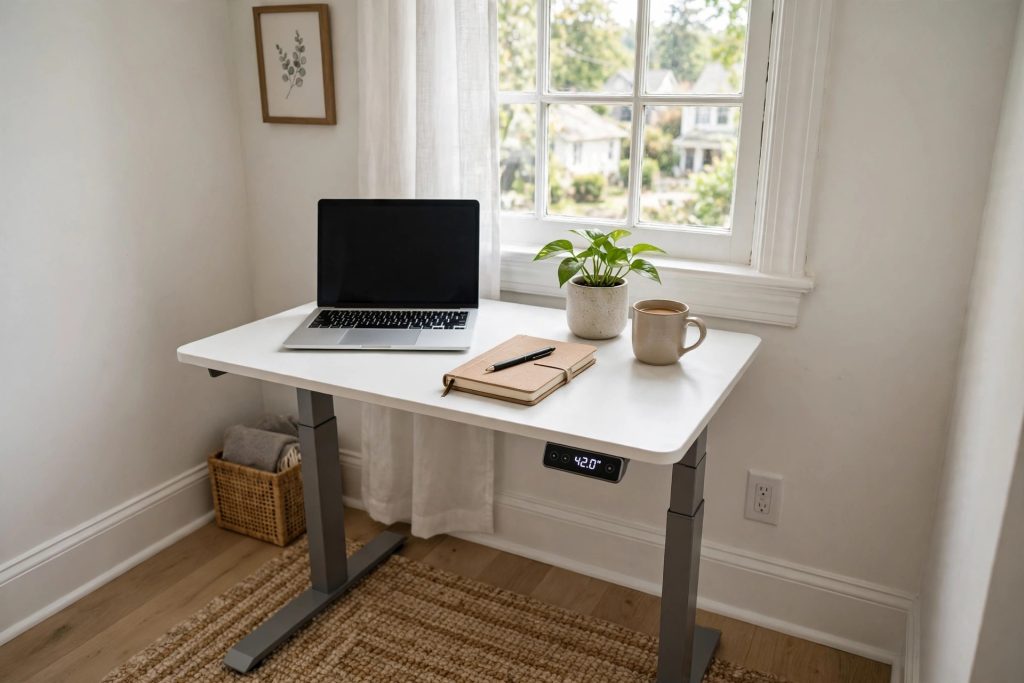
Many homeowners find that keep workspace cool is easier than they expected once they know the basics.
The cheapest cooling is the heat you never let inside. Sunlight streaming through glass turns a workroom into an oven. Close blinds or curtains on sun-facing windows during the sunniest hours, roughly late morning to late afternoon.
Vermont Energy Saver lists closing window coverings during the day among its top cooling tips, noting it blocks the sun's heat before it enters the room (Vermont Energy Saver).
A west-facing window in the afternoon is like a heater aimed at your desk. If your desk faces one, a closed blind during peak sun beats any gadget. Light-colored blinds reflect more heat than dark ones. If your windows lack coverings, even a light sheet pinned up for the hot hours helps.
Reflective window film is a step up. It cuts solar heat while keeping the view. Apply it to the windows that take the worst sun.
Flush the heat out at night
Many homeowners find that keep workspace cool is easier than they expected once they know the basics.
The key to keep workspace cool is choosing the right approach for your space and budget.
Once the outside air drops below the indoor temperature, open up. Open windows on opposite sides of the house to create a cross-breeze that pushes the day's heat out. This is called night-flush ventilation, and it costs nothing.
Close the windows before the morning heat builds. The goal is to trap the cool night air inside and seal it off from the warming day. HR News quotes workplace advisers who recommend opening windows after sundown as one of the simplest heat-wave work-from-home tactics (HR News).
A box fan in one window blowing out, and another window open across the room, turns a faint breeze into a real air exchange. Pull the fan out and seal up once the sun climbs.
Aim the fan at you, not the room
The key to keep workspace cool is choosing the right approach for your space and budget.
With a little planning, keep workspace cool can fit even a busy schedule.
Fans do not lower the room temperature. They cool people by moving air across skin. That distinction matters, because it means a fan pointed at you is worth more than a fan aimed at the ceiling.
Set ceiling fans to spin counterclockwise in summer, viewed from below, so they push air straight down onto you (Vermont Energy Saver). The U.S. Department of Energy notes that a ceiling fan lets you raise the thermostat about four degrees with no loss of comfort, as long as you switch the fan off when you leave the room (Energy.gov).
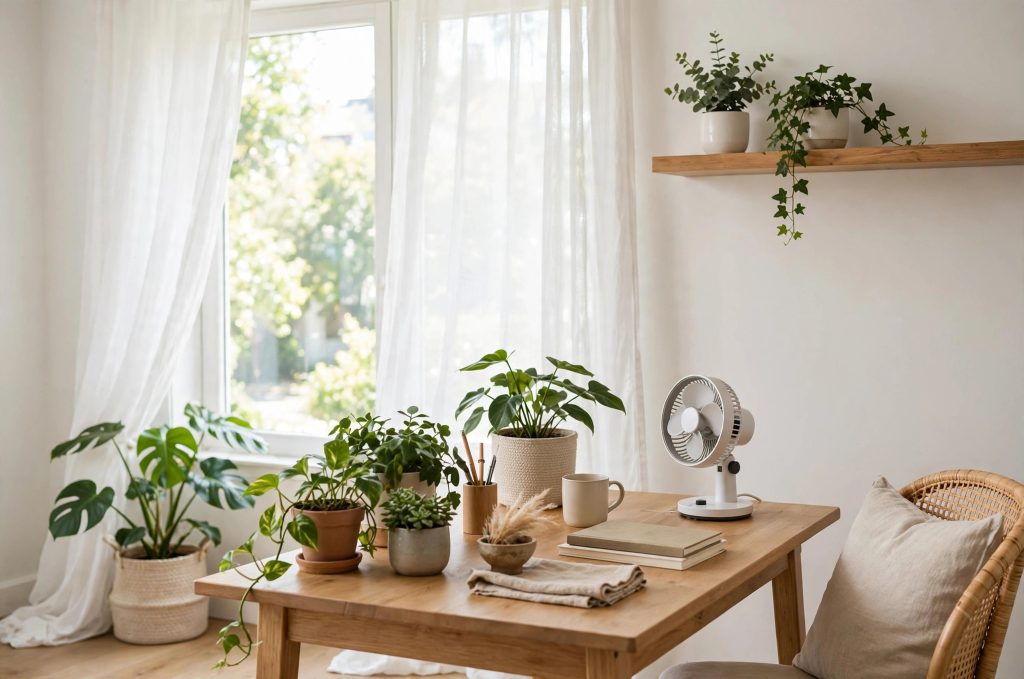
A small desk fan is the home-office classic. An adjustable desk fan with a USB charging port sits on the desk and keeps air moving across your face and hands. For a bigger push, a ceiling fan with a light and remote gives you speed control without getting up.
Try the ice trick on brutal days: set a bowl of ice water in front of the fan. The moving air picks up a little coolness as it passes. It will not replace air conditioning, but it takes the edge off a still, hot afternoon.
Delay the heat-makers
With a little planning, keep workspace cool can fit even a busy schedule.
Before you start, it helps to understand how keep workspace cool works in real homes.
Your office is not the only heat source in the house. Ovens, dryers, dishwashers, and even gaming PCs dump real heat into the air. During a heat wave, shift those chores to the cooler evening hours.
Run the dishwasher after dinner. Do laundry at night. If you cook, favor the microwave, the grill outside, or no-cook meals during the hot stretch. The Department of Energy's summer hacks guide lists sealing the home's envelope and limiting heat-generating appliances among the most effective low-cost cooling moves (Energy.gov).
Your own gear adds up too. A desktop tower under the desk radiates warmth all day. A laptop on a stand with airflow around it runs cooler than one baking on a flat desk. Turn off monitors and printers when you step away instead of letting them idle and glow.
Dress and drink for the heat
Before you start, it helps to understand how keep workspace cool works in real homes.
A good plan for keep workspace cool saves time, money, and frustration.
Remote work has one great perk during a heat wave: nobody sees your outfit. Wear loose, light clothing. Breathable fabrics let heat escape from your skin. Some people swear by taking their socks off, since hands and feet help the body dump excess heat (HR News).
Keep cold water at your desk and drink it steadily. Dehydration sneaks up in hot rooms and drags your concentration down before you notice. A mini fridge for the home office under the desk keeps cold drinks an arm's reach away so you never have an excuse to skip.
Cold snacks help too. Frozen fruit, chilled towels on the neck, a quick cool shower at lunch. These sound small. They reset your core temperature and buy you a comfortable hour.
A little patience helps when you keep workspace cool.
Choose furniture and fabrics that breathe
A good plan for keep workspace cool saves time, money, and frustration.
For most people, keep workspace cool comes down to a few smart choices.
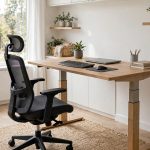
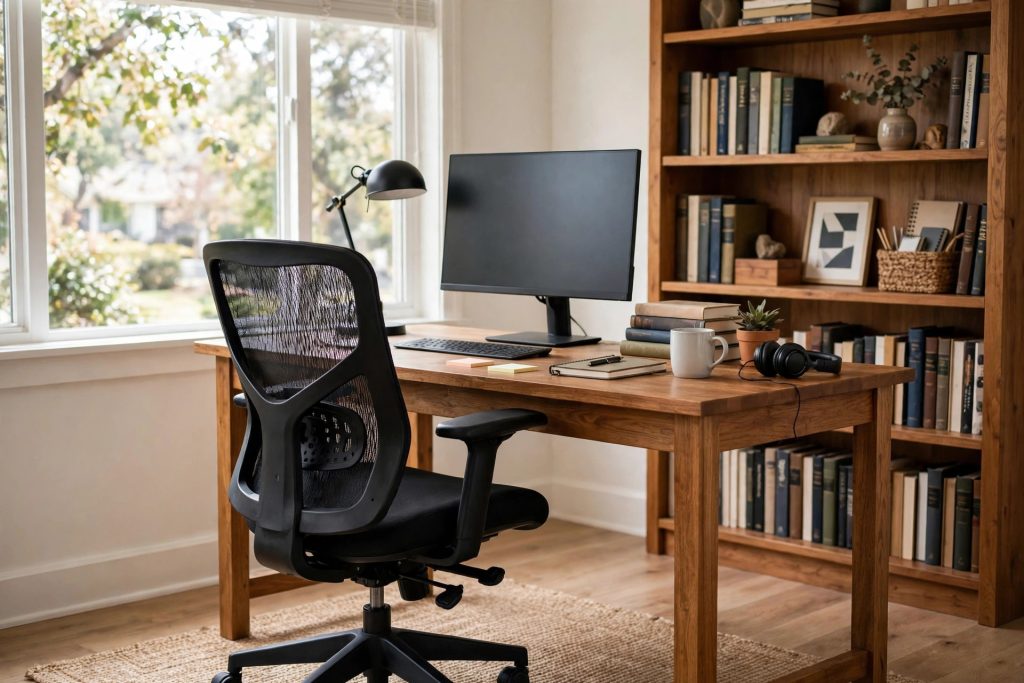
Heavy, dark furniture absorbs heat and makes a room feel hotter than it is. A mesh office chair lets air move around your back and legs instead of trapping body heat against vinyl or leather. We Are The City recommends lightweight furniture and breathable materials for summer workspaces, plus plants for a fresher feel (We Are The City).
Swap the heavy throw rug for bare floor or a thin cotton rug during the hot months. Light-colored desk accessories reflect heat instead of soaking it up. If your chair sticks to you by afternoon, a breathable seat cover or a simple cotton towel on the seat fixes it for almost nothing.
Manage the light without losing it
For most people, keep workspace cool comes down to a few smart choices.
Good light matters for work, but direct sun on the desk is a double problem: glare on the screen and heat on your hands. Sheer curtains are the middle path. They soften the sun while keeping the room bright.
Plantation shutters give you fine control over light and airflow, and they insulate better than bare glass. Tilt the louvers to bounce light up toward the ceiling instead of straight onto the desk.
Next Luxury points out that desk position itself is a cooling lever: pulling the desk away from direct sun reduces both glare and the pocket of hot air that builds around sunlit furniture (Next Luxury).
Watch the thermostat strategy
If you are new to keep workspace cool, start with the simplest option and build from there.
If you do run air conditioning, do not set it to arctic. The Department of Energy advises keeping the thermostat as high as comfortable in summer and raising it when you sleep or leave, since each degree of difference between inside and outside trims the bill (Energy.gov).
Cool only the rooms you use. Close doors to unused rooms during the hottest hours so the cold air stays where you work. A portable unit or a window unit in the office alone can be far cheaper than cooling the whole house.
Change the AC filter before the hot season. Etrapp notes that clogged filters force the system to work harder for the same cooling, which raises costs and wear (Etrapp).
Shift your hours when you can
When it comes to keep workspace cool, getting the details right makes all the difference.
Heat waves peak in the afternoon. If your schedule allows, start earlier and wrap up before the worst heat. An early start means your hardest thinking happens in the coolest part of the day.
Futurity, reporting on building scientists, notes that adjusting daily routines around heat is one of the most effective free strategies, alongside closing off unused rooms during the day and reopening them at night (Futurity).
Take real breaks. Step into the coolest room for ten minutes. Splash cold water on your wrists and face. A short reset beats an hour of sweaty, scattered work.
Know when heat is a health issue
Many homeowners find that keep workspace cool is easier than they expected once they know the basics.
A warm office is uncomfortable. A dangerously hot room is something else. Watch for headaches, dizziness, nausea, or a racing pulse. If the room will not drop below the high eighties even with fans and shade, move your work to a cooler room or a public cool space for the day.
Check on others too. Heat hits older adults, young kids, and pets harder. Keep water out for everyone, and never leave pets in a closed hot room.
A heat-wave office checklist
- Close blinds on sun-facing windows during peak sun
- Open windows at night for a cross-breeze; seal up by morning
- Set ceiling fans counterclockwise; point desk fans at yourself
- Shift ovens, dryers, and dishwashers to evening
- Wear loose clothing; keep cold water at the desk
- Swap to a mesh chair and light fabrics
- Use sheer curtains or shutters to tame glare and heat
- Keep the thermostat as high as comfortable; cool only used rooms
- Start work earlier; take cool-down breaks
- Watch for signs of heat illness and act fast
You cannot control the weather. You can control the blinds, the fan, the schedule, and the water bottle. Together those small moves keep a home office workable through the hottest stretch of the season. Once you try it, you can keep workspace cool with ease.
References
Energy.gov. (n.d.). Top 11 things you didn't know about saving energy at home: Summer edition. https://www.energy.gov/articles/top-11-things-you-didnt-know-about-saving-energy-home-summer-edition
Energy.gov. (n.d.). Energy-saving hacks to beat the summer heat. https://www.energy.gov/indianenergy/articles/energy-saving-hacks-beat-summer-heat
Etrapp. (n.d.). How to keep your house cool in extreme summer heat. https://etrapp.com/how-to-keep-your-house-cool-in-extreme-summer-heat/
Futurity. (n.d.). Use these tips to save energy during summer heat. https://www.futurity.org/lower-energy-cooling-house-2942732-2/
HR News. (n.d.). Top tips from HR on how to stay cool when WFH. https://hrnews.co.uk/top-tips-from-hr-on-how-to-stay-cool-when-wfh/
Next Luxury. (n.d.). How to create a comfortable home office during summer. https://nextluxury.com/home-design/create-a-comfortable-home-office-during-summer/
Vermont Energy Saver. (n.d.). Cooling. https://energysaver.vermont.gov/energysaver/node/99
We Are The City. (n.d.). How to refresh your home office for summer. https://wearethecity.com/how-to-refresh-your-home-office-for-summer/
WFH Lounge. (n.d.). How to keep your home office cool in summer (no AC). https://www.wfhlounge.com/blog/keep-home-office-cool-summer
Was this guide helpful?

About My Garden US
The My Garden US editorial team writes practical, in-depth home and garden guides for American homeowners — tested advice, no fluff.
You May Also Like

Home Office Closet Organizer for Office Supplies: A Complete Guide
May 26, 2026 13 views
Wall Mounted Desk Shelf Above Computer Monitor: A Simple Buying Guide
September 26, 2026 20 views
Compact Desk With Keyboard Tray for Small Room
April 9, 2026 16 views