
Introduction
Every pool owner wants clean, clear water. The best pool filter for above ground pools is the tool that makes it happen. A filter pulls out dirt, leaves, hair, and tiny particles that cloud the water. It works with the pump to move every gallon of pool water through the filter many times each day. Without a strong filter, water turns green. Algae grows fast. The pool becomes unsafe to use. With the right filter, the water stays clear and the chemical balance stays steady. This guide walks you through the choices. You will learn the three main filter types, how to size a unit for your pool, what to pay, and how to keep the filter running well for years.
Why the Filter Matters So Much: Best Pool Filter for Above Ground
An above ground pool has less water than an in-ground pool. That sounds like an advantage. In practice it means small problems grow fast. A little dirt in a small body of water has a big effect. Warm summer water speeds up algae growth. One day of still, dirty water can turn a pool green in a week.
The filter is the first line of defense. It catches debris before it can break down. It lets the sanitizer do its job with less work. A good filter means you use fewer chemicals. The water feels better on the skin. The pool smells fresh instead of sharp with chlorine. Many owners of above ground pools find that a better filter cuts their weekly chores in half.
The Three Main Types of Pool Filters
Three filter designs serve above ground pools. Each uses a different method to trap dirt. Each has strengths and weak points. Most owners end up happy with any of the three, once they pick the right size.
Sand Filters
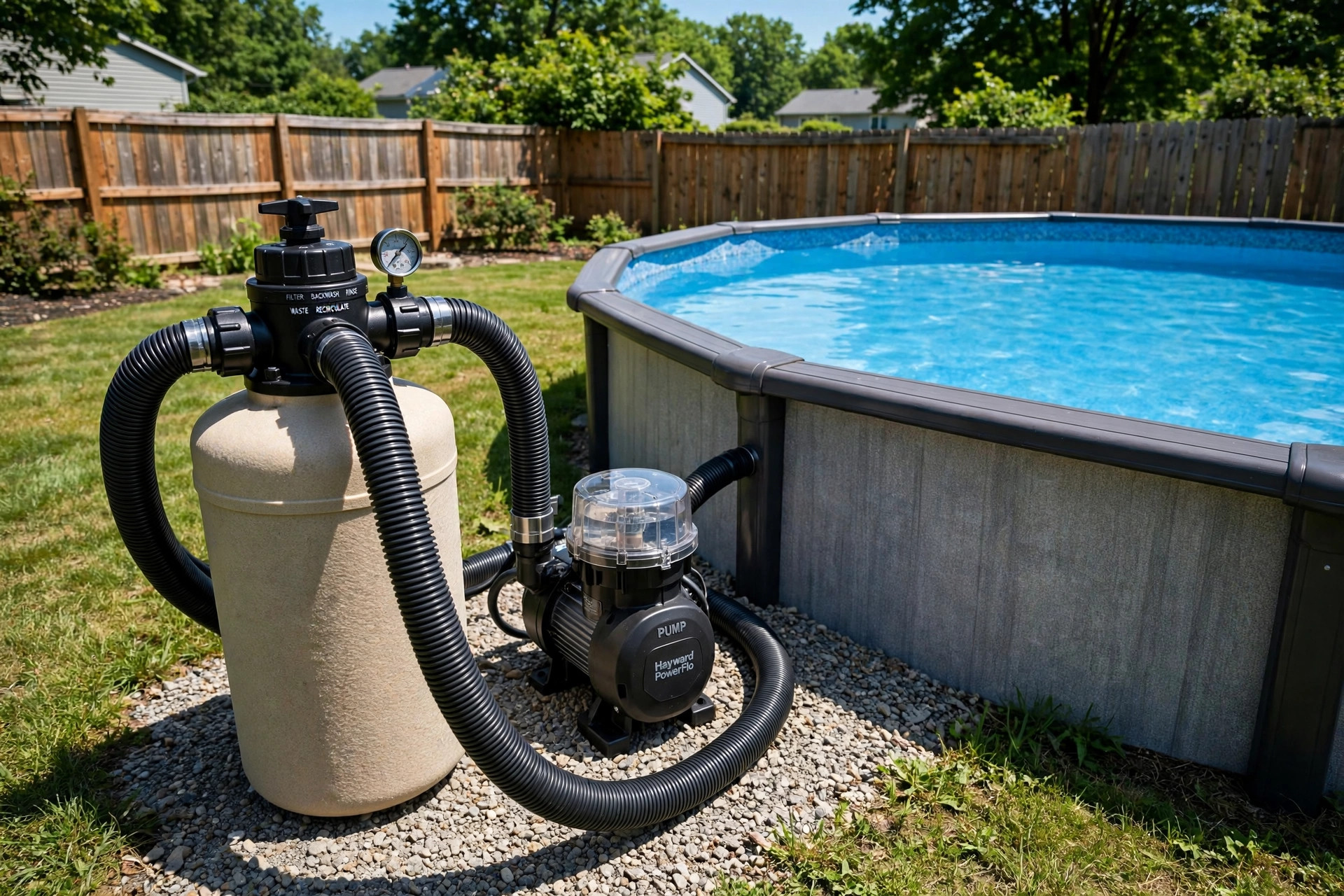
A sand filter pushes water through a tank filled with special filter sand. Dirt sticks in the sand grains. Clean water flows back to the pool. Sand filters are the most common choice for above ground pools. They cost less than other types. They clean easily: you simply reverse the water flow to flush out the trapped dirt, a step called backwashing. The sand lasts about five years before it needs replacement. The downside is that sand catches only larger particles. Very fine dust may pass through. Still, for most backyard pools, sand filtration is enough. Retailers like The Home Depot carry many sand filter models sized for round and oval above ground pools.
Cartridge Filters
A cartridge filter uses a pleated paper-like element to trap dirt. Water passes through the fine folds. The folds catch particles much smaller than sand can catch. Cartridge units are simple to run and need no backwashing. You rinse the cartridge with a hose when it gets dirty. They cost more than sand filters at first, but they waste no water on backwashing. The cartridge needs replacement every one to two seasons. Many pool owners who want the clearest water choose cartridge filters. Care guides at Swim University explain the cleaning routine step by step.
Diatomaceous Earth (DE) Filters
A DE filter uses grids coated with diatomaceous earth powder. This powder catches the smallest particles of all three types. Water from a DE filter looks polished. These units cost the most. They also need the most care. You must add fresh DE powder after each backwash. You must handle the powder with care, since breathing the dust is unsafe. For above ground pools, DE filters are less common. Some owners of saltwater pool systems prefer DE because it polishes the water so well.
What to Look for When You Choose
Choosing the best pool filter for above ground use comes down to five points. Keep each one in mind as you shop.
First, match the flow rate. The filter must handle the gallons per minute that your pump pushes. A filter rated lower than the pump will strain and fail early. A filter rated a bit higher than the pump runs easy and lasts longer. Check the label on your pump, then pick a filter rated for that flow or above.
Second, size the filter to the pool. The filter should turn over the whole pool volume in eight hours or less. A small 12-foot pool needs a much smaller unit than a 30-foot pool. Oversizing a little is smart. An oversized filter cleans faster and needs cleaning less often.
Third, check the hookup size. Most above ground pools use one and a half inch hoses and fittings. Make sure the filter ports match. Adapters exist, but a direct fit saves trouble.
Fourth, think about cleaning effort. Sand filters need backwashing every few weeks. Cartridge filters need hose rinsing every few weeks. Pick the chore you mind least.
Fifth, look at the build. A thick, UV-proof tank stands up to summer sun. Good clamps and a clear pressure gauge make daily use simple. Brand names from makers like Pentair have long records in pool equipment, and owner reviews on sites like Leslie’s show how models hold up over time.
How to Size a Filter for Your Pool
Sizing is simple math. Find your pool volume in gallons. Round pools and oval pools hold different amounts, and the maker lists the volume in the manual. If the manual is gone, online volume calculators at sites like Pool Warehouse can help.
Divide the gallons by eight. That gives the gallons per hour the filter must move. Divide again by 60 for gallons per minute. That is the minimum flow rate you need.
Here are rough guides:
– Pools up to 5,000 gallons: a 100-pound sand filter or a 50-square-foot cartridge filter is enough. – Pools of 5,000 to 10,000 gallons: a 150-pound sand filter or a 75-square-foot cartridge filter works well. – Pools of 10,000 to 20,000 gallons: a 200 to 250-pound sand filter or a 100 to 150-square-foot cartridge filter is the right range.
Always round up. A filter that is one size too big is a happy filter. A filter that is one size too small will clog fast and need constant care.
Cost and Price
Prices vary by type and size. Small sand filter and pump combo sets for above ground pools often run from 150 to 300 dollars. Larger sand units run from 250 to 500 dollars. Cartridge filter systems run from 200 to 600 dollars. DE filter systems for above ground pools run from 300 to 700 dollars.
Running costs matter too. Sand needs a 50-pound bag every five years, which costs little. Cartridge elements cost 40 to 100 dollars and last one to two seasons. DE powder costs about 20 to 30 dollars a season. Electricity matters as well: the pump runs many hours a day, so a right-sized filter that lets water flow easy can cut power use.
Buy the filter and pump as a matched set when you can. Combo sets are sized to work together. Buying parts alone can lead to a mismatch that hurts both parts.
Setting Up Your New Filter
Most above ground pool filters sit on the ground beside the pool. Place the unit on level ground, close to the pool wall but clear of the splash zone. Keep it within hose reach of the skimmer and return fitting.
Fill a sand filter with the right grade of pool filter sand, usually sold as number 20 silica sand. Do not use play sand. The grains are the wrong size and will pass through into the pool. For a cartridge filter, slide the cartridge into the tank and lock the lid. For DE, add the powder through the skimmer after the system is primed, following the maker label for the dose.
Prime the pump before you start it. Fill the pump basket with water. Open the air relief valve on the filter lid. Start the pump. Let air hiss out until water flows steady, then close the valve. Check every joint for drips. Run the system for a full day and check the pressure gauge. Write down the clean starting pressure. When the gauge reads 8 to 10 pounds above that number, it is time to clean.
Care and Upkeep
A filter is a low-care machine, but it is not a no-care machine. A small routine keeps it strong.
Check the pressure gauge once a week. Clean or backwash when the reading rises 8 to 10 pounds over the clean reading. For sand filters, backwash for two to three minutes, then rinse for one minute. For cartridge filters, pull the element and hose it from top to bottom. Let it dry in the sun before you put it back. Sunlight helps kill trapped germs.
Inspect hoses and clamps each month. Sun and pool chemicals wear rubber parts. Replace cracked hoses before they burst. Lubricate O-rings with pool-safe lube once a season so the lids seal tight.
In fall, winterize the filter if you close the pool. Drain the tank fully. Store the cartridge indoors where it will not freeze. Cover the unit so leaves and ice stay out. Good winter care adds years to the filter life. The safety guidance from the U.S. Consumer Product Safety Commission also reminds owners to secure pool covers and equipment when the pool is closed.
Above ground pools from brands like Intex often ship with small filters. Many owners upgrade to a larger unit in the second season. The upgrade is the single best step toward clear water.
Safety Notes
Filters are safe when used right. A few rules keep them that way. Never open the filter lid while the pump is running. The tank holds pressure, and a loose lid can blow off with force. Always turn the pump off and open the air relief valve first.
Keep the electrical parts dry. The pump motor should sit on dry ground, not in a puddle. Use a ground-fault outlet for all pool equipment. If the cord or plug looks worn, replace it before use.
Store filter chemicals and DE powder away from children and pets. Keep the pool area fenced as local rules require. Safety guides at The Spruce list pool safety steps every owner should follow.
Frequently Asked Questions
How often should I run the filter each day? Run it long enough to turn over all the water once or twice a day. For most above ground pools that means 8 to 12 hours. Run longer in hot weather or after heavy use.
Can I use a sand filter with a saltwater system? Yes. Sand filters work fine with saltwater pools. Many owners of saltwater above ground pools use sand or cartridge filters with good results. The salt system cares for germs, while the filter removes dirt.
Why is my water cloudy even with the filter running? Cloudy water often means the filter is too small, the media is worn out, or the chemical balance is off. Test the water first. If the chemistry is right, clean the filter. If the pressure gauge stays high after cleaning, the media may need replacement.
How long does a pool filter last? The tank can last 10 to 15 years with care. Sand lasts about five years. Cartridges last one to two seasons. DE grids last five to seven years. Pumps often wear out before the filter tank does.
Is a bigger filter always better? Almost always, within reason. A filter one size up from the minimum cleans faster and needs less care. A filter far too large can move water so slowly through the media that it cleans poorly. Stay close to the sizing guide above.
Do I need to run the filter in winter? If you fully close and winterize the pool, no. Drain the filter and store parts indoors. If you keep the pool open in a mild climate, run the filter a few hours a day to keep the water moving.
Final Word
The best pool filter for above ground pools is the one that fits your pool size, matches your pump, and suits the cleaning routine you will actually keep. Sand filters win on low cost and easy care. Cartridge filters win on fine filtration and water savings. DE filters win on the clearest water. Size the unit right, clean it on schedule, and your pool will stay clear all summer. Owners who also plan extras like a pool heater for longer swim seasons should size the filter for the full season of use, since more swim days mean more hours on the filter. For model ideas and owner reviews, browse the pool equipment sections at Hot Spring and Bullfrog Spas, which list filtration parts alongside their spa lines. A little study now saves a summer of green water later.
References
Bullfrog Spas. (n.d.). Hot tubs and spas. https://www.bullfrogspas.com Hot Spring Spas. (n.d.). Hot tubs and spas. https://www.hotspring.com Intex. (n.d.). Above ground pools and accessories. https://www.intexcorp.com Leslie’s Pool Supplies. (n.d.). Pool supplies and equipment. https://www.lesliespool.com Pentair. (n.d.). Pool and spa equipment. https://www.pentair.com Pool Warehouse. (n.d.). Pool equipment and supplies. https://www.poolwarehouse.com Swim University. (n.d.). Pool and hot tub care guides. https://www.swimuniversity.com The Home Depot. (n.d.). Home improvement products. https://www.homedepot.com The Spruce. (n.d.). Home and garden advice. https://www.thespruce.com U.S. Consumer Product Safety Commission. (n.d.). Product safety information. https://www.cpsc.gov
Was this guide helpful?

About Emily Rodriguez
The My Garden US editorial team writes practical, in-depth home and garden guides for American homeowners — tested advice, no fluff.
You May Also Like
Hot Tub Chemicals for Sensitive Skin: How to Soak Without the Itch
July 27, 2026 0 views
The Best Pool Pump for Inground Pools: A Plain Guide for Pool Owners
August 9, 2026 0 views
Best Pool Test Kit Digital Reviews: A Plain Guide for Pool Owners
March 24, 2026 0 views