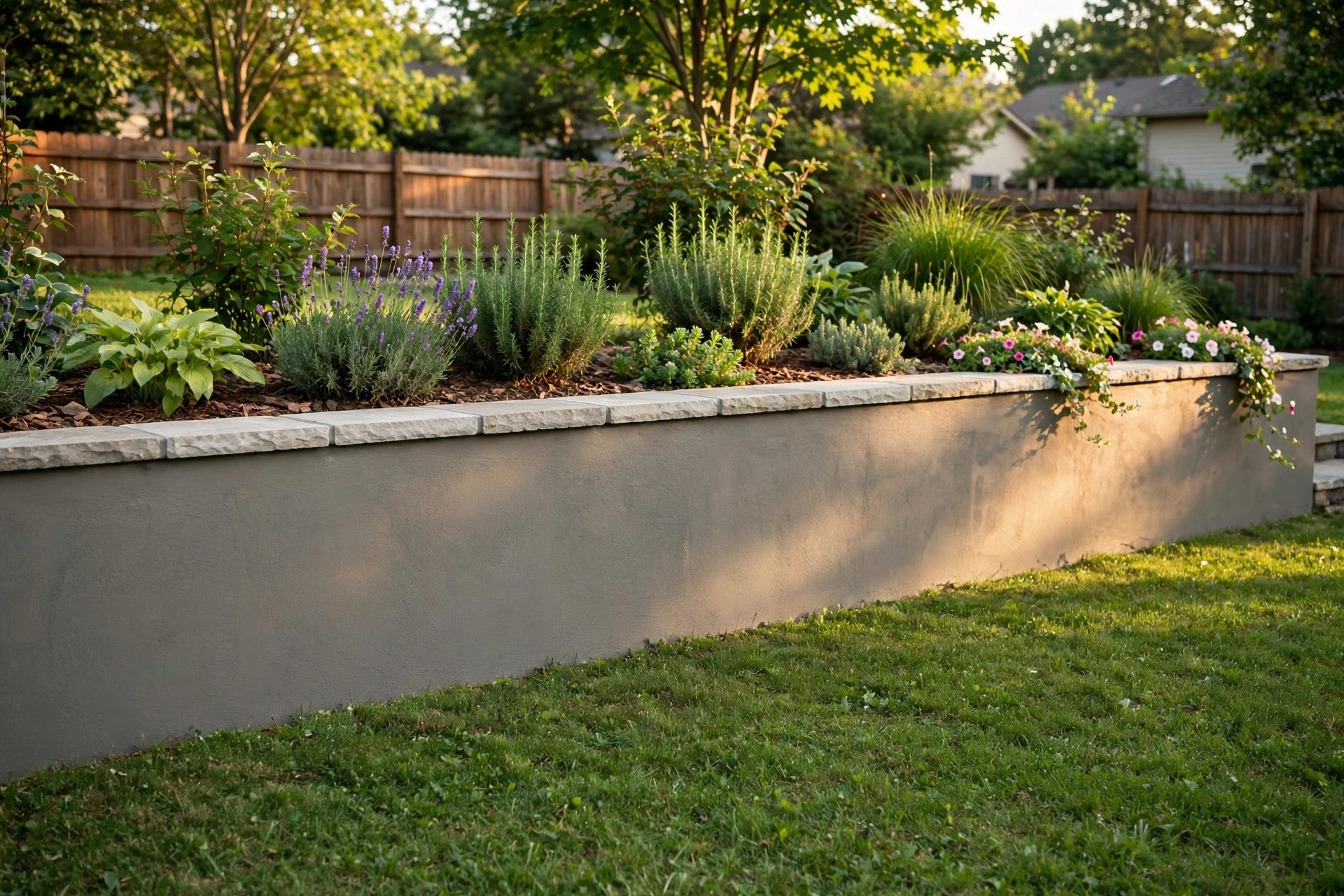

A plain gray concrete retaining wall can make a yard feel cold and unfinished. Paint changes that. The right painting concrete retaining wall ideas usa homeowners trust can turn a bare wall into a proud feature of the yard. This guide covers why it matters, how to choose colors and paint, what the work costs, how to keep the finish safe, and how to care for it year after year.
Why It Matters
A retaining wall does hard work. It holds back soil. It keeps a slope from washing away. It shapes the land so a yard can be used and enjoyed. But most walls are built from plain block or poured concrete, and plain concrete can look dull. Over time it stains. It grows dark patches. Moss and algae move in where water lingers. A coat of paint hides these marks and gives the wall new life.
Paint also guards the surface. Good masonry paint keeps water from soaking deep into the concrete. In states with hard freezes, that matters. Water inside concrete can freeze and expand. Small cracks grow into big ones. Paint slows that process. The wall lasts longer and looks better while it does.
There is also the matter of curb appeal. A painted wall frames the yard. It can match the house. It can set off the garden. Neighbors notice. Buyers notice too, when a home goes on the market. A painted wall costs far less than rebuilding, yet it reads as care and pride in the home.
What to Look for When Choosing Paint: Painting Concrete Retaining Wall Ideas Usa
Not all paint belongs on concrete. A retaining wall stands outside in sun, rain, and frost. It faces soil on one side and air on the other. Ordinary house paint will fail here. It will peel. It will bubble. You need paint made for masonry.
Masonry and Concrete Paint
Look for labels that say masonry paint, concrete paint, or elastomeric coating. These products flex a little as the wall moves with heat and cold. They grip rough surfaces. They resist water. Many paint companies publish guides on choosing exterior masonry paint that explain which line fits concrete block.
Elastomeric coatings are worth knowing about. They are thick. They bridge tiny cracks. They stretch as temperatures swing. For a wall that already shows hairline cracks, an elastomeric coating can be the best choice. Product pages from major paint brands often list elastomeric options made for exterior concrete.
Primer and Sealer
Concrete is thirsty. It drinks paint. A primer seals the surface first, so the top coat sits on top instead of sinking in. For bare concrete, use a concrete or masonry primer. For walls that have been painted before, a bonding primer helps the new coat stick. Some painters also seal the back of the wall or the soil side, because moisture pushing through from behind is what lifts paint. Guides on prepping exterior surfaces before paint explain how primers help paint last on concrete.
Color Choices That Work
Light colors make a small yard feel bigger. Warm grays, sand, and soft white are safe picks that match many house colors. They also reflect sun, which keeps the wall cooler. Dark colors look modern and bold. Charcoal, deep green, and navy can make plants pop. But dark paint shows dust and water marks sooner, and it fades faster in strong sun.
Earth tones sit well with gardens. Clay, stone, and olive blend with plants and mulch. If the house trim has a color, echo it on the wall. That small match ties the yard to the house. Many design sites show outdoor paint color ideas that help owners picture the result before they buy.
Painting Concrete Retaining Wall Ideas by Type
Solid Single Color
The simplest idea is often the best. One clean color over the whole wall gives a modern, calm look. It hides stains and joins. It makes the garden the star. A solid warm gray or soft beige works in nearly every yard.
Two-Tone and Accents
Paint the wall one color and the cap stones another. The cap is the flat top row of the wall. A lighter cap over a darker wall looks finished. Or paint the face one shade and the ends another to mark a corner or entry.
Stone and Brick Looks
Some paints and stains mimic stone or brick. Concrete stains in earth tones can give a natural look without the cost of real stone. Stamped or stenciled patterns are another option. Stencils that look like brick or block cost little and can cover a plain wall in a weekend. DIY sites publish stenciling and faux finish ideas for concrete surfaces.
Murals and Patterns
A garden wall can hold art. Simple stripes, geometric shapes, or a nature mural make the wall a focal point. Keep the design simple so it ages well. A large mural may need sealing with a clear top coat made for exterior paint.
Vertical Garden Walls
Paint the wall a soft neutral color, then hang planters on it. The paint becomes a backdrop for green plants. Trailing vines soften the hard lines. This idea works well on tall walls that would look bare in one color.
Preparation: The Step That Decides Everything
Paint sticks only to a clean, sound wall. Skip prep and the paint will fail within a year. Do the work right and it can last a decade.
1. Clean the wall. Use a pressure washer to remove dirt, algae, and loose paint. A stiff brush helps on heavy growth. Let the wall dry fully before painting. Wet concrete and paint do not mix. 2. Repair cracks and holes. Fill cracks wider than a hairline with concrete patch or crack filler. Deep holes need patching compound. Let patches cure as the label directs. This old house style guides cover repairing concrete before painting step by step. 3. Test for moisture. Tape a square of plastic to the wall for a day. If water beads under the plastic, moisture is moving through the wall. Fix drainage first. Paint will not hold over active water pressure. 4. Scrape and sand old paint. Remove any loose or flaking paint. Sand rough edges smooth. A guide on painting baseboards without tape is about interiors, but the sanding lessons apply to any prep work. 5. Prime the surface. Roll or spray one coat of masonry primer. Work it into the pores. Let it dry fully.
Tools You Will Need
– Pressure washer or garden hose with spray nozzle – Stiff brush and putty knife – Concrete patch compound and caulk gun – Masonry primer – Concrete or masonry paint – Paint roller with thick nap, or a paint sprayer – Brush for edges and corners – Painter’s tape and drop cloths – Ladder for tall walls
A thick-nap roller holds paint in the rough texture of block. For very rough or large walls, a sprayer lays paint faster and more even. Home improvement retailers list concrete paint tools and sprayers with ratings from other buyers.
Cost and Price
Painting a retaining wall costs far less than replacing one. Still, prices vary by wall size, condition, and whether you hire help.
Doing It Yourself
For a typical wall of 200 to 300 square feet, expect to spend:
– Pressure washer rental: 40 to 80 dollars – Cleaner and degreaser: 10 to 20 dollars – Patch compound: 10 to 30 dollars – Masonry primer: 30 to 60 dollars per gallon – Concrete paint: 40 to 80 dollars per gallon – Roller covers, brushes, tape, and cloths: 30 to 60 dollars
One gallon of masonry paint often covers 200 to 400 square feet, depending on how rough the surface is. Plan on two top coats. Most DIY jobs land between 150 and 400 dollars total. Discount tool and paint retailers publish weekly paint prices that can lower the bill.
Hiring a Painter
Professional painters in the USA often charge 1 to 3 dollars per square foot for exterior concrete painting, or 300 to 700 dollars per day. A badly stained wall that needs heavy prep costs more. Some owners also get quotes from firms that handle lead paint removal service costs when older walls carry lead paint layers from decades past. Always get two or three quotes. Ask what prep is included. Ask what paint brand they will use.
Care and Upkeep
A painted retaining wall needs little care, but small habits keep it looking good.
Wash the wall once a year with a garden hose or light pressure wash. This removes dust, pollen, and algae before they stain. Keep soil and mulch a few inches below the painted face where you can. Constant wet soil against paint shortens its life. Trim plants back so vines and shrubs do not trap moisture on the surface.
Touch up chips as they appear. Keep a small can of leftover paint sealed and stored indoors. A quick touch-up takes minutes and stops small damage from spreading. Inspect the wall each spring. Look for new cracks, flaking, or dark damp spots. Catching problems early keeps repair costs low. Home care sites share seasonal maintenance checklists that include walls and fences.
Plan to repaint every 5 to 10 years. Walls in harsh sun or freeze-thaw climates may need paint sooner. A fresh coat over the old one is much easier than the first job, since the prep is already done.
Safety
Paint and prep work carry real risks. Treat them with respect.
Work in good weather. Do not paint in rain, high wind, or extreme heat. Paint needs a dry surface and mild air to cure. Read the product label. Follow the temperature range it gives.
Wear protection. Gloves, safety glasses, and a dust mask are the basics. When sanding old paint, wear a proper respirator. Old paint on walls built before 1978 may contain lead. Do not sand or scrape it without testing. Safety agencies publish lead paint safety guidance for homeowners.
Pressure washers can injure skin and eyes. Keep the nozzle away from your body. Never point it at people or pets. Keep paint and solvents away from flames and sparks. Store leftover paint out of reach of children. Let the area dry and air out before children or pets use the yard. Painting a garage pegboard or the best paint for a garage pegboard may sound like a small indoor job, but even indoor painting needs ventilation, and the same safety habits apply outside.
FAQ
How long does paint last on a concrete retaining wall?
With good prep and quality masonry paint, expect 5 to 10 years. Walls in mild climates last longer. Walls that face heavy rain or freeze-thaw cycles may need a new coat sooner.
Can I paint a retaining wall that has never been painted?
Yes. Bare concrete is a fine surface for paint, but it must be clean, dry, and cured. New concrete should cure at least 30 days before painting. Prime it first.
What color hides stains best?
Mid-tone earth colors hide stains best. Warm gray, tan, and clay do not show dust and water marks as fast as white or black. If your wall stains often, pick a forgiving mid-tone.
Should I paint or stain a concrete retaining wall?
Paint sits on top and covers fully. Stain soaks in and shows the texture. Paint hides flaws better. Stain looks more natural and often lasts longer on very rough walls. Both are good ideas. Pick based on the look you want.
Do I need to seal the wall before painting?
Primer is the key first step. Some walls also need a masonry sealer on the soil side to block moisture. If your wall shows damp patches, fix drainage and consider a sealer before priming.
How much paint do I need for my wall?
Measure height times length to get square feet. Divide by the coverage on the paint can, usually 200 to 400 square feet per gallon. Plan for two coats. Buy a little extra for touch-ups later.
A Final Word
Painting a concrete retaining wall is one of the best value projects in the yard. It costs little. It takes a weekend or two. And it changes how the whole yard feels. Pick ideas that fit your home and climate. Prep the wall with care. Use paint made for masonry. Do those three things, and the wall will reward you for years. The best painting concrete retaining wall ideas usa families choose are not the fanciest. They are the ones done well, with clean prep and paint that belongs on concrete.
References
Behr. (n.d.). Paints, primers, and stains. https://www.behr.com Benjamin Moore. (n.d.). Paints and stains. https://www.benjaminmoore.com Bob Vila. (n.d.). Home improvement advice. https://www.bobvila.com HGTV. (n.d.). Home and garden ideas. https://www.hgtv.com Lowe’s. (n.d.). Home improvement products. https://www.lowes.com Sherwin-Williams. (n.d.). Paints and coatings. https://www.sherwin-williams.com The Home Depot. (n.d.). Home improvement products. https://www.homedepot.com The Spruce. (n.d.). Home and garden advice. https://www.thespruce.com This Old House. (n.d.). Home renovation guidance. https://www.thisoldhouse.com U.S. Consumer Product Safety Commission. (n.d.). Product safety information. https://www.cpsc.gov
Was this guide helpful?

About Robert Taylor
The My Garden US editorial team writes practical, in-depth home and garden guides for American homeowners — tested advice, no fluff.
You May Also Like

Paint Color Consultation Service Online USA: A Plain Guide for Homeowners
April 18, 2026 0 views
Polyaspartic Garage Floor Coating Cost USA
August 24, 2026 0 views
Peel and Stick Wallpaper for Bedrooms Reviews: What Real Users Say
May 2, 2026 0 views