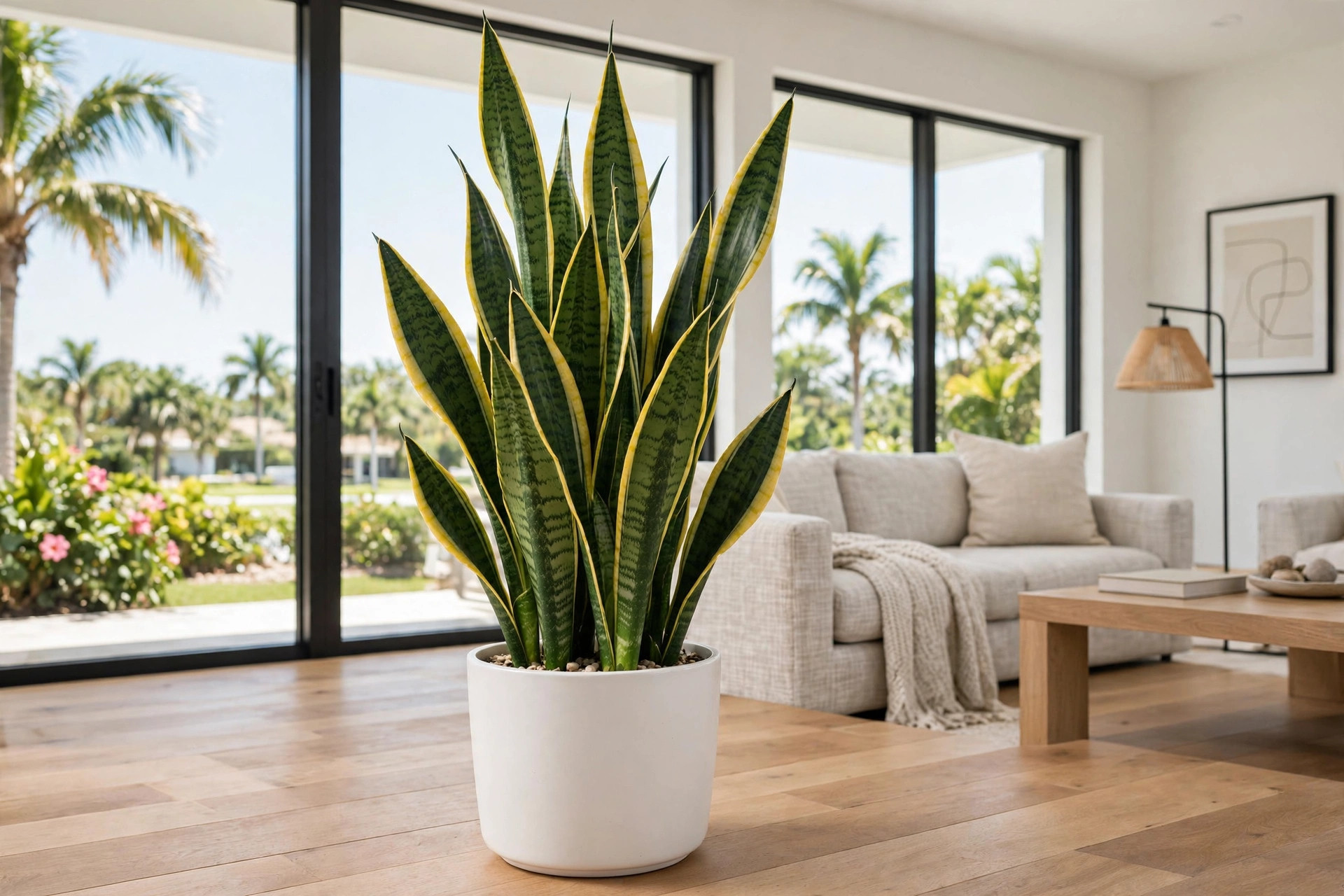

Snake plants indoor florida homes usa have become one of the most common houseplants in the state. The reason is simple. A snake plant asks for little and gives much. Its tall, stiff leaves stand like blades. Many Florida homes keep one or more in a bright corner. This guide explains how to pick, pot, and care for snake plants inside a Florida house.
Why Snake Plants Suit Florida Homes
Florida homes have light and warmth all year. Snake plants like both. They come from dry lands in West Africa. They store water in their thick leaves. This means they do not need daily care. If a homeowner forgets to water for two weeks, the plant still looks fine. Plant care research supported by the National Institute of Food and Agriculture covers the basics of watering and light for common houseplants.
The Florida climate also helps with humidity. Most indoor rooms in Florida stay damp in the air. Snake plants do not mind this. They grow slowly and keep their shape. They do not drop leaves on the floor. This makes them good for busy people. A small pot by the door or a large pot in the living room works well.
Another reason is light. Florida homes often have big windows. Snake plants grow well in bright, indirect light. They also do fine in low light. This gives the owner many choices for where to place the plant. Few houseplants are this flexible.
How to Choose a Snake Plant: Snake Plants Indoor Florida Homes Usa
Walk into a garden center and you will see many pots. Here is how to pick a good one.
Look at the leaves. Pick a plant with firm, upright leaves. Avoid leaves that bend or feel soft at the base. Soft bases can mean rot. The leaf color should be even. Some spots are normal, but large brown patches are not.
Check the soil. Touch the top of the soil. It should be dry or only slightly damp. If it is soaked, the plant may have been overwatered. A good pot feels heavy but not waterlogged.
Check the pot. Pick a pot with a drainage hole at the bottom. Water must be able to run out. Pots without holes hold water and harm the roots. If you like a pot without a hole, keep the plant in its plastic pot and set it inside the nicer pot. Nursery growers such as White Flower Farm ship most houseplants in plastic nursery pots that fit neatly inside decorative covers.
Think about size. Young snake plants are short and cheap. Large plants cost more but fill a room right away. A medium plant in a six-inch pot is a good start for most homes.
For those who like variety, many nurseries also stock pothos plants bulk florida homes usa and other easy houseplants. A mix of easy plants can fill a room with green at a low cost.
Types and Varieties Worth Knowing
The common snake plant is called Sansevieria trifasciata. New books now call it Dracaena trifasciata. Both names mean the same plant. Here are the main types sold in the United States.
Laurentii. This is the classic one. Tall green leaves with yellow edges. It grows up to three or four feet indoors. It is the most common type in stores.
Black Gold. Similar to Laurentii but with darker green centers and thick gold edges. It looks bold in a white pot.
Moonshine. Leaves are a soft silver-green. It looks cool and calm. It grows a bit slower than the green types.
Hahnii. A dwarf type. The leaves form a low rosette, only six to eight inches tall. Good for desks and shelves.
Cylindrica. The leaves are round tubes instead of flat blades. Some stores braid the tubes for looks. It is very tough. Seed and plant catalogs such as Park Seed and Gurney’s list many houseplant varieties each season, which helps buyers compare types before they shop.
All of these types need the same basic care. The main difference is the look. Pick the one that fits your room. Gardeners looking for bigger statement plants may also enjoy monstera plants sale florida homes usa or fiddle leaf figs florida homes usa for the same bright corner.
Light: How Much Does a Snake Plant Need?
Snake plants are famous for taking low light. But they grow best in bright, indirect light. A spot near an east or north window is ideal.
A south or west window in Florida gives strong sun. This is fine if a sheer curtain softens the light. Direct hot sun can scorch the leaves. You will see pale or brown patches if the sun is too strong. Move the plant back a few feet.
In a dark hallway or a room with one small window, a snake plant will still live. It will just grow very slowly. If you want faster growth, add a simple grow light on a timer for ten hours a day.
Turn the pot a quarter turn each month. This keeps the leaves growing straight instead of leaning toward the window.
Water: Less Is More
Overwatering kills more snake plants than anything else. These plants like their soil to dry out between waterings.
The finger test. Push your finger two inches into the soil. If it feels dry, water the plant. If it feels damp, wait. In a Florida home, this may mean watering every two to three weeks in summer and every three to four weeks in winter.
Water fully, then drain. Pour water slowly until it runs out of the drainage hole. Never let the pot sit in a tray of standing water.
Use room-temperature water. Cold water can shock the roots. Keep a watering can filled and standing so the water warms up.
Reduce water in winter. Short days and cooler rooms slow the plant down. Cut back to once a month. The plant rests and needs little.
Signs of too much water include yellow leaves and a mushy base. If you see this, stop watering at once. Take the plant out of the pot. Cut away any soft brown roots. Let the roots dry for a day, then repot in fresh, dry soil.
Signs of too little water include dry brown tips and wrinkled leaves. Give the plant a good soak and it should recover.
Soil and Potting
Snake plants need soil that drains fast. A standard houseplant mix works if you add extra drainage. Mix two parts potting soil with one part perlite or coarse sand. This keeps air around the roots.
Do not use heavy garden soil from the yard. It packs too tight and holds water. The roots will rot.
Repotting. Snake plants like being a little crowded. Repot only when roots push out of the drainage hole or the pot starts to bulge. This may be every two to three years. Move up one pot size only.
When to repot. Spring is best. Water the plant a day before. Tip the plant out gently. Shake off old soil. Place it in the new pot at the same depth. Fill in with fresh mix. Wait three to five days before watering so any small root tears can heal.
Terracotta pots are a good choice. The clay lets moisture escape through the walls. This helps the soil dry between waterings.
Temperature and Humidity in Florida Homes
Snake plants grow best between 60 and 85 degrees Fahrenheit. This matches most Florida homes all year. Keep the plant away from cold air vents. Do not place it where a blast of cold air hits it. Cold drafts can damage the leaves.
Brief dips to 50 degrees are usually fine. Frost is not. In North Florida, bring porch plants inside on nights when frost is forecast. Central and South Florida homes rarely face this problem.
Florida air is humid. Snake plants do not need extra humidity. They do fine in dry air-conditioning too. You do not need to mist the leaves. If the leaves get dusty, wipe them with a damp cloth. Clean leaves take in light better.
Feeding and Fertilizer
Snake plants are light feeders. They need very little food. In spring and summer, feed once every two months. Use a balanced liquid houseplant fertilizer at half strength.
Do not feed in fall and winter. The plant is resting. Extra fertilizer can burn the roots and cause salt buildup in the soil.
Common Problems and How to Fix Them
Root rot. The most common problem. Caused by too much water. Leaves turn yellow and feel soft at the base. Fix by removing the plant, cutting away rot, and repotting in dry soil.
Brown leaf tips. Often caused by dry air, too much fertilizer, or minerals in tap water. Trim the brown tip with clean scissors. Follow the shape of the leaf for a natural look. Reduce fertilizer.
Pests. Snake plants rarely get pests. Sometimes mealybugs show up as white cottony spots in the leaf joints. Wipe them off with a cotton swab dipped in rubbing alcohol.
Fungal spots. Brown spots with yellow rings can mean a leaf fungus. This comes from water sitting on the leaves. Water the soil, not the leaves. Remove badly spotted leaves. Improve air flow around the plant.
Leaning leaves. A plant that leans toward the window needs to be turned more often. Tie tall leaves loosely to a stake if they flop. A deep pot with heavy soil also helps keep the plant steady.
Safety: Pets and Children
Snake plants contain saponins. These are natural compounds that can irritate the mouth and stomach if chewed. Cats and dogs that chew the leaves may drool, feel sick, or vomit. It is rarely life-threatening, but it is not pleasant.
Keep snake plants out of reach of pets that chew plants. A tall stand or a high shelf works well. Teach children not to bite or chew houseplant leaves. If a pet eats a large amount, call a vet. The ASPCA keeps a list of plants that are toxic to pets.
Cost and Where to Buy in Florida
Snake plants are one of the cheapest houseplants. Prices in the United States are friendly.
* Small 4-inch pot: 8 to 15 dollars * Medium 6-inch pot: 15 to 30 dollars * Large 10-inch pot: 40 to 80 dollars * Rare types like Moonshine: 20 to 40 dollars for a small pot
Florida shoppers have many options. Big box stores carry the common types at low prices. Local nurseries often have larger, healthier plants. Plant swaps and local growers are good places to find rare types. Online sellers ship bare-root plants that do well after potting.
When buying, compare several plants. Pick the fullest pot with the best color. A cheap plant with good roots will outgrow an expensive one with weak roots. Big catalogs like Burpee, Monrovia, and Proven Winners show the range of plants sold across the country.
Care Through the Florida Seasons
Spring. Growth starts. Resume feeding. Check if the plant needs repotting. Move porch plants back outside after the last frost date in North Florida. The Old Farmer’s Almanac posts frost dates by zip code, which makes this timing easy.
Summer. The plant grows fastest. Water a bit more often, but still let the soil dry. Watch for strong sun through west windows. A sheer curtain helps.
Fall. Growth slows. Cut back on water and stop feeding. Bring outdoor pots inside before cool nights arrive.
Winter. The plant rests. Water once a month. Keep it away from cold drafts and heaters. Do not repot now.
This simple rhythm keeps the plant healthy year after year. Many owners report their snake plants living for ten years or more with this routine.
Decorating Ideas for Florida Homes
Snake plants fit many styles. Here are a few ideas.
* Entryway. A tall Laurentii in a ceramic pot makes a strong first impression. * Living room corner. Group three pots of different heights for a layered look. * Porch or lanai. Large pots frame a seating area. Bring them in on cold nights.
Pair snake plants with other easy plants for contrast. Soft trailing plants look good next to the stiff upright leaves. Home style sites like The Spruce and Gardening Know How show many room layouts with snake plants.
Frequently Asked Questions
How often should I water a snake plant in Florida? Every two to three weeks in summer and every three to four weeks in winter. Always check the soil first. It should be dry two inches down before you water.
Can snake plants live outside in Florida? Yes, in most of the state. They do well on shaded porches and patios. In South Florida they can stay out all year. In North Florida, bring them inside when frost threatens.
Do snake plants clean the air? They do take in some gases at night, but one plant will not purify a whole room. Keep them because they look good and are easy, not because they replace an air filter.
Why are my snake plant leaves turning yellow? The most common cause is too much water. Let the soil dry out fully. Check that the pot drains. If the base of the leaves feels soft, check for root rot.
Can I grow a new plant from a leaf cutting? Yes. Cut a healthy leaf into three-inch pieces. Let the cut ends dry for a day. Push them cut-side down into moist potting mix. Roots form in a few weeks. Note that cuttings of Laurentii often lose the yellow edge. For true color, divide the root ball instead.
How fast do snake plants grow? Slowly to moderately. In bright light with good care, expect a few new leaves each growing season. In low light, growth is very slow. This is normal.
A Short Final Word
Snake plants indoor florida homes usa are popular for good reason. They fit the light, the warmth, and the pace of Florida life. They ask for water only now and then. They forgive mistakes. They look sharp in any room. Pick a healthy plant, give it a pot that drains, and let the soil dry between waterings. Do that, and your snake plant will stand tall for many years.
References
ASPCA. (n.d.). Pet care and animal welfare resources. https://www.aspca.org Burpee. (n.d.). Seeds, plants, and gardening supplies. https://www.burpee.com Gardening Know How. (n.d.). Gardening guides and plant care. https://www.gardeningknowhow.com Gurney’s Seed & Nursery Co. (n.d.). Seeds, plants, and garden supplies. https://www.gurneys.com Monrovia. (n.d.). Plants for home gardens. https://www.monrovia.com National Institute of Food and Agriculture. (n.d.). Agricultural research and extension. https://www.nifa.usda.gov Park Seed. (n.d.). Seeds, plants, and gardening supplies. https://www.parkseed.com Proven Winners. (n.d.). Plants and gardening inspiration. https://www.provenwinners.com The Old Farmer’s Almanac. (n.d.). Gardening calendars and advice. https://www.almanac.com The Spruce. (n.d.). Home and garden advice. https://www.thespruce.com White Flower Farm. (n.d.). Plants, bulbs, and garden supplies. https://www.whiteflowerfarm.com
Was this guide helpful?

About Lisa Anderson
The My Garden US editorial team writes practical, in-depth home and garden guides for American homeowners — tested advice, no fluff.
You May Also Like
Native Grass Seed: Where to Buy in the USA
July 28, 2026 0 views
Lavender Seed Packets Deals Near Me: A Guide to Finding Them
July 12, 2026 0 views
Peat Pots Seedlings Buying Guide USA
June 21, 2026 0 views