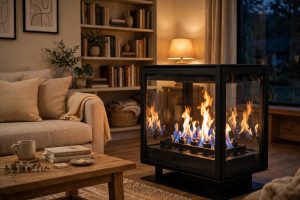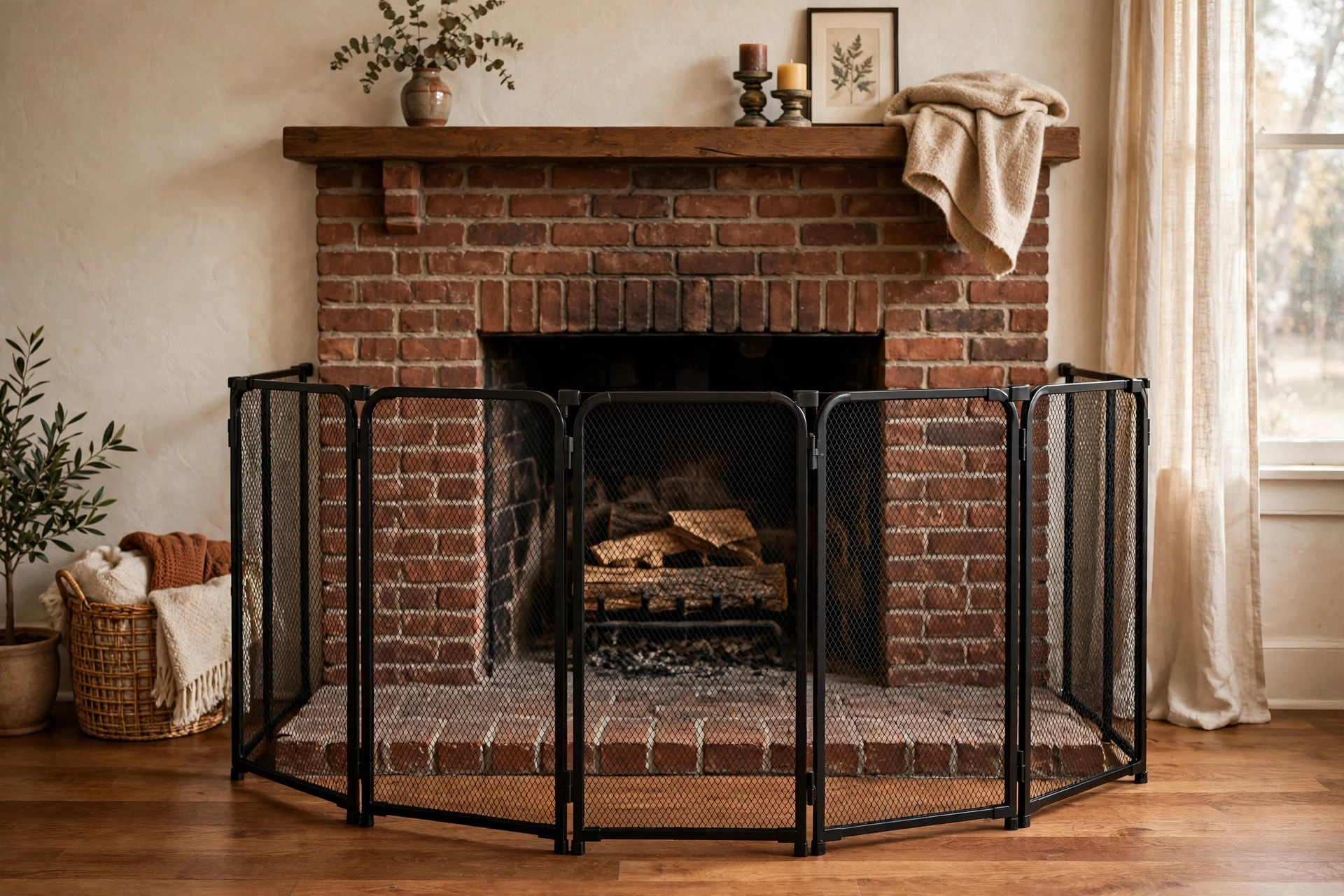

When you shop for high efficiency fireplace safety gates for sale, you want a simple barrier that stands between small hands, paws, and a very hot firebox. A high efficiency fireplace, such as a sealed gas insert or a wood insert with glass doors, runs much hotter at the surface than an old open hearth. The glass can reach several hundred degrees during normal use. A good gate gives you a clear margin of safety around that heat.
This guide explains what these gates do, how to pick one, what they cost, and how to keep them in good shape. It is written in plain words so you can decide with confidence.
Why a Safety Gate Matters With High Efficiency Fireplaces
High efficiency fireplaces burn cleaner and send more heat into the room. That is their virtue. It also means the front of the unit stays hot for a long time after the fire goes out. A child who touches the glass, even a minute after the flames stop, can get a serious burn. A pet that lies against the hearth can suffer the same injury.
A safety gate solves this problem in a direct way. It sets a physical boundary that a child cannot climb and a dog cannot push past. The gate stands a foot or more from the hot surface, so accidental contact never happens. It does not change how the fireplace works. It only keeps people and animals out of the danger zone.
Many modern inserts and zero clearance units run with sealed glass fronts. The glass is not optional. It is part of the design. Because the glass gets hot enough to cause burns in seconds, makers of these units often advise a protective barrier in homes with small children. You can read more about safe fireplace practice in guides from This Old House, which cover hearth safety in plain detail.
A gate also helps during everyday life. Toddlers wander. Guests bring dogs. You cannot watch every second. A fixed gate removes the need for constant watchfulness near the fire. That peace of mind is the real reason most families buy one.
The heat from a high efficiency unit can also crack nearby furniture finish or scorch a rug that sits too close. A gate marks a clear line that keeps soft goods out of the hot zone. It guards the room, not just the child.
How to Choose the Right Gate: High Efficiency Fireplace Safety Gates for Sale
Choosing sounds hard, but it comes down to a few clear steps.
Measure the Hearth
Start with a tape measure. Measure the width of the area you must block. Include the full fireplace surround, not just the glass. Most gates come in panels that add up to a fixed span, often 120 inches or more. If you have a wide raised hearth or a corner unit, you may need an extra wide model or an add on panel.
Check the Height
A gate must be tall enough that a child cannot climb it. Most models stand between 28 and 34 inches. Taller gates give more margin. Check that the top bar sits well above the reach of a toddler who stands on tiptoe.
Wall Mount or Freestanding
Two main styles exist. A wall mounted gate screws into studs on each side of the hearth. It will not move when pushed. A freestanding gate forms a pen shape with panels that fold to fit. It stands on its own feet. Wall mounting is stronger. Freestanding is easier to move. Many families with crawlers prefer wall mounted units for the firm hold.
Material and Heat Resistance
Look for steel construction. Steel stands up to radiant heat and will not melt or warp. Powder coated finishes hold color and resist rust. Avoid thin plastic parts near the hot zone. Some gates use heat resistant mesh panels. Steel mesh gives a view of the fire while keeping hands out.
Gate Door
A gate with a walk through door saves work. You can open it to load wood or clean the glass. A good door locks with a latch that a child cannot work but an adult can open with one hand. Double locking latches are the safest common choice. Check that the door swings freely and shuts on its own.
You can compare gate styles and buyer ratings on Lowe’s and Home Depot, both of which list detailed dimensions and customer reviews for hearth barriers.
Types of Fireplace Safety Gates
Several types are sold today. Each fits a different home.
Panel Play Yard Style
This is the most common type. Five or six hinged panels form a wide arc or a full pen in front of the hearth. You adjust the shape to your room. Rubber feet protect wood floors. Many models let you add panels to widen the span.
Wall Mounted Hearth Gate
A wall mounted gate attaches to the wall or to the fireplace surround with screws. It forms a rigid wall across the front. It cannot be tipped or pushed. It is the best choice when you want a fixed, long term barrier.
Mesh Safety Screen
A mesh screen combines a fixed frame with fine metal mesh. It sits close to the fireplace and keeps sparks inside while a separate gate stands further out. This is not a gate by itself. It is a second layer of protection. Some buyers pair mesh screens with a wider gate for double safety.
Adjustable Free Standing Guard
A smaller guard with three panels fits tight rooms. It stands close to the hearth and blocks direct contact. It works well in apartments and small living rooms where a full pen would take too much space.
If you are also looking at glass doors or screens, Consumer Reports publishes independent buying advice on hearth products that can help you compare features.
Cost and Price Ranges
Prices for high efficiency fireplace safety gates for sale vary with size, material, and brand.
Basic three panel guards start near 40 dollars. They fit small hearths and simple rooms.
Mid range five panel steel gates with a walk through door run from 90 to 180 dollars. Most American families buy in this range. These models offer strong steel frames, locking doors, and wide spans.
Premium wall mounted gates and extra wide models with add on panels can reach 200 to 350 dollars. They suit large stone hearths and corner fireplaces.
Extras add cost. Add on panels run 25 to 50 dollars each. Heat resistant covers cost more. Mounting hardware is often in the box. Watch for holiday sales in late fall, when hearth stores cut prices before the cold season.
When you compare prices, check the listed span and height. A cheap gate that does not cover your hearth is no bargain. Read the full dimensions before you buy. Retailers such as Bob Vila and The Spruce often break down cost versus features in their buying guides.
Care and Upkeep
A safety gate needs little care, but a small routine keeps it safe.
Wipe the frame with a damp cloth every few weeks. Dust and ash build up near a working fireplace. Check the hinges and latch twice a year. A latch that sticks is a latch that may stay open by mistake. Oil a stiff hinge with a drop of light machine oil.
Look for bent panels or loose feet. A gate that rocks can fall if a child pulls on it. Tighten screws at the wall mounts once a year. If the finish chips near the heat zone, touch it up with high heat paint made for grills and stoves.
Store the gate where it will not get bent if you take it down for summer. Lean panels flat against a wall in a dry room. Do not stack heavy boxes on the mesh.
If the gate came with a fabric play yard bag or carry strap, use it. The strap keeps panels from swinging open while you carry the unit through a doorway. Keep the manual and spare screws in a marked envelope with the stored gate. You will want them next fall.
Practical hearth care tips also appear on Family Handyman, which covers simple home maintenance tasks in clear steps.
Safety Notes Every Owner Should Know
A gate is a tool, not a substitute for care. Keep these rules in mind.
Place the gate at least 12 inches from the hottest surface. More distance is better. The maker of your fireplace may suggest a clear zone. Follow the wider of the two rules.
Never hang towels, blankets, or stockings on the gate. Cloth near a hot firebox can catch fire. The gate is a barrier, not a drying rack.
Check that the gate does not block a heat vent or a cold air return. High efficiency inserts need air flow to work well. Blocking vents can overheat the unit.
Teach children that the gate is a stop sign. They learn fast when the rule never changes. Praise them when they stay back.
Follow local codes. Some towns require hearth barriers in rental homes or in day care settings. The EPA publishes guidance on wood burning appliances and safe home heating that is worth reading before winter.
Fireplace makers also post safety notices. Brands such as Napoleon and Heatilator include barrier guidance in their manuals and on their home pages.
Frequently Asked Questions
Will a safety gate hurt my fireplace’s heat output?
No. A gate stands a foot or more away from the unit. It does not block air vents or fans. Heat moves past the open frame into the room. Your fireplace will warm the space the same as before.
Can I use a safety gate with a gas insert?
Yes. Gas inserts are a common match. The sealed glass on a gas unit gets very hot. A gate keeps hands off that glass. Make sure the gate span covers the full surround, including any trim.
Do I need to mount the gate to the wall?
Wall mounting is stronger, but not every model needs it. Freestanding gates with wide feet work well for many families. If you have a strong toddler who pushes or climbs, wall mounting gives extra hold.
How wide a gate do I need?
Measure the full width of the fireplace surround, then add at least 24 inches of margin. Most gates list their total span in the product details. Choose a model whose span meets or beats your number.
Are these gates safe for pets?
Yes. Steel gates hold up to dogs that jump or lean. Choose a gate with narrow bar spacing if you have a small dog, so it cannot slip through. Check the latch, since smart dogs learn to nose at weak latches.
When should I take the gate down?
Many families keep the gate up all year. The stone or metal surround stays a hard edge even in summer. If you remove it, store it flat in a dry place. Put it back before the first cold snap, not after.
A Final Word
A high efficiency fireplace warms a home well. It also asks for respect. A good safety gate gives that respect a simple shape. Measure your hearth, pick a steel gate with a locking door, mount it firm, and check it twice a year. The cost is small. The quiet you gain is worth it.
For related hearth gear, see our guides on high efficiency childproof fireplace screens for american homes, top rated childproof fireplace screens for sale, and fireplace glass doors reviews and buying guide.
References
Bob Vila. (n.d.). Home improvement advice. https://www.bobvila.com Consumer Reports. (n.d.). Product reviews and ratings. https://www.consumerreports.org Family Handyman. (n.d.). DIY home repair and maintenance. https://www.familyhandyman.com Heatilator. (n.d.). Fireplaces and fireplace products. https://www.heatilator.com Lowe’s. (n.d.). Home improvement products. https://www.lowes.com Napoleon. (n.d.). Fireplaces, grills, and heating products. https://www.napoleon.com The Home Depot. (n.d.). Home improvement products. https://www.homedepot.com The Spruce. (n.d.). Home and garden advice. https://www.thespruce.com This Old House. (n.d.). Home renovation guidance. https://www.thisoldhouse.com U.S. Environmental Protection Agency. (n.d.). Protecting human health and the environment. https://www.epa.gov
Was this guide helpful?

About Jennifer Lee
The My Garden US editorial team writes practical, in-depth home and garden guides for American homeowners — tested advice, no fluff.
You May Also Like
Outdoor Firewood Storage Sheds Price Comparison USA
June 29, 2026 0 views
Where to Buy Wood Burning Stoves in Colorado
September 13, 2026 0 views
How to Buy Freestanding Electric Stoves Online in the USA
January 29, 2026 0 views