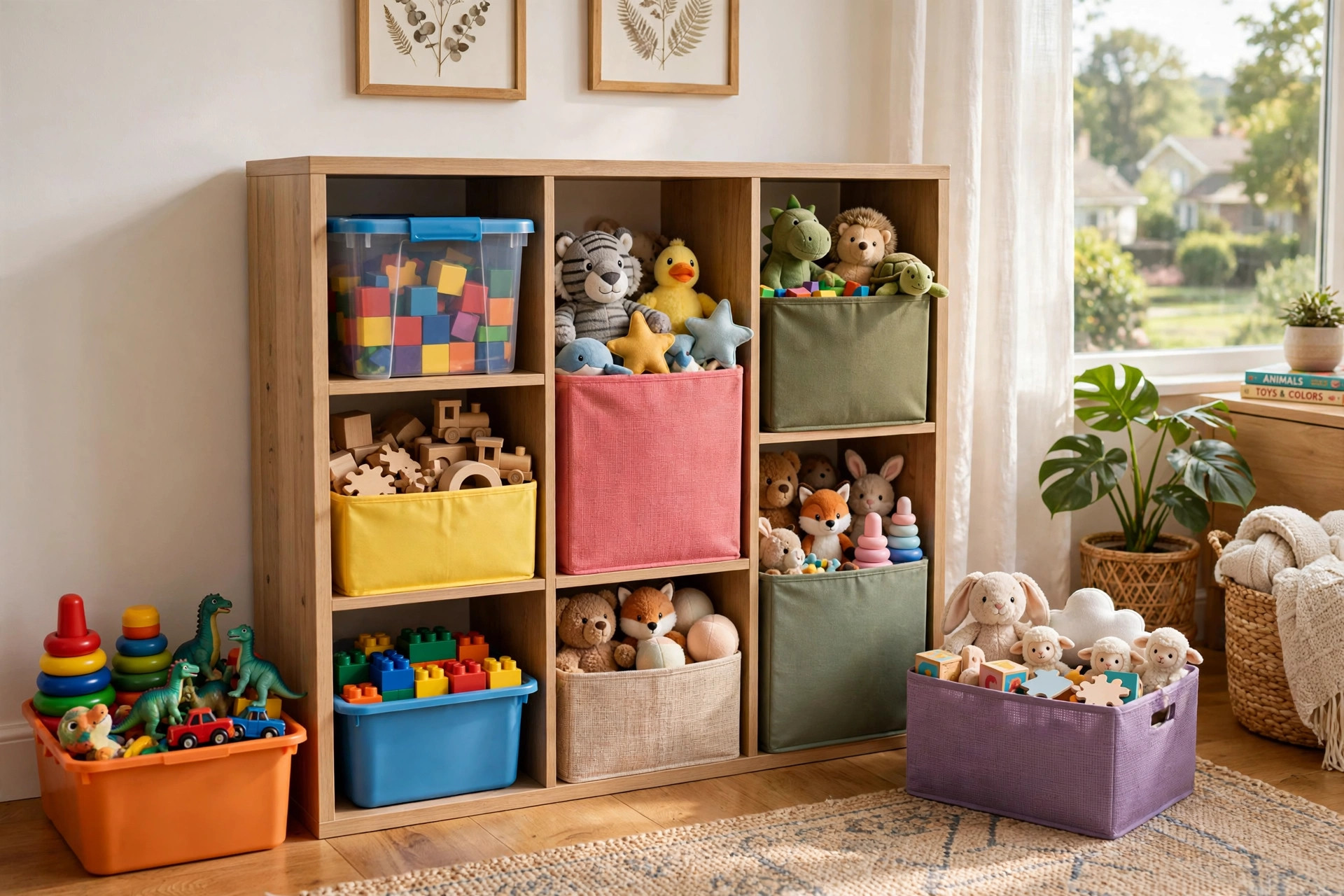

Every family with young children knows the same sight. Toys spread across the floor of the living room. Blocks under the sofa. Dolls on the stairs. Toy cars in the kitchen. A good set of toy storage bins ends this daily mess. But the prices for these bins vary more than most parents expect. A small fabric cube can cost a few dollars. A large wooden organizer with bins can cost well over one hundred dollars. This toy storage bins price comparison usa guide walks through the options in plain terms. It shows what the main types cost, where prices differ, and how to choose bins that fit your home and your budget. You do not need to be a shopping expert. You need a little time, a tape measure, and this guide.
Why a Price Comparison Matters
Toy storage bins look simple. Most are boxes, baskets, or cubes. Yet the price range is wide. Two bins that look the same in a photo can differ in price by three or four times. The difference often comes from the material, the size, the brand, and the seller. A toy bin sold at a large discount store may cost half of what the same style costs at a specialty shop. Sale weeks, shipping fees, and bundle packs change the real price further.
A careful toy storage bins price comparison usa shoppers can trust does more than find the lowest number. It shows what you get for your money. A cheap bin that cracks in six months costs more in the long run than a sturdy bin that lasts three years. Parents who compare sizes, materials, and shipping charges tend to spend less over time and end up with bins that actually work for their rooms.
There is another reason to compare. Children grow fast. The bins you buy for toddler blocks will later hold board games, art supplies, or sports gear. If you buy bins that last, you avoid buying the same storage twice. A price comparison helps you find that middle ground: low cost today, good use tomorrow.
What to Look for When You Choose Toy Bins: Toy Storage Bins Price Comparison Usa
Size and Shape
Measure before you buy. A bin that is too tall will not fit in a cube shelf. A bin that is too small will overflow in a week. Most cube shelf openings are about 11 inches square. Standard toy bins come in sizes that match these shelves, which makes shopping easier.
Think about what will go inside. Large building blocks need deep bins. Small puzzle pieces need shallow trays with lids. Soft toys need bins with some give. One large bin holds a big mess fast. Several small bins keep things sorted by type.
Material
Plastic bins are the most common. They are light, easy to clean, and come in many colors. Fabric bins cost a bit more but look softer in a living room. They fold flat when not in use. Wooden storage units with bins cost the most. They serve as furniture and can hold heavy loads. Canvas and rope baskets fall in the middle. They look natural and fit warm room styles.
Each material has a trade-off. Plastic can crack in cold garages. Fabric can stain. Wood needs care. When you compare the toy storage bins price comparison usa listings online, read the product details. The material is usually the main reason one bin costs twice as much as another.
Lids, Handles, and Labels
Lids keep dust out and let you stack bins. Handles make bins easy to carry to another room. Label holders or label windows help children put toys back in the right place. These small features add a few dollars to the price. They are worth it if they make cleanup a daily habit instead of a weekly fight.
Main Types of Toy Storage Bins
Plastic Toy Bins
Plastic bins are the workhorse of toy storage. A basic open plastic bin often costs between five and fifteen dollars. A plastic toy storage bin with a lid may cost between ten and twenty-five dollars. Stackable sets of four or six bins usually run from twenty to fifty dollars. Large rolling bins with wheels cost more, often thirty to sixty dollars, because of the wheel hardware and the heavier plastic.
Fabric Storage Cubes
Fabric cubes fold flat and fit standard cube shelves. A single fabric cube usually costs between seven and eighteen dollars. Sets of four, six, or eight bring the price per cube down. An eight-pack often costs between thirty and sixty dollars. Sturdier fabric cubes with sewn seams and metal frames cost more than thin ones. They also hold their shape better over time.
Wooden Storage Organizers
These are furniture pieces with open spaces for bins. A small unit that holds four bins often costs between fifty and one hundred twenty dollars, bins included. Larger units that hold eight or twelve bins can cost from one hundred fifty to three hundred dollars or more. The price depends on the wood type, the finish, and whether the unit is solid wood or engineered wood. These pieces last for years and move with the family from room to room.
Baskets and Canvas Bins
Woven baskets and canvas bins look good in living rooms where parents want storage that does not look like a toy box. A medium woven basket often costs between fifteen and thirty-five dollars. Canvas bins with handles run from twelve to thirty dollars. These cost more than basic plastic. Parents often buy them for shared spaces and use cheaper bins in bedrooms.
Kids Toy Organizer Sets
Full kids toy organizer bins sets come as a frame with many small bins. A set with nine bins often costs between forty and ninety dollars. A set with twelve bins can cost between sixty and one hundred thirty dollars. These are popular for playrooms. Children can see each bin at a glance. The frame keeps everything in one place.
Toy Storage Bins Price Comparison: What Things Cost
The table below gives rough price ranges seen at major American stores. Real prices change with sales and seasons. Use these ranges as a starting point, not as final numbers.
– Basic open plastic bin, medium: $5 to $15 – Plastic bin with lid, large: $10 to $25 – Fabric storage cube, single: $7 to $18 – Fabric cubes, pack of eight: $30 to $60 – Cheap toy storage bins bulk packs, plastic, pack of six: $25 to $50 – Woven basket, medium: $15 to $35 – Canvas bin with handles: $12 to $30 – Large toy bins with handles, plastic: $18 to $40 – Wooden organizer unit with four bins: $50 to $120 – Wooden organizer unit with twelve bins: $150 to $300 – Playroom organizer frame with twelve bins: $60 to $130
Back-to-school season and the weeks after the winter holidays often bring the best sales. Many stores cut prices on storage in January, when families organize their homes for the new year. Buying during these sales can save twenty to forty percent.
Shipping matters too. A bin that costs eight dollars online can cost twelve dollars once shipping is added. Many large stores offer free shipping over a set amount. Guides from home experts often suggest buying all your bins in one order so you pass the free shipping mark. If you shop in person, you avoid shipping but spend time and gas. Compare the full cost, not just the tag price.
Also watch the price per bin in bundle packs. A pack of six bins at forty-two dollars costs seven dollars per bin. If you need only four, buying single bins at nine dollars each is cheaper in total. Do not let a low per-unit price push you to buy more than you need.
Where American Shoppers Buy Toy Bins
Most parents buy toy storage bins in one of three places: big discount stores, home improvement stores, or online marketplaces. Big discount stores often have the lowest sticker prices on basic plastic bins. Home improvement stores carry sturdy bins that also work in garages and workshops. Online stores offer the widest choice and make a true toy storage bins price comparison usa shoppers need easy, because you can open many tabs and compare.
Consumer testing groups such as Consumer Reports publish buying advice on home goods each year. Family and craft sites like Apartment Therapy and Family Handyman also review storage ideas and show how bins look in real homes. These sources help you judge quality before you buy.
When you buy online, check the return policy. Bins may look larger or smaller in photos than they are in real life. A store with easy returns saves you trouble if the size is wrong. Also check customer reviews for comments about sturdiness. A bin that tips over when a child pulls it out is not a good buy at any price.
Care and Upkeep
Toy bins take daily use from small hands. A little care keeps them in good shape.
– Wipe plastic bins with a damp cloth and mild soap once a month. – Vacuum fabric bins to remove dust and crumbs. – Spot clean canvas bins with soap and water. Do not soak them. – Tighten screws on wooden organizer frames once a year. – Replace cracked plastic bins before sharp edges form. – Keep bins out of long direct sun, which can fade colors and weaken plastic.
Sort toys twice a year. Children outgrow toys fast. A spring and fall cleanout keeps bins from overflowing. Broken toys go in the trash. Good toys your child no longer uses can go to a donation center or a neighbor.
Safety Tips for Parents
Toy storage should be safe first and neat second.
– Choose bins with no sharp edges or rough seams. – Make sure tall units are fixed to the wall with straps so they cannot tip onto a child. – Avoid bins with lids that slam shut on small fingers. Soft-close lids or open tops are safer. – Keep small parts in lidded bins out of reach of babies and toddlers who still mouth objects. – Check that painted or coated bins are marked non-toxic and free of lead. – Do not let children climb on storage units or ride rolling bins.
Safety guidance from government and family sources stresses tipping risk. A child who climbs a tall shelf can pull it down. Wall straps cost a few dollars and prevent serious injury. Many stores sell them in the hardware section.
Frequently Asked Questions
How many toy bins does a family need? Most families need between four and eight bins for daily toys. Start with five. Watch for two weeks. If toys still spill out, add one or two more. Fewer bins with regular cleanouts work better than many bins that never get sorted.
Are fabric bins or plastic bins better for kids? It depends on the room. Plastic bins clean faster and hold heavier toys. Fabric bins look nicer in living rooms and weigh less. Many families use plastic in playrooms and fabric in shared rooms. Both work if you buy the right size.
What is a fair price for a set of toy storage bins? A fair price for a pack of six medium plastic bins is twenty-five to fifty dollars. A fair price for a wooden organizer with bins is one hundred to two hundred dollars. Prices below these ranges can be good sales. Prices far above them should come with clear quality reasons, such as solid wood or a strong brand.
Where can I find the cheapest toy storage bins? Big discount stores and warehouse clubs usually have the lowest prices on basic bins. Online sales during January and back-to-school season also bring prices down. Compare the total with shipping before you decide.
How do I compare bins online without seeing them? Read the size in inches, not just the photo. Check the material and the weight limit. Read three or four customer reviews, not just the star rating. Look at customer photos if the store shows them. This gives a truer picture than the store photo.
Should I buy matching bins or mix types? Matching bins look tidy and stack well. Mixed types let you match the bin to the toy. A common plan is matching bins inside one shelf unit and one or two larger rolling bins for big toys. Either way works. Pick what fits your room.
A Short Final Word
A toy storage bins price comparison usa families can use does not need to be complex. Start with your budget. Measure your space. Pick a material that fits your home. Compare the full price, shipping included. Buy during a sale if you can wait. Then keep the bins in good shape and sort the toys twice a year. The result is a home that cleans up in ten minutes and toys that last longer. That is a good return on a small purchase.
Related Reading
– Best bike storage racks with free shipping – Waterproof holiday decoration storage boxes buying guide – Affordable bathroom vanity organizers with free shipping
References
Apartment Therapy. (n.d.). Home design ideas and inspiration. https://www.apartmenttherapy.com Consumer Reports. (n.d.). Product reviews and ratings. https://www.consumerreports.org Family Handyman. (n.d.). DIY home repair and maintenance. https://www.familyhandyman.com Target. (n.d.). Retail store. https://www.target.com The Container Store. (n.d.). Storage and organization products. https://www.containerstore.com The Home Depot. (n.d.). Home improvement products. https://www.homedepot.com The Spruce. (n.d.). Home and garden advice. https://www.thespruce.com Walmart. (n.d.). Everyday low prices. https://www.walmart.com Wayfair. (n.d.). Furniture and home goods. https://www.wayfair.com
Was this guide helpful?

About James Carter
The My Garden US editorial team writes practical, in-depth home and garden guides for American homeowners — tested advice, no fluff.
You May Also Like
How to Buy Sports Equipment Organizers Online in California
August 13, 2026 0 views
A Guide to Stackable Makeup and Cosmetics Organizers with Free Shipping
June 9, 2026 0 views
Premium Kitchen Cabinet Organizers Buying Guide
May 15, 2026 0 views