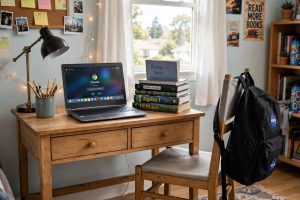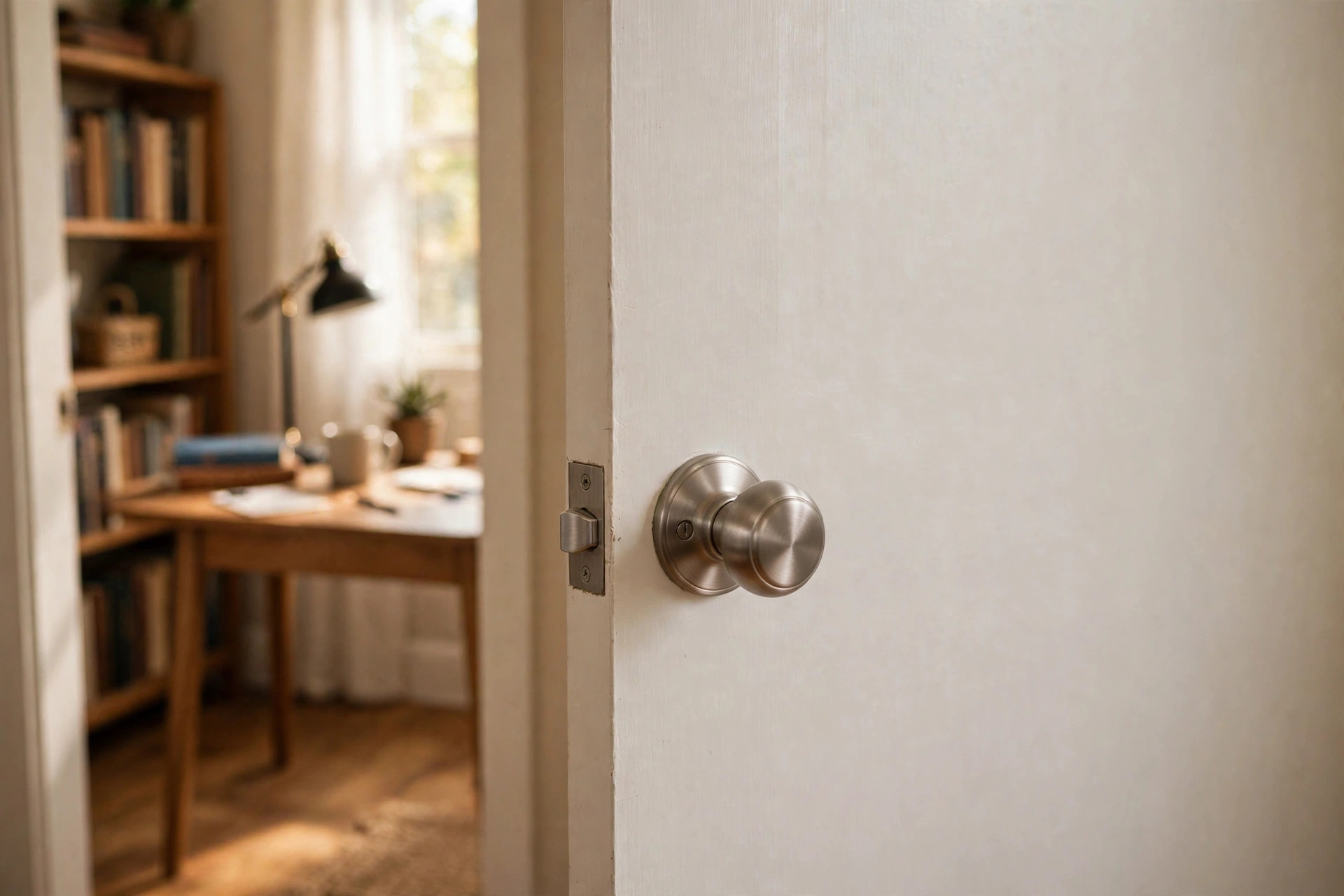

A home office door lock for private workspace use may be the smallest change you make to your work setup, yet it can change your whole day. When the door clicks shut, the noise of the house drops away. Calls stay private. Thoughts stay in order. Many remote workers find that a simple lock does more for focus than a new desk or a new chair.
This guide explains why a home office door lock matters, what kinds you can buy, how to choose the right one, what it costs, how to keep it in good order, and what safety rules to follow. It also answers common questions from people who work at home full time or part time.
Why a Locked Door Helps You Work
A home office is not just a corner with a computer. It is a place where you earn your living. A lock draws a clear line between work time and home time. Children learn that a closed, locked door means you are at work. Pets stay out of video calls. Family members knock instead of walking in.
Privacy matters as well. Many workers handle tax forms, medical files, payroll data, or client records. A locked door keeps papers, screens, and conversations out of view. For anyone who takes calls with clients or attends video meetings, a lock gives peace of mind.
Sound is another reason. Houses are loud. A closed door cuts that noise in half. A locked door adds a reason to leave the door closed all the way. Studies of home workspaces often point to fewer breaks in focus when the worker can shut the world out. You can read more about workspace design from guides on home office ergonomics.
Finally, a lock helps at the end of the day. You can close the door on your work and walk away. The office stays as it is, and the rest of the house feels like home again. That small ritual helps many people stop working at a decent hour.
How to Choose the Right Lock: Home Office Door Lock for Private Workspace
Think About Your Door First
Most interior doors in American homes are hollow. They are light and easy to drill. A basic privacy knob set fits them well. Solid wood doors are heavier and take screws more firmly. They can hold a deadbolt or a heavier latch.
Check the thickness of your door. Standard interior doors run about one and three-eighths inches thick. Almost every home office door lock sold today fits that size. Measure with a tape before you buy.
Look at the way your door closes. If it swings into the room, the lock parts go on the inside face. If the door frame is worn or the latch plate is loose, fix that first. A new lock will not hold well in a weak frame.
Decide What Level of Privacy You Need
A privacy lock, like the ones found on bathroom doors, keeps casual visitors out but can be opened from the outside with a small pin in an emergency. This is the most common choice for a home office door lock for private workspace use.
A keyed entry lock needs a key from the outside. It gives more real privacy. It suits workers who store records, equipment, or cash in the room.
A deadbolt adds strength. It needs a key or a turn from one side. Many workers add a deadbolt above a privacy knob for extra hold. Think about fire escape plans before you add extra locks to any room.
Smart locks work with a phone or a code. They let you lock the door from your desk and open it without standing up. They cost more and need batteries.
Types of Home Office Door Locks
Privacy Knob Sets
These are the classic choice. They look like a normal door knob with a small push button or turn button on the inside. Press the button and the door is locked. Open it from the outside with a pin through a small hole in the knob. They install in minutes with a screwdriver and fit most doors. Guides at IKEA show many small office layouts where a simple privacy knob is all that is needed.
Keyed Entry Levers and Knobs
These have a key cylinder on the outside face and a turn button inside. You need the key to open from outside. They are stronger than privacy sets and give true privacy for files and equipment. Keep a spare key in another room.
Deadbolts
A deadbolt is a thick bolt that slides deep into the frame. It resists pushes and kicks. Many homeowners add a single cylinder deadbolt above the knob on an office door. It is strong but slow to open in an emergency, so weigh that fact.
Portable Door Locks
These small metal devices fit into the strike plate or under the door and hold it shut from the inside. They need no tools. They suit renters who cannot drill into doors. They are less strong than fixed locks but better than nothing.
Smart and Keypad Locks
A keypad lock opens with a code. A smart lock may also work with a phone app. Both let you grant entry to family by code and change the code any time. They need power from batteries. Check reviews at PCMag for current models and test results.
Sliding and Pocket Door Locks
Pocket doors and barn doors slide rather than swing. They need special hooks, latches, or surface bolts. Measure the gap between the door and the wall before you buy. Many hardware sellers list these under sliding door hardware.
Cost and Price Guide
A home office door lock for private workspace use fits almost any budget. Here is what you can expect in the United States.
A basic privacy knob set costs between fifteen and thirty-five dollars. These come in common finishes like brushed nickel, matte black, and polished brass. Most include all screws and a template.
A keyed entry knob or lever costs between twenty-five and sixty dollars. Better brands with solid metal parts sit at the top of that range.
A deadbolt costs between twenty and fifty dollars. A set with both a keyed knob and a deadbolt, sold together, often costs forty to eighty dollars and is the best value for a private office.
Portable door locks cost between eight and fifteen dollars. They are cheap insurance for renters.
Smart locks and keypad locks cost between eighty and two hundred fifty dollars. You pay for the electronics, the app, and the convenience.
A locksmith visit to install a lock runs between seventy-five and one hundred fifty dollars, but most home office locks are easy enough to fit yourself. If you rent, ask your landlord before you drill. You may need to keep the old hardware and put it back when you move.
To keep costs down, match the finish to the other knobs in your house. Buy one brand for all your doors so one key fits all. Watch for sales at large home stores such as Wayfair during holiday weekends.
Care and Upkeep
Door locks need very little care, but a little care goes far. Once a year, tighten the screws on the knob and the strike plate. Doors shift with the seasons. A loose plate makes the latch stick.
Keep the moving parts clean. Blow dust out of the keyhole with a can of air. Never pour oil into a lock. Oil gathers dust and gums up the pins. A small puff of dry graphite powder works better.
Test the lock every few months. Lock and unlock it from both sides. If the key turns hard, check the door alignment before you blame the lock. A swollen door edge often causes trouble in summer.
For smart locks, change the batteries on a schedule. Many models warn you when power runs low. Keep a physical key as backup if your model takes one.
If paint gets on the latch during a remodel, scrape it off gently with a plastic tool. Paint can keep the bolt from sliding all the way home.
Safety Rules You Should Know
A lock keeps people out, and that means it can also keep people in. Plan for emergencies before you lock a room for long work hours.
Never lock yourself in a room with no way out in a fire. Make sure the window opens and you can reach it. Keep the key or the release tool where you can find it in the dark.
Privacy locks with a pin release are safer than keyed locks for rooms where children might lock the door by accident. Keep the release pin on top of the door frame where small hands cannot reach it but adults can.
If you work in a basement office or a room with only one door, talk with your family about an emergency plan. Everyone should know how to open the office door from the outside.
Renters should read the lease. Some leases forbid lock changes. In that case a portable lock or a do not disturb door sign paired with a simple latch may be your best option. Read safety and product guides from trusted outlets such as the Wirecutter before you buy.
Do not lock the door and wear noise cancelling headphones at full volume if you are home alone with small children. You need to hear them in an emergency. A lock works best as part of a plan, not as the whole plan.
FAQ: Home Office Door Locks
Can I install a home office door lock myself?
Yes, in most cases. A privacy or keyed knob set fits into the holes already drilled in a standard interior door. You need a screwdriver and about fifteen minutes. Follow the template in the box. If your door has no holes at all, you will need a hole saw kit or a carpenter.
What is the best lock for a home office door?
For most people, a keyed entry knob set is the best pick. It gives real privacy, it looks like the rest of the house hardware, and it costs under fifty dollars. Renters may prefer a portable lock that needs no tools. Workers who handle sensitive files may add a deadbolt for extra strength.
Are smart locks worth it for a home office?
They can be. A keypad lock lets you enter without a key and change codes when you like. That helps if a housekeeper or a repair person needs in while you are away. The cost is higher, and you must keep the batteries fresh. For a simple need for quiet, a basic privacy knob often does the job.
Will a lock damage my door?
A standard lock uses the holes most interior doors already have. If you add a deadbolt, you drill one new hole. That is normal and does not harm the door. Keep the old hardware if you rent so you can put it back later.
How do I keep kids from barging in during calls?
Pair the lock with clear habits. Lock the door during meetings. Put a sign on the door that says you are on a call. Some families use a red and green card system. A lock plus a home office door sign do not disturb working routine works better than either one alone. For open-plan homes, a quiet keyboard for shared home office space also helps keep the peace.
Do I need a permit to change an interior lock?
No. Interior lock changes need no permit in the United States. You only need your landlord’s approval if you rent. Local rules apply to exterior doors, not to a bedroom or office door inside the home.
A Short Final Word
A home office door lock for private workspace use is a small buy with a large return. It guards your focus, your calls, and your files. It teaches the whole house to respect work hours. Pick a lock that fits your door, your budget, and your safety needs. Install it on a quiet weekend morning. Then close the door, turn the button, and get to work.
If you are building out the rest of your room, plan the whole setup at once. A good chair, a steady desk, and a locked door work as a team. Many guides on ergonomic office furniture and standing desk options show how the pieces fit together. Even a simple adjustable height desk converter for existing table can round out a room that is quiet, private, and ready for deep work.
References
Herman Miller. (n.d.). Office furniture and ergonomic seating. https://www.hermanmiller.com IKEA. (n.d.). Home furnishings. https://www.ikea.com PCMag. (n.d.). Technology product reviews. https://www.pcmag.com Steelcase. (n.d.). Office furniture and workplace research. https://www.steelcase.com The Spruce. (n.d.). Home and garden advice. https://www.thespruce.com UPLIFT Desk. (n.d.). Standing desks and ergonomic office furniture. https://www.uplift-desk.com Wayfair. (n.d.). Furniture and home goods. https://www.wayfair.com Wirecutter. (n.d.). Product reviews from The New York Times. https://www.nytimes.com/wirecutter
Was this guide helpful?

About David Wilson
The My Garden US editorial team writes practical, in-depth home and garden guides for American homeowners — tested advice, no fluff.
You May Also Like
Home Office Desk Extension for Wider Workspace: A Plain Guide
May 17, 2026 0 views
Home Office Printer Paper Storage Organizer: A Complete Guide
August 18, 2026 0 views
Home Office Rug to Protect Hardwood Floors: A Complete Guide
August 7, 2026 0 views