
A standing desk can change the way you work. Many people find that they feel more alert when they stand for part of the day. They also like the way it breaks up long hours in a chair. But standing on a hard floor has a cost. Feet get tired. Legs feel heavy. The lower back starts to ache. An adjustable standing desk mat with massage bumps offers one simple answer to these problems. It cushions the feet. It also gives the soles of the feet a gentle massage while you work.
This guide explains what the mat is, how it works, and who should buy one. It covers the features to look for, the types on the market, typical prices, and care tips. It also answers common questions so you can shop with care.
Why Standing Comfort Matters
Standing desks have grown popular in home offices across the country. Workers who use them often report less stiffness and more energy. Yet doctors and safety experts note that standing too long on hard floors can cause real harm. Foot pain, sore knees, and tired backs are common complaints.
A good floor mat changes the picture. Anti-fatigue mats were first used in factories and kitchens. Workers who stood all day found relief from the soft surface. The same idea now helps home office workers. The mat adds a layer of support between the feet and the hard floor. This eases pressure on the joints. It also encourages small shifts in weight, which keep blood flowing.
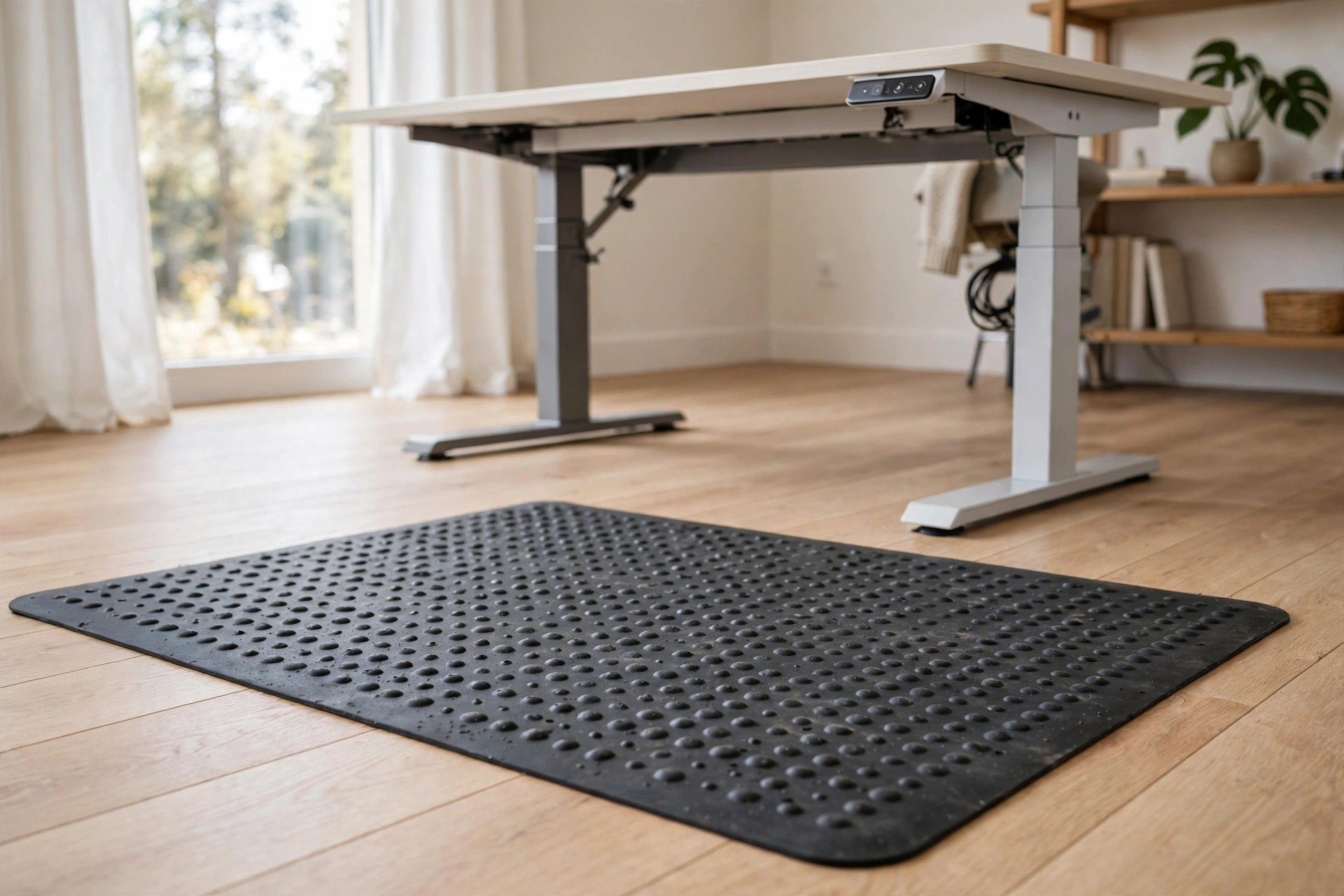
The adjustable standing desk mat with massage bumps takes this idea further. Its surface is not flat. It has raised bumps or knobs built into the material. These bumps press into the soles of the feet. The result feels like a light foot massage. Many users say it keeps them from growing restless at their desks. Some say it helps them stand longer with less pain.
What the Mat Is and How It Works: Adjustable Standing Desk Mat with Massage Bumps
Basic Design
At its core, the mat is a thick pad that sits on the floor under a standing desk. Most are made of foam, rubber, or a mix of the two. The top surface carries small rounded bumps. These are sometimes called massage nodes or acupressure points. They are spaced so that both feet can rest on them at once.
The word adjustable in the name can mean more than one thing. On some mats, it means the mat can be flipped over. One side is flat. The other side has the massage bumps. The user can turn the mat to change the feel. On other mats, it means the firmness can be changed. A few models let the user add or remove an inner layer. Still others use zones of different height. The user can stand on one zone for soft support or move to another for firm bumps.
How the Massage Bumps Help
The bumps press into the bottom of the feet as you stand. This light pressure can feel soothing. It may also nudge you to shift your feet now and then. These small movements are useful. They stop the body from locking into one still pose. Blood moves more freely through the legs. Muscles stay active instead of going slack.
The bumps do not work like a real massage from a trained hand. No mat can replace that. But for daily use at a desk, they add a layer of comfort that a plain flat mat cannot give. Many people also like the way the bumps keep their feet from slipping.
What to Look for When You Shop
Not all mats are the same. The right choice depends on your body, your floor, and your habits. Keep these points in mind.
Size and Shape
Measure the space in front of your desk. The mat should be wide enough for both feet with room to shift. A width of 20 to 24 inches suits most users. Length matters too. Some mats are long enough for a wide stance. Others are small and meant for a single spot. If you move around the desk, choose a longer mat.
Thickness and Firmness
Thickness often runs from half an inch to one inch. A thicker mat gives more cushion. But too much softness can make you feel off balance. Look for a mat that feels firm yet forgiving. The foam should spring back when you press it. If it stays flat after you press it, it will wear out fast.
The Bump Pattern
Bump patterns vary. Some mats have small, soft bumps spread evenly. Others have larger, firmer knobs in set zones. If your feet are sore, start with gentle bumps. People with very tender feet may find large knobs too harsh. If you like strong pressure, choose deeper bumps. A two-sided mat lets you test both a flat side and a bumpy side.
Adjustable Features
Check what adjustable really means for the model you want. A flip-over mat is simple and has no parts to lose. A mat with a removable insert gives more choice but adds care steps. Some mats also have a raised edge for balance exercises. Make sure any loose parts lock in place so they do not shift underfoot.
Material and Floor Safety
Most mats use foam, rubber, or polyurethane. Rubber lasts long and grips the floor well. Foam is lighter and softer. The bottom of the mat should not slide. Test it on your floor type. On wood or tile, a rubber base grips best. The mat should also be free of strong chemical smells when new. Air it out for a day before use if needed.
Weight Limit and Durability
Check the weight rating if you are a larger person. A good mat keeps its shape for years. Edges should not curl up, since curled edges can trip you. Stitched or beveled edges tend to last longer than sharp cut edges.
Types of Standing Desk Mats with Massage Features
Foam Mats with Bumps
These are the most common. A single piece of foam carries molded bumps on top. They are light and easy to move. Prices are low. They suit most home offices. The trade-off is shorter life. Heavy daily use can flatten the foam over time.
Rubber Massage Mats
Rubber mats are heavier and tougher. They often have firm knobs that give strong pressure. They grip hard floors well and last for years. They cost more than foam mats. They are a good pick for people who want firm support.
Two-Sided Reversible Mats
One side is flat and smooth. The other side has massage bumps. You flip the mat to change the feel. This design suits people who are new to standing. On tired days, use the flat side. On fresh days, flip to the bumpy side. Many buyers see this as the best of both worlds.
Balance and Rocker Mats
Some mats curve at the base so they rock gently. A few add bumps to the rocking surface. These keep the legs moving more than a flat mat. They can be fun, but they are not for everyone. People with balance problems should use them with care.
Cost and Price Ranges
Prices vary by material and brand. A simple foam adjustable standing desk mat with massage bumps may cost between 25 and 45 dollars. Mid-range models with reversible sides or rubber builds often run 45 to 80 dollars. Premium mats with layered foam, strong rubber, or special balance bases can cost 80 to 130 dollars.
Higher price does not always mean better comfort. A 40-dollar mat with the right bump size may suit you better than a costly one with knobs that feel too sharp. Read the return policy before you buy. Many sellers allow a trial of 30 days or more. That is the best way to know if the mat fits your feet.
Set a budget before you shop. Then compare mats within that range. Look at size, material, and reviews from people who stand for similar hours.
Care and Upkeep
A standing desk mat needs little care, but a few habits will make it last.
– Wipe the surface with a damp cloth each week. This keeps dust and skin oils from building up. – Use mild soap for stains. Harsh cleaners can break down foam. – Keep the mat away from sharp shoes. Work in socks or soft shoes to protect the bumps. – Do not fold the mat. Folding can crack the foam or loosen the bumps. – Air the mat out now and then. Lift it and let the floor beneath it dry, which stops odors. – Check the edges each month. If an edge starts to curl, lay a heavy book on it overnight to flatten it.
With basic care, a good foam mat lasts one to three years. A rubber mat can last five years or more.
Safety Tips
Standing mats are safe for most people, but a few cautions apply.
First, place the mat flat on the floor with no wrinkles. A wrinkled mat can cause a trip. Second, ease into standing. If you are new to standing work, start with 20 to 30 minutes at a time. Build up slowly over a few weeks. Third, keep your posture in mind. Stand tall with soft knees. Do not lock your joints. A best ergonomic office desk chair for back pain is still worth having for the parts of the day you sit.
People with foot conditions should take extra care. If you have plantar fasciitis, nerve pain, or wounds on the feet, talk to a doctor before using a bumpy mat. Strong bumps may irritate sore spots. In such cases, a flat anti-fatigue mat may be the safer first step. Pregnant women and older adults should also check with a doctor if standing brings pain.
Keep cords and clutter off the mat. The area around your feet should stay clear so you can shift freely.
How It Fits a Full Home Office
A massage mat is one piece of a healthy setup. It works best with other good choices. A quiet mechanical keyboard for home office night keeps late work from waking the house. An adjustable bookshelf for home office corner nook keeps books and files within reach. Together, these pieces make long workdays easier on the body.
Think of the mat as the base of your setup. You stand on it for hours each week. It is worth the same care you give your chair and your desk.
Frequently Asked Questions
Do massage bump mats really help foot pain?
Many users report less foot tiredness. The bumps spread pressure across the sole. The small shifts in stance keep blood moving. Results vary from person to person. People with mild tiredness often notice the most gain. People with medical foot problems should ask a doctor first.
How long should I stand on the mat each day?
There is no single rule. Most experts suggest mixing sitting and standing. A common pattern is 30 minutes of standing for each hour of sitting. Some people work up to half the day on their feet. Listen to your body. If pain grows, sit down and rest.
Can I use the mat barefoot?
Yes. Many people prefer bare feet or socks. Bare feet feel the bumps most. Socks give a softer feel. Hard shoes may press too deep into the foam and wear it out faster. Soft shoes are fine if you prefer them.
Will the bumps hurt at first?
They can feel strange on day one. Most users adjust within a week. Start with short sessions. If sharp pain appears, stop and use the flat side or a flat mat. Mild pressure that fades is normal. Sharp pain is not.
How do I clean the massage bumps?
A damp cloth with mild soap works well. Wipe between the bumps where dust collects. Do not soak the mat. Let it dry fully before you stand on it again.
Is an adjustable mat better than a fixed one?
Adjustable models give more choice. A reversible mat lets you switch between flat and bumpy. A mat with inserts lets you change firmness. If you know exactly what you like, a fixed mat may be enough. If you are unsure, adjustable is the safer buy.
A Final Word
An adjustable standing desk mat with massage bumps is a small buy that can make a real difference. It cushions hard floors. It wakes up tired feet. It gives you the choice of flat or bumpy support as the day demands. Shop with your feet in mind. Pick the right size, the right bump feel, and a material built to last. Then stand a little taller, work a little easier, and give your feet the care they earn each day.
For more background, see Wayfair, Herman Miller, and Steelcase. For more background, see UPLIFT Desk, PCMag, and IKEA.
References
Herman Miller. (n.d.). Office furniture and ergonomic seating. https://www.hermanmiller.com IKEA. (n.d.). Home furnishings. https://www.ikea.com PCMag. (n.d.). Technology product reviews. https://www.pcmag.com Steelcase. (n.d.). Office furniture and workplace research. https://www.steelcase.com The Spruce. (n.d.). Home and garden advice. https://www.thespruce.com UPLIFT Desk. (n.d.). Standing desks and ergonomic office furniture. https://www.uplift-desk.com Wayfair. (n.d.). Furniture and home goods. https://www.wayfair.com Wirecutter. (n.d.). Product reviews from The New York Times. https://www.nytimes.com/wirecutter
Was this guide helpful?

About Michael Thompson
The My Garden US editorial team writes practical, in-depth home and garden guides for American homeowners — tested advice, no fluff.
You May Also Like

Home Office Desk Organizer for Mail and Bills: A Simple Guide
June 7, 2026 0 views
Corner Bookshelf for Small Home Office Storage: A Practical Guide
April 15, 2026 0 views
A Home Office Desk with Cable Management Holes: A Plain Guide
May 10, 2026 0 views