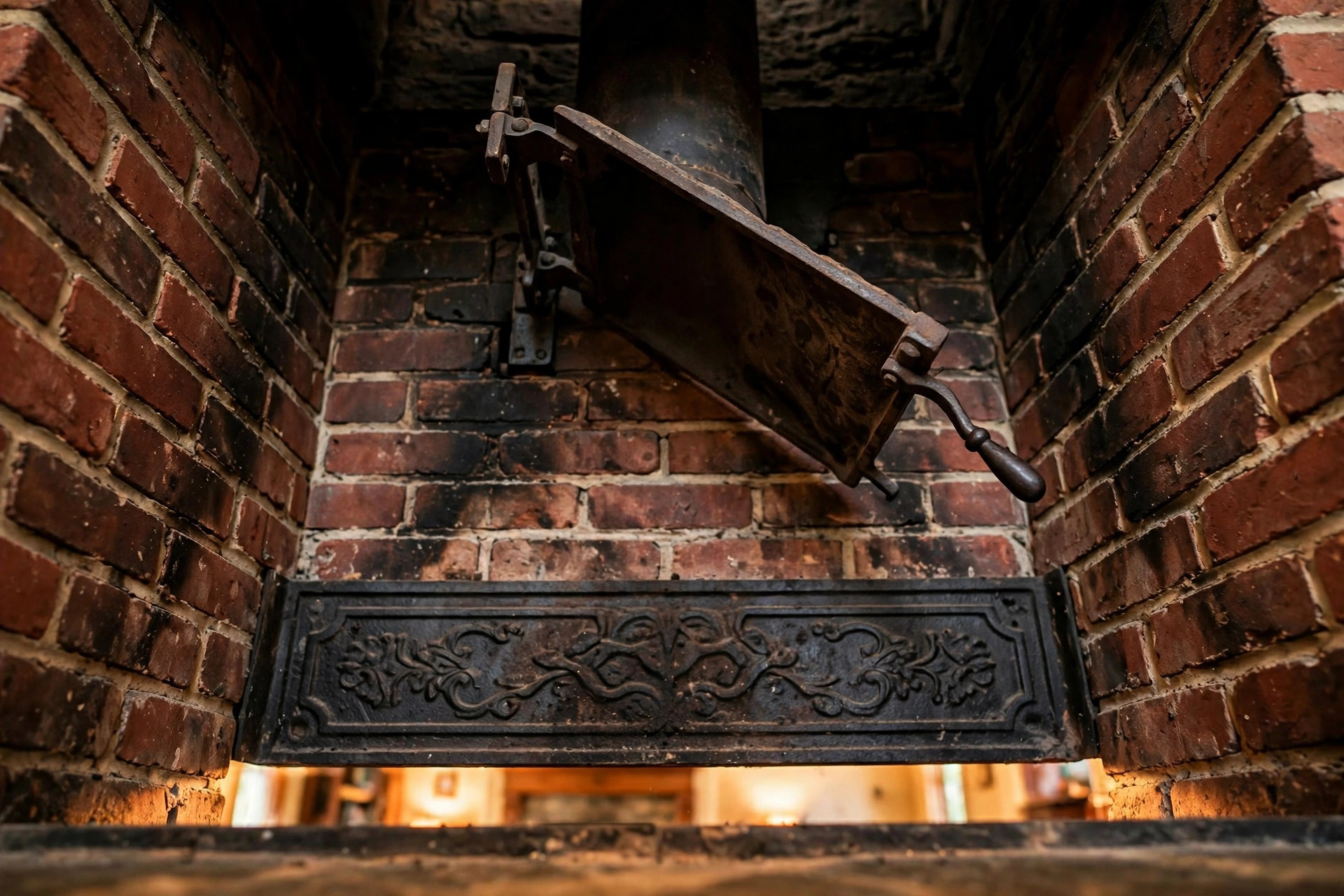

A ventless fireplace dampers buying guide matters more than most home owners think. A damper sits in the throat of the firebox, just above the flames. It controls how air moves through the unit. When the fire is burning, the damper must be open. When the unit is idle, a tight damper keeps warm air from rising out of the house. This ventless fireplace dampers buying guide walks through the parts, the kinds, the rules, and the prices, so you can buy with a clear head.
Why the Damper Matters
The damper is the valve of the fireplace. In a ventless gas unit, the firebox is closed and there is no chimney to carry fumes away. That is why a good seal counts for so much. A damper that closes fully keeps conditioned air in the room. It also keeps outside air from drifting in on cold nights. Home owners notice the change on the heating bill. Even a small gap at the damper can pull warm air out of the room all winter long.
The damper also guards the health of the fire. A damper that sticks half shut can let fumes gather near the unit. A damper that opens fully lets the fire burn clean and steady. If you also shop for the glass front that sits over many ventless units, our fireplace glass doors reviews and buying guide pairs well with this page.
A new damper is cheap compared with a wasted winter of heat loss. That is the first reason to read on.
What to Look For When You Choose: Ventless Fireplace Dampers Buying Guide
Size and Fit
Measure the firebox opening before you shop. Dampers are sold by width, and most range from twenty four inches to forty eight inches wide. A damper that is too small leaves gaps at the edges. A damper that is too large will not sit flat. Take three measures across the opening, at the front, the middle, and the back, and use the smallest one. Note the depth of the throat as well. Some models need a certain depth to swing shut.
Blade and Frame Material
Most dampers are built from cast iron or steel. Cast iron blades weigh more and close with a solid seal. Steel blades cost less and still do the job. Look at the frame too. A bent or rusted frame can ruin the seal of a new blade. The Home Depot parts aisle and the Lowe’s stove section both stock common sizes, and seeing the parts in hand helps you judge the weight and build.
Seal Type
A bare metal blade seals against a bare metal frame. Over time the edge wears and small leaks start. Many modern dampers add a heat proof gasket or a rope seal around the edge. The gasket fills tiny gaps and gives a tighter close. If your unit runs often, the gasket type pays for itself. Ask whether the gasket can be replaced. A damper with a replaceable gasket lasts years longer than one where the seal is built in.
Control Style
Dampers open and close in a few ways. The simplest is a hand lever or chain that you pull. A rotary control uses a knob at the side of the firebox. Top mounted designs use a cable from a handle on the hearth wall. Each style works, but think about who will use the fire. A knob is easier for an older parent to work. A hidden cable keeps small hands away from the control. For broader fireplace setup tips, This Old House runs through firebox parts in plain language.
Lock and Safety Clamp
Ventless gas units need the damper fixed open while the fire burns. A safety clamp, sometimes called a damper stop, holds the blade open at the right gap. When you buy a damper for a ventless unit, buy the matching clamp at the same time. The clamp is a small metal bar, but it is the part that keeps the setup legal and safe.
Types and Options
Throat Dampers
The throat damper sits right above the firebox. It is the most common kind in American homes. It swings on a hinge and closes like a lid. Throat dampers are cheap, easy to find, and simple to fit. They do not seal as tightly as the next type, but with a good gasket they come close.
Top Mounted Dampers
A top mounted damper sits at the top of the chimney flue, though it is less common on true ventless units. It uses a cable and a pull handle. Because it seals the whole stack at the top, it cuts drafts better than a throat damper. It also keeps rain, leaves, and animals out of the flue. The Heatilator line shows how these units fit into many American firebox designs. For general venting advice, Napoleon publishes clear charts of parts and clearances.
Damper Clamps and Stops
These are not full dampers. A clamp holds an existing damper open so gas can flow while the fire burns. Building codes in many states require one on ventless gas units. Clamps are the cheapest item on this page, often under twenty dollars. If your inspector asks for one, buy the metal kind that bolts on, not a wire clip that can slip.
Aftermarket Gasket Kits
A gasket kit refreshes an old damper without a full swap. The kit holds a roll of heat proof rope or tape and a small tube of adhesive. You pull out the old seal, clean the groove, and press in the new one. Kits cost little and take under an hour. They are a good first try before you buy a whole new damper.
Cost and Price
Prices stay modest across the range. Expect these rough bands in 2026 dollars.
– Basic throat damper, cast iron or steel: forty to ninety dollars. – Throat damper with gasket seal: eighty to one hundred and sixty dollars. – Top mounted damper with cable kit: one hundred and twenty to two hundred and fifty dollars. – Damper clamp or stop bar: ten to twenty five dollars. – Aftermarket gasket kit: fifteen to thirty dollars.
Labor adds more. A sweep or stove shop charges about one hundred and fifty to three hundred dollars to fit a throat damper, and two hundred and fifty to four hundred for a top mounted unit. Many home owners fit throat dampers themselves with basic tools. Top mounted work on the roof is best left to a pro. Shop prices shift with metal costs, so check the current shelf tags. The EPA publishes guidance on efficient home heating that helps put the energy savings in context.
Care and Upkeep
A damper needs little, but it needs it every year. Open the blade and look at the hinge. Brush away soot with a stiff brush. A light drop of heat proof oil on the pivot keeps it moving free. Check the gasket each fall. If the rope is flat or crumbling, replace it before heating season.
Look for rust on the frame. A small rust spot can be brushed and painted with stove paint. Heavy rust means the frame is weakening, and the damper should be replaced. Run the blade through its full motion once a month in winter. A damper that sits still all season can seize shut right when you need it open.
Keep the firebox clean too. Ash and creosote can pile against the blade and stop it from closing. A clean hearth makes every part last longer. For step by step seasonal tasks, Family Handyman lists simple fireplace jobs that pair well with damper care.
Safety
Ventless units burn room air, so safety rules are strict. Many towns require the damper to be locked open while a gas fire burns. The clamp or stop bar does this job. Never close the damper on a live fire. Never guess at the gap. Follow the unit maker’s chart for the minimum open height.
Put a carbon monoxide alarm near the fireplace. It is cheap and it is the backstop for any fuel fire. If the alarm sounds, shut off the gas, open windows, and leave the house. Call the gas company from outside.
Hire a sweep for a yearly check if you also burn wood elsewhere in the home. A pro will test the seal with a light and confirm the blade moves as it should. If you are sizing up a whole new unit instead of parts, our buy ventless gas fireplaces online in arizona guide walks through that choice.
For chimney work beyond the firebox, like caps that sit at the flue top, see our chimney caps and covers reviews and buying guide. General how to pieces at The Spruce also cover damper repair in short, clear steps.
Frequently Asked Questions
Do ventless fireplaces even have dampers?
Many do. A ventless gas unit often sits in a masonry firebox that still has a throat damper from an earlier wood setup. The damper is kept locked open with a clamp while the gas fire burns. If you buy a new factory built ventless unit, it may have no damper at all, just a fixed vent path.
Can I install a damper myself?
A throat damper is a common do it yourself job. You need gloves, a brush, and a few hand tools. Measure twice and buy the right width. Top mounted dampers go on the roof, so most owners hire a sweep for that job.
How do I know my damper seals well?
Close the blade on a cold day. Hold a lit match or a lighter flame near the edge of the closed blade. If the flame bends or blows out, air is leaking past. A tight damper will not move the flame. A smoke pencil from a hardware store works the same way.
What size damper do I need?
Measure the firebox throat in inches. Buy the damper whose listed width matches your smallest measure. Common sizes run from twenty four to forty eight inches wide. If you fall between sizes, take the next size down rather than forcing a wide blade into a narrow throat.
How long does a damper last?
A good cast iron damper lasts twenty to thirty years with basic care. The gasket wears faster and may need replacing every five to ten years. Heavy rust or a bent frame shortens the life. Yearly cleaning and oiling add years.
Should the damper be open or closed when the fire is off?
Closed. A closed damper keeps warm air in the house and cold air out. Open it only when you are about to light the fire, and close it again once the unit is fully cool.
A Final Word
A damper is a small part with a big job. Measure your firebox, pick a blade that fits, add a gasket seal if the budget allows, and never run a ventless gas fire without the safety clamp. The right choice takes one trip to the store and an hour of easy work. After that, the damper quietly pays you back every winter. Keep this guide in a folder with your other home papers, so when a guest asks how the fireplace works, you can show them the clamp, the lever, and the sealed edge, and answer with confidence.
References
Family Handyman. (n.d.). DIY home repair and maintenance. https://www.familyhandyman.com Heatilator. (n.d.). Fireplaces and fireplace products. https://www.heatilator.com Lowe’s. (n.d.). Home improvement products. https://www.lowes.com Napoleon. (n.d.). Fireplaces, grills, and heating products. https://www.napoleon.com The Home Depot. (n.d.). Home improvement products. https://www.homedepot.com The Spruce. (n.d.). Home and garden advice. https://www.thespruce.com This Old House. (n.d.). Home renovation guidance. https://www.thisoldhouse.com U.S. Environmental Protection Agency. (n.d.). Protecting human health and the environment. https://www.epa.gov
Was this guide helpful?

About Robert Taylor
The My Garden US editorial team writes practical, in-depth home and garden guides for American homeowners — tested advice, no fluff.
You May Also Like

Outdoor Fire Pits Price Comparison USA: What Each Type Really Costs
March 8, 2026 0 views
High Efficiency Fireplace Remote Controls with Free Shipping: A Full Buying Guide
July 19, 2026 0 views
Affordable Electric Fireplace Mantels with Free Shipping
March 13, 2026 0 views