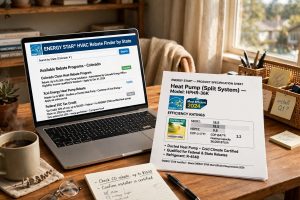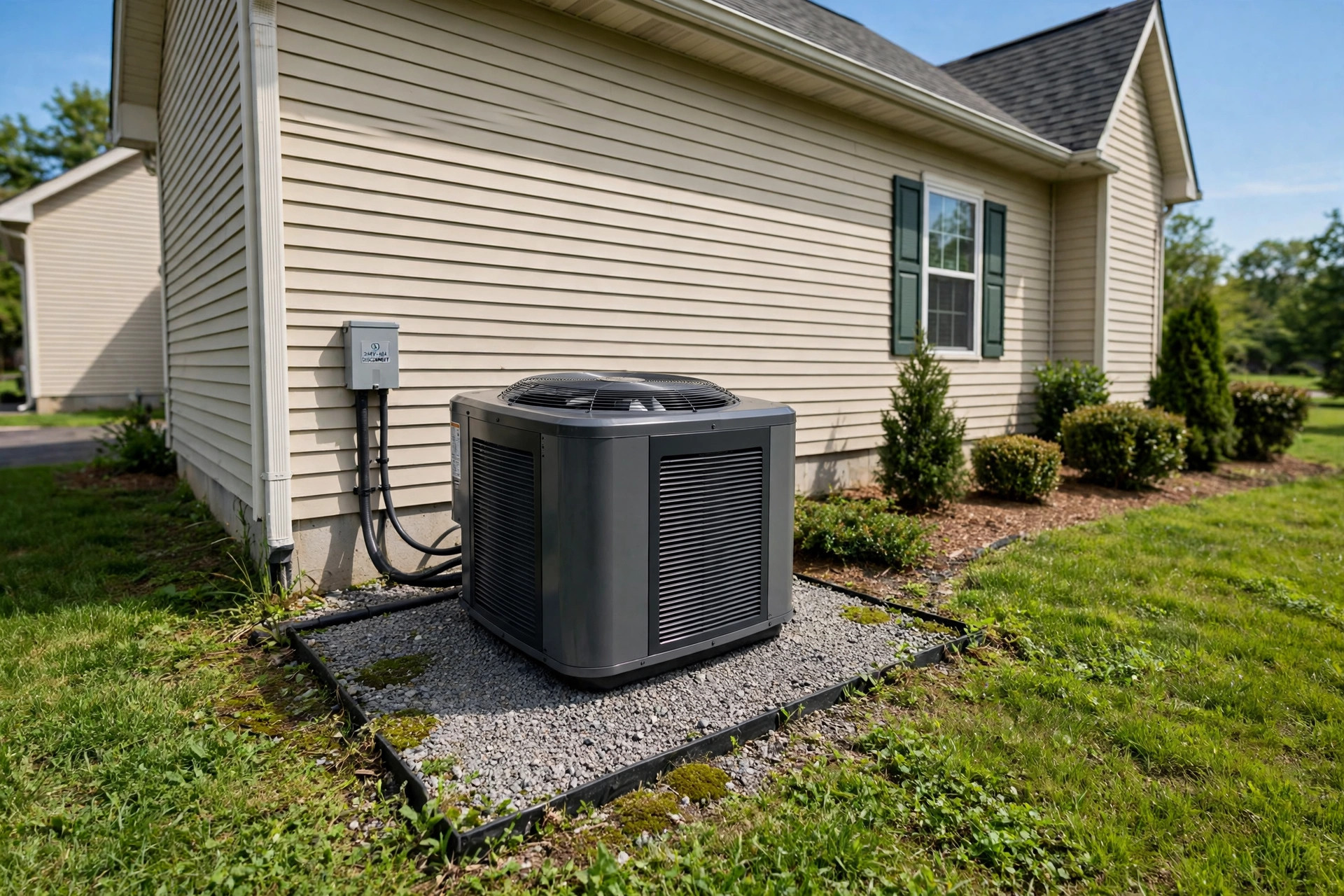

Heating and cooling cost a lot of money. A new system can cost ten thousand dollars or more. The federal law passed in 2022 set aside money to help families pay for better equipment. This guide gives the inflation reduction act hvac rebates explained in plain words. You will learn who can get the money, which equipment is covered, and how the claim process works.
Why These Rebates Matter
Most homes in the United States use old heating equipment. Furnaces and air conditioners from twenty years ago waste energy. They burn more fuel than they need. They raise power bills each month.
New heat pumps change this picture. They move heat instead of making it. In summer they move heat out of the home. In winter they pull heat from the air outside. This method uses far less power. The Department of Energy notes that heat pumps can cut heating energy use by half in many homes.
The rebates matter because the first cost is the hard part. A good heat pump system may cost $8,000 to $15,000. That sum stops many families. The rebates take money off at the point of sale or after purchase. For lower income homes, the rebate can cover the whole cost. This makes clean heating open to people who could not afford it before.
There is a second reason. Old systems break at the worst time. A furnace fails on a cold night in January. A family then buys whatever the dealer has in stock. That rushed choice may be a cheap, low-efficiency unit. If the family knows about the rebates in advance, they can plan. They can pick a better system when the time comes.
What the Law Covers for Home Heating and Cooling: Inflation Reduction Act Hvac Rebates Explained
The law set up two large rebate programs. They are run by each state. The names are the Home Efficiency Rebates program and the Home Electrification and Appliance Rebates program. People often call the second one by its short name, HEAR. Each state sets its own rules, but the federal law sets the dollar limits.
Under the HEAR program, a household can get up to $14,000 in total rebates. The limits for heating and cooling items are:
– Up to $8,000 back for a heat pump for space heating and cooling. – Up to $1,750 back for a heat pump water heater. – Up to $2,500 back for new electrical wiring and panel upgrades needed for the work. – Up to $1,600 for insulation, air sealing, and ventilation. – Up to $840 back for an electric stove or heat pump clothes dryer.
Income level decides how much of the cost the rebate pays. Households earning less than 80 percent of their area median income can get 100 percent of the cost covered. Households between 80 and 150 percent of the area median income can get 50 percent of the cost covered. Homes above 150 percent do not qualify for these rebates.
There is also a separate tax credit program. It is not a rebate. A tax credit cuts the amount of tax you owe at the end of the year. The law raised the energy efficient home improvement credit to 30 percent of the project cost, up to $2,000 per year for heat pumps. A family can claim this even if they earn more than the rebate limit. Many families use both the rebate and the tax credit on the same project, as long as the total does not exceed the true cost.
Each state runs its own rebate office. The programs opened at different times in different states. The Consumer Reports buying guides and state energy offices publish the latest dates. Before you buy, check whether your state is taking applications.
Types of HVAC Upgrades That Qualify
Air-Source Heat Pumps
These are the most common choice. They heat and cool with one system. They work well in most states. New cold-climate models keep working in freezing air. Read our roundup of cold climate heat pump reviews for 2026 to compare top models for northern homes. Prices run from about $4,000 for a single room mini split to over $15,000 for a whole house system.
Ground-Source Heat Pumps
These use pipes buried in the yard. They pull heat from the ground. They cost more up front, often $20,000 to $30,000. They also qualify for the 30 percent tax credit with no dollar cap. For homes that plan to stay for decades, they can pay back over time.
Heat Pump Water Heaters
These pull heat from the air to warm water. They use about one third of the power of a standard electric tank. The HEAR program offers up to $1,750 for them. Rheem makes many of the top-rated models sold in the United States. To weigh costs, see our comparison of heat pump water heater vs gas for typical homes.
Electrical Panel and Wiring Upgrades
Old panels may not handle new equipment. The law allows up to $2,500 for upgrades. This work must be tied to the energy project. A licensed electrician must do it.
What to Look For Before You Buy
First, check the efficiency rating. Look for the ENERGY STAR label. For air conditioners and heat pumps, the key number is SEER2. A higher number means lower power use. Most qualifying units must meet a set minimum level. Ask the dealer to show you the rating in writing.
Second, get the right size. A system that is too large turns on and off too often. A system that is too small runs all day and never rests. A good contractor will measure your home. They will check insulation, windows, and room size. This step is called a load calculation. Do not skip it.
Third, compare quotes. Get three written quotes at least. Check our guide on heat pump installation cost near you in 2026 to know what fair prices look like. Make sure each quote lists the brand, model number, and efficiency rating. Ask whether the quote includes the rebate paperwork.
Fourth, check the contractor. Look for a state license and insurance. Ask for names of past customers. Carrier, Trane, and Lennox each keep lists of factory-trained dealers on their sites. Goodman offers strong warranty terms on many models.
Fifth, ask about the timing. Some states ask you to apply for the rebate before the work starts. Others let you apply after. If you buy first and your state wanted a pre-approval, you may lose the money. Call your state energy office and ask. This Old House and Family Handyman both publish plain guides that walk through the order of steps.
Cost and Price
A single-zone ductless mini split often costs $3,000 to $6,000 installed. A whole-house ducted heat pump runs $8,000 to $16,000. Ground-source systems cost $20,000 to $40,000. Heat pump water heaters cost $1,200 to $3,500 installed.
The rebate cuts these numbers hard. A family under 80 percent of area median income can get up to $8,000 off a heat pump at the point of sale. In many cases that covers most of the bill. A family between 80 and 150 percent gets half the cost covered.
Do not forget the tax credit. The 30 percent credit up to $2,000 per year can sit on top of the rebate. Example: a $12,000 heat pump for a mid-income family. The HEAR rebate covers $6,000. The tax credit can cover part of the rest. The family may pay only a few thousand dollars out of pocket.
Watch for added costs. Ductwork repair, new thermostats, and permit fees add up. Get them in writing. Some dealers inflate prices when they hear about rebates. That is why three quotes matter.
How to Claim the Money
Start at your state energy office website. Search for the home energy rebate program page. Most states have an online form or a phone line.
Step one: check your income tier. The office will ask for proof of income or proof that you take part in programs such as Medicaid or SNAP. These programs can qualify you at once.
Step two: pick approved equipment. The state list shows which models count. Keep the model number from your quote.
Step three: hire a participating contractor if your state requires one. Some states pay the rebate straight to the contractor. You then pay the lower price at once.
Step four: keep every paper. Save the contract, the invoice, the model number, and the permit. Take photos of the old unit and the new unit. If the state audits your claim, these papers protect you.
Step five: file on time. Rebate funds have limits. When the money runs out, the program stops. Early applicants have the best chance.
Care and Upkeep
A heat pump needs simple care. Clean or change the air filter every one to three months. Keep leaves and snow away from the outdoor unit. Wash the coils once a year with a garden hose. Trim plants so air can flow on all sides.
Set the thermostat and leave it. Heat pumps work best with steady settings. Big swings force the backup heat to kick in. That backup heat costs more to run.
Get a service check once a year. The technician will test the refrigerant level and the electrical parts. A small problem found early costs little. A failed compressor costs a lot.
Safety
Use a licensed contractor for all work. Heat pumps use high voltage. Refrigerant lines need special tools. Do not open the outdoor unit yourself.
If you upgrade the electrical panel, the power company may need to shut off service for a few hours. Plan for that. Keep food safe in a closed fridge during the outage.
Make sure the old refrigerant is recovered by law. Old coolants harm the air if they leak. Your contractor must capture them. Ask to see the recovery paperwork.
FAQ
Do the rebates apply to rentals and second homes? Most state programs focus on a primary home. Some allow rentals if the landlord agrees to keep rents stable. Second homes usually do not qualify for the HEAR rebates, but they may still get the tax credit.
Can I combine the rebate with a tax credit? Yes, in most states. You cannot claim the same dollar twice. The rebate lowers your cost first. You then claim the tax credit on what you actually paid.
What if my state has not started its program yet? States opened at different times. If yours is not open, do not buy in a rush. The tax credits are already active through the IRS. You can plan the project now and claim the rebate when the state opens.
Do heat pumps work in very cold states? Yes. Cold-climate models are built for this. They keep heating down to well below zero. See our guide to cold climate heat pump reviews for 2026 for models tested in northern winters.
How long does approval take? It varies by state. Some approve in weeks. Others take months. Apply early and keep copies of all papers you send.
A Final Word
The Inflation Reduction Act set aside real money for home heating and cooling. The rules are not hard once you know them. Check your income tier, pick a qualifying system, and hire a good contractor. The savings can be large, and the monthly bills drop for years after.
References
Carrier. (n.d.). Heating and cooling systems. https://www.carrier.com Consumer Reports. (n.d.). Product reviews and ratings. https://www.consumerreports.org ENERGY STAR. (n.d.). Energy efficient products. https://www.energystar.gov Family Handyman. (n.d.). DIY home repair and maintenance. https://www.familyhandyman.com Goodman. (n.d.). Heating and cooling equipment. https://www.goodmanmfg.com Lennox. (n.d.). Heating and cooling systems. https://www.lennox.com Rheem. (n.d.). Heating, cooling, and water heating. https://www.rheem.com This Old House. (n.d.). Home renovation guidance. https://www.thisoldhouse.com Trane. (n.d.). Heating and air conditioning. https://www.trane.com U.S. Department of Energy. (n.d.). Energy efficiency and renewable energy. https://www.energy.gov
Was this guide helpful?

About Sarah Mitchell
The My Garden US editorial team writes practical, in-depth home and garden guides for American homeowners — tested advice, no fluff.
You May Also Like

Ceiling Fan with Light and Remote Reviews USA: A Plain Guide to Choosing the Right One
September 6, 2026 0 views
How to Clean Mini Split Filters USA Guide: Step-by-Step Care for Cleaner Air
September 14, 2026 0 views
Most Energy Efficient Space Heater 2026 USA: A Practical Buyer’s Guide
September 12, 2026 0 views