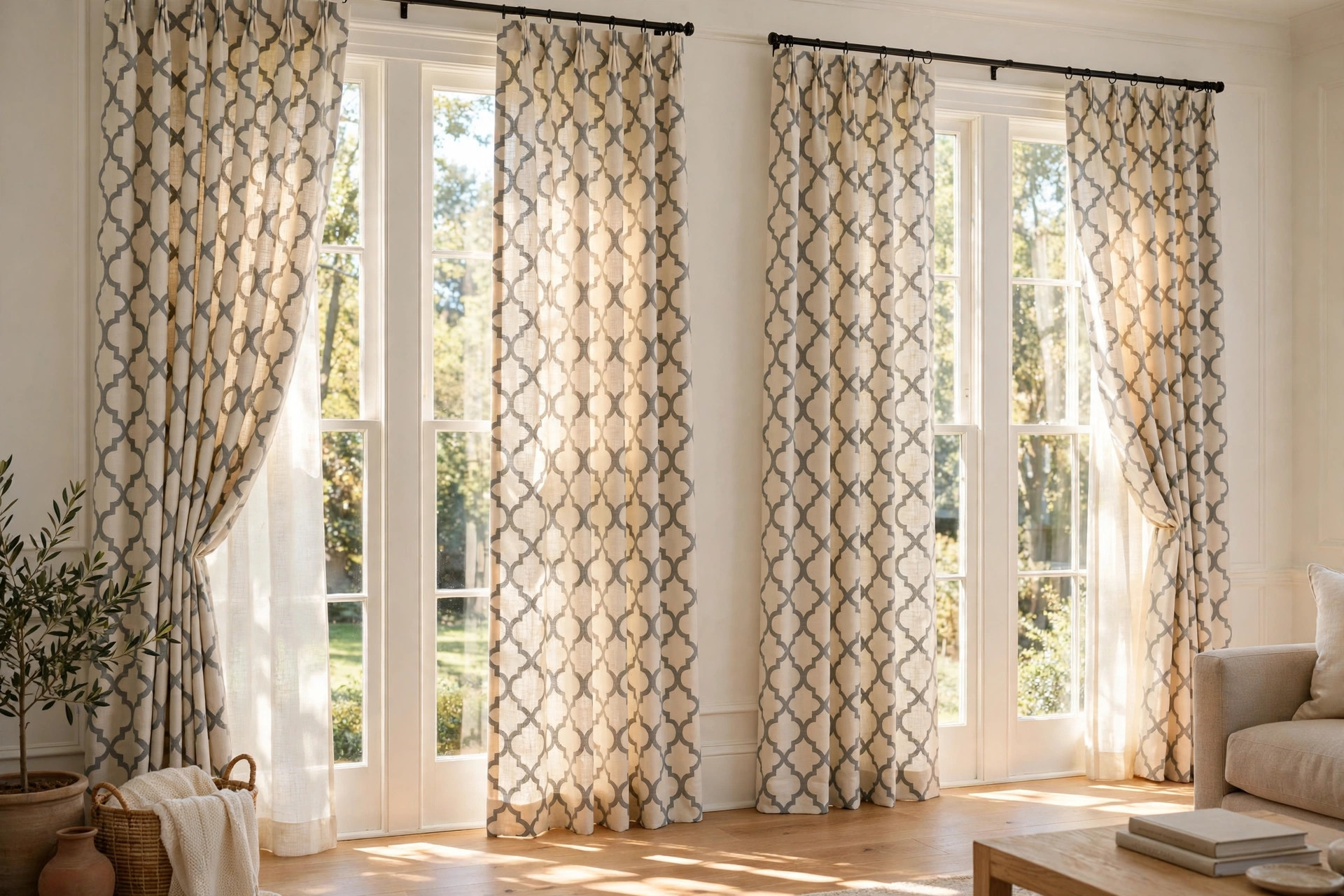

Many shoppers now look for the top rated Moroccan pattern curtains for southern states. The reason is simple. These curtains join two fine qualities. They bring a bold and timeless print into the room. And they give shade and comfort in homes that face long hours of hard sun. From Texas to Florida, the southern sun is strong for much of the year. A plain curtain may block the light, but a Moroccan print turns a plain window into the center of the room.
This guide covers the prints, fabrics, linings, and sizes, plus cost, care, and safety. Read it before you buy.
Why Moroccan Pattern Curtains Suit Southern Homes
The south has light. Much of the year brings bright mornings and long afternoons. Homes in the southern states often have large windows and sliding doors. These bring in light and air. But they also bring glare and heat. A curtain is the first line of defense. The right curtain softens the glare. It keeps the room cooler. And it gives the room a finished look.
Moroccan patterns fit this job well. The classic prints come from the tiles and screens of North Africa: the trellis, the quatrefoil, the eight-point star, and the curved arch. These small repeated shapes read as texture from across the room and show fine detail up close.
There is another reason. Many top rated Moroccan pattern curtains for southern states use light colors. White, cream, sand, and soft gray are common. Light colors reflect heat. They do not fade as fast in strong sun. Dark colors absorb heat and can grow warm to the touch. They can also fade in a single summer. So a light Moroccan print is not only pretty. It is practical for a warm home.
The pattern also hides dust and wear. Southern homes deal with dust, pollen, and humidity. A busy geometric print hides small marks better than a flat solid color. That keeps the curtains looking fresh between washes.
What to Look For When You Choose: Top Rated Moroccan Pattern Curtains for Southern States
A curtain has many parts. The print is only one of them. When you shop for the top rated Moroccan pattern curtains for southern states, check each part with care.
Fabric
Cotton is the most common choice. It feels soft. It hangs in a natural way. It breathes in warm rooms, which home guides often note as a plus. Cotton-polyester blends are also common. They resist wrinkles better than pure cotton. They keep their shape after washing. Linen looks fine and rich, but it wrinkles fast and costs more. Polyester is strong and resists fading. It does not breathe as well as cotton. For a hot climate, a cotton or cotton-blend curtain is often the best middle ground.
Check the fabric weight: a thin curtain lets light through, which is fine for a bright room. A thick curtain blocks more light and more heat. Many buyers in the south prefer a middle weight. It softens the glare without making the room dark at noon.
Lining
The lining matters more than most buyers think. A lined curtain lasts longer. The lining takes the sun instead of the face fabric. It also blocks more heat. Some top rated Moroccan pattern curtains for southern states come with a built-in lining. Others are sold as single panels, and you add your own lining. A white or cream lining is best, since it reflects the sun back out the window.
There are three common linings. A standard cotton lining gives body and a clean look. A thermal lining has a coated back that blocks heat in summer and keeps warmth in winter. A blackout lining blocks nearly all light. For a bedroom in a southern state, a blackout or thermal lining is often worth the extra cost.
Light Control and Heat
Think about what the room needs. A living room may need light filtering. That means the curtain softens the sun but keeps the room bright. A bedroom may need room darkening or blackout. That helps with sleep on long summer evenings. A home office may need glare control so screens stay easy to read.
Heat control is its own matter. Light-colored curtains with a lining can cut the heat that enters through glass. Some energy efficiency guides show that lined curtains reduce heat gain by a clear margin. They will not replace good insulation, but they help. If your power bills climb in summer, lined curtains are a low-cost step.
Size and Length
Measure the window before you shop. This step sounds plain. Many buyers skip it and regret it. Measure the width of the rod, not the window frame. For a full look, the curtain should be one and a half to two times the rod width when gathered. Measure the length from the rod to the floor or sill.
Floor-length curtains suit living rooms and bedrooms. Curtains that end at the sill suit kitchens and bathrooms. In the south, floor-length curtains are common because many homes have tall windows and sliding doors. Make sure a long curtain does not drag in a doorway where people walk.
Header Style
The header is the top of the curtain. It sets how the curtain hangs and slides. A rod pocket slides the rod through a sewn sleeve and gives a soft gathered look, but it can be hard to open and close each day. Grommets are metal rings set into the fabric. They slide smooth and fast. They give a clean modern look. Tab tops have fabric loops. Back tabs hide the rod for a neat pleated look. For a window you open and close daily, grommets or back tabs work best, and curtain hardware comes in standard sizes.
Types and Options on the Market
Not all Moroccan pattern curtains are the same. Here are the main types you will find.
Sheer panels. These thin, light panels let the Moroccan print show through the fabric. They give privacy in the day while keeping the room bright. They do not block heat. They work well as a layer under a heavier curtain.
Light-filtering panels. These are the most popular type. They soften the sun. They give daytime privacy. Most of the top rated Moroccan pattern curtains for southern states fall in this group. They come in many prints and colors.
Room-darkening panels. These block most of the light. They are lined or made of thick fabric. They suit bedrooms and media rooms. They also help keep a room cooler; product ratings compare blackout panels by how well they block light.
Thermal insulated panels. These have a coated lining for heat control. They are a smart pick for west-facing windows that take the afternoon sun; buying guides often recommend them for hot rooms. They cost more, but they can trim cooling costs over time.
Valances and tiers. A valance is a short top treatment, and curtain collections include many ready-made options. A tier covers only part of the window. These work in kitchens and bathrooms where full curtains would be too much. Some buyers pair a Moroccan valance with a plain solid panel.
Buyers often ask about custom thermal insulated curtains for small apartments. The same rules apply to small spaces. Measure with care. Choose a light color. And pick a lining that suits the room.
Cost and Price
Prices vary with fabric, size, and brand. A single ready-made panel often costs between ten and forty dollars. A pair of panels often costs between twenty and sixty dollars. Larger sizes, such as panels for sliding doors, cost more. Custom or thermal-lined curtains can run sixty to one hundred fifty dollars per pair.
A few points help you judge value. First, check whether the price is for one panel or a pair. Many listings show one panel. Buyers who need two must double the cost. Second, check the lining. A lined curtain costs more but lasts longer. Third, check the size. A tall window needs a longer panel. Short panels on tall windows look wrong and let in more heat at the top and bottom.
Sales are common at home decor retailers, so it pays to watch prices for a few weeks. Buy from a store with a fair return policy. Live with the curtain for a week. If the color looks wrong in your light, send it back. Morning light in a southern home is very different from store light.
Related kitchen windows may call for a different style, such as the ones covered in buy cafe curtains for kitchens online in arizona. A short cafe curtain can pair well with a Moroccan valance for a layered look.
Care and Upkeep
Southern sun, dust, and humidity test every curtain. Good care keeps the print sharp.
Dust the panels often with a soft brush or a vacuum brush tool.
Wash as the label directs; care guides suggest cold water for printed fabrics. Most cotton and cotton-blend curtains are machine washable. Use cold water, a gentle cycle, and a mild soap. Strong bleach can harm the print. Dry on low heat or hang to dry. Take the panels out of the dryer while still a little damp. Smooth them and hang them. This cuts wrinkles.
No curtain lasts forever in a south-facing window. A lining slows the damage. So does turning the panels now and then, if the style allows. When the print starts to look pale, it may be time to replace the panels. Most lined curtains last five to eight years in a bright room. Unlined curtains in hard sun may last only three to five years.
Humidity is a fact of life in the Gulf states. Make sure the room has air flow. Damp fabric can grow mold. If a panel smells musty, wash it and dry it fully in moving air.
Buyers who prefer hard treatments sometimes look at machine washable real wood blinds buying guide. Blinds and curtains can work together. A blind gives fine light control. A Moroccan curtain over it adds softness and style.
Safety
Curtains are safe when hung well. A few rules keep them that way.
First, cords. Old blinds and shades have looped cords. These can be a hazard to small children and pets. When you hang curtains, remove or replace any corded blinds behind them. Choose cordless products where you can. Keep cords short and out of reach. The safety commission’s guides give clear rules for corded window coverings, and they are worth reading before you buy.
Second, mounting. Use a strong rod and solid anchors rated for the weight of heavy lined curtains. In drywall, use anchors made for the load. In plaster or brick, use the right screws. A falling rod can hurt a child.
Third, clearance. Keep curtains away from heat sources. Do not hang long panels near a fireplace, a stove, or a space heater. In the south, portable heaters see less use. But a fireplace or a hot vent still calls for care. Leave at least a few feet of space.
Fourth, length near cribs. In a nursery, keep cords and long curtain tails away from the crib. A short sill-length style is often the safer pick for a child’s room.
Frequently Asked Questions
Do Moroccan pattern curtains help keep a room cool?
Yes, to a point. A lined curtain in a light color can cut the heat that comes through the glass. It will not cool a room the way an air conditioner does. But it trims the load on the system. Thermal-lined panels do the best job. Hang them close to the window for the best result.
What colors work best in southern states?
Light colors work best. White, cream, ivory, sand, and soft gray reflect heat and resist fading. Many top rated Moroccan pattern curtains for southern states come in these shades. Dark navy or black prints look bold, but they fade faster in hard sun. If you love a dark print, choose one with a strong lining.
Should I choose grommets or a rod pocket?
It depends on how you use the window. Grommets slide easy. They are best for windows you open and close every day. A rod pocket gives a soft gathered look. It suits windows that stay dressed most of the time. Both styles work with Moroccan prints.
How do I measure for curtains on a sliding glass door?
Measure the full width of the rod or track, as measuring guides advise. Then add extra width so the panels can gather. For a standard slider, two wide panels or four narrow panels work well. Measure the length from the rod to the floor. Let the panels just touch the floor or hang a half inch above it.
Can I wash Moroccan pattern curtains at home?
Most of them, yes. Check the label first. Machine wash in cold water on a gentle cycle. Skip the bleach. Tumble dry low or hang to dry. Press with a cool iron if the label allows. Sheers need a gentler touch than heavy lined panels.
How long will these curtains last in a sunny room?
A lined curtain in a bright south or west window often lasts five to eight years. An unlined curtain in the same spot may last three to five years before the print fades. A lining, light colors, and regular care all add life.
A Short Final Word
The top rated Moroccan pattern curtains for southern states earn their name. They handle hard sun. They soften glare. They add pattern and warmth to rooms that need both. Start with your window measurements. Pick a light color and a good lining. Choose a header style that fits how you live. Then hang the panels and enjoy the change. A good curtain is a small buy with a daily reward.
References
Blinds.com. (n.d.). Window blinds, shades, and shutters. https://www.blinds.com Bob Vila. (n.d.). Home improvement advice. https://www.bobvila.com Consumer Reports. (n.d.). Product reviews and ratings. https://www.consumerreports.org ENERGY STAR. (n.d.). Energy efficient products. https://www.energystar.gov HGTV. (n.d.). Home and garden ideas. https://www.hgtv.com IKEA. (n.d.). Home furnishings. https://www.ikea.com The Home Depot. (n.d.). Home improvement products. https://www.homedepot.com The Spruce. (n.d.). Home and garden advice. https://www.thespruce.com U.S. Consumer Product Safety Commission. (n.d.). Product safety information. https://www.cpsc.gov Wayfair. (n.d.). Furniture and home goods. https://www.wayfair.com
Was this guide helpful?

About David Wilson
The My Garden US editorial team writes practical, in-depth home and garden guides for American homeowners — tested advice, no fluff.
You May Also Like
Affordable Light Filtering Roller Shades Buying Guide
April 11, 2026 0 views
Affordable Nursery Room Darkening Shades for Midwest Homes: A Simple Buying Guide
September 30, 2026 0 views
Reliable Blinds Installation Companies in California: A Homeowner’s Guide
May 18, 2026 0 views