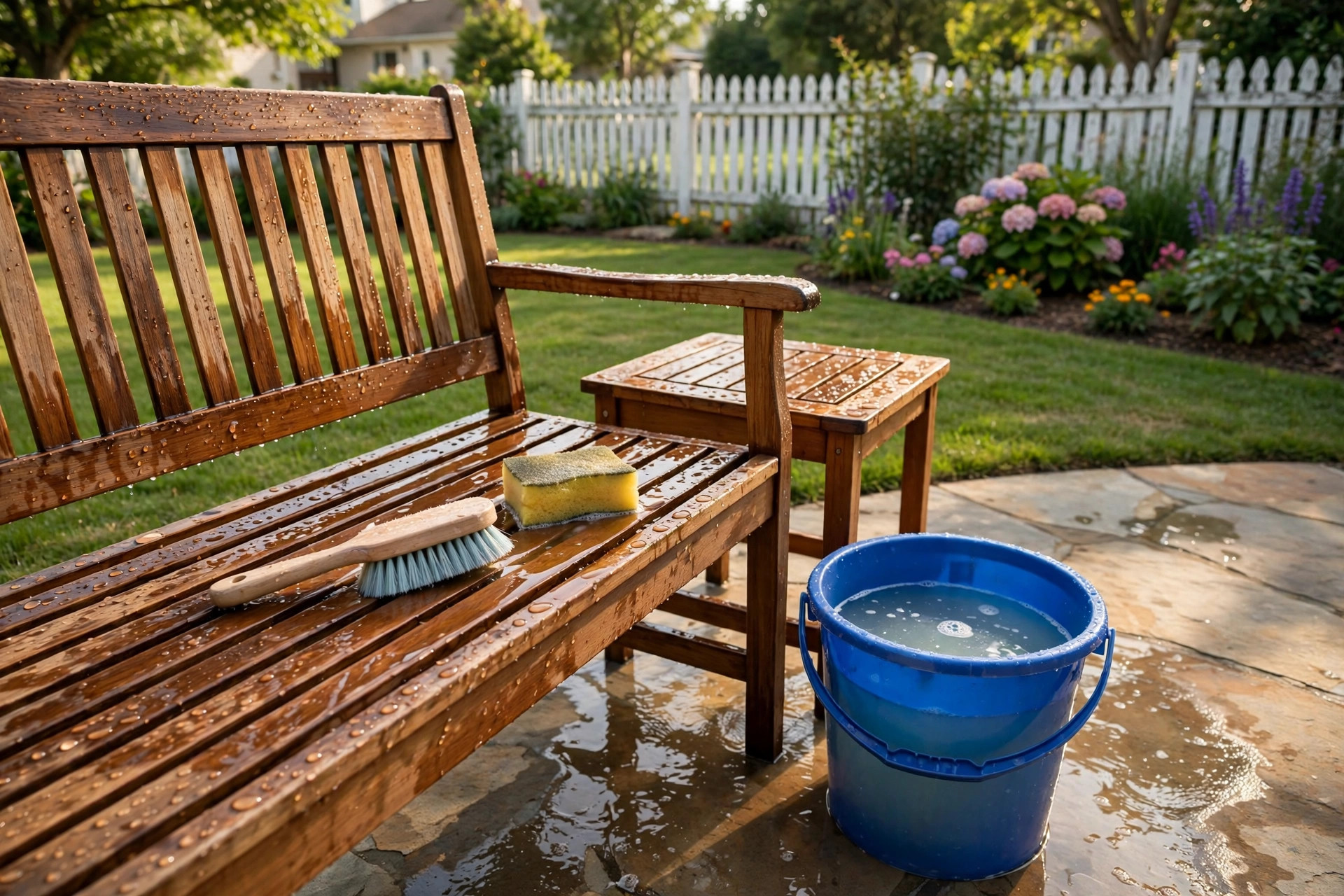

Teak is one of the finest woods for outdoor furniture. It stands up to rain, sun, and frost far better than most other woods. But even teak needs cleaning. Dirt, dust, mildew, and grey weather stains build up over time. Many owners now ask how to clean teak furniture with vinegar instead of harsh chemicals. The answer is simple. A mild vinegar wash is cheap, safe, and easy. It lifts grime without harming the wood. This guide shows you how to do it right, what tools you need, and what to avoid.
Why Vinegar Works on Teak
White vinegar is a mild acid. It breaks down dirt, mineral spots, and surface mildew. It cuts through the grey film that forms when teak weathers outdoors. Unlike bleach or strong cleaners, vinegar does not strip the natural oils of the wood. Teak is full of these oils. They are what make the wood resist rot and insects. A gentle wash keeps those oils in place.
Vinegar is also safe for the garden. When you rinse your teak bench or table, the wash water runs onto the lawn or flower beds. A diluted vinegar rinse will not harm grass or plants. This matters to anyone who keeps a tidy yard. Store-bought teak cleaners often carry strong chemicals. They may warn against runoff near plants and pets. Vinegar carries no such warning at normal strength.
Cost is another reason. A gallon of plain white vinegar costs a few dollars at any grocery store. That is enough to clean a full patio set. You do not need special tools. A bucket, a soft brush, and clean water are enough. For more on keeping your set in good shape through the seasons, see our teak patio set maintenance tips guide.
What You Need Before You Start: How to Clean Teak Furniture with Vinegar
Gather your supplies before you touch the furniture. This keeps the work smooth.
Your cleaning kit
– Plain white distilled vinegar (five percent acidity, the kind sold for cooking) – A bucket of clean warm water – A soft-bristle brush or a large soft sponge – Two clean rags or old towels – A garden hose with a gentle spray nozzle – Rubber gloves (optional, but helpful for long jobs)
Do not use apple cider vinegar or wine vinegar. They can stain light wood. Do not use a wire brush or a stiff scrub pad. They will scratch the soft surface of the teak. Test your mix on a hidden spot first. The underside of a seat or the back of a leg is a good place.
When to clean
Pick a dry, mild day. Morning is best. Direct hot sun will dry the vinegar mix too fast. That can leave streaks. A cloudy morning or a shaded spot on the patio is ideal. Plan to let the furniture dry fully after rinsing. Two to three hours in open air is enough in most weather.
Step-by-Step: How to Clean Teak Furniture with Vinegar
Follow these steps in order. Take your time. Teak rewards gentle care.
1. Rinse off loose dirt
Spray the piece with the garden hose. Use a soft shower setting. Wash away dust, leaves, pollen, and bird droppings. Do not use a pressure washer. High pressure can gouge teak and raise the grain. A plain hose is all you need at this stage.
2. Mix the vinegar solution
Fill your bucket with one gallon of warm water. Add one cup of white vinegar. This one-to-sixteen mix is strong enough to clean yet gentle on the wood. For heavy mildew spots, you can raise the mix to two cups per gallon. Never use vinegar straight from the bottle at full strength on a large area. Full strength acid can dry out the surface and leave it dull.
3. Wash the wood with the grain
Dip the soft brush in the mix. Scrub in the direction of the wood grain. Short, even strokes work best. Work one section at a time, such as one chair seat or one armrest. Let the mix sit on the wood for three to five minutes. This gives the acid time to loosen grime.
4. Treat stubborn spots
Mildew shows up as small black or green dots. Bird droppings can leave hard white marks. For these, dampen the spot with the mix and let it sit a full ten minutes. Then scrub gently. If the spot holds on, repeat the wash a second time. Do not gouge at the spot with a hard tool. Patience cleans better than force.
5. Rinse clean
Spray the piece with fresh water. Wash off all the vinegar. Any mix left behind can leave a film when it dries. Run your hand over the wood after rinsing. It should feel smooth and clean. If it feels slick or sticky, rinse again.
6. Let it dry in open air
Stand the piece upright so air moves around it. Wipe the legs and joints with a clean towel to remove standing water. Then let it air dry for two to three hours. Do not cover the piece while it is damp. Covers trap moisture and invite mildew.
What to Watch For
Grey weathered teak
Teak left outside turns a silver-grey color. This is normal. It is the sun at work on the surface. Many owners like the grey look. If you want it gone, vinegar washing alone will not bring back the golden brown color. It cleans the grey, but it does not restore the warm tone. To bring back the color, you must sand the surface lightly and then apply teak oil. Our guide on how to refinish teak outdoor furniture walks through that longer job.
Oily or sticky spots
Teak gives off natural oils. On a hot day, these oils can rise and leave sticky patches. Vinegar cuts them well. If a sticky spot survives one wash, mix a small cup of warm water with a drop of plain dish soap. Wash the spot with a soft rag. Rinse well. Keep soap use to a minimum. Soap residue can dull the wood over time.
White marks and rings
Rings from glasses and plant pots are common on teak tables. A vinegar wash lifts most fresh rings. Old rings that have sat for months may need a light sanding. Use very fine sandpaper, work with the grain, and stop as soon as the mark fades. Wipe the dust off before the vinegar wash.
Caring for Teak After Cleaning
Cleaning is only half the job. A little care after each wash keeps the wood strong for decades.
Brush off debris often. Leaves and seeds hold moisture against the wood. Sweep the furniture once a week in the fall.
Cover when the season turns. A breathable furniture cover keeps winter rain and snow off the wood. Heavy duty covers made for outdoor furniture are best. Make sure the cover is vented so air can move under it.
Oil or seal if you like the warm color. Clean teak can take oil at once. Teak oil brings back the rich golden tone and adds a layer of protection. Apply thin coats with a rag. Wipe off the extra. Let each coat dry a full day. Skip the oil if you prefer the grey look. The wood will last just as long.
Clean the cushions too. Dirty cushions can stain clean wood. Wash fabric cushions in the same weekend you clean the frames. Our notes on how to clean outdoor furniture cushions cover fabric types and drying tips.
Check the joints. Teak furniture is often held with brass or stainless screws. Rinse any green corrosion off the fittings while you wash. Tighten loose screws once a season.
Cost of Vinegar Cleaning vs. Other Methods
Vinegar is the cheapest way to clean teak. The numbers below show why.
Vinegar wash. One gallon of white vinegar costs about three dollars. You will use less than a quarter gallon per chair or small bench. The full job costs under five dollars, plus an hour of your time.
Commercial teak cleaner. Store-bought teak cleaners run from twelve to thirty dollars a bottle. One bottle covers a small patio set. Many of these cleaners contain acids or bleaches. They work fast, but they can dry out the wood. They also need careful handling near pets and plants.
Teak restoration kit. Two-part cleaner and brightener kits cost thirty to sixty dollars. They restore the golden color in one day. They are the right choice when the wood is deeply weathered. They are overkill for a normal seasonal cleaning.
Professional cleaning. Hiring a service to clean a full patio set costs one hundred to three hundred dollars. This makes sense for large sets or for owners who cannot do the work themselves.
For regular care, the vinegar wash wins on price. Save the stronger products for years when the wood needs a full restoration. Shoppers comparing patio sets and care products can read independent test results at Consumer Reports (https://www.consumerreports.org) before buying.
Safety Notes
Vinegar is mild, but a few rules keep the job safe.
Keep it away from your eyes. Vinegar stings if it splashes. Wear simple glasses or sunglasses while scrubbing overhead pieces.
Do not mix vinegar with bleach. The mix gives off fumes that harm the lungs. Use vinegar alone. If you must use bleach for deep mildew on another project, do it on a different day with a fresh rinse between.
Protect stone and concrete. Vinegar can etch some natural stone and dull concrete sealers. Lay an old sheet or tarp under the furniture if it sits on a stone patio. Move potted plants aside while you rinse.
Mind the fittings. Most teak furniture uses brass or stainless steel screws. Vinegar will not harm them at wash strength. Cheap steel screws may show a dark spot if soaked. Rinse fittings promptly.
Store vinegar away from children. A cleaning bucket looks like water to a small child. Keep the bucket where little ones cannot reach it. This is the same caution advised by the U.S. Consumer Product Safety Commission (https://www.cpsc.gov) for all household cleaning jobs.
Frequently Asked Questions
Can I use vinegar on a teak bench that has never been oiled?
Yes. Unfinished teak takes a vinegar wash well. The natural oils in the wood protect it. Rinse fully and let it dry. No oil is needed after unless you want the golden color.
Will vinegar remove the grey color from weathered teak?
No, not fully. Vinegar cleans the surface dirt and mildew from grey teak. It does not undo the sun bleaching that causes the grey tone. Only sanding and oiling bring back the warm brown color. Many owners keep the grey look on purpose. It is the classic teak patio look.
How often should I wash teak furniture with vinegar?
Twice a year is enough for most homes. Wash once in spring when you bring the furniture out or uncover it. Wash once more in late summer. Furniture under trees or near a pool may need a third wash, since pollen and splash stains build up faster.
Is vinegar safe for teak with fabric cushions or rope seats?
Yes, for the wood. But keep the wash off the fabric when you can. Vinegar can spot some dyed fabrics. Remove cushions before you wash the frames. Rinse rope or cord seats with plain water only, then let them dry in the sun.
Can I use a pressure washer after the vinegar wash?
Avoid it. Pressure washers force water deep into teak. This raises the grain and opens cracks. The wood then dries unevenly. A garden hose with a shower nozzle is all the pressure you need.
What if the mildew keeps coming back?
Mildew returns when the wood stays damp. Check your storage. Covers must vent. Furniture must not sit in standing water. Move pieces to a spot with good air flow and morning sun. A yearly vinegar wash in that spot will keep mildew away.
A Final Word
Teak earned its place on patios across America by standing up to the weather. A vinegar wash is the gentlest way to keep it clean. It costs almost nothing. It is safe for the lawn, the pets, and the gardener. Mix it mild, scrub with the grain, rinse well, and let the sun do the drying. Do that twice a year and your teak bench, chairs, and table will serve your family for decades. Retailers with wide patio lines, such as IKEA (https://www.ikea.com) and Wayfair (https://www.wayfair.com), carry care products and covers if you want to stock up for the season.
References
IKEA. (n.d.). Home furnishings and outdoor furniture. https://www.ikea.com Wayfair. (n.d.). Furniture, home decor, and outdoor living. https://www.wayfair.com Consumer Reports. (n.d.). Product reviews and ratings. https://www.consumerreports.org U.S. Consumer Product Safety Commission. (n.d.). Home safety guidance. https://www.cpsc.gov
Was this guide helpful?

About Emily Rodriguez
The My Garden US editorial team writes practical, in-depth home and garden guides for American homeowners — tested advice, no fluff.
You May Also Like

How to Install Deck Privacy Screen: A Step-by-Step Guide
March 22, 2026 0 views
Patio Shade Sail Installation Guide: A Step-by-Step Plan for Cool, Shady Summers
April 15, 2026 0 views
How to Hang Patio Curtains on Pergola: A Plain Guide for Homeowners
July 30, 2026 0 views