
Why This Guide Exists
When winter comes to the Northeast, the cold is serious. Maine, New Hampshire, Vermont, Massachusetts, Connecticut, New York, New Jersey, and Pennsylvania face long seasons of snow, ice, and wind. A strong furnace is not a luxury. It is a must. This guide brings together the best oil furnace reviews for Northeast USA homeowners and explains what those reviews mean in plain terms.
If your old unit is failing, or if you bought a home with an aging burner, you need facts before you spend thousands of dollars. The sections below walk through the leading brands, the numbers that matter, the prices you may pay, and the care that keeps a furnace alive for decades.
Why Oil Heat Still Matters in the Northeast: Best Oil Furnace Reviews for Northeast Usa
About one in five homes in New England still burns heating oil. That share is far higher than in any other region of the country. The reason is history. Oil dealers built delivery routes through small towns and country roads long ago. The trucks still run those routes today.
A gallon of heating oil holds about 138,500 BTUs of energy. That is a dense fuel. It warms a cold house fast on the coldest nights, when the wind cuts through old clapboard and the thermometer drops below zero. For many homeowners, that power is the main argument for oil.
The fuel itself is changing, too. Most states in the region now require or encourage Bioheat fuel, which blends biodiesel with standard heating oil. The National Oilheat Research Alliance tracks this shift and explains how modern burners handle the blends with no changes. The result is lower carbon output from the same tank and the same burner.
What the Reviews Say: The Leading Brands
Reviewers judge oil furnaces on a few clear points. Build quality comes first. Then efficiency ratings, noise, burner reliability, warranty terms, and the strength of the dealer network. A great furnace with no local service is a poor choice.
Thermo Pride
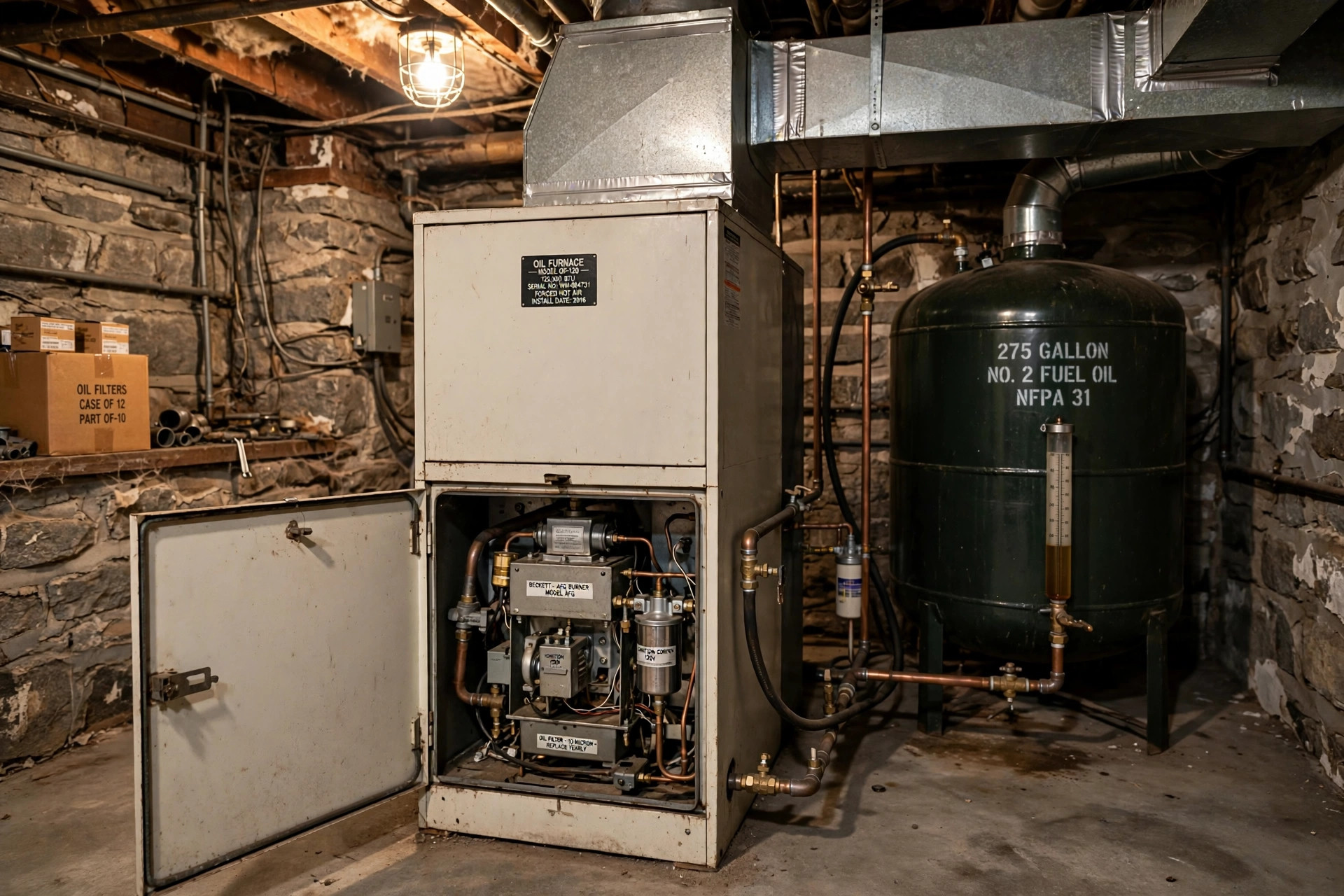
Thermo Pride earns the most praise in owner reviews, almost across the board. The brand builds its cabinets from heavy-gauge steel and uses octagonal heat exchangers that resist warping. Owners report units that run for thirty years or more with steady care. Contractors call the brand the gold standard of oil heat.
The drawback is price. Thermo Pride units cost more than most rivals, and fewer dealers sell them. But for homeowners who plan to stay in the house for decades, reviewers say the extra money pays back in fewer repairs.
Lennox
Lennox sells a line of oil furnaces built for cold climates. Reviews praise the brand for solid efficiency numbers and quiet operation. Lennox offers two-stage models that run at lower fire on mild days and ramp up when the cold deepens. The company backs its units with a wide dealer network, which matters when a burner fails on a January night.
Some reviewers note that Lennox oil furnaces cost more than value brands, and that parts can be pricier. The warranty terms are fair but not the longest in the field.
Carrier
Carrier is one of the biggest names in American heating. Its oil furnace line earns good marks for build quality and consistent burner performance. Reviewers like the brand’s sealed combustion options, which draw air from outside and keep basement air cleaner. Carrier units tend to run in the mid-80s on the AFUE scale.
Carrier’s dealer network is wide, and factory-trained techs are easy to find across the Northeast. The main knock in reviews is the premium-tier price.
Adams Manufacturing and Williamson-Thermoflo
For buyers who want solid heat without a premium price, reviewers often point to Adams Manufacturing and Williamson-Thermoflo. These smaller American makers focus on oil equipment. Their furnaces use simple, rugged designs that local techs can service with standard parts.
Reviews praise the value. The units cost less up front, and repair bills stay low because parts are common and cheap. The trade-off is efficiency. Most models sit at the lower end of the modern AFUE range. For a rental property or a camp, many reviewers call them the smart pick.
Brands With Limited or No Oil Lines
A few big names appear in furnace talk but sell little or no oil equipment. Rheem and Trane focus on gas and electric systems. Goodman is a value leader in gas furnaces. Homeowners often meet these brands when they compare oil against gas. If natural gas reaches your street, that comparison leads many buyers to read our guide on oil to gas boiler conversion cost usa. Conversion can make sense, but only when the gas line is close and the numbers work.
What to Look for When You Compare Oil Furnaces
The AFUE Rating: The Efficiency Number
AFUE stands for Annual Fuel Utilization Efficiency. It tells you what share of each gallon of oil becomes heat for your house. A unit rated at 85 AFUE turns 85 cents of each fuel dollar into warmth. The rest goes up the chimney.
Older oil furnaces from the 1980s often ran at 60 to 70 AFUE. Modern units range from about 82 to 90. The U.S. Department of Energy publishes plain guidance on these ratings and on federal minimums. The ENERGY STAR program lists certified heating equipment that meets higher efficiency marks. Aim for 84 AFUE or better. In the Northeast, where fuel bills run high, each extra point of efficiency pays back real money over the life of the unit.
Single-Stage, Two-Stage, and Variable-Speed Burners
A single-stage burner runs at full fire or it runs not at all. It is simple and cheap, and it has warmed houses for a hundred years. The weakness is comfort. Full-fire heat can overshoot the thermostat setting, then shut off and let the house cool. The cycle repeats.
A two-stage burner fires at a low level most of the time and shifts to high fire only in deep cold. The result is steadier room temperatures and fewer start-stop cycles, which cuts wear on parts. Two-stage costs more up front. Reviewers say the comfort gain is worth it in the Northeast, where the heating season runs six months.
Variable-speed blowers adjust air flow to match the burner. They run quieter and move air more evenly through the ducts. They also help air conditioning in summer, if the furnace blower drives a cooling coil.
Sizing the Furnace to the House
Furnaces are rated in BTUs per hour of heat output. A small cape in Connecticut might need 60,000 BTU per hour. A large colonial in Maine might need 140,000. Bigger is not better. An oversized furnace short-cycles, wastes fuel, and wears out faster.
A proper heat-load calculation, often called a Manual J, tells the right size. A good dealer measures the house, checks insulation and windows, and runs the numbers. This Old House offers homeowner-friendly advice on sizing and on the questions to ask a contractor. Be wary of any dealer who sizes by square footage alone.
Burner Quality and Noise
The burner is the heart of the machine. Most quality furnaces use burners from Beckett or Riello, two makers with long records in oil heat. Reviewers praise Riello for quiet operation and Beckett for parts availability. When you read a review, check which burner the model uses.
Types of Oil Furnaces on the Market
Standard Efficiency Oil Furnaces
These units carry AFUE ratings in the low to mid-80s. They use proven designs with no complex extras. The price is lower, and any oil tech can service them. For a homeowner who needs heat now at the lowest installed price, they remain a fair choice.
High Efficiency Oil Furnaces
High efficiency models push AFUE into the upper 80s and low 90s. They squeeze more heat from each gallon with better heat exchangers and smarter controls. The fuel savings can be large over fifteen to twenty years. The price premium is real, so weigh the high efficiency furnace pros and cons for your own fuel use before you commit. Heavy fuel users gain the most.
Oil Furnaces With Hot Water Coils
Some oil furnaces include a tankless coil that heats domestic hot water. This setup gives endless hot water without a separate water heater. Reviewers are mixed. The coil keeps the furnace hot all summer, which wastes fuel in warm months. Many experts now advise a separate indirect water heater fed by the furnace instead.
Cost and Price: What a New Oil Furnace Runs
Money questions dominate the reviews. Here is what homeowners in the Northeast report.
The furnace itself, the equipment alone, usually costs between 2,500 and 6,000 dollars depending on size, brand, and efficiency. Premium brands like Thermo Pride sit at the top of that range. Value brands sit at the bottom.
Installed price is the number that matters. A full installation with labor, permits, and basic ductwork changes usually runs from 4,500 to 10,000 dollars or more. Industry data puts the Northeast toward the high end because labor rates and permit costs run high. Hard installations, such as a basement with tight access or a chimney that needs a new liner, push the total higher.
Extra costs catch some buyers by surprise. Removing an old underground oil tank can cost several thousand dollars, and some states require soil testing. Replacing an old single-wall oil line with a protected line adds a few hundred dollars. A new chimney liner may add 1,000 to 2,500 dollars. Ask your dealer for a written quote that lists every item. The furnace replacement cost near me 2026 market varies by town, so get at least three quotes before you sign.
One more note on value. When fuel prices spike, some homeowners ask whether to switch fuels entirely. Our comparison of heat pump vs furnace cost comparison usa lays out that choice in detail. Cold-climate heat pumps have improved, but in the deep cold of northern New England, many homes keep oil as the main or backup heat.
Care and Upkeep
An oil furnace rewards steady care and punishes neglect. Reviewers who report thirty-year unit lives share one habit: a yearly tune-up every fall.
A full tune-up includes a new nozzle and fuel filter, cleaning of the heat exchanger and flue passages, a check of the electrodes and transformer, a combustion test with a smoke reading, and a look at the chimney and venting. The tech also checks the oil tank and lines for leaks. Family Handyman publishes homeowner guides that show what a tech should do on each visit, which helps you judge the quality of the service.
Between visits, keep the area around the furnace clear. Change or clean air filters on schedule. Listen for new noises and watch for soot marks around the unit. Soot means poor combustion, and poor combustion wastes fuel and can be unsafe.
Fuel quality matters, too. Order from a reputable dealer, keep the tank reasonably full to cut condensation, and consider a fuel treatment if your dealer recommends one. Sludge in the tank is a common cause of mid-winter no-heat calls.
Safety in the Home
Oil heat is safe when equipment is sound, but every homeowner should know the basics.
Install carbon monoxide detectors on each floor and near sleeping areas. Test them monthly. Oil burners can produce carbon monoxide if combustion goes wrong, and the gas has no color or smell.
Learn the smell of heating oil. If you smell strong oil fumes in the basement, shut off the burner switch and call your service company. Do not try to fix a leak yourself. Check the tank each fall for rust, weeps, or wet spots on the floor. An old tank with visible rust deserves a professional look before the heating season.
Keep flammable items away from the furnace. Boxes, paint cans, and gasoline belong in another space. Make sure the burner has fresh air. A furnace starved of air burns dirty and wastes fuel.
Frequently Asked Questions
How long does an oil furnace last?
Most oil furnaces last 15 to 25 years with yearly service. Premium units with heavy heat exchangers often run 30 years or more. The burner usually needs parts before the cabinet wears out.
What AFUE rating should I buy?
Buy at least 84 AFUE. That level meets current thinking for oil equipment and keeps fuel bills in check. Higher ratings save more fuel each year. Match the rating to your budget and to how long you plan to stay in the home.
Can I convert my oil furnace to natural gas?
Sometimes. A gas conversion burner can replace the oil burner in some furnaces, but the heat exchanger must be rated for gas. Many homeowners replace the whole unit instead. Gas must be available at your street. See our guide on oil to gas boiler conversion cost usa for the full breakdown.
Should I switch to a heat pump instead of oil?
Cold-climate heat pumps now work well in much of the Northeast, and they can cut fuel use sharply. But they cost more up front, and in the coldest zones many homes keep oil as backup. Our heat pump vs furnace cost comparison usa compares the two paths side by side.
How often should I service an oil furnace?
Once a year, every year, in the fall before the heating season. Skipping service is the most common cause of breakdowns and short unit life. A tune-up also keeps the warranty valid on most brands.
What does an oil furnace cost installed in the Northeast?
Expect 4,500 to 10,000 dollars for a standard replacement, with premium brands and hard installations running higher. Tank work, chimney liners, and duct changes add to the total. Get three written quotes and compare line by line.
A Final Word
The best oil furnace for your home is the one that fits the house, the budget, and the local service network. Read the reviews, but read them with the Northeast in mind. A unit praised in a mild climate may disappoint in a Maine January. Size it right, service it yearly, and buy from a dealer who will answer the phone when the wind howls.
References
Carrier. (n.d.). Heating and cooling systems. https://www.carrier.com ENERGY STAR. (n.d.). Energy efficient products. https://www.energystar.gov Family Handyman. (n.d.). DIY home repair and maintenance. https://www.familyhandyman.com Goodman. (n.d.). Heating and cooling equipment. https://www.goodmanmfg.com Lennox. (n.d.). Heating and cooling systems. https://www.lennox.com National Oilheat Research Alliance. (n.d.). Oilheat information and research. https://www.noraweb.org Rheem. (n.d.). Heating, cooling, and water heating. https://www.rheem.com This Old House. (n.d.). Home renovation guidance. https://www.thisoldhouse.com Trane. (n.d.). Heating and air conditioning. https://www.trane.com U.S. Department of Energy. (n.d.). Energy efficiency and renewable energy. https://www.energy.gov
Was this guide helpful?

About Jennifer Lee
The My Garden US editorial team writes practical, in-depth home and garden guides for American homeowners — tested advice, no fluff.
You May Also Like

Energy Star HVAC Rebate Finder by State: A 2026 Guide
June 13, 2026 0 views
Cool Roof Shingles Cost vs Regular Shingles in the USA
October 4, 2026 0 views
Best Mini Split for Cold Climates Reviews USA
April 13, 2026 0 views