
When a shopper types best ventless gas fireplace reviews usa into a search box, he usually wants one simple thing: honest facts about which ventless gas fireplace is worth the money. This guide gives those facts in plain words. It explains how ventless units work, what to look for, which types exist, what they cost, how to care for them, and how to stay safe. By the end, you will know how to read reviews like a careful buyer and pick a unit that fits your room, your fuel line, and your budget.
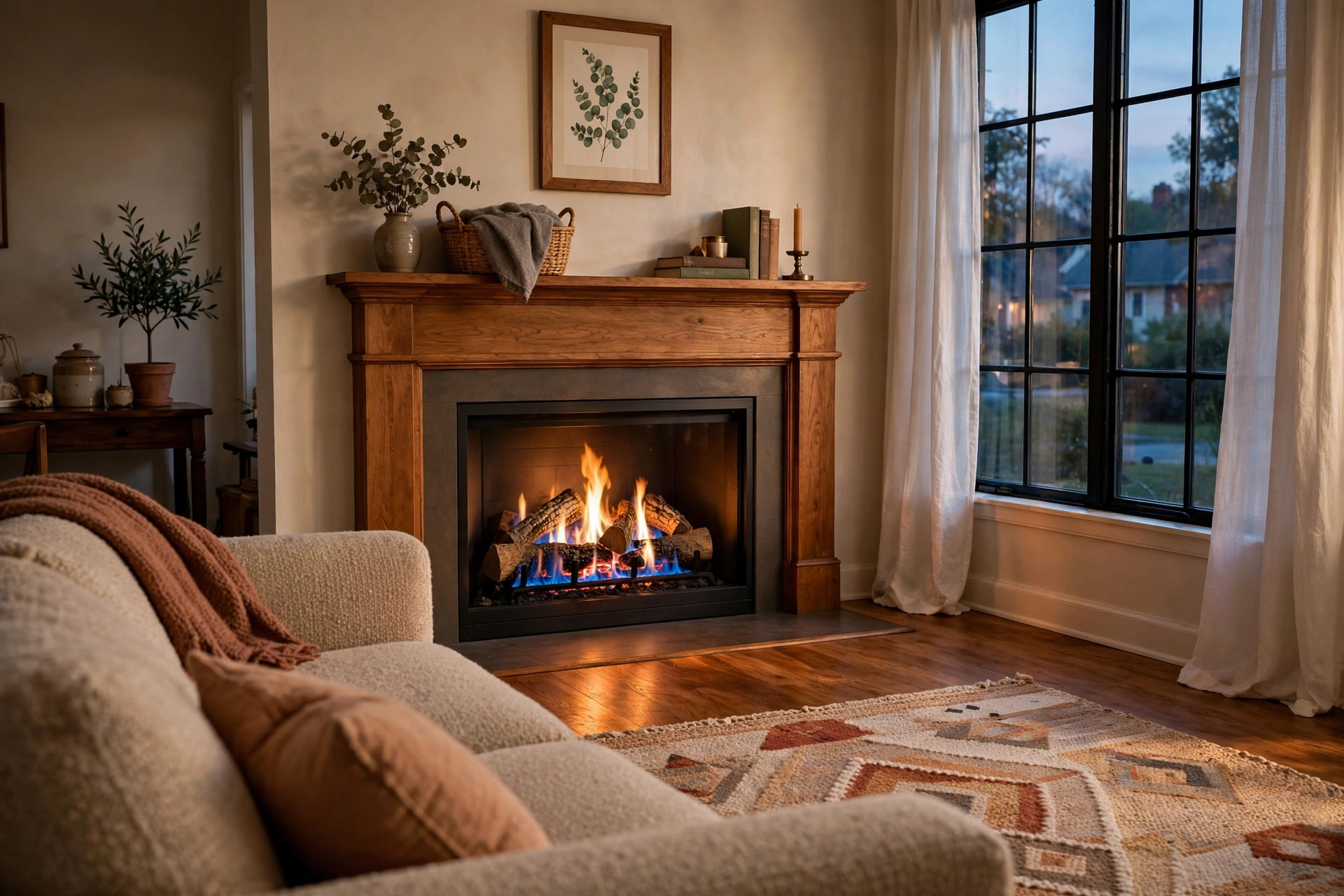
A ventless gas fireplace, sometimes called a vent-free fireplace, burns natural gas or propane and needs no chimney and no flue. The flame is tuned to burn so cleanly that most of the heat stays in the room instead of going up a vent. That is why so many reviews praise them for quick warmth. It is also why safety rules and local codes matter so much. Read on before you buy.
Why a Ventless Gas Fireplace Matters
Winter comes back every year, and the heating bill comes back with it. Many American homes have one cold room that never feels warm enough: a den, a finished basement, a sun porch, a big open living room. A ventless gas fireplace aims right at that problem. It adds heat where you need it, and it does so without the cost of building a chimney or cutting a vent through the wall.
The best ventless gas fireplace reviews USA shoppers post tend to praise three things. First, heat output. A mid-size unit can give 20,000 to 32,000 BTU per hour, enough to take the chill off a room of several hundred square feet. Second, efficiency. Because there is no vent, almost all the heat made by the flame stays inside the house. Third, looks. The flame is real, the logs look real, and the glow changes the feel of a room in a way a space heater never can.
But reviews also carry a warning that repeats again and again: check your local code first. Ventless gas fireplaces are not legal in every state or every city. California does not allow them, and some other localities limit them or require permits. A careful buyer checks the rule book before spending a dollar. Good advice from This Old House reminds homeowners that gas work and local codes are not places to guess; when in doubt, ask the local building office.
How a Ventless Fireplace Works: Best Ventless Gas Fireplace Reviews Usa
A ventless unit pulls room air into its burner, mixes that air with gas, and burns the mix so completely that the exhaust is mostly water vapor and carbon dioxide. Every unit sold in the United States must include an oxygen depletion sensor, a small safety device that shuts the burner off if the oxygen level in the room drops too far. This is required by national standards, and no honest review treats it as a bonus.
Most units are rated at about 99.9 percent combustion efficiency. That number is honest in one sense: very little fuel goes to waste. But it does not make the fireplace a whole-home heater. It is a room heater. It warms the space it sits in. Reviewers who love their units use them that way and let the main furnace handle the rest of the house.
Ventless fireplaces burn two fuels. Natural gas units hook to a home gas line. Propane units run from a propane tank or a home propane supply. The burner must be made for one fuel only, and the two are not interchangeable.
How to Choose: What the Best Reviews Look For
The best ventless gas fireplace reviews USA buyers trust all cover the same basic points. If a review skips these, it is not much use.
Heat output in BTU. Match the BTU rating to your room size. A small bedroom of 200 square feet needs only a modest unit. A great room of 800 square feet needs a much bigger one. Manufacturers print a suggested room size on the box. Trust it, but do not oversize. Too much BTU in a small room forces the oxygen sensor to trip, and the unit will shut itself down again and again.
Blue flame or infrared. Blue-flame burners heat the air itself and spread warmth through the room. Infrared burners heat objects and people in front of the fireplace, like the sun through a window. Reviewers with big open rooms often prefer blue flame. Reviewers who sit near the fireplace often prefer infrared. Neither is better for everyone.
Fuel type. Natural gas is cheaper per unit of heat in most places and never runs out, since it flows through a line. Propane works anywhere a tank can sit, which helps homes off the gas grid. Propane costs more per BTU in most markets. Pick the fuel you already have.
Thermostat or manual control. Basic units use a manual knob. Better units add a thermostat that cycles the burner to hold a room temperature, or a remote control. Reviews show that buyers who use the fireplace daily tend to wish they had bought the thermostat version.
Realistic logs and flame. Much of what you pay for is the look. Look at buyer photos in reviews, not just the studio photos. Buyer photos show the true flame color and the true log finish in a real home.
Certification. Look for testing marks such as ANSI Z21.11.2, which covers ventless gas heaters sold in the United States. Independent test data from sources like Consumer Reports is not in our linked set, but third-party review sites and hardware guides at Family Handyman often discuss what these marks mean.
Types of Ventless Gas Fireplaces
Four main styles appear in most reviews. Each suits a different home.
Wall-mounted units. These hang on a wall like a picture or a flat-screen television, though they are much thicker. They need only a few inches of depth, so they suit small rooms and apartments. Most are blue-flame models.
Freestanding and corner units. These look like a small wood stove or a cabinet. They stand on the floor and often give the best heat output for the price. Corner models fit neatly into a corner of a family room.
Built-in fireboxes. These sit inside a framed opening or a custom mantel. They cost more and often need a contractor to build the surround, but they look the most like a real fireplace. Reviews of built-in models talk a lot about the mantel work, which can cost as much as the unit itself.
Gas log sets. A ventless log set sits inside an existing masonry fireplace opening and turns it into a working gas fire without a chimney. Owners of old fireplaces they never use often pick this option. The existing damper must be closed and sealed, and the fireplace must be approved for ventless use.
Cost and Price: What You Will Pay
Ventless gas fireplaces are not expensive compared with most home heating work. A basic wall-mounted blue-flame unit of modest size can cost between two hundred and four hundred dollars. Mid-range units with thermostats, better logs, and remote controls run from four hundred to eight hundred dollars. Large built-in fireboxes with decorative fronts can run from eight hundred to two thousand dollars or more, and that is before the mantel or carpentry work.
Installation adds to the total. If a gas line already reaches the room, a licensed plumber or gas fitter can usually hook up the unit for a few hundred dollars. If a new gas line must be run across the house, the cost rises fast. Get two or three quotes, because gas work prices vary widely by city.
Running cost depends on fuel and use. A 20,000 BTU unit burning natural gas costs only pennies per hour at typical prices. Propane costs more per hour. Shoppers who pair a ventless unit with other low-cost winter moves, like the ones in our guide to how to lower your heating bill in winter, often report the biggest savings, because they heat one lived-in room and let the main thermostat rest.
Do not forget small extras. Some cities require a permit for gas appliance work. Some require a licensed installer. A carbon monoxide detector for the room is a small price, usually under forty dollars, and every review worth reading says to have one.
Care and Upkeep
A ventless gas fireplace asks little, but it does ask for regular attention. Dust is the main enemy. Dust on the burner or on the logs can cause sooting, and soot is a sign that the burner is not getting clean air.
Once a year, before heating season, do this simple work:
1. Turn the gas off and let the unit cool fully. 2. Lift out the logs carefully and set them on newspaper. Note how they sat, because they must go back the same way. 3. Vacuum the burner and the firebox with a soft brush attachment. 4. Wipe the glass, if the unit has glass, with a cleaner made for fireplace glass. 5. Check the pilot and the oxygen depletion sensor area for dust or cobwebs. 6. Put the logs back exactly as shown in the manual. Log placement shapes the flame, and wrong placement can cause sooting.
Call a licensed technician if you see yellow flames where blue ones should be, if soot appears on the logs or walls, if the pilot will not stay lit, or if you smell gas at any time. A gas smell means: do not light the unit, leave the room, and call the gas company from outside the house.
The U.S. Department of Energy publishes homeowner guidance on heating equipment care, and the same habit applies here: small yearly maintenance prevents large repairs.
Safety: The Section You Must Not Skip
Ventless gas fireplaces are safe when they are certified, installed correctly, used in the right room size, and kept clean. They are unsafe when any one of those is missing. The best ventless gas fireplace reviews USA homeowners write often include a safety paragraph, and you should read it closely.
Mind the code. Ventless units are restricted in some states and cities. Most codes also forbid them in small bedrooms and bathrooms. Check before you buy.
Size the room correctly. The unit needs enough room air to burn cleanly. A unit rated for a 700 square foot room does not belong in a 200 square foot bedroom. The oxygen sensor will shut it down, and repeated shutoffs are the unit telling you the room is too small.
Keep clearances and use a detector. Nothing flammable should sit within the clearances printed in the manual: curtains, furniture, papers, Christmas stockings. Place a carbon monoxide detector in the room, test it monthly, and change batteries on schedule.
Never run it unattended. Do not run it while you sleep or while the house is empty. It is a room heater, not a furnace. Also watch moisture: ventless combustion makes water vapor, and long daily use in a tight home can fog windows. If your windows weep, cut back the hours of use.
The Consumer Product Safety Commission at cpsc.gov is the federal agency that tracks home product hazards; checking its site for recalls before you buy is a smart habit for any gas appliance. Guides at Family Handyman also walk through fireplace clearances and safe placement in plain language.
How to Read Reviews Like a Pro
Not every review deserves your trust. Here is how experienced shoppers sort the useful ones from the noise.
Look for reviews with photos and a full winter behind them. Real photos show flame quality, log color, and how the unit fits a real room. A review written in March says the unit actually heated a room all winter; one written on delivery day says only that the box arrived.
Note the room size and climate. A five-star review from a mild climate in a 300 square foot room tells you nothing about how the same unit will do in a 700 square foot room in Minnesota. Match the reviewer situation to yours.
Read the negative reviews first. Happy buyers praise; unhappy buyers diagnose. One complaint may be a bad unit, but twenty complaints about the same pilot problem point to a design weakness. The low-star reviews show the real failure modes: hard starts, sooting, cheap remotes, short pilot life.
Major heating equipment makers like Carrier, Trane, Lennox, Rheem, and Goodman focus on furnaces and central systems rather than ventless fireplaces, but their sites explain how room-by-room heating fits into a whole-home plan. Our article on ductless mini split installation cost per zone covers another room-by-room heating option worth comparing.
Installation: DIY or Professional
Many ventless units are sold as do-it-yourself friendly, and mechanically they are simple: set the unit, connect the gas line, test for leaks. But gas is not a hobby. In many places the law requires a licensed gas fitter for the hookup even if you do the rest yourself.
A safe approach is this: handle the placement, the mantel, and the cosmetic work yourself, and pay a licensed professional for the gas connection and the first lighting. He will test the line pressure, check for leaks, and confirm the burner flame looks right.
If your home has no gas line at all, you will need one run from the meter or the tank. This is real plumbing work. Get permits where required. Old hands at This Old House have long advised that gas line work is one of the jobs homeowners should not teach themselves on the fly.
Shoppers sometimes pair a new fireplace with small comfort upgrades, like heavier window coverings. Our review guide to the best thermal curtains for winter covers one such upgrade that helps any room heater work less hard.
Frequently Asked Questions
Are ventless gas fireplaces safe? They are safe when they are certified to national standards, installed to code, used in a room of the right size, and kept clean. They include an oxygen depletion sensor that shuts the burner off if room oxygen drops. Still, you must follow clearances, use a carbon monoxide detector, and never run one while sleeping.
Are ventless gas fireplaces legal in my state? Rules differ by state and city. California does not permit them. Some other states and many local codes limit their use, forbid them in bedrooms or bathrooms, or require permits and licensed installers. Check with your local building department before buying.
How big a room can a ventless gas fireplace heat? It depends on the BTU rating. Small units around 10,000 BTU suit rooms of about 300 square feet. Large units near 32,000 BTU suit rooms near 1,000 square feet. Follow the manufacturer room-size chart and do not oversize a small room.
Do ventless fireplaces need a chimney? No. That is the point of the design. They need no chimney, no flue, and no vent through the wall. They do need room air for combustion, so the room must not be sealed airtight.
Natural gas or propane: which is better? Natural gas costs less per unit of heat in most places and flows through a line, so it never runs out. Propane works in homes off the gas grid but usually costs more per BTU. Buy the burner made for the fuel you have. The two are not interchangeable.
Will a ventless fireplace raise my heating bill or lower it? Used as a room heater, it usually lowers the total bill. You warm the room you live in and turn the main thermostat down. Used carelessly, with the main heat still running high, it just adds cost. The savings come from heating less space.
A Short Final Word
The best ventless gas fireplace reviews USA buyers leave all tell the same story in different words: pick a certified unit, size it to the room, respect the local code, and have the gas work done right. Do that, and you get a warm room, a real flame, and a heating bill that stops climbing. Skip those steps, and the bargain becomes a headache. Read the reviews, check the code, and buy once.
References
Carrier. (n.d.). Heating and cooling systems. https://www.carrier.com Consumer Reports. (n.d.). Product reviews and ratings. https://www.consumerreports.org Family Handyman. (n.d.). DIY home repair and maintenance. https://www.familyhandyman.com Goodman. (n.d.). Heating and cooling equipment. https://www.goodmanmfg.com Lennox. (n.d.). Heating and cooling systems. https://www.lennox.com Rheem. (n.d.). Heating, cooling, and water heating. https://www.rheem.com This Old House. (n.d.). Home renovation guidance. https://www.thisoldhouse.com Trane. (n.d.). Heating and air conditioning. https://www.trane.com U.S. Consumer Product Safety Commission. (n.d.). Product safety information. https://www.cpsc.gov U.S. Department of Energy. (n.d.). Energy efficiency and renewable energy. https://www.energy.gov
Was this guide helpful?

About Jennifer Lee
The My Garden US editorial team writes practical, in-depth home and garden guides for American homeowners — tested advice, no fluff.
You May Also Like
Thermostat for Two Zone System Reviews USA: A Plain Buyer’s Guide
June 19, 2026 0 views
Central AC Replacement Cost Near Me 2026
September 19, 2026 0 views
Steam Humidifier for Whole House Reviews: A Complete Guide for USA Homes
September 4, 2026 0 views