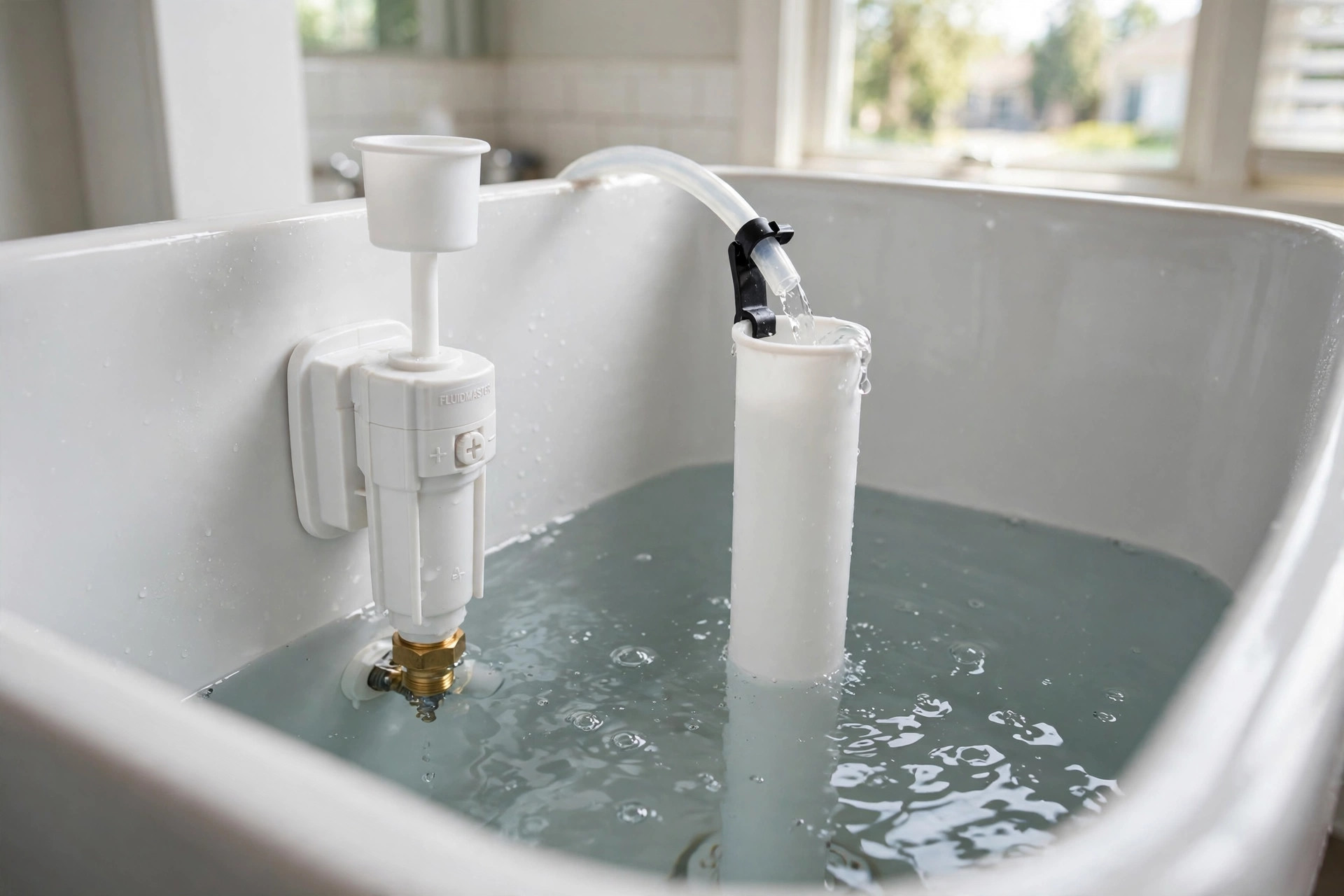

If your toilet runs at night or takes forever to refill, you may be looking up the toilet fill valve replacement cost near me. The fill valve is the part that refills the tank after each flush. When it wears out, water keeps running, the tank hisses, and your water bill climbs. The good news is that this is one of the most common and least costly repairs in the home. A new valve costs between $10 and $30 at most stores. A plumber charges $150 to $300 for the job when you add labor and a service call. Many homeowners finish it themselves in under an hour with one tool.
Why the Fill Valve Matters
The fill valve controls how much water enters the tank and stops the flow at the right level. An old valve may stick open, let water trickle into the bowl, or refill the tank very slowly. Each of these faults wastes water every day. A running toilet can waste 200 gallons a day or more. That is like flushing the toilet dozens of extra times without using it.
A new fill valve fixes the problem at its source. It also gives the tank a fresh start. Most valves last seven to ten years before the seals and floats wear out. Hard water shortens that life. If your valve is more than five years old and the toilet acts up, the valve is the first suspect.
Signs Your Fill Valve Needs Replacement: Toilet Fill Valve Replacement Cost near Me
Listen to the tank. A constant hissing or trickling sound means water is moving when it should be still. Look inside the tank. If water rises past the overflow tube, the valve is not shutting off. Watch the refill after a flush. A healthy valve fills the tank in one to three minutes. If it takes much longer, the valve may be clogged with sediment.
Another sign is a weak flush. The tank may not fill to the marked water line, so the bowl gets less water than it needs. You may also see the tank refill on its own every few minutes. This ghost flushing wastes water and points to a valve or flapper problem. Check both before you buy parts.
What to Look For When You Buy a Fill Valve
Valve Type
Most tanks use a universal tower-style fill valve. This design fits nearly every standard toilet made in the last thirty years. Older tanks may use a ballcock valve with a float ball on a metal arm. If you have a ballcock, a universal tower valve still works as a replacement in almost all cases. It costs less and adjusts more easily.
Adjustability
Buy a valve with an easy height adjustment. The top of the valve must sit about one inch below the top of the overflow tube. Twist-lock height designs let you set this in seconds without cutting the shank. A clip-adjust float is also easier than older screw designs.
Water Saving Features
Some valves let you fine-tune the tank level. A lower water line can save water if your toilet flushes well at that level. Look for the water line mark inside your tank and match the valve setting to it. Do not set the level above the overflow tube.
Brand and Fit
Universal valves from major brands fit most two-piece toilets. Check the tank size first. One-piece toilets and some compact models may need a specific part. Measure the tank or read the model number stamped inside the tank lid. Bring that number when you shop or call a pro.
Types of Fill Valves
Tower-style universal valves. The most common choice today. A float ring slides up and down a plastic tower. They are quiet, easy to adjust, and cost $10 to $20.
Ballcock valves. The older design with a float ball on an arm. Some very old toilets still have these. They work but are louder and bulkier. Most repair pros replace them with a universal tower valve.
Dual-flush valves. Used in two-piece dual-flush toilets with two buttons. These cost more, often $25 to $40, and match the brand of the toilet. Universal valves do not fit these models.
Pressure-assist parts. Commercial and some home pressure-assist toilets use special valves. These are not a do-it-yourself job in most cases. Call a licensed plumber if your tank has a sealed pressure vessel instead of an open tank.
Cost and Price Breakdown
The parts are cheap. That is what makes this repair so popular with homeowners.
| Item | Typical Price | |—|—| | Universal fill valve | $10–$20 | | Fill valve plus flapper kit | $20–$35 | | Dual-flush valve (brand specific) | $25–$40 | | Pro service call and labor | $150–$300 |
A plumber’s visit usually includes the trip fee, one hour of labor, and the part. Rates vary by city. In large metro areas the total may reach $300. In smaller towns it may sit near $150. Most pros charge a flat fee for this small job.
Do-it-yourself cost is just the part plus a sponge and a bucket. You need a pair of adjustable pliers or a small wrench. There is no need to turn off water to the whole house. The shutoff valve behind the toilet is enough.
When the Low Price Is Misleading
The valve itself is cheap, but a bad shutoff valve can add cost. If the supply valve behind the toilet will not turn or it leaks when you touch it, replace it too. That adds $15 to $40 in parts and some time. A corroded supply line is another common extra. Stainless braided lines cost about $10 and take five minutes to swap.
How a Professional Handles the Job
The plumber shuts off the water at the wall valve and flushes to empty the tank. A sponge soaks up the last inch of water. The old valve unscrews from under the tank. The new valve slides in, the lock nut tightens, and the supply line reconnects. The plumber sets the height, turns the water on, and checks the water line and the refill time.
The whole visit takes thirty to forty-five minutes. Most pros test the flush three or four times and check for leaks at the base of the valve. Ask them to check the flapper too. If the flapper is old, replacing both at once costs little and avoids a second service call.
Doing It Yourself: Step by Step
If you are handy and your shutoff valve works, this is a safe first plumbing job.
1. Turn off the water at the valve behind the toilet. Turn it clockwise until it stops. 2. Flush the toilet and hold the handle down to empty the tank. 3. Sponge out the last of the water into a bucket. 4. Unscrew the supply line from under the tank. Keep the bucket below it. 5. Loosen the plastic lock nut under the tank and lift the old valve out. 6. Adjust the new valve to the right height. The top should sit about one inch below the overflow tube. 7. Drop the new valve in and hand-tighten the lock nut. Snug it gently. Overtightening can crack the tank. 8. Reconnect the supply line and the refill tube. The refill tube clips into the overflow pipe. 9. Turn the water on slowly. Watch for leaks at the nut and the supply connection. 10. Check the water level against the mark inside the tank. Flush twice and watch the refill time.
If the valve hisses or the tank overfills, adjust the float down a small amount. Small changes make a big difference.
Care and Upkeep
A new fill valve needs little care. Once a year, look inside the tank and check the water line. Clean the valve screen if your water is hard. Sediment builds up on the small filter at the bottom of some valves. Turn off the water, pull the cap, and rinse the screen.
Do not use drop-in tank cleaners. The blue tablets sold in stores can eat the rubber seals in the valve and the flapper. If you want a clean bowl, use a cleaner that hangs in the bowl instead. This one habit can add years to the life of your valve.
Check the flapper at the same time. Press it and feel for rough spots. A rough or sticky flapper leaks water into the bowl and makes the valve cycle often. Replacing a worn flapper costs about $8 and takes five minutes.
Safety
Turn the water off before you start. Water and electricity do not mix, so keep cords and radios away from the tank while you work. Wear gloves if you have sensitive skin. Tank water is not dirty, but it is stale.
Do not overtighten the lock nut. Porcelain cracks under force. Hand tight plus a quarter turn with pliers is enough. If the tank moves when you tighten, stop and hold the tank steady.
Call a pro if the shutoff valve breaks, the supply line is corroded, or the tank has a crack. A broken supply line can flood a bathroom in minutes. Know where your main house shutoff is before you begin any plumbing work.
FAQ
How much does a plumber charge to replace a toilet fill valve?
Most plumbers charge $150 to $300 for a toilet fill valve replacement, including the part, the trip fee, and up to one hour of labor. Big-city rates sit at the top of that range. The valve itself costs $10 to $20, so most of the price is labor and the service call.
Can I replace a toilet fill valve myself?
Yes. It is one of the easiest plumbing repairs. You need a new universal valve, a sponge, a bucket, and a pair of pliers. The job takes thirty to sixty minutes. Turn off the shutoff valve behind the toilet first and test for leaks when you finish.
How long does a toilet fill valve last?
Most fill valves last seven to ten years. Hard water, drop-in tank cleaners, and high water pressure shorten that life. If your toilet is older than ten years and the tank acts up, plan on replacing the valve soon.
Why does my toilet keep running after I replace the fill valve?
A running toilet after a new valve often means the flapper leaks. Water drains into the bowl, the tank level drops, and the new valve refills it. Replace the flapper too. Also check that the refill tube is clipped into the overflow pipe and not stuck below the water line.
What is the difference between a fill valve and a flush valve?
The fill valve refills the tank with fresh water after a flush. The flush valve, with its flapper, releases tank water into the bowl when you press the handle. They are two separate parts. A leak at the flush valve makes the fill valve run often.
Should I replace the flapper at the same time?
In most cases, yes. The flapper costs about $8 and wears out on the same schedule as the fill valve. Many stores sell a fill valve and flapper kit together for $20 to $35. Doing both at once saves a second repair visit.
A Short Final Word
Searching the toilet fill valve replacement cost near me ends with a simple answer. The part is cheap, the job is quick, and the fix stops water waste the same day. Whether you hire a pro for $150 to $300 or do it yourself for under $30, a new fill valve gives your toilet years of quiet, reliable service. Start by checking the water level and the shutoff valve. From there, the repair is straightforward. For more on related bathroom plumbing costs, see our guide to toilet installation cost near me 2026, our toilet auger vs plunger comparison, and what drives water softener installation cost near me. Shoppers can compare parts at The Home Depot, Lowe’s, and Moen, check repair guides at This Old House and Family Handyman, read fixture basics from Kohler and Delta Faucet, review water facts at the EPA, and see filtration options from Aquasana.
References
Aquasana. (n.d.). Water filtration systems. https://www.aquasana.com Delta Faucet. (n.d.). Kitchen and bathroom faucets. https://www.deltafaucet.com Family Handyman. (n.d.). DIY home repair and maintenance. https://www.familyhandyman.com Kohler. (n.d.). Bathroom and kitchen fixtures. https://www.kohler.com Lowe’s. (n.d.). Home improvement products. https://www.lowes.com Moen. (n.d.). Faucets and plumbing fixtures. https://www.moen.com The Home Depot. (n.d.). Home improvement products. https://www.homedepot.com This Old House. (n.d.). Home renovation guidance. https://www.thisoldhouse.com U.S. Environmental Protection Agency. (n.d.). Protecting human health and the environment. https://www.epa.gov
Was this guide helpful?

About Lisa Anderson
The My Garden US editorial team writes practical, in-depth home and garden guides for American homeowners — tested advice, no fluff.
You May Also Like
Heat Pump Water Heater Pros and Cons: A Plain Guide for American Homes
April 5, 2026 0 views
Best Widespread Bathroom Faucet Reviews USA
July 1, 2026 0 views
Battery Backup Sump Pump Reviews 2026 USA: A Plain Guide for Homeowners
March 26, 2026 0 views