
When a sewer line blocks, the first question most owners ask is about money. The hydro jetting cost for sewer line USA work is the price of one common fix. A plumber sends a high pressure hose into the line. Water at strong force cuts through grease, roots, and scale. The job takes about one to two hours in most homes. This guide explains what you will pay, what changes the bill, and how to pick a fair service.
Why It Matters
A sewer line carries all the waste water from your home to the city main or a septic tank. When it clogs, sinks drain slow. Toilets gurgle. Water may back up into a tub or shower. These are not small troubles. A backed up line can flood a basement. It can send waste water into living space. That creates a health risk and a large clean up bill.
Older homes face this trouble more often. Clay pipe, cast iron pipe, and Orangeburg pipe can crack or shift with age. Tree roots find the small cracks and grow into the line. Kitchen grease coats the inside of the pipe and hardens over time. A basic plunger cannot reach these problems. A hand snake can punch a small hole through a clog, but the blockage often comes back within months.
Hydro jetting is different. It does not just open a path. It cleans the full inside wall of the pipe. High pressure water scours the whole line from one end to the other. Grease, soap film, roots, and mineral scale wash out to the city main. After a good jetting, the line runs close to its full width again. For a home that blocks every year, jetting can end the cycle of repeat calls and repeat bills.
Knowing the typical price matters for another reason. Drain companies price this work in many ways. Some charge a flat fee. Some charge by the hour or by the length of the line. Without a sense of fair cost, an owner can pay far too much for the same hour of work. A clear picture of the hydro jetting cost for sewer line USA homeowners pay helps you say yes with confidence or walk away from a bad quote.
How to Choose a Hydro Jetting Service: Hydro Jetting Cost for Sewer Line Usa
The company you hire matters as much as the price. Good jetting takes skill. Bad jetting can crack old pipe or flood a yard. Take a little time to check the company before you agree.
What to Ask Before You Hire
Ask if the company runs a camera through the line before and after the job. A sewer camera inspection shows where the blockage sits and how bad it is. After the job, it shows the line is truly clean. Companies that skip the camera are guessing. You want proof.
Ask what pressure they plan to use. Most home lines clean well at 3,000 to 4,000 pounds per square inch. Very high pressure is not always better. Old clay or cast iron can break under too much force. A careful operator picks the pressure to match your pipe. If a company cannot tell you the pressure range, look for another one.
Ask if the price includes cleanup. Jetting can push water out of a cleanout opening. A good crew controls the spray and cleans the area when done. Ask this in plain words: does the quoted price cover the full job, from start to cleanup?
Signs You Are Dealing With a Fair Company
A fair company gives the price in writing before work starts. The quote names the service, the price, and what is included. It also names what costs extra, such as a camera inspection fee or a second line. Watch out for companies that refuse a written quote or press you to decide on the spot.
Check that the company is licensed and insured. Ask for the license number and look it up with your state board. This step takes five minutes and it is worth it. You can also look up recent ratings on sites like Consumer Reports to see how the company treats its customers.
Get at least three quotes. The numbers will teach you the fair range in your town. If one quote is far below the rest, ask why. If one is far above, ask what extra you get. The middle quote is often the honest one.
Types of Hydro Jetting Services
Not all jetting jobs are the same. The type of line and the type of blockage shape the work and the price.
Residential Line Jetting
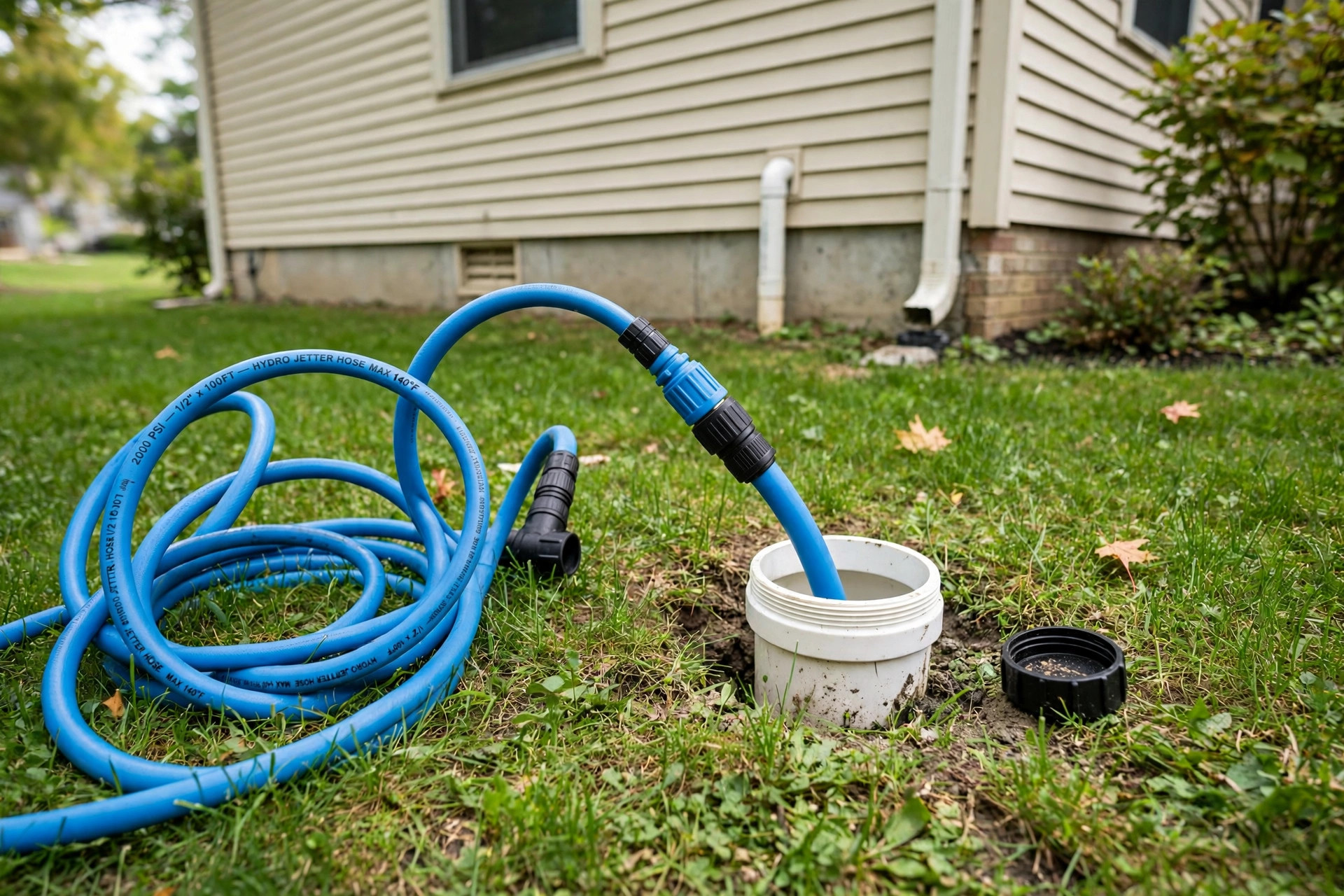
This is the most common job. The crew jets the main sewer line of a house, usually four to six inches wide and up to 100 feet long. Most homes take one to two hours. The truck or trailer carries the water tank and the high pressure pump. The hose goes in through an outside cleanout or a pulled toilet. This is the job the hydro jetting cost for sewer line USA price guides describe most often.
Longer and Larger Line Jetting
Some homes have long runs to the street, 150 feet or more. Some lines are wider, such as the six or eight inch lines on large lots or small rental buildings. These jobs take more time and more water, so the sewer line hydro jetting price climbs with length and width.
Spot Jetting for Tough Blockages
When one section of pipe holds a hard clog, the operator may jet only that part. Tree roots at one joint or a grease plug near the kitchen line are common cases. A root cutting nozzle spins as it moves and chews through root mass. This focused work can cost less than a full line clean when the rest of the pipe is sound.
Cost and Price
Now the part most readers want. The hydro jetting cost for sewer line USA homeowners report falls in a clear band. The hydro jet drain cleaning cost for commercial lines runs much higher than for homes.
What the Average Job Costs
For a typical home, hydro jetting a main sewer line costs about $350 to $600 in most of the country. Small jobs on short lines can run near $250. Long lines, heavy root growth, or lines that need two passes can push past $800. A separate camera inspection often adds $100 to $300 when it is not part of the package.
These are national averages for 2026. Your city may sit a little above or below. Big cities and the West Coast tend to cost more. Small towns in the Midwest and South often cost less.
What Changes the Price
Length of the line is the first factor. A 40 foot run takes less time than a 120 foot run. The company spends more on water, fuel, and labor on long lines. Access is the second factor. A cleanout in the front yard makes the job easy; pulling a toilet to reach the line takes longer and raises the price. The type of blockage is the third factor. Soft grease flushes out fast. Thick roots take slow, careful passes with a root cutting head. A line that is blocked solid may need a first pass with a cable snake before jetting can work at all. That is two jobs in one visit.
Pipe condition is the fourth factor. Fragile old pipe needs lower pressure and more care. The operator works slower to avoid damage. Emergency timing is the last big factor. A night or weekend call can add 50 percent or more to the bill. If the line is only slow and not backing up, you can save real money by booking a weekday visit. Compare the job with a standard drain cleaning service to see which price makes sense for your case.
What Is Usually Included in the Price
A full price quote should cover the jetting itself, the water, the crew time on site, and basic cleanup of the work area. Many companies now fold a short camera check into the price. Ask clearly. If the camera is extra, ask its exact fee. Also ask about a warranty. Some companies promise the line will stay clear for 30 to 90 days. A short warranty like this is a good sign. It means the company trusts its own work.
Watch for extra fees that appear after the quote. Common ones are fees for pulling a toilet, for a second cleanout opening, and for disposal of root debris. None of these are wrong on their own. The problem comes only when they are hidden until the work is done.
Care and Upkeep After Hydro Jetting
Jetting gives your line a fresh start. Simple habits keep it clear for years.
First, keep grease out of the drain. Pour cooking grease into a can and throw it in the trash. Wipe pans with a paper towel before washing. Grease is the main cause of repeat clogs in kitchen lines. Fixture makers such as Delta Faucet post simple drain care tips worth a look. Products and guidance for drain care are easy to find at stores like Home Depot or Lowe’s.
Second, watch what goes down the toilet. Only human waste and toilet paper belong there. Wipes marked flushable do not break down fast enough. They gather in the line and form clogs. Feminine products, paper towels, and cotton swabs should never be flushed.
Third, treat roots early. If a large tree grows near your line, ask a plumber about a root barrier or a foaming root treatment once a year. This small step can delay the next full jetting by years.
Fourth, flush the line with hot water from time to time. Run the hottest tap for five minutes once a month. This will not replace jetting, but it slows grease buildup. For step by step home plumbing care, This Old House and Family Handyman publish plain guides that many owners trust, and makers like Moen share fixture care advice. On the supply side, guides from Aquasana cover filters that keep fixtures working well.
If clogs return within a year, a camera inspection can find the damaged section. In some cases a spot repair or a full line replacement is the honest answer. You can read about those costs in guides to sewer line replacement pricing before you call a contractor.
Safety
Hydro jetting uses water at pressures that can cut skin and damage eyes. This is not a do it yourself job. Rental jetters exist, but a home grade rental cannot match a truck unit and a wrong move can break a pipe or cause injury. Leave this work to a trained operator with the right machine and the right safety gear.
During the visit, keep children and pets away from the work area. Water under high pressure can spray out of the cleanout. The crew should use shields and control the hose. If they do not take these steps, speak up or send them away.
There is also the question of water use. A home jetting job can use several hundred gallons of water. Most of it flows into the sewer system, which is where it belongs. The EPA offers guidance on protecting local water systems, and fair companies follow clean water practice on every job.
Sewage smell in the yard, a wet patch that never dries, or sinks that back up every week can point to a cracked line. Jetting a broken pipe can make the break worse. This is why the camera check before the job matters so much.
FAQ
How long does hydro jetting take?
Most home jobs take one to two hours. Long lines or heavy roots can take three hours or more. The crew should tell you the expected time before they start.
How often should a sewer line be hydro jetted?
A sound line in good soil may never need it. A line with root trouble may need jetting every one to two years. A line that feeds a restaurant kitchen may need it twice a year.
Is hydro jetting safe for old pipes?
It can be, in trained hands. The operator lowers the pressure for clay, cast iron, and Orangeburg pipe. The camera check before the job tells the operator where the pipe is weak. A cracked or collapsed pipe should not be jetted at all.
Does hydro jetting remove tree roots?
Yes. A root cutting nozzle spins under high pressure and grinds roots out of the line. It does not kill the tree or seal the crack the roots grew through. Roots will grow back over time. Yearly treatment and planned pipe repair are the long term answers.
What is the difference between snaking and hydro jetting?
Snaking punches a hole through a clog with a metal cable. Jetting cleans the whole pipe wall with high pressure water. Snaking is cheaper and faster for a simple clog. Jetting lasts longer and suits grease and roots. Many owners start with a snake and move to jetting when clogs keep coming back.
Can I rent a hydro jetter and do it myself?
You can rent small units, but they lack the pressure of a truck machine and the job carries real risk. High pressure water can injure you and can break old pipe. For a main sewer line, a licensed pro is the safer and smarter choice.
A Final Word
The hydro jetting cost for sewer line USA homeowners pay sits near $350 to $600 for a standard job. Length, access, blockage type, pipe condition, and timing move the number up or down. Get three written quotes. Ask for a camera check. Hire a licensed, insured company. A good jetting leaves your line close to new, and simple care keeps it that way for years.
References
Aquasana. (n.d.). Water filtration systems. https://www.aquasana.com Bob Vila. (n.d.). Home improvement advice. https://www.bobvila.com Consumer Reports. (n.d.). Product reviews and ratings. https://www.consumerreports.org Delta Faucet. (n.d.). Kitchen and bathroom faucets. https://www.deltafaucet.com Family Handyman. (n.d.). DIY home repair and maintenance. https://www.familyhandyman.com Lowe’s. (n.d.). Home improvement products. https://www.lowes.com Moen. (n.d.). Faucets and plumbing fixtures. https://www.moen.com The Home Depot. (n.d.). Home improvement products. https://www.homedepot.com This Old House. (n.d.). Home renovation guidance. https://www.thisoldhouse.com U.S. Environmental Protection Agency. (n.d.). Protecting human health and the environment. https://www.epa.gov
Was this guide helpful?

About Sarah Mitchell
The My Garden US editorial team writes practical, in-depth home and garden guides for American homeowners — tested advice, no fluff.
You May Also Like

Best Water Dispenser for Home Office USA: A Practical Buyer’s Guide
August 30, 2026 0 views
Burst Pipe Repair Cost Near Me: 2026 Prices and What to Expect
April 27, 2026 0 views
Wall Mounted Toilet Installation Cost USA: A Plain Guide for 2026
March 12, 2026 0 views