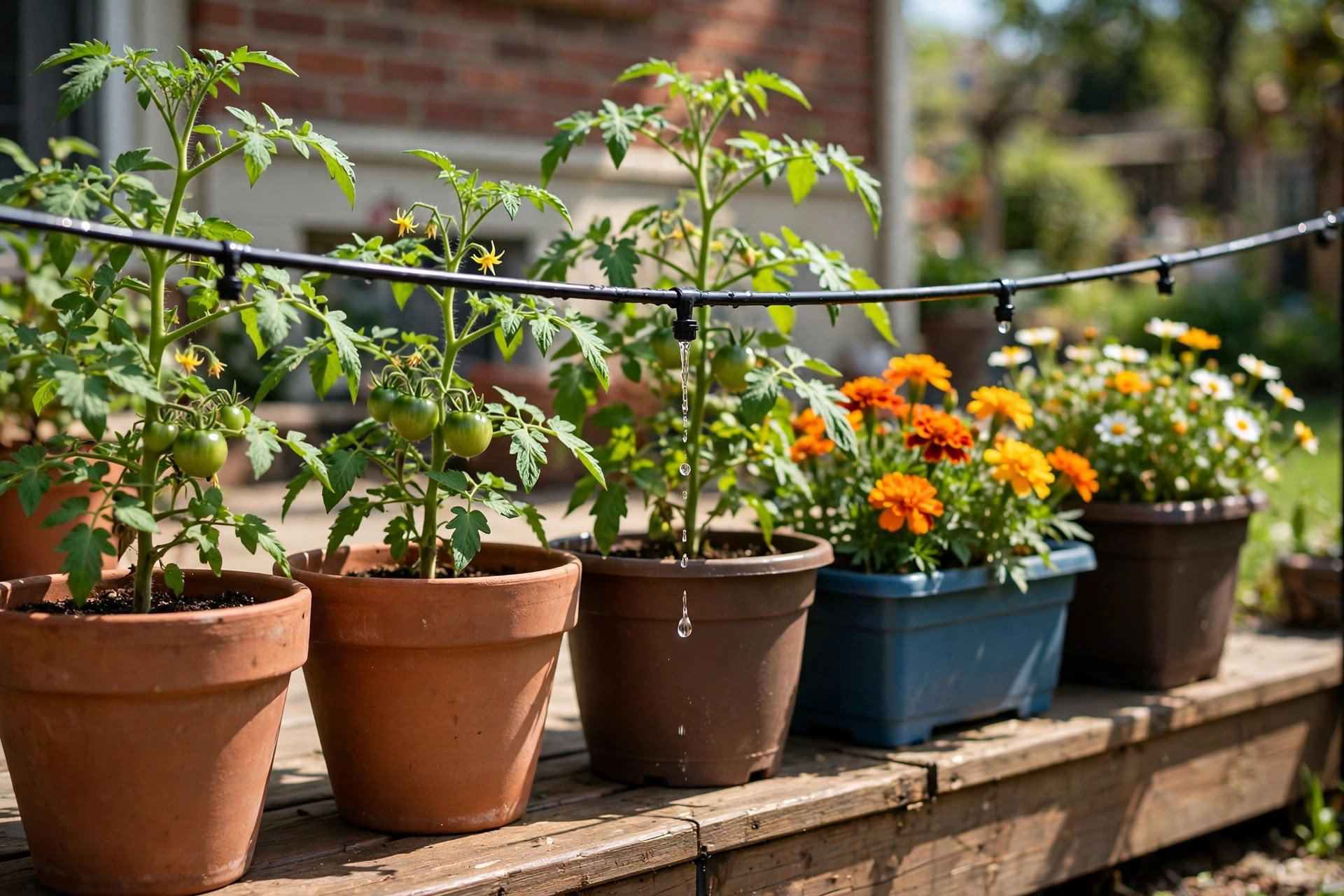

Potted plants dry out fast. A pot of soil holds little water. The sun beats down on the container. The wind pulls moisture from the leaves. Many gardeners lose fine plants in July and August for this simple reason. This drip line for container plants reviews guide will help you solve the problem.
A drip line is a thin tube with small outlets along its length. It carries water from a hose or faucet to each pot. Water drips out slowly, drop by drop. The soil stays damp without flooding. You do not need to stand outside with a watering can every morning. That is the whole idea.
Many kits on the market promise easy setup. Some work well. Some leak. Some clog. This guide walks through what matters, what to buy, and what it costs. We base our advice on common product designs and years of plain gardening experience.
Why a Drip Line Matters for Container Plants
Container plants live in a small world. A tomato in a five gallon pot has only a few gallons of soil to draw from. On a hot day it can drink a quart of water by noon. If you miss one morning watering, the plant wilts by dinner.
A drip line changes the pattern of watering. Instead of one big drink, the plant gets a slow steady supply. Roots grow deep and even. The top of the soil stays dry, which cuts down on weeds and mold. Leaves stay dry too, which helps stop blight and mildew on tomatoes and cucumbers.
There is another gain. Hand watering wastes water. Much of it runs off the hard dry soil and onto the patio. A drip line puts water exactly where the roots are. Many gardeners cut their watering use by half.
Travel is the final reason. A two week trip in August used to mean dead plants or a neighbor with a key. A drip line on a simple battery timer keeps every pot alive while you are away. That peace of mind alone is worth the price.
What to Look for When You Choose: Drip Line for Container Plants Reviews
Water Flow and Emitter Size
Each outlet on a drip line is called an emitter. Emitters are rated in gallons per hour, often written as GPH. A half gallon per hour emitter suits most pots. A one gallon per hour emitter suits large planters and thirsty plants like tomatoes.
Some lines have fixed emitters. Others have small dials you can turn. Adjustable emitters let you give a thirsty plant more and a small herb less. For mixed containers, adjustable outlets save a great deal of trouble.
Tubing Size and Material
Most container kits use quarter inch tubing. It is thin and bends easy around pots. It works well for short runs on a patio or balcony. For a long run of many pots, a half inch main line with quarter inch branches keeps pressure even.
Look for tubing that resists the sun. Cheap vinyl cracks after one summer. Polyethylene tubing lasts several seasons. Good kits say so on the box. The Gardeners Supply catalog often lists material specs clearly.
Connectors and Kits
Count your pots before you buy. A kit may feed twelve pots or twenty. Buy a kit that covers your largest bed, then add single emitters later if you expand.
Push fit connectors go together by hand. Barbed connectors need a warm day and firm hands. Some gardeners like kits with a hole punch tool and extra plugs. The tool makes clean holes. The plugs seal mistakes.
Types and Options
Emitter Line With Built In Outlets
Emitter line has outlets spaced every six or twelve inches. You lay it across a row of pots or through a long planter box. Water comes out at each outlet. It is the fastest way to cover many pots. It suits long window boxes and deck rail planters.
The weak point is spacing. If your pots sit far apart, many outlets drip onto the patio. You can cap unused outlets on some brands.
Blank Tubing With Individual Emitters
Blank tubing has no holes. You punch a hole where you want one and push in an emitter. This gives full control. Each pot gets one or two emitters exactly at the stem. Nothing drips on bare concrete.
This type takes more time to set up. The result is neat and exact. Many experienced gardeners prefer it. Corona Tools and other tool makers sell fine hole punches for this work.
Micro Sprayers and Bubblers
Micro sprayers throw a fine mist over a small circle. They suit wide shallow pots and seed trays. Bubblers flood a small area gently. They suit large shrubs in big pots. Both use more water than drip emitters, so they need care in dry regions.
Gravity Fed Kits
A gravity kit uses a raised bucket or rain barrel instead of a faucet. Water flows down by its own weight. These kits suit balconies with no hose spigot. They also pair well with a rain barrel for garden watering. Pressure is low, so runs must be short and level.
Cost and Price
Prices are modest. A basic twelve pot drip kit sells for fifteen to twenty five dollars. A twenty five pot kit with a timer costs thirty five to sixty dollars. A battery timer by itself runs twenty to forty dollars.
Blank tubing costs about twenty cents a foot. Individual emitters cost ten to thirty cents each. A hole punch tool costs five to ten dollars. A pressure reducer, which protects thin lines from strong house pressure, costs eight to fifteen dollars. Most gardeners should buy one. High pressure blows cheap lines apart.
Compare this to the cost of lost plants. One dead tomato plant is a six dollar loss plus a season of fruit. A full set of pots can hold fifty dollars of plants. The kit pays for itself the first summer. The Home Depot and Lowe’s both carry starter kits in store each spring, so prices stay honest.
Watch for extras that add cost without value. A kit with thirty parts looks complete but may leak at every joint. Simple kits with fewer joints often last longer.
Care and Upkeep
A drip line needs little care, but not zero. Follow this plain routine each season.
Spring setup takes an hour. Lay the lines after the last frost. Flush the open ends into a bucket for a minute to push out winter dirt. Check each emitter. Replace any that drip too fast or not at all.
Summer care is simple. Walk the line once a week. Look for dry pots, which mean a clogged emitter. Look for puddles, which mean a loose joint. Pinch off algae if lines sit in full sun. Check the timer battery in August, when heat drains batteries fast. A quick mid season check takes ten minutes and stops most failures before they start. A garden sprayer for pesticides is not needed here, but the same weekly walk applies.
Fall winterizing matters in cold states. Water left in lines will freeze and split the tubing. Drain the lines, open the end caps, and store the timer indoors. Take the battery out of the timer. A dry line lasts years. A frozen one may not last one winter.
Clogs are the main trouble. Hard water leaves mineral crust. A filter at the faucet head stops most dirt. A small screen filter costs ten dollars and saves many emitters. If an emitter clogs, pull it out and soak it in plain white vinegar for an hour. Rinse and push it back in.
Safety
Drip irrigation is safe work, but a few rules keep it that way.
Never connect a drip line directly to house plumbing without a backflow preventer. Fertilizer or soil water must never flow back into drinking water. Many kits include a small backflow device. If yours does not, buy one. They cost a few dollars. The EPA explains backflow rules for home irrigation in plain terms.
Keep lines off walkways. A thin black tube is a trip hazard. Run lines behind pots or bury them under mulch.
Unplug or remove timers before you leave for long trips? No, the timer is the point. But test the timer for a full week before you trust it with a vacation. Timers fail. Batteries die. A week of testing catches the failure while you are home.
Store chemicals away from the watering area. If you mix liquid fertilizer through the line, mark the container clearly and keep it from children and pets. Plain water is the safer choice for most pots.
Frequently Asked Questions
How long should I run a drip line on container plants?
Start with thirty minutes each morning in summer. Check the soil with your finger. Damp two inches down is right. Dry is too little. Muddy is too much. Adjust the timer in fifteen minute steps until the soil stays even. In spring and fall, cut the time in half.
Can one faucet feed many pots?
Yes. A standard hose spigot can feed thirty or more emitters on a short run. If the far pots drip weakly, split the run into two zones with a simple Y valve, or switch to a larger main line. Low pressure is almost always a design problem, not a faucet problem. The Family Handyman site has clear drawings of zone layouts.
Do drip lines work for hanging baskets?
They do, with care. Run a thin line up to each basket and add one low flow emitter. Weight the basket well, because a wet basket is heavy. Many gardeners prefer a small mister for baskets, since the spray covers the whole root ball. Either way, test for one week and watch for drips onto the deck below.
Should I bury the drip line under mulch?
Yes. A thin layer of mulch hides the line, cools it, and slows algae. Do not bury it deep in soil. Buried lines are hard to inspect and easy to cut with a trowel. Keep the line on the soil surface under the mulch, where you can lift it and check it.
How do drip lines compare to soaker hoses?
A soaker hose weeps water along its whole length. It suits garden beds but wastes water between pots. A drip line with individual emitters waters only the pots. Our guide on how to use a soaker hose effectively covers beds in detail. For containers, drip emitters win on control and water savings.
Can I use a drip line with a watering can habit?
Keep the can for seedlings and indoor plants. A watering can for indoor plants is still the best tool inside the house. Outdoors, let the drip line do the daily work. Use the can for liquid feed once a month if you like. The two tools do not fight each other.
A Final Word
This drip line for container plants reviews guide comes down to a simple point. Buy a simple kit. Set it up with care. Check it once a week. Your pots will thank you with green leaves and heavy fruit.
Start small if you are unsure. Water six pots this season. Learn the parts. Next year, water them all. Good gardening is steady work, and a drip line does the steadiest part for you. Your mornings become free for coffee instead of hauling water. For more tool guidance, see reviews at Consumer Reports, Bob Vila, The Spruce, Fiskars, and Burpee.
References
Bob Vila. (n.d.). Home improvement advice. https://www.bobvila.com Burpee. (n.d.). Seeds, plants, and gardening supplies. https://www.burpee.com Consumer Reports. (n.d.). Product reviews and ratings. https://www.consumerreports.org Corona Tools. (n.d.). Garden and landscape tools. https://www.corona-tools.com Family Handyman. (n.d.). DIY home repair and maintenance. https://www.familyhandyman.com Fiskars. (n.d.). Garden and cutting tools. https://www.fiskars.com Gardener’s Supply Company. (n.d.). Gardening tools and supplies. https://www.gardeners.com Lowe’s. (n.d.). Home improvement products. https://www.lowes.com The Home Depot. (n.d.). Home improvement products. https://www.homedepot.com The Spruce. (n.d.). Home and garden advice. https://www.thespruce.com U.S. Environmental Protection Agency. (n.d.). Protecting human health and the environment. https://www.epa.gov
Was this guide helpful?

About Robert Taylor
The My Garden US editorial team writes practical, in-depth home and garden guides for American homeowners — tested advice, no fluff.
You May Also Like
Cold Frame Gardening Tips for Beginners
February 3, 2026 0 views
How to Grow Microgreens Indoors Kit: A Complete Guide for Beginners
April 27, 2026 0 views
Garden Edging Ideas for Vegetable Beds: Borders That Work as Hard as You Do
August 31, 2026 0 views